

Front Line Report:Hard Realities For Electric Fleets

A seamless charge depends on a string of independent companies getting it right together, every time. How can electric fleets navigate the challenges to create a successful charging plan?
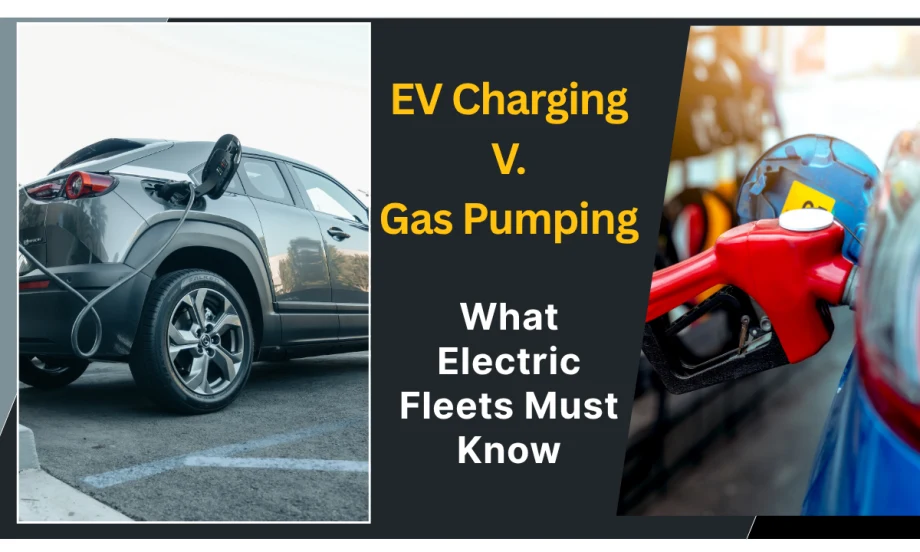
A gas pump almost never lets you down, and you've probably never once wondered why: A standardized nozzle, and a fuel that frequently doesn't care what car it's going into. A fleet depot charger looks just as simple, but it isn't.
Charged Fleet
*Summarized by AI
EV charging is still young, and charging sessions create issues more often than people would like.
Even on a good charger, a session might work on the first try only about 85% of the time. Across all public charging last year, about one in seven drivers reported a visit that ended without a charge, according to J.D. Power.
There's plenty of advice on how to respond when charging fails, but less on why it fails in the first place, which tells an electric fleet buyer what to ask for.
Most charging failures are invisible to the people they happen to. A broken cable or a dark screen is obvious; you can walk up and see it. But the bulk of what gets written up as "the charger's broken" isn't really the charger.
Industry estimates put about 90% of charging problems in the software layer, in the data handoffs between companies that most drivers don't know are part of a single charge.
No fleet manager needs to understand those handoffs the way an engineer does. But knowing they exist, and about how a charge gets passed from one company to the next, is the difference between an operator who can ask a vendor the question that matters or structure a smart service-level agreement, versus one who just opens another ticket or waits on hold with support.
What follows is a plain-language map of the parts, and the handful of questions worth asking once you can see them.
You already know this failure: The declined card.
A gas pump almost never lets you down, and you've probably never once wondered why: A standardized nozzle, and a fuel that frequently doesn't care what car it's going into.
A fleet depot charger looks just as simple, but it isn't. The screen's lit, and it takes the badge or ID card. It even reads "charging" for a minute, then slides back to idle. To the driver, that's a broken charger. What happened is that several systems, often built by several different companies, failed to stay in sync, and nearly everyone was doing exactly the job it was built to do.
The closest thing most people have felt to that is a declined credit card. You tap, and it feels like a single handshake between you and the terminal, but it’s not that simple.
In the two seconds before that red "declined," the store's terminal, the card network, your bank, and another connection on the store's side all had to check in and agree. One of them said no or took too long, and you got a single word back. Maybe your balance, maybe a network timeout that cleared by the time you tried again. The cashier can't tell you, because most of the time the register can’t see the whole chain.
A charging session is the same kind of failure, with more parties in the room/ A single charge relies on a string of independent companies that get it right together, in real time, every time:
When all of them answer cleanly, charging just works. When one hesitates or disagrees with another, the driver gets one unhelpful symptom and no way to tell which link broke.
Here, the decline is more than a metaphor. At a public charger, the payment authorization is one of those conversations, and it's not the only one: the car and charger are still negotiating how hard to push, and the charger must still maintain a cellular link back to its software.
The site also needs enough available power to deliver. If any part of the chain stalls, a session that looks fine on the screen may never send energy to the vehicle.
It's tempting to assume somebody's being lazy or cheap. Sometimes that's true, but often it isn't. The automakers, the charger builders, and the network software companies spend real money testing against each other, certifying, running pilots, and shipping fixes.
And the standards underneath them aren't the problem either. OCPP (the Open Charge Point Protocol), the messaging standard between a charger and its network, has been around since 2009, and the version most chargers in the field run today dates to 2015. ISO 15118, which governs how cars and chargers talk, has been published for a decade. These are relatively mature specifications.
The trouble lies in the space the standards don't cover. OCPP defines the messages that a charger and a network exchange. It doesn't define what the network does with them: how it prices a session, when it retries a failed one, how it handles an error, how it reconciles what happened afterward. That business logic is built from scratch by every company, and it's where many real-world edge cases arise.
Two networks can both be fully compliant and still handle the exact same bad moment differently. The specs also keep moving, so the field always runs a mix of versions, and every release starts a fresh round of who's implemented what.
The real problem is combinations. A charger that's rock-solid with one car model chokes on another after a routine firmware update. A load-sharing setup that tested clean with five trucks does something else when 27 roll in late and all ask for power at once.
Every piece is behaving, and the session still fails. No lab tests every car against every charger on every firmware version at every site on a bad-signal night, so the field runs that test instead, every morning.
Which is why "the charger's broken" is close to useless as a diagnosis. Sometimes the hardware is dead. More often, the fault lies in a specific combination nobody owns end-to-end: this firmware, this truck, one network hiccup, tonight.
Tesla didn't crack this with a better cable. It cracked it by owning the whole chain: the car, the charger, the software, the app, and most of the network. Its Supercharger for Business page says as much: it designs the power electronics, makes the hardware, runs the network, and writes the software.
When one company can see the entire session, it can catch a disagreement, fix it, push a coordinated update, and trace what the driver felt back to the engineer who can change it. No contracts to renegotiate, no argument about whose layer failed. All of that is worth wanting, and it's the thing almost no fleet can buy.
You'll buy vehicles from one or two automakers, chargers from another vendor, software from a third, and power from a utility whose rate plan was never built around your dispatch board. The new NACS connector standard (the North American Charging Standard, the Tesla-style plug now going industry-wide) makes the physical connection universal, which helps.
But a common plug doesn't put one company in charge of the firmware, the power, and the recovery when a session slips. Copying Tesla by going vertical isn't an option for a fleet and isn't the point anyway.
The part worth copying is narrower: reliability comes from being able to see enough of the chain to keep it aligned. You can't buy that by owning every box. You get at it by knowing who owns each one and asking the right questions before you sign.
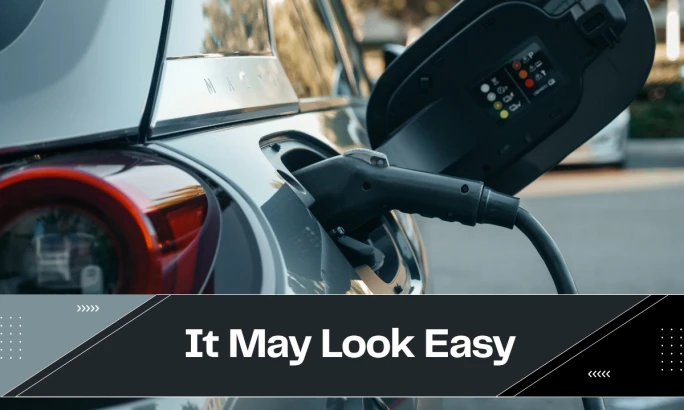
Charging will improve, but it probably won't ever be as simple as filling a tank, and not because anyone's doing it wrong.
Charged Fleet
You don't need to learn the protocols. You need to know enough about the chain to ask who owns each link, because the worst surprises come from a link nobody told you about. A few questions do most of the work, and none of them need an engineering background.
The answers tell you more than the warranty does. They tell you how many companies are really in the chain, and who picks up the phone when one of them drops the handoff.
Charging will improve, but it probably won't ever be as simple as filling a tank, and not because anyone's doing it wrong. A gas pump is mostly mechanical. There's no software in the loop, negotiating in real time with whatever just plugged in.

GridLink CEO Josh Silets advises electric fleet operators to focus on five key questions when evaluating compatible charging options.
GridLink
A charge is exactly that negotiation, between separate companies' computers, settled in the few seconds a driver experiences as a single motion. That messiness is less a defect than the price of an open market, and that market is worth keeping.
A vertically integrated owner like Tesla can wring more reliability out of the near term, because it controls every layer. A closed stack only builds what its owner decides to build. The open version is the one where a startup can turn a streetlight into a charger or pilot curbside charging for people who park on the street, and where vendors must compete on uptime rather than inherit a captive fleet.
The fragmentation that makes it hard to keep a session lined up is the same dynamic that lets the industry try new ideas.
A fleet can't simplify that market, so the focus is to run it well. When the chain holds, charging is boring. Nobody files a ticket. Vehicles leave full, and dispatch never thinks about it.
When it slips, the charger takes the blame, because it's the part you can see standing in the lot. The shift worth making is to stop asking whether the charger's up and start asking who's keeping the whole session lined up when it counts.
That question doesn't have a clean number behind it yet, but it's the one that decides whether your route leaves on time, and whether an open market can be made as dependable as a closed one.
Loading data...

Fleet operators who manage a mix of light-, medium-, and heavy-duty vehicles can’t treat charging as an add-on to fueling. Here’s how to develop a specific strategy.
Charging
A seamless charge depends on a string of independent companies getting it right together, every time. How can electric fleets navigate the challenges to create a successful charging plan?
Charging
Getting boots on the ground quickly is not enough. Fleets must now master charging management, one of the newest capabilities, the most critical of all the new skills the transition to EVs demands.
Charging
As more fleets transition to EVs, those that embed telematics deeply into their workflows will expand deployments with fewer surprises and more predictable economics.
Charging
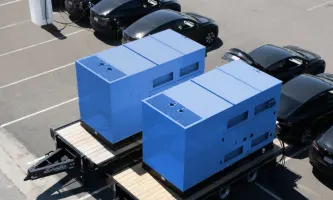
Off-grid charging assets have proven to be much more than stopgaps. Fleets can use those tools to hedge against grid delays, capacity bottlenecks, and other uncertainties.
Charging
Here's why the EV transition stopped being centered on ideology and started focusing on operational benchmarks.
Electric Vehicles
Follow these three concepts to get the most value when cycling out your electric fleet vehicles.
Operations
Successful electrification means reimagining fleet operations by building a system in which every vehicle is optimized for its role.