

How To Set Up Charging For A Mixed-Duty Commercial Fleet
Fleet operators who manage a mix of light-, medium-, and heavy-duty vehicles can’t treat charging as an add-on to fueling. Here’s how to develop a specific strategy.

Fleet operators who manage a mix of light-, medium-, and heavy-duty vehicles can’t treat charging as an add-on to fueling. Here’s how to develop a specific strategy.
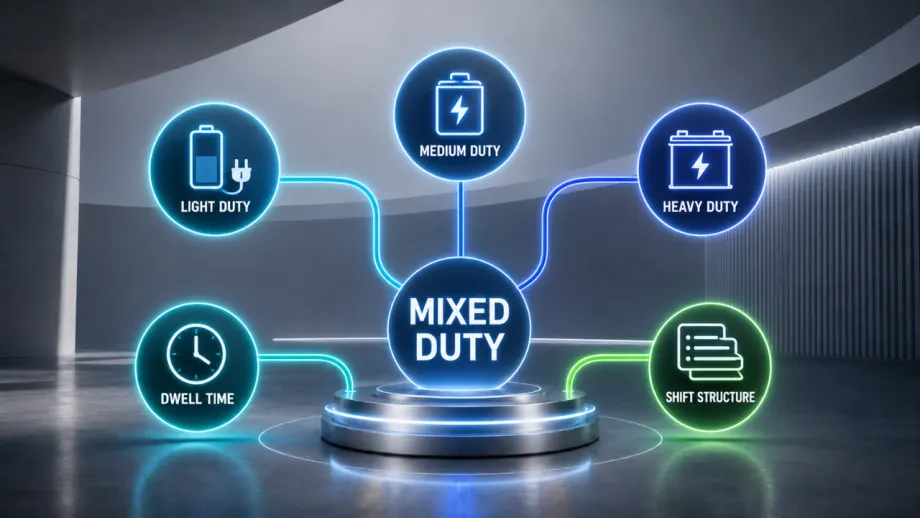
Mixed-energy fleets may operate vehicles powered by multiple fuel types simultaneously. As electric vehicles enter the mix, fleets should tailor charging decisions to each asset’s route, daily energy use, dwell time, and operational requirements rather than applying a single solution across the entire operation.
Charged Fleet
As more fleets turn to electric vehicles, success depends less on fuel management and more on how they use telematics and charging data to keep vehicles ready, control energy costs, and protect uptime.
A practical strategy for mixed-duty fleets uses route and dwell patterns, facility and grid constraints, charger velocity, and AI-driven telematics to provide a disciplined approach to maintenance and redundancy.
Fleet managers build workable charging strategies when they start with operations, not hardware. A structured assessment across vehicle classes pinpoints how each vehicle operates day-to-day and how that translates into charging demand.
Key operational variables include:
A mixed-duty fleet often has distinct charging personas. Light-duty pool cars and service vans may use slower, lower-cost charging because they accrue modest mileage and sit parked for long stretches.
Medium-duty distribution trucks that push range limits need more aggressive charging and tighter control of charging windows. Heavy-duty, specialized, or vocational equipment tends to require high-power charging, careful grid coordination, and redundancy because lost shifts have a big business impact.
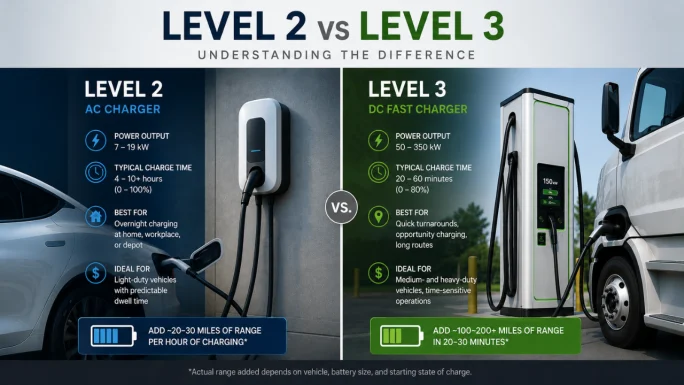
Level 2 charging can provide a lower-cost backbone for vehicles that return to base and remain parked overnight, while DC fast charging supports longer routes, multiple shifts, and quick turnarounds. Most mixed-duty fleets will need a carefully managed combination of both.
This image was generated by OpenAI. Please refer to our terms of use.
Once fleet managers understand how vehicles operate, they can design a charging mix that fits those profiles rather than over- or under-building. Most mixed fleets require Level 2 charging, DC fast charging (DCFC), and managed charging controls rather than a single standard.
Level 2 AC charging, which is typically 7 to 19 kW in North America, works best when vehicles have predictable returns to base and ample dwell time. Many light-duty passenger EVs, pool vehicles, and some service vans can recover a full day’s energy overnight at these power levels.
Level 2 is best when:
Because Level 2 hardware costs less and draws less power, it often provides the backbone of a mixed-fleet charging strategy, especially for light-duty assets of dozens or more.
DC fast chargers deliver much higher power, generally around 50 to 350 kW, which reduces charge times from hours to under an hour. Mixed-duty fleets typically reserve DCFC capacity for vehicles that push their range envelope or need quick turnarounds between shifts.
DC fast charging often plays a critical role when:
High-power DC charging requires more intensive electrical design, utility coordination, and load management to avoid excessive demand charges or grid constraints. Fleet operators plan capacity early, reserve space and conduit for expansion, and integrate DCFC scheduling into their dispatch logic so they use high-power ports only when necessary.
Unmanaged or ad hoc charging rarely works for long in a mixed fleet. As port counts and load grow, fleets need managed charging that orchestrates when and how each vehicle charges, based on priorities, tariffs, and operational constraints.
Smart or managed charging systems allow you to:
Managing change allows diverse assets to share common infrastructure without grid or operational disruptions.
The most successful mixed-fleet deployments treat charging as critical infrastructure, not a retrofit after vehicles arrive. Early data-driven site planning avoids costly rework and supports a smooth path to higher EV penetration over time.
Key elements include:
Many fleets rely on specialized engineering, procurement, and construction (EPC) services, permitting, and commissioning, especially when projects span multiple depots or include a mix of Level 2 and high-power DC systems. This integrated approach reduces handoffs and helps ensure that hardware, software, and civil work align with operational needs.
With sites in place, fleets still need daily playbooks for when vehicles plug in, which chargers they use, and how they share available power. Mixed-duty operations benefit from explicit policies and close coordination between dispatch, maintenance, and energy management.
Core practices include:
As fleets scale, these scheduling and load-management practices become more complex, but they also unlock significant total cost-of-ownership benefits through reduced energy spend, improved fleet utilization, and higher uptime.
Telematics has long supported routing and safety for internal combustion fleets, but EVs elevate its importance. Electric vehicles generate richer, more granular data, including battery state of charge, cell temperatures, charging rates, and energy consumption by segment. This data becomes even more powerful when AI analyzes patterns across a mixed fleet.
AI-enabled telematics platforms ingest vehicle, driver, and charging data to model how different operating choices affect energy use and uptime. This intelligence translates into several tangible capabilities for mixed-duty fleets, including:
These capabilities move EV operations from static planning to adaptive optimization, where the system continually refines charging and routing based on live conditions and historical performance.
AI delivers these benefits only when fleets tame the complexity of their data landscape. Mixed fleets often run multiple telematics platforms, OEM portals, and charger management tools, each with its own dashboards and formats. Without integration, managers spend too much time reconciling reports and not enough time acting on insights.
To move from raw data to decisions, fleet operators increasingly:
When fleets succeed, they see measurable reductions in total cost of ownership, improved uptime, and more confident decision-making about which routes, depots, and vehicle classes to convert to electric next.
A mixed-duty charging strategy fails if vehicles can’t charge when needed. It must be reliable, redundant, and fixable to succeed in the long term, especially for fleets that depend on specialized or heavy-duty vehicles.
Practical reliability measures include:
Over time, fleets revisit their charging strategy as they convert more assets to electric, add new vehicle classes, or expand to new depots. Designs that start with clear data, scalable infrastructure, and integrated telematics adapt more easily to changes, supporting current operations while remaining flexible enough to grow.
Mixed-duty fleets that take this end-to-end approach, rooted in operational data, aligned with utility and site realities, and supported by AI-driven telematics and best reliability practices, can turn fleet electrification from a compliance task into a competitive advantage.

InCharge Energy | Charged Fleet
About the Author: Laura Karrer is a digital marketing specialist at InCharge Energy, a Los Angeles-based company focused on providing electric vehicle charging infrastructure and energy solutions. With a background in storytelling and content creation on sustainability topics, Karrar makes complex issues clear and compelling and tailors messages that drive action.
Loading data...

Fleet operators who manage a mix of light-, medium-, and heavy-duty vehicles can’t treat charging as an add-on to fueling. Here’s how to develop a specific strategy.


Charging
A seamless charge depends on a string of independent companies getting it right together, every time. How can electric fleets navigate the challenges to create a successful charging plan?
Charging
Getting boots on the ground quickly is not enough. Fleets must now master charging management, one of the newest capabilities, the most critical of all the new skills the transition to EVs demands.
Charging
As more fleets transition to EVs, those that embed telematics deeply into their workflows will expand deployments with fewer surprises and more predictable economics.
Charging
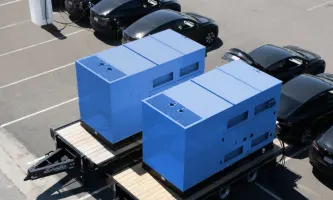
Off-grid charging assets have proven to be much more than stopgaps. Fleets can use those tools to hedge against grid delays, capacity bottlenecks, and other uncertainties.
Charging
Here's why the EV transition stopped being centered on ideology and started focusing on operational benchmarks.
Electric Vehicles
Follow these three concepts to get the most value when cycling out your electric fleet vehicles.
Operations
Successful electrification means reimagining fleet operations by building a system in which every vehicle is optimized for its role.