


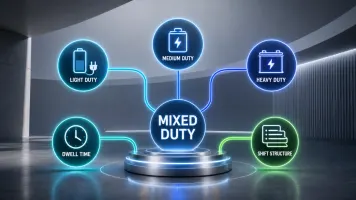
How To Set Up Charging For A Mixed-Duty Commercial Fleet
Fleet operators who manage a mix of light-, medium-, and heavy-duty vehicles can’t treat charging as an add-on to fueling. Here’s how to develop a specific strategy.

Successful electrification means reimagining fleet operations by building a system in which every vehicle is optimized for its role.
Every fleet has a technology stack, which is a mix of software, hardware and operations which help them first get the job done, and then do it safely and efficiently, within a budget.
Charged Fleet
*Summarized by AI
“One eye alone isn’t wise,” reads a Yoruba proverb that infers that no one has a monopoly on wisdom.
This is why I listen to fleet-related podcasts to keep learning from industry leaders.
A few weeks ago, RJ Scaringe, Rivian’s founder and CEO, spoke about Amazon (a key customer of theirs) and how they are not just dabbling in EVs but continue to go all in. Amazon’s ruthless approach to cost management via data-driven decision-making works for EVs because they have predictable routes, depot-based vehicles with overnight dwell times when electricity costs are lowest, owned infrastructure, and a mid-range duty cycle (<200 miles).
They’ve faced the same headaches as everyone else, like charging infrastructure buildouts, permitting delays, and operational complexity, but their ability to refine their electrification stack means they’re pulling away from the pack on profitability with these electric vehicles.
Every fleet has a technology stack, which is a mix of software, hardware, and operations that help them first get the job done, and then do it safely and efficiently, within a budget.
Then comes the electrification stack, the next era iteration to give them the best chance to capture the total cost of ownership (TCO) promise that EV enthusiasts like to drone on about.
But this isn’t some far-off concept; every piece: vehicles, management systems, telematics, charging, maintenance, cost management, and more; already exists today, although they continue to evolve.
The magic happens when fleets stitch these pieces together to achieve granular control over costs and expand revenue streams. Think less downtime, faster stops, increased cargo, and happier drivers.
But beware: overcomplication is a real risk. Lose sight of your fleet’s core purpose, and you’ll end up with a stack that’s all sizzle, no substance. As a former boss once put it to me, “Don’t build a spaceship when all you need is a bus.”
To learn more about this stack, I reached out to gather perspectives from fleet managers across different segments and from vendors that support fleets.
As expected, not everyone has the same outlook for the industry, but one thing is for certain: Fleets that master stack orchestration will keep winning; those who don’t, well, keep reading!
Electrification isn’t a single decision or a one-size-fits-all solution. It’s a layered system in which vehicles, data, infrastructure, financing, and maintenance must work together. Miss one piece, and the whole strategy starts to wobble. For fleets getting serious about electrification, success comes from understanding how each layer connects and where smart planning today prevents expensive fixes tomorrow. That’s where breaking down the electrification stack really matters.
Here are five key components of the electrification stack:
Vehicle selection is moving beyond horsepower and wheelbase to focus squarely on duty cycle, upfit potential, and data compatibility.
The right vehicle unlocks new operational models, from pooling to dynamic routing. As Bradley Northup, fleet manager of 500 vehicles for the City of Carlsbad, California, puts it, “Know your chess pieces, what each vehicle does, not just how many you have.”
For scheduled, point-to-point routes with overnight dwell, battery-electric vehicles are the lowest-friction option, especially when depot charging is available.
However, BEVs can face large weight penalties in heavy-duty applications. Tyler Flynn, fleet director at Savage with 1,300 vehicles, notes an 8,000-pound difference between BEV and hydrogen fuel-cell tractors, resulting in a 10% payload loss and the need for more trucks.
That’s why hydrogen is gaining some traction for high-payload, long-range, or compliance-driven corridors, while BEVs and hybrids suit lighter, predictable routes.
For now, upfitting should be kept to a minimum, as added mass and drag degrade range and TCO economics.
Telematics and predictive maintenance are now essential, turning vehicles into data-rich assets for smarter deployment. The best fleet managers, even those not yet electrifying, stay informed and use telematics to identify underused vehicles and right-size their fleet.
Ultimately, successful electrification means reimagining fleet operations, which goes beyond simply swapping powertrains. It means building a system where every vehicle is optimized for its role.
Telematics transforms fleets from reactive to proactive. Predictive analytics, AI-driven insights, and integration with Fleet Management Information System (FMIS) platforms enable managers to optimize routes and charging schedules and to predict failures before they occur.
“Our new consultative process will let customers authorize us to analyze historical fleet data, so we can model scenarios like TCO and operational logistics if EVs had been used instead,” said Tracy Herman of Volvo sales.
Telematics isn’t just about tracking a vehicle’s location; it also helps with charging, maintenance, and driver behavior in real time. This part of the stack has the potential to serve as your fleet's command center, and if you plan to integrate AI into your operations, it should be here.
Of course, this depends on your ability to connect to the functions required to manage your fleet, such as driver monitoring, vehicle error codes, location, and fuel/energy levels.
This requires high levels of discipline & best practices in data management to enable a highly responsive system.
Charging is the bottleneck and the opportunity. Fleets that master energy management, such as timing, location, and rate, can help arbitrage costs, reduce downtime, and even participate in grid services (V2G).
Amazon’s success is built on depot-based charging and predictable dwell times. Building charging infrastructure before buying EVs is critical for depot-based fleets, and recommendations always include starting with a pilot program. Full deployment without testing can lead to many problems.
Flynn of Savage spent five years wrangling permits for two chargers in California and goes by the mantra, "There's a better way. Find it.” Charging isn’t just a technical challenge; it’s a strategic one.
As fleets scale up, the complexity of managing charging sessions, grid constraints, and cost control explodes. Charging management software (CMS) has become the nerve center for coordinating when, where, and how vehicles charge, balancing operational needs, energy tariffs, and grid limitations.
Many fleets also juggle multiple platforms: one for depot charging, another for at-home reimbursement, and yet another for public charging. This lack of integration leads to data silos and operational headaches.
Lastly, without smart scheduling, fleets risk charging all vehicles at peak times, triggering punitive demand charges and even grid overload. Fleets that invest in robust CMS platforms already see tangible benefits.
Financial innovation is enabling fleets to de-risk electrification. Flexible leases, insurance tied to real-world data, and new warranty structures mean fleets can scale without betting on the farm.
But residual values have been volatile. Jim Petrillo, fleet manager at FUJIFILM, with 1,500 vehicles, warned, “When Tesla lowered prices… I lost all my value in those used cars.”
Open-end leases and battery health monitoring are your friends. Financing models are evolving, with EV-as-a-Service and mileage-based insurance gaining traction. Many fleets treat insurance as a separate category altogether because of its broader relevance beyond asset management, but it is also one of the largest drivers of EV costs compared to ICE vehicles.
For other fleets, they are tightly integrated and part of the same equation. Regardless, getting these structures right is critical to smooth operations.
EVs shift the maintenance paradigm. Less moving parts, but more software. Fleet leaders with in-house technicians should invest in technician training, remote diagnostics, and partnerships with OEMs and FMCs to ensure uptime.
Predictive maintenance is a game-changer. Savage processes 1.5+ million engine codes every six months, catching failures before they occur. Technician upskilling and stocking spares are musts.
Kimberly Fisher, award-winning fleet manager for 1,600+ vehicles at NOV, said the company is not yet electrifying its U.S. fleets due to operational and industry barriers. She emphasized the need for warranty protection. Her company now mandates dealer service during the warranty period after an incident with AC compressor failures highlighted the manufacturer’s reluctance to support recalls without a maintenance history with their dealers.
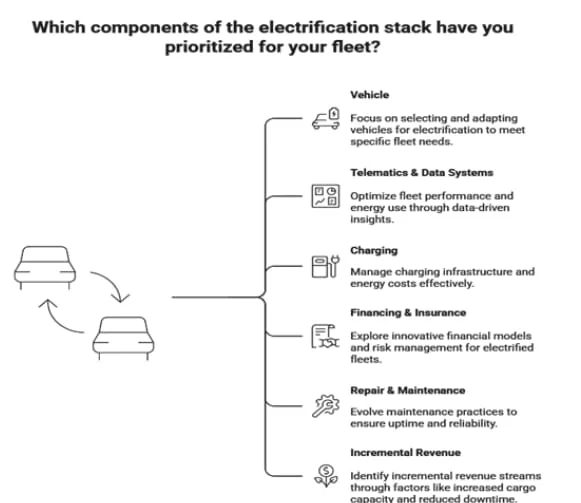
Every piece -- vehicles, management systems, telematics, charging, maintenance, cost management, and more --- already exists, although they continue to evolve. The magic happens when fleets stitch these pieces together for granular control over costs and increased revenue streams.
Leke Services
Electrification can be more than just cost savings; it can also drive new business models. Fleets can monetize sustainability, offer premium services, sell energy via their charging infrastructure, and tap into incentives that still exist if you know where to look, as well as carbon credits.
Green premiums, increased cargo, and access due to lower emissions are real opportunities. As Fisher pointed out: “The fleet industry is evolving faster than in previous decades; one must understand integration across the stack: telematics, fuel/charge cards, charging infrastructure, and more.”
Across the electrification stack, collaboration is the biggest new core competency. Northup added: “The biggest change from 20 years ago: massive collaboration.” Fleet managers now work with climate, facilities, compliance, and strategic planning teams. Safety and compliance are no longer siloed. The stack enables cross-functional teams to manage risk, ensure regulatory alignment, and drive continuous improvement.
The fleet industry is heading into 2026 with mixed signals. American OEMs are slowing their EV rollouts, hampered by poor profitability and less federal pressure to transition.
As Ted Cannis, former CEO of Ford Pro, explained, “OEMs are losing money on EV sales vs ICE, with F-150 Lightning vs F-150 as an example,” which means traditional brands are likely to contribute to the market slowdown as they chase profits and manage increasing write-downs from supply chain uncertainty. Tariffs and chip shortages hit EVs especially hard.
Yet, pure-play EV companies like Tesla and Rivian remain bullish, with no alternate play and cost advantages from vertical integration and software-defined vehicles. Volvo, for example, continues to push a clear EV message to its channels, signaling that the electrification march is far from over. Even as legacy OEMs retrench, they must continue improving their EV platforms to remain competitive with industry trends.
While some legacy OEMs are cautious, charging infrastructure is a bright spot. Expansion has been remarkable, with year-over-year growth expected to exceed 20% in 2025 and projections of more than 35 million charging points by 2030 (PwC). While national labs have become less reliable for data, other sources confirm the trend: public charging is becoming ubiquitous, reducing range anxiety for all drivers. In California, I’ve personally experienced the benefits; my annual drive to my in-laws now takes less time and gives me more confidence, thanks to the proliferation of fast chargers even in smaller towns.
Beyond the largest networks such as ChargePoint and Tesla, companies such as Ionna and bp Pulse are rapidly expanding public charging networks at airports and urban hubs. Fleet-focused solutions like Terawatt and Greenlane are opening en route charging facilities nationwide.
For fleets, owned depots offer the greatest cost advantages but require long lead times and careful planning. The growing ubiquity of public and private infrastructure is building confidence in adoption, especially for larger and heavier vehicles, provided these companies can sustain their momentum until vehicle supply and price points evolve to meet fleet needs.
Looking ahead, 2026 will see AI and autonomous vehicle technology move from pilot projects to more scaled deployments in fleet operations. Fleet managers are increasingly leveraging AI for predictive maintenance, route optimization, and energy management.
Flynn highlights how partnerships with Geotab and Uptake enabled predictive failure alerts days in advance, and they process over 1.5 million engine codes every six months.
Autonomous trucks are no longer science fiction: Savage is set to deploy 18 autonomous vehicles on a 22-mile coal mine route in Utah, demonstrating how AVs can tackle repetitive, high-volume tasks. AI-driven orchestration is also streamlining driver assignments, charging schedules, and compliance, reducing manual workload and improving uptime.
Petrillo of FUJIFILM mentioned the potential for AI to become a fleet manager’s co-pilot by generating bespoke reports, surfacing exceptions, optimizing assets, and letting humans focus on strategy.
Expect 2026 to bring more real-world AV deployments, smarter fleets, and a shift in the skills required for fleet management, as data and automation become central to daily operations.
In addition to missing out on the savings, fleets that fall behind risk losing relevance. Leaders in the transition are likely to build market share and profitability, while laggards get stuck with stranded assets and rising costs.
Strategic collaboration is a critical skill set for fleet professionals. Have an infrastructure plan before you buy vehicles, and don’t wait for mandates to force your hand.
With less pressure to electrify at any cost, now’s the time to build smarter. Use the breathing room to refine your stack, pilot new tech, and embed change management into every step. Whether you’re a government fleet navigating regional regulations, a utility or work fleet, or a private last-mile delivery operation, the playbook is the same:
As a final thought, you must orchestrateyour electrification stack. The fleets that connect the dots, such as data, infrastructure, people, and process, will keep pulling away.
As the Yoruba saying from Nigeria goes, “no one has a monopoly on wisdom.”
Learn from the leaders, avoid the pitfalls, and build a stack that works for your fleet, pulling away from the hype. And even if your fleet is not ready to electrify today, figure out what those key factors are, and monitor them diligently so you know when (and how) to pull the trigger.
Loading data...

Fleet operators who manage a mix of light-, medium-, and heavy-duty vehicles can’t treat charging as an add-on to fueling. Here’s how to develop a specific strategy.
Charging
A seamless charge depends on a string of independent companies getting it right together, every time. How can electric fleets navigate the challenges to create a successful charging plan?
Charging
Getting boots on the ground quickly is not enough. Fleets must now master charging management, one of the newest capabilities, the most critical of all the new skills the transition to EVs demands.
Charging
As more fleets transition to EVs, those that embed telematics deeply into their workflows will expand deployments with fewer surprises and more predictable economics.
Charging
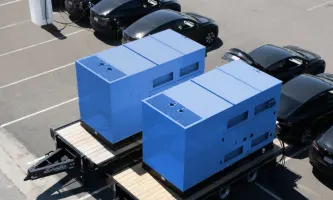
Off-grid charging assets have proven to be much more than stopgaps. Fleets can use those tools to hedge against grid delays, capacity bottlenecks, and other uncertainties.
Charging
Here's why the EV transition stopped being centered on ideology and started focusing on operational benchmarks.
Electric Vehicles
Follow these three concepts to get the most value when cycling out your electric fleet vehicles.
Operations
Successful electrification means reimagining fleet operations by building a system in which every vehicle is optimized for its role.