March 1, 2026
When Experience Replaces Evangelism With Electric Vehicles
Here's why the EV transition stopped being centered on ideology and started focusing on operational benchmarks.
Angus Clark, The Merlin Group
Long before “net zero” became corporate language, fleet operators were already learning hard lessons about batteries, power, uptime, and operations.
Credit:
Charged Fleet
5 min to read
- The shift in the electric vehicle (EV) transition reflects a move from ideological promotion to focusing on real-world performance and benchmarks.
- Experience and practical outcomes are now driving the EV movement, emphasizing efficiency and operational success.
- The narrative around EVs is increasingly based on tangible achievements rather than advocacy or evangelism.
*Summarized by AI
There’s a point in most EV programs whenthe tone shifts.
It often happens after the first unexpected utility bill. Or when a charger that looked essential on paper rarely gets used. Or when a promised six-month grid upgrade stretches into two years. At that point, the conversation changes.
Most operators no longer need to be convinced that electrification is part of the future. What they need is a clearer understanding of what it looks like today. And in real yards, with real vehicles and route constraints, the transition is rarely linear.
This is where the anti-“should” mindset starts to surface.
The most credible voices in fleet electrification today aren’t focused on telling others what they should do. More often, they talk about what didn’t work in early deployments and what those experiences revealed about cost, power, and operational limits.
Those lessons don’t always make for polished marketing narratives, but they are shaping how the next generation of EV infrastructure is being planned.
Long before “net zero” became standard corporate language, fleet operators were already experimenting with electric vehicles and absorbing early lessons about batteries, power availability, uptime, and route design.
Many of those lessons came quietly and over time.
Long before “net zero” became corporate language, fleet operators were already learning hard lessons about batteries, power, uptime, and operations.
Credit:
Charged Fleet
The Cost of Getting It Wrong
Several early electrification efforts shared a similar pattern: infrastructure was built anticipating a scale that had not yet materialized.
Large logistics operators, including UPS, initially pursued high-capacity charging infrastructure across multiple facilities. The logic was straightforward: install enough power to avoid future constraints.
In practice, that approach sometimes introduced new challenges.
High-capacity charging triggered substantial demand charges in certain markets. Utility upgrades required longer timelines and higher capital expenditures than originally modeled. In some locations, installed capacity exceeded near-term vehicle needs.
For many operators, the bigger surprise was not total energy consumption. It was peak demand. In several early deployments, demand charges (not kilowatt-hours) had the greatest impact on operating costs.
Over time, adjustments followed. Instead of expanding hardware, fleets began focusing on load management, charging sequence, and operational coordination. By shaping demand rather than simply increasing capacity, some operators improved economics without expanding infrastructure.
The system didn’t necessarily get faster. In many cases, it became more deliberate.
Experience Has a Long Memory
It’s easy to forget how long fleets have been testing electrification in various forms.
The EV transition did not begin with incentives or public commitments. It began in maintenance yards, pilot programs, and limited deployments that received little attention outside the organizations running them.
Those early experiments produced a body of operational knowledge that continues to influence planning today.
Mature EV programs often look different from first-generation pilots, not because the vehicles changed dramatically, but because operators did.
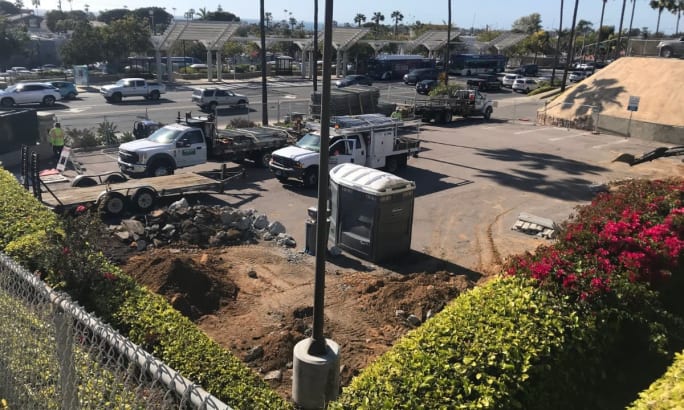
This EV charging depot was constructed in 2021 in Encinitas, California, by a non-profit, Corridor Power, and serves as an example of newer wave planning of charging infrastructure.
Credit:
Angus Clark / Evoasys
The First Wave: Proving Vehicles Could Exist (2005–2010)
The earliest modern electric fleet deployments focused less on scale and more on feasibility.
Municipal fleets, transit agencies, and industrial operators introduced electric forklifts, yard tractors, short-range delivery vans, and early battery-electric buses. Battery costs were high, range was limited, and charging standards were still evolving.
The objective was straightforward: determine whether the vehicles could perform reliably within defined duty cycles.
In many cases, they could, but only when routes, charging windows, and maintenance processes were adjusted to accommodate their limitations.
The central lesson of this period was basic but foundational: Vehicles could electrify, but only when operations had to adapt around them.
The Second Wave: Overcorrecting With Infrastructure (2010–2015)
As battery performance improved and early pilots demonstrated viability, attention shifted toward charging infrastructure.
Many fleets pursued a straightforward strategy:
- Install sufficient power.
- Install it broadly across facilities.
- Build for anticipated growth.
In some deployments, infrastructure was built ahead of vehicle rollouts. This reduced short-term risk but introduced new financial variables, including demand charges, multi-year utility coordination, and capital tied up in underutilized assets.
During this phase, fleets began to recognize that power availability and power economics are distinct. Having access to capacity did not automatically translate into cost efficiency.
Quiet Lessons from Electric Public Transit
Public transit agencies were among the earliest large-scale adopters of battery-electric vehicles and encountered similar tradeoffs.
Overnight charging reduced energy costs in certain regions but created scheduling risks if vehicles were delayed. Midday fast charging supported route continuity but sometimes disrupted service planning and introduced additional demand charges.
In several documented cases, battery performance and long-term health were influenced more by charging patterns than by total mileage.
For many agencies, reliability improved not by increasing charging speed, but by establishing predictable, repeatable charging behavior aligned with route schedules.
The Third Wave: When the Economics Fought Back (2016–2020)
As electric delivery vans and medium-duty trucks entered broader pilots, fleets had more data to analyze.
Vehicles generally met performance expectations within defined routes. Charging hardware functioned as designed. But when downtime, queuing, usage rates, and demand charges were modeled together, some deployments required reassessment.
In certain markets, expansion plans slowed. This was not necessarily a loss of confidence in electrification. Rather, operators had developed a more complete understanding of cost drivers and operational complexity.
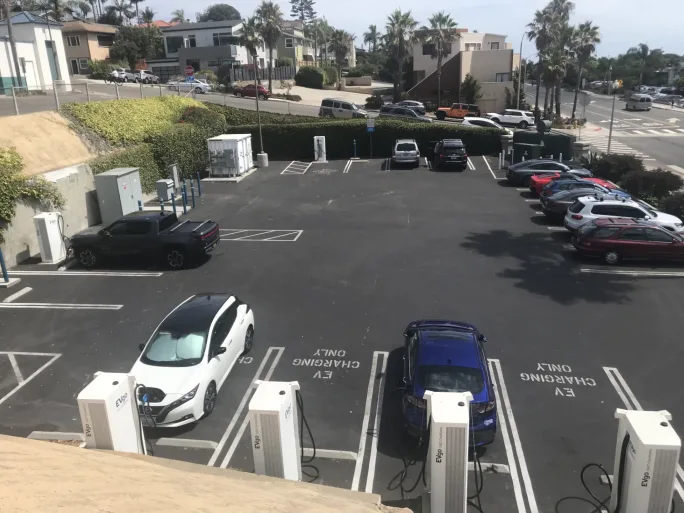
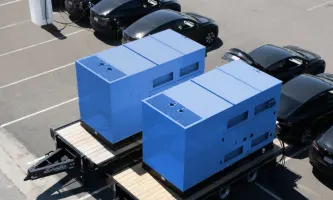
The now-named Vulcan Station charging depot in Encinitas, California, features 9 DCQC charging bays with backup power from a 650 kW Sungrow BESS battery system.
Credit:
Angus Clark / Evoasys
Slower Electrification Can Be More Sustainable
One of the less intuitive outcomes of operational experience is that faster charging is not always the primary objective.
DC fast charging plays an important role in specific use cases. However, in depot environments, simultaneous high-power charging can significantly increase peak demand.
By sequencing charging sessions and shaping load curves, fleets can often reduce peak demand, delay expensive utility upgrades, and improve overall asset usage.
In this context, software becomes as important as hardware.
A modern charging management system does more than track sessions. It can prioritize vehicles, stagger load, and align charging with tariff structures. For many operators, software-driven load management has proven to be one of the most effective levers in controlling long-term costs.
Embracing The Operational Transition
For fleet operators, electrification eventually becomes less about purchasing equipment and more about managing energy.
In some cases, this shift has led fleets to explore partnership models. Rather than owning and maintaining all infrastructure, operators may engage infrastructure providers through structured agreements that share risk and optimization responsibilities.
This approach does not eliminate complexity, but it can redistribute it.
Well-performing EV depots are not always the largest or most visually impressive. Many are built incrementally, with capacity expanded as vehicle adoption grows and operational data accumulates.
This measured approach focuses on aligning infrastructure with verified demand rather than on projections.
In many respects, the technology has advanced more quickly than organizational processes. The next phase of electrification will likely depend less on vehicle capability and more on planning discipline, financial modeling, and operational integration.
Operational maturity rarely generates headlines. But it plays a significant role in determining whether electrification succeeds as long-term infrastructure rather than remaining a pilot initiative.
Loading data...