


May 1, 2026
Data Is The New Diesel: Using Telematics To Boost Electric Fleet Performance
As more fleets transition to EVs, those that embed telematics deeply into their workflows will expand deployments with fewer surprises and more predictable economics.
Robert Hall Jr., Track Your Truck
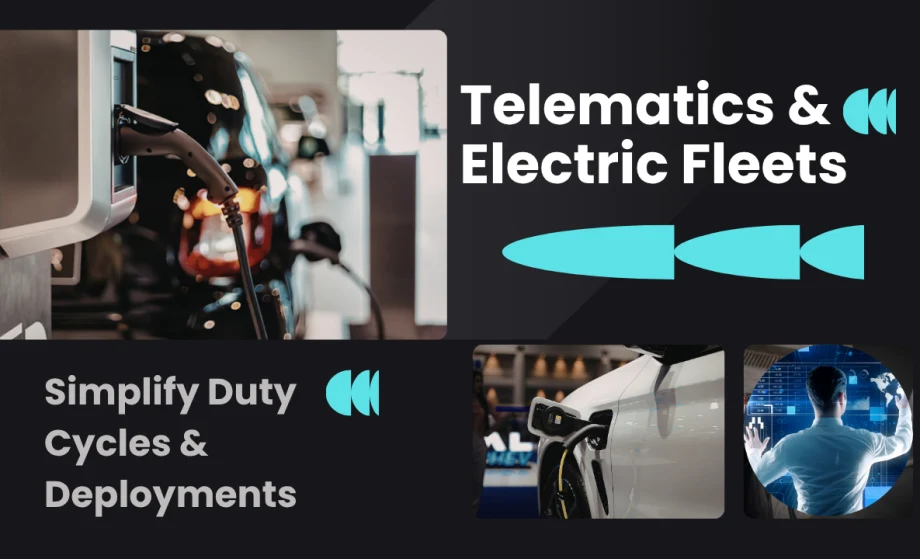
EV fleets shift the focus from gallons and miles per gallon to energy profiles and real-time performance data.
Credit:
Charged Fleet
9 min to read
- Telematics systems offer fleet managers insights that help reduce unexpected issues and optimize economic outcomes.
- Predictable fleet performance is achieved by leveraging data-driven strategies through telematics integration.
*Summarized by AI
As electric vehicles move from pilot programs into core operations, telematics and analytics step into the role that diesel once held as the primary lever for performance, cost control, and uptime.
Fleet leaders who treat data as a strategic fuel can understand how every kilowatt, route, and driver decision affects real-world range and availability.
They gain precise visibility into battery health, charging behavior, vehicle condition, and on-road performance, rather than relying on static range estimates and assumptions.
That level of insight matters more as fleets layer complex duty cycles, tight delivery windows, and varied climates onto electric platforms.
In an EV world, the fleets that deeply integrate telematics into planning, dispatch, and maintenance will scale electrification with confidence, while competitors struggle with range anxiety, unexpected downtime, and inconsistent total cost of ownership.
Why Data Becomes the “New Diesel” for EV Fleets
Diesel once dominated fleet optimization because fuel consumption dictated operating costs and route design. Electric vehicle (EV) fleets shift the focus from gallons and miles per gallon to energy profiles and real-time performance data.
Telematics and fleet management software now provide continuous visibility into vehicle location, usage, and operating conditions, enabling managers to understand how electric trucks perform across specific territories and duty cycles.
They see how often vehicles idle, how aggressively drivers accelerate or brake, and how those behaviors affect energy consumption and range. That insight turns data into a primary input for dispatch decisions, coaching programs, charging strategies, and capital planning.
How Data Can Manage Risk
As electrification accelerates, data also becomes a risk-management tool.
EV deployments often involve large upfront investments in vehicles and charging infrastructure.
By tracking mileage patterns, usage, and charging events, fleets can compare the real total cost of ownership (TOC) for electric fleet vehicles over time and refine their transition strategy.
Instead of guessing whether routes suit EVs, managers use telematics to confirm that vehicles complete assignments with adequate buffer and without sacrificing customer service.
Turning Battery Health and Energy Data Into Range You Can Trust
Battery health defines EV fleet capacity, yet many managers begin with only a nameplate range and generic estimates. Telematics closes that gap by continuously measuring how EVs consume and replenish energy in real conditions.
By monitoring drive distance, duty cycles, and idle time, fleets can estimate a realistic range for each vehicle type across seasons and service territories. That data reveals how temperature congestion, stop-and-go patterns, and auxiliary loads erode available range on specific routes.
Instead of planning around a single advertised number, managers build buffers on actual performance and assign vehicles accordingly.
Charging and idling data also support smarter infrastructure investments. When fleet managers understand how long vehicles remain idle, where they dwell, and how often they start shifts with a partial charge, they can optimize the mix of depot, home, and opportunistic public charging.
Patterns in telematics data highlight which depots need higher-power chargers, when to schedule overnight Level 2 sessions, and which duty cycles justify DC fast charging, even at higher capital cost.
Over time, trends in battery performance allow fleets to flag emerging degradation issues early. If similar vehicles in the same class and age begin to show diverging usable range, managers can schedule diagnostics or software updates before range limitations compromise service levels.
That enterprising stance keeps EVs productive longer and preserves the economics that justified converting to electric vehicles in the first place.
Using Routing Intelligence to Stretch Every Kilowatt
Routing once focused primarily on minimizing distance and avoiding traffic. With electric fleets, routing must also protect available range and align with charging opportunities.
Modern fleet routing tools use real-time GPS data to locate every vehicle and dispatch the nearest suitable unit to each job, which reduces non-productive miles and wasted energy.
Real-time maps and traffic feeds help managers reroute around congestion, bottlenecks, and closures, so EVs avoid extended idling that can consume energy without generating revenue. The combination of proximity-based dispatch and traffic-aware routing protects range margins and allows fleets to add more stops per charge.
Telematics further enriches routing by showing where drivers routinely encounter delays, miss turns, or operate at inefficient speeds. With animated route replays and location history, managers can see the exact paths vehicles take, where they slow or idle, and how those patterns align with charge levels at the end of a shift.
That insight supports the redesign of routes to keep electric vehicles within their effective range and near charging locations when needed.
Because routing hinges on accurate vehicle position data, fleets often rely on dedicated GPS tracking devices to update locations frequently enough for dispatch and rerouting decisions.
High-frequency reporting enables dispatchers to respond quickly when customers call for estimated times of arrival, when jobs change in real time, or when road conditions deteriorate.
In electric operations, agility helps managers avoid situations in which a vehicle with a marginal charge takes on a last-minute assignment that pushes it beyond safe range.
Driver Behavior: From Safety Metric to Energy Lever
Driver behavior has affected safety and fuel costs forever. In EV fleets, it also directly influences usable range, battery health, and charging overhead.
Telematics systems track speeding, harsh acceleration, hard braking, and cornering, so managers can distinguish between occasional evasive maneuvers and habitual risky driving. Those same behaviors consume more energy per mile in electric vehicles, reducing the distance drivers can cover on a single charge. When fleets correlate behavior metrics with energy consumption and route completion, they can build coaching programs that quantify the range impact of aggressive driving.
Speed management plays a central role. Excessive speed increases aerodynamic drag and energy draw, so driver scorecards that highlight speeding episodes help managers reduce safety and energy use.
Idling also takes on new dimensions with electric vehicles. While electric powertrains waste less energy at a standstill than combustion engines, extended climate control use during idle periods still draws power that might otherwise support revenue-producing miles.
More advanced telematics programs move beyond simple exception-to-trend analysis at the driver, route, and vehicle levels. Managers segment drivers by risk and efficiency profiles, then tailor coaching, incentives, and even route assignments to those patterns.
Over time, they can compare high- and low-performing drivers on identical routes to isolate behaviors that protect range and reduce charging events. Some fleets also feed behavior data into driver training and gamification programs, so operators compete on safety and efficiency scores, helping lock in lasting habits rather than short-term compliance.
By combining behavior analytics with routing and charging data, fleet leaders can design realistic policies around preconditioning, cabin comfort, and auxiliary loads.
For example, they might encourage drivers to pre-heat or cool vehicles while plugged in, then maintain moderate cabin settings on the road to preserve range. Telematics reporting and automated alerts ensure those expectations translate into measurable changes at the vehicle level.
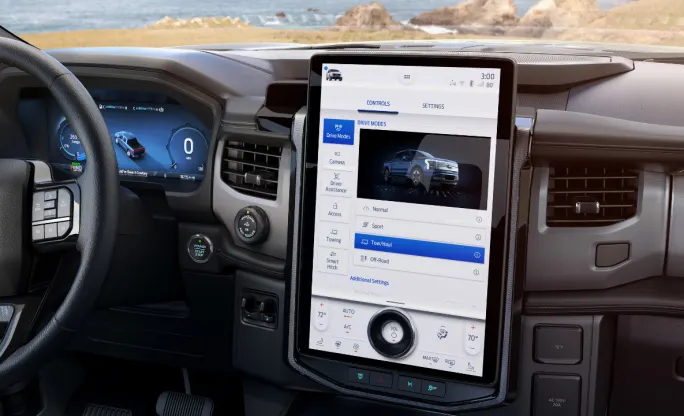
By tracking mileage patterns, usage, and charging events, fleets can compare the real total cost of ownership for electric fleet vehicles over time and refine their transition strategy.
Credit:
Ford
Maintenance Intelligence for Electric Uptime
Electric vehicles require less routine maintenance than internal combustion fleets, but unplanned downtime still threatens usage and service levels. Telematics-driven maintenance strategies keep EVs available when operations need them most.
Automated maintenance tracking uses odometer readings, engine hours, and diagnostic inputs from tracking devices to schedule service based on actual usage instead of static intervals.
That approach reduces the risk of missed inspections, worn components, or deferred service that might otherwise lead to breakdowns. For EVs, those schedules focus on systems such as tires, brakes, cooling, and high-voltage components instead of oil changes or exhaust systems.
Fleet maintenance software also centralizes service records, alerts, and inventory tracking. Managers receive notifications when vehicles approach predefined thresholds, so they can plan shop time during natural lulls instead of unexpectedly pulling units from active duty.
They also gain visibility into parts consumption and technician workloads, which helps prevent bottlenecks in the shop and ensures critical components for EV systems remain on hand when faults appear.
Consistent preventive care improves vehicle safety, supports regulatory compliance, and extends useful life, thereby strengthening the TOC case for electric assets. As data accumulates, fleets can refine service intervals for specific models and duty cycles, instead of relying on generic recommendations, and can validate which maintenance actions reduce failures over time.
Telematics contributes to maintenance beyond scheduled tasks. When tracking devices relay real-time performance anomalies, out-of-range temperatures, or repeated fault codes, technicians can address issues before they escalate into major failures.
That predictive posture allows fleets to decide when vehicles go in for service rather than reacting to roadside events. In electric fleets, where each unit may represent a major capital investment, the control over uptimes and lifecycle matters as much as energy efficiency.
Building a Data‑Driven Roadmap for Scaling Electrification
Early EV pilots often focus on a small subset of routes that clearly suit electric range and charging patterns. Scaling beyond those “easy wins” requires a deeper reliance on telematics.
During planning, fleets use historical telematics data from combustion vehicles to analyze average and maximum daily distances, dwell times, and duty cycles.
That baseline reveals which segments of the operation can transition to EVs with minimal operational risk and which routes may demand longer-range vehicles or additional infrastructure.
As EVs enter service, the same framework continues by comparing expected versus actual performance across distance, energy use, and uptime.
As the mix of electric and combustion units evolves, managers rely on dashboards and reports that blend activity, GPS tracking, and alerts to monitor usage across the entire asset base.
Those views help decide where to assign additional EVs, which depots warrant further charging investment, and where internal combustion assets still provide necessary flexibility.
Data-driven comparisons of operating costs, maintenance burden, and asset availability keep electrification tied to measurable business outcomes rather than abstract sustainability goals.
Telematics also supports change management. With detailed reporting on driver behavior, route performance, and charging patterns, managers can clearly communicate to drivers, executives, and other stakeholders why the fleet adopts certain policies and invests in routes or depots. That transparency builds confidence that electrification efforts rely on real operational insight, not just external pressure or incentives.
From Fuel Management to Information Management
Data now fills the strategic role that diesel once held in fleet operations, especially as electrification reshapes asset planning, routing, and maintenance.
Telematics turns electric vehicles into connected assets that broadcast how drivers use them, where they excel, and where they need support.
Fleet leaders who treat information as a core energy source can tune routes to real-world range, schedule charging and maintenance around actual duty cycles, and coach drivers with metrics that connect behavior to uptime and service performance.
As more fleets transition to electric fleets, those that embed telematics deeply into their workflows will expand EV deployments with fewer surprises and more predictable economics. They will operate with better visibility into battery health, maintenance needs, and on-road conditions while protecting customer commitments and compliance. In that environment, the most competitive fleets will not simply consume less power or fuel; they will manage information with the same discipline they once applied to diesel.
Quick Answers
Telematics improves EV fleet deployment by offering real-time insights into vehicle usage and efficiency, thus allowing organizations to predict and mitigate potential issues before they arise.
*Summarized by AI
Loading data...