April 1, 2026
Why Off-Grid Charging is Becoming an Operational Choice, Not a Last Resort
Off-grid charging assets have proven to be much more than stopgaps. Fleets can use those tools to hedge against grid delays, capacity bottlenecks, and other uncertainties.
By Yves Toussaint, SparkCharge
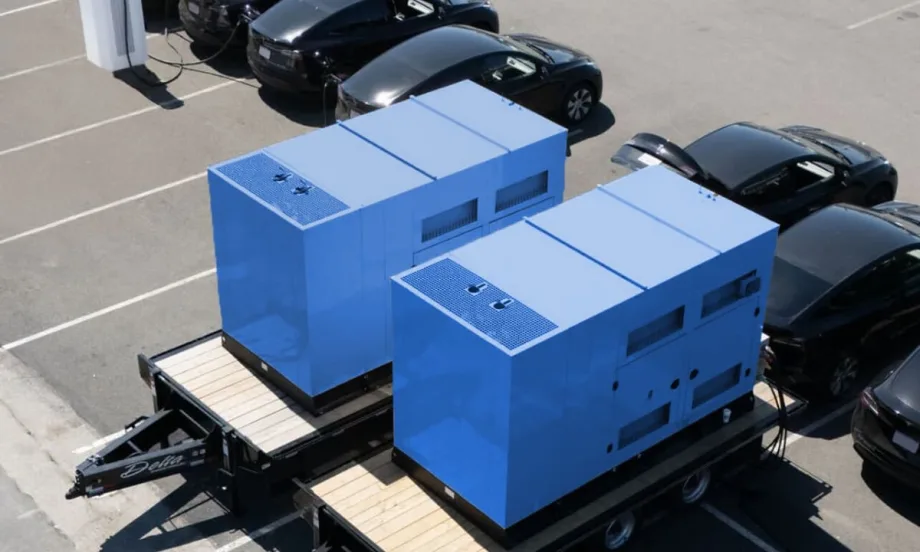
Mobile charging has evolved to provide operational choices that allow fleets to shape deployment speed, reliability, and costs to suit their needs.
Credit:
SparkCharge
8 min to read
- Off-grid charging systems are increasingly valued as essential tools rather than temporary solutions.
- These assets enable fleets to navigate grid delays and capacity issues effectively.
- Off-grid charging provides strategic resilience against various operational uncertainties.
*Summarized by AI
As more companies electrify their fleets, they run into a consistent challenge: they need charging infrastructure that’s flexible and scales with them. They can’t afford to wait years for their charging solutions to catch up.
Thankfully, there’s a solution. It allows fleet owners and operators to bypass costly and time-consuming utility upgrades and the bottleneck of grid power constraints. And it starts with one simple shift in perspective:
Fleet charging should prioritize operational efficiency while aligning with the fleet's business model. And off-grid charging is the key to this intersection of needs and efficiency.
All too often, fleet charging has been treated as an afterthought when planning. But as grid interconnection timelines stretch into years, and utility capacity faces continuing uncertainty, off-grid and hybrid charging strategies are no longer stopgaps.
They’re operational choices that let fleets shape deployment speed, reliability, and costs to suit their needs.
Let’s look at what “off-grid” really means in fleet deployments, why it’s becoming central to fleet electrification strategies, and how successful fleet owners and operators think differently about energy, duty cycles, and operational design.
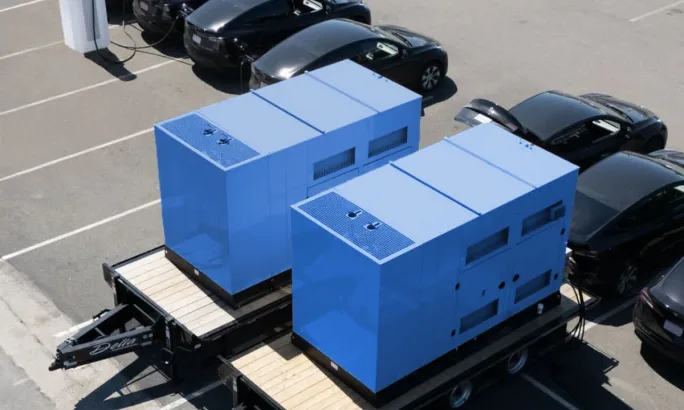
Mobile charging has evolved to provide operational choices that allow fleets to shape deployment speed, reliability, and costs to suit their needs.
Credit:
SparkCharge
Shifting From Infrastructure First to Operations First
Previously, fleet electrification planning has followed a predictable path:
- Fleet operators begin by assessing long-term fleet growth and EV targets.
- They then estimate the charger quantity and power.
- Finally, they engage utilities and begin infrastructure installation.
This sequence makes some assumptions. It depends on the availability of grid access when the fleet requires it and on utilities providing sufficient capacity without prohibitive cost or delay.
The reality is that fleets and utilities are much more complex and variable.
Fleets often run into lengthy permitting processes and utility interconnection timelines, especially at scale. It’s unrealistic to expect fleets to wait months or even years for service upgrades. This can bottleneck electrification efforts and leave EVs idle.
Fleets facing this conundrum between vehicle readiness and charger availability are forced to either reduce deployment scale or delay EV introduction. Both options will hurt operations and ultimately, bottom lines.
Placing off-grid charging strategies at the forefront of that sequence flips the outcome. Instead of starting from a point of infrastructure and struggling to fit operations within its constraints, fleets begin with operational factors and work backwards towards provisioning.
The conversation goes from: How can we build enough chargers? And how long will it take?
To: How can we meet our operational requirements with charging solutions that scale and grow as our operations do?
What Does “Off-Grid” Charging Really Mean?
Off-grid charging encompasses several distinct charging models. Fundamentally, it refers to charging solutions that deliver energy to EVs without relying exclusively on traditional utility infrastructure at the point of charge.
Here are the different models underneath this larger umbrella:
Fully Off-Grid Depots
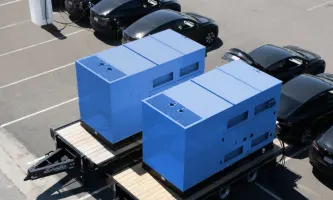
These deployments use mobile batteries charged off-site. Typically, in the form of battery trailers or portable energy units, they serve as the primary power source for EV fleets while fully decoupling charging availability from utility interconnection timelines and constraints.
Hybrid Depots
These depots combine limited grid connections with battery trailers or portable energy units. In a hybrid setting, battery trailers are typically used to supply peak loads or to supplement grid power. They’re also useful in situations where routes are rural and/or don’t feature returns to the charging hub within the necessary charging timeframes.
Large-Capacity Off-Grid Depots
Such power hubs deliver sustained charging power through heavy on-site energy storage. These depots are designed to support large fleets or those with high-power requirements without requiring permanent grid upgrades. They require advanced energy management and operational coordination, but when done correctly, they can enable fleets to scale rapidly.
Understanding these off-grid charging models enables fleet operators to evaluate trade-offs among costs, deployment speed, and operational flexibility. This evaluation is critical to planning fleet charging that fits an operation’s needs.

Off-grid charging approaches let the operational side of the business shape how energy is used, rather than having energy constraints dictate operations.
Credit:
SparkCharge
Why This Operational Shift Matters
No matter the exact off-grid model, they all point to one truth: control over the energy supply translates into control over fleet operations. And scalable energy supplies can scale alongside growing fleets.
Off-grid charging approaches let the operational side of the business shape how energy is used, rather than having energy constraints dictate operations. They also control what would otherwise be external timelines.
This produces the following results:
- Power availability is fixed, not elastic. Fleets know their expandable amount of energy to withdraw from before vehicles arrive, so planning begins with duty cycles, a key operational point, rather than charger specs.
- Charging windows become a strategic asset. Fleets using off-grid charging have longer dwell times, which means lower instantaneous power requirements and smoother operations. This strengthens advanced planning.
- Redundancy and resilience become part of operational design. Instead of reacting to grid delays and outages, fleets build energy buffers into their operations to meet their service commitments.
Ultimately, off-grid charging strategies turn energy into a core operational value rather than a construction project outcome and potential bottleneck.
Operational Variables That Matter More Than Charger Power
Certain variables consistently emerge as predictors of success in constrained charging environments:
- Daily miles per vehicle: This determines a baseline energy demand. High mileage means more energy throughput, which in turn informs battery and charging strategy.
- Route predictability vs. variability: Predictable routes allow energy requirements to be forecast with confidence and precision. Variability forces the use of operational slack and buffers, which can be challenging with a limited, fixed energy supply.
- Vehicle dwell time by location: Long dwell times, such as overnight parking or scheduled breaks, reduce the need for instant charging power. This can dramatically lower infrastructure costs and peak energy demand, while also making operational planning easier.
- Minimum state of charge (SOC) at dispatch: Operations have different safety margins for dispatch charge levels. Aligning minimum SOC with realistic energy availability prevents overprovisioning.
- Seasonal and load impacts: Cold weather, payload variations, and other auxiliary loads, such as HVAC all affect energy consumption. These factors must be baked into duty-cycle models for fleets.
- Fleet growth cadence: Deploying EVs gradually allows charging strategies to scale alongside fleets, while maintaining operational excellence. Sudden, large-scale onboarding without corresponding charging strategy adjustments leads to underusage or misaligned infrastructure.
It’s clear that predictable duty cycles and measured growth often matter more than peak fleet size. Fleets that can accurately forecast energy usage times and locations perform better than those that simply chase power density. Off-grid charging supports this.
Aligning Duty Cycles to Constrained Energy Supply
In constrained charging environments, operations dictate charging design. Success often involves subtle changes in scheduling and fleet assignment. Fleet operators should seek:
- Staggered dispatch and return times: Avoid clustering vehicles in the same charging window, which drives peak demand.
- Route assignment by dwell availability: Match higher-energy routes to vehicles with longer dwell windows at base.
- Leveraging predictable downtime: Overnight parking or scheduled maintenance windows can be opportunities to charge.
- Reducing required peak power: Fleets can lower required charger capacity and reduce the strain on their energy assets by spreading energy delivery over longer times.
When charging availability and fleet operations align, it lowers infrastructure costs and operational risks. Off-grid charging provides the needed flexibility.
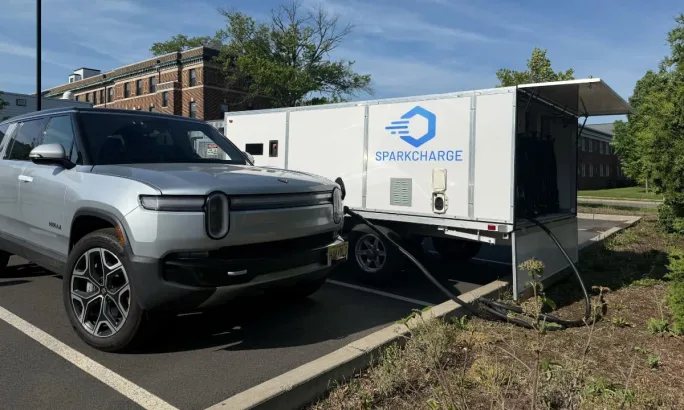
Off-grid charging with on-site energy storage smooths out peaks. Batteries can become components in energy planning, allowing fleets to charge vehicles when energy is cheapest or most available.
Credit:
SparkCharge
Managed Charging and Energy Buffering: Coordination Over Hardware
Managed charging’s true value in off-grid environments lies in its coordination. Instead of charging every vehicle at full power whenever it arrives, managed charging allows energy delivery to sequence across time and vehicles. This centers the equation on the time and amount of energy delivered, rather than on the available hardware.
Off-grid charging with on-site energy storage smooths out peaks. Batteries can become components in energy planning, allowing fleets to charge vehicles when energy is cheapest or most available.
Managed charging also allows fleets to coordinate schedules and avoid situations in which multiple vehicles draw power simultaneously. This prevents energy asset overloads and self-inflicted cost increases. It also builds resilience. When faced with unplanned delays, route changes, or weather disruptions, managed charging enables fleets to adjust appropriately without derailing service.
When managed correctly, off-grid charging, coordinated energy availability, and fleet duty cycles often work better than buying more chargers.
Efficiency and Cost Impacts
Off-grid charging environments produce several consistent outcomes.
Managed charging reduces peak demand and energy costs by spreading usage and avoiding spikes. Duty-cycle alignment lowers the required infrastructure power capacity, and peak shaving with energy storage reduces exposure to demand charges. Off-grid charging strategies can defer or eliminate costly grid upgrades.
These effects alone are all vital to a business’s bottom line. When working in sync, they magnify scale. And off-grid charging opens the door to these opportunities.
Planning for Tradeoffs
While off-grid strategies can produce powerful results, fleet operators would be amiss not to consider the trade-offs and complexities.
Increased operational planning requires that duty cycles, schedules, and energy forecasts all intertwine. Fleet operations and charging strategies must tightly align, with corresponding dispatch and energy levels.
And fleets must put contingency plans in place. Variable routes, extreme weather conditions, or unexpected service demands all require fleets to define, outline, and implement response strategies.
Acknowledging these challenges early in off-grid charging plans allows fleets to build in agility for real-time decision-making.
Strategic Lessons Learned From Early Off-Grid Deployments
One of the main lessons learned from working with fleet operators on their off-grid charging plans is that those who started with operational variables rather than charger specs tended to avoid costly redesigns.
On the other hand, fleets that focused narrowly on infrastructure as a starting point often found their chargers underused or poorly matched to their vehicles' needs. Fleets that treated energy as a shared resource could scale faster.
To put it simply: off-grid charging assets have proven to be much more than stopgaps. They’re tools that fleets can use to hedge against grid delays, capacity bottlenecks, and other uncertainties.
Even if utility capacity improves and public charging networks expand, off-grid charging models will remain a vital strategy for fleet electrification. They provide unmatched deployment speed, resilience, and operational flexibility.
In the coming years, the success of electrification will depend less on the number of chargers installed and more on fleets' ability to manage energy in their operations. The fleets that succeed in this new scenario will view energy as a dynamic partner in delivering reliable and sustainable operations.
Loading data...