


Latest Hard Realities, Top Pressures For Electric Fleets
Speakers and experts at Fleet Forward: The Tour shared hands-on, hard-won insights on how fleet operations are handling tariffs, EV charging, rules and regs, and safety issues.

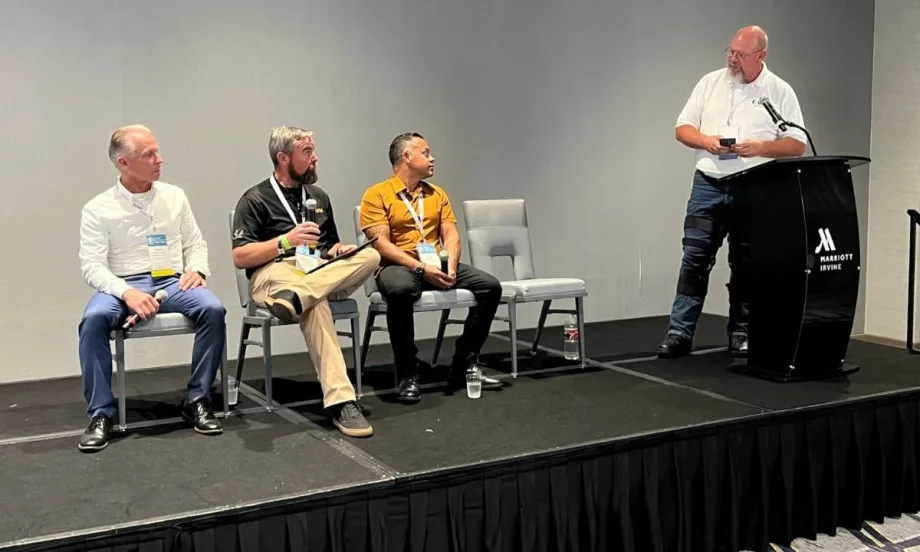
David Renschler, a consultant for EVSE Answers and public works fleet division manager for the City of Fairfield (R) leads a public fleets panel (L to R): Panelists: Mark McCullough, director of fleet management, San Bernardino County; Brad Northup, public works superintendent of fleet operators for the city of Carlsbad; and David Fernandez, chief of departmental operations/fleet services for San Diego County at the Fleet Forward: The Tour event in Irvine, California, on July 22, 2025.
Photo: Martin Romjue / Automotive Fleet
- Experts provided insights into managing tariffs and economic pressures affecting fleet operations.
- EV charging infrastructure and its integration into existing fleet systems was a key focus.
- Discussions addressed compliance with evolving regulations and maintaining safety standards in electric fleets.
*Summarized by AI
While views on the success of electric vehicles may vary, one fact stands clear: Fleet electrification just got harder.
This year, a wave of economic and political changes are shaking up the EV fleet market as it confronts new demands and a search for best practices. In California, the forefront of the push toward electric vehicles, government fleet managers must contend with volatile costs, regulatory shifts, and macro-disruptions.
A Fleet Forward: The Tour regional conference in Irvine, California, on July 22, brought together the latest thought leadership on navigating fleet management.
Fleets Face Uncertainties And Unknowns
While fleet electrification remains a priority for fleet operations, practical realities such as tariff-related cost increases and the operational lifecycle of EV chargers are complicating progress in meeting aggressive zero-emission vehicle (ZEV) mandates.
At the recent FFTT, moderator David Renschler, a consultant for EVSE Answers and public works fleet division manager for the city of Fairfield, California, led a panel that included: David Fernandez, chief of departmental operations/fleet services for San Diego County; Brad Northup, public works superintendent of fleet operators for the city of Carlsbad; and Mark McCullough, director of fleet management for San Bernardino County.
The full impact of recent federal tariffs on EV-related equipment and vehicle components has not yet fully hit. Fleet managers are bracing for cost increases.
Northup noted that tariffs so far are mostly raising the costs of parts and materials crossing the U.S.-Canada border, as the long-term outlook looks more uncertain.
He has directed his operation’s parts staff to report tariff-related issues immediately, adding that fleets should adjust their sourcing approaches. He identified trailers as a red flag, which could lead to price hikes due to their rapid production cycles and reliance on imported steel and materials.
McCullough highlighted the delayed nature of tariff impacts, pointing out that raw material costs slowly move through the supply chain. Although he attributed most pricing challenges to post-pandemic inflation, McCullough warned tariffs could further strain fleet budgets.
Fernandez added that while his team had not yet experienced widespread higher prices, they’ve seen isolated cases, such as electric vehicle lifts, where tariff line items appeared in procurement quotes. Infrastructure components for EV charging could also soon take a tariff cost hit, he said.
The lack of reliable, available charging stations contributes to a more cautious approach to EVs among fleets, panelists said.
With more chargers deployed across fleets, managers are grappling with expansion and maintenance.
Renschler outlined the hidden costs of charger upkeep: Level 3 chargers cost $125,000, and many break within five to seven years.
“As I talk to fleets all over the country, very few have thought about this. “When you have chargers, some will last a while, but your Level 3 chargers can start to break.”
To address this, some municipalities have created charger replacement funds, treating chargers like depreciating fleet assets. Northrup described how his team tracks chargers under a fleet replacement strategy, complete with cost recovery through internal service funds.
However, even with planning, surprises emerge. In some cases, fleets have to bust out concrete to move or replace electrical conduits because new chargers don’t match existing mounts and dimensions, he said.
Legacy chargers also bring problems. Many Level 2 chargers installed through early grant programs are now obsolete, and some manufacturers have left the market. This has left agencies scrambling for parts or facing full replacement.
“You can't really use those chargers anymore,” Northup said. “When we go to upgrade or change them out, even just changing out a SIM card in an ultra-charger is like [dealing with] a 7-year-old cell phone. It's now an outdated piece of equipment, and there may not be a solution except to replace it. As they get older, the parts won’t be available for our larger Level 3 chargers.”
McCullough reported that San Bernardino County plans to fund future replacements through a model similar to gas tax-based reserves.
They’ll treat EV chargers like fuel tanks, applying a markup on electricity usage to build a replacement fund.
Yet, even with such foresight, costs are climbing: a 34-cent per kilowatt-hour markup now makes electric fueling more expensive than gasoline in some locations, he said.
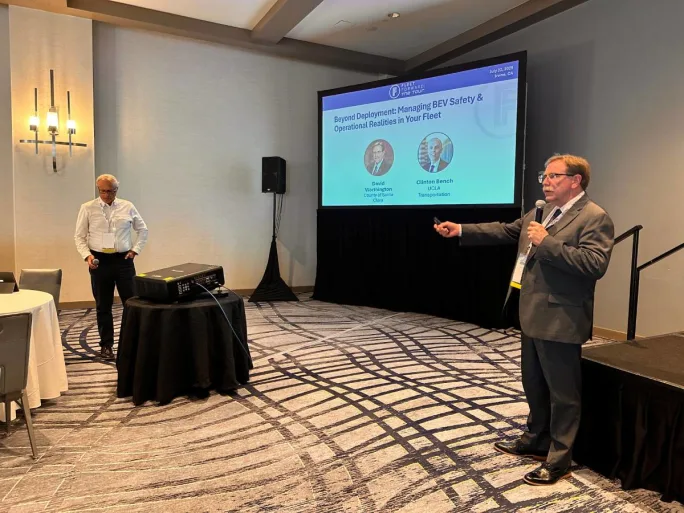
Clinton Bench, director of fleet and transit for UCLA Transportation (L) and David Worthington, fleet manager for Santa Clara County, walk through some of the latest safety and operational challenges for electric fleets during FFTT.
Photo: Chris Brown / Automotive Fleet
Practical EV Fleet Lessons Learned
From power reliability and fire safety to software integration and end-user education, the operational realities of managing EV fleets require detailed knowledge, policies, and best practices.
Power Outages Put Down Fleets
During an FFTT session featuring David Worthington, fleet manager for Santa Clara County and Clinton Bench, director of fleet and transit for UCLA Transportation, provided a sobering overview of EV safety measures to prevent a range of problems, from power interruptions to catastrophic battery fires.
EV charging sessions are highly sensitive to even the briefest power outages or interruptions, where EVs do not automatically restart their charging sessions after even short power outages lasting only a few seconds.
This is less of a hardware issue and more of a failure of vehicle software to re-engage the charging process, which can leave fleets inoperable in the morning after overnight charging sessions.
Among the 58 locations in Santa Clara County, the lack of overnight staff to manually restart charge sessions results in long charging delays, Worthington said. Only two known companies have addressed this issue, but one is out of business and the other, based in Europe, has stopped supporting the necessary software.
Preparing for EV Battery Fires
Known in EV industry jargon as “thermal runaway events,” EVs carry a major risk of their batteries causing long, recurring fires if ignited.
Worthington cited a Tesla truck crash that shut down Highway 80 in California for over 16 hours due to the intensity and duration of the battery fire. These fires require tens of thousands of gallons of water to control, often releasing hazardous runoff.
To minimize risks, some fleets have started using thermal imaging systems that alert technicians to potential fires in real time, enabling quicker responses such as moving the vehicle out of enclosed spaces or parking them a safe distance away from other vehicles.
This means fleet maintenance workers must be trained to be the front line of first responders to an EV fire, as they are often the first people to inspect and handle damaged EVs.
Despite not being part of traditional emergency services, their role demands detailed training on fire responses, including the use of appropriate personal protective equipment (PPE), knowledge of high-voltage safety zones, and techniques to contain fires until emergency responders arrive.
EV Maintenance Requirements
Traditional fleet maintenance facility designs can present hazards when working with elevated EVs.
The minimal clearance between vehicle roofs and overhead metal infrastructure like copper piping or light fixtures can increase the risk of electrical accidents. Worthington recommended battery lifts that eliminate cords and reduce contact points to minimize these risks. Additionally, spacing EVs at least 10 feet apart can help prevent cascading fires, as was illustrated by a real incident involving a row of electric buses.
Training and Teaching EV Drivers
Bench advised that many people, including students and new employees, have never driven an EV before. Without proper orientation, users often struggle with basic operations like turning the vehicle on or charging it.
Simple instructions, accessible via QR codes or included in reservation confirmations, are crucial. Differences between Level 1, 2, and 3 chargers, authentication protocols, and charge timing must be clearly communicated to ensure effective use.
Managing the charging infrastructure itself requires robust software. Charger management systems can balance overnight loads and prioritize vehicles based on upcoming usage.
However, integration with telematics and fleet management software (FMS) remains a challenge, with vendors often overstating compatibility. Having systems that can integrate without placing fleets in beta-testing roles is essential.
Fleet managers should also remember that not all EV batteries run or last the same way. For lighter vehicles, transitioning from gel or AGM batteries to lithium-ion variants can extend battery lifecycle and reduce costs.
Meanwhile, heavier vehicles require careful matching of battery capacity to operational needs. Avoiding overspecification not only saves money but also improves performance.
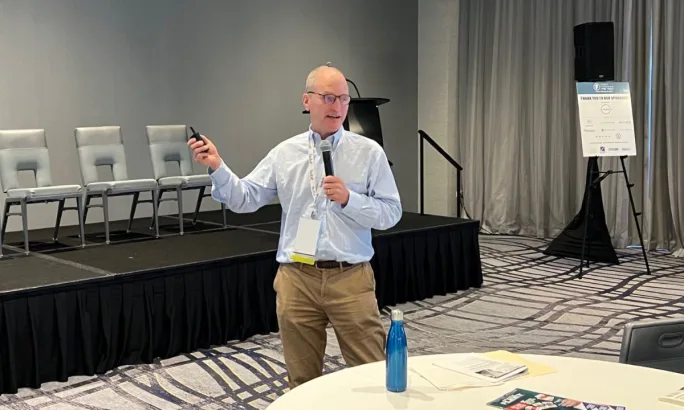
During a midday lunch session, John Boesel, President and CEO of CALSTART, updated the status, challenges, and opportunities surrounding zero-emission vehicle adoption.
Photo: Martin Romjue / Automotive Fleet
California's EV Leadership in Flux
John Boesel, President and CEO of CALSTART, updated the status, challenges, and opportunities surrounding zero-emission vehicle adoption.
He delved into policy rollbacks, funding strategies, and the accelerating pace of EV infrastructure and technology.
Shifting Regulations and State Responses
Boesel underscored California’s role as a global leader in electric vehicles and clean transportation.
Despite recent federal rollbacks, such as the EPA’s waiver reversal and the uncertain future of federal tax credits, California retains authority under the Clean Air Act to establish its own vehicle standards. The state is expected to introduce new regulations by January 2029.
Meanwhile, CALSTART and its allies will continue lobbying for federal battery production tax credits to help bolster the U.S. EV battery manufacturing. New battery plants are opening in Kansas, Tennessee, Georgia, and South Carolina.
Boesel highlighted Governor Newsom’s upcoming Aug. 11 executive order and the state plan, which would set up measures to counteract weakened federal regulations. These include extending California’s Cap-and-Trade program through 2045 to secure funding for EV incentives, infrastructure, and fleet programs.
“The cap-and-trade program, now known as cap and invest, by the end of August the legislature needs to extend that program from 2030 to 2045. This must happen, and I would argue that it's in the interest of all of us in this room to help make that happen.”
Incentives and Industry Support
CALSTART manages key incentive programs like CORE (Clean Off-Road Equipment) and HVIP (Hybrid and Zero-Emission Truck and Bus Voucher Incentive Project), both of which are oversubscribed.
Feedback is being sought to improve the access and performance of these programs. Additionally, California’s updated Low Carbon Fuel Standard (LCFS) promises new revenue opportunities for fleets. LCFS is designed to reduce carbon emissions and air pollutants from the transportation sector.
A proposed cap on LCFS credits was recently defeated, allowing the program to continue scaling its benefits.
Utility engagement remains strong, with investor-owned utilities maintaining make-ready programs. Furthermore, CALSTART is launching a new initiative with the Center for Sustainable Energy to help electrify transportation network companies like Uber and Lyft.
Promoting EV Battery Technology
One of the most compelling themes of the session was the rapid evolution of EV battery technology. Boesel reported that battery prices have declined 90% since 2010 and are expected to continue dropping.
Solid-state and sodium-ion batteries, some developed in California, promise further cost and performance improvements.
“This industry globally is growing at enormous scale, and we will see more and more price reductions,” Boesel said. “Advanced battery technologies coming.”
While China leads in lithium iron phosphate (LFP) battery adoption, U.S. manufacturers are advancing as well, with several EV battery development companies based in California.
“We don't want to see what happened in the U.S. semiconductor industry happen with [EV batteries] in the U.S.,” he said. “We don't want to see it invented here, but then have the product produced elsewhere. The more you've got production and R&D happening in the same country with collaboration, it becomes a virtuous cycle.”
Challenges of Charging Infrastructure
Public and private charging networks face differing reliability issues. Public EVSE (electric vehicle supply equipment), particularly at commercial or residential properties, often suffers from poor maintenance.
Boesel suggested that green building codes may lack enforcement mechanisms to ensure chargers remain functional.
In contrast, medium- and heavy-duty charging contracts, such as those at ports or with logistics firms, tend to be more robust due to business-to-business service level agreements.
Boesel also cited promising developments like microgrid-powered depots, which offer electricity at lower rates than the utility grid, helping to address California’s high electricity costs primarily driven by climate-related infrastructure improvements.
“We need incentives to make the business case viable here, while continuing to work on how to figure out how to bring down cost of electricity,” Boesel said. “Wildfires are the biggest driver of cost of electricity with undergrounding and putting in new electrical lines. We’ve seen impressive growth of micro-grids at charging depots. The micro-grids can offer rates that are lower than the grid.”
Working With Manufacturers and Government
In needing to drive more demand for EVs, Boesel warned that vendor viability depends on fleet and consumer purchases, especially for smaller OEMs pursuing innovation.
With Tesla’s semi-truck entering production and promising rapid charging and long-range performance, traditional OEMs may be pressured to compete more aggressively on price and capability, he said.
In hauling beverages and Fritos across the U.S.-Mexican border, the Tesla semi can run 400 miles on one full charge of a fully loaded truck, Boesel said.
“They did one experiment where they ran it more than 1,000 miles in a 24-hour period. They're getting about 400 miles of range in 40 minutes or less with their chargers, including 1.2 megawatt chargers being installed.”
As California confronts a rapidly evolving EV landscape, the need for strategic leadership, pragmatic incentives, and interagency cooperation has never been greater, he said.
Despite regulatory uncertainty and economic challenges, the state’s ability to maintain momentum will be pivotal in moving to cleaner transportation.
“Based on California success, we launched a global program on commercial vehicles, and we now have 40 nations signed up to California's targets,” he said. “I hear you on the pain of doing business here in California, the cost of electricity, and the permitting. There are many challenges here, and this is why we need regulators and the legislature to work with us to provide incentives. We also need to rally around the cap and invest program to get it done and ensure there's an immediate reallocation of the funding for our sector.”
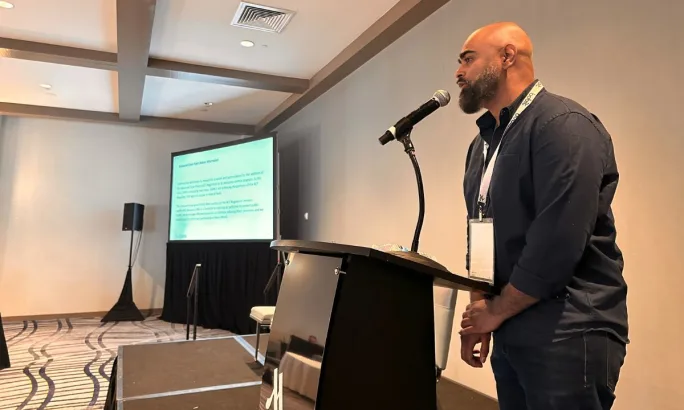
Adil Mahmood, staff air pollution specialist, California Air Resources Board (CARB) provided critical updates on the Advanced Clean Fleets (ACF) regulation and Clean Truck Check (CTC) compliance requirements at the FFTT event.
Photo: Chris Brown / Automotive Fleet
CARB Compliance Update On Fleet Rules
Adil Mahmood, staff air pollution specialist, California Air Resources Board (CARB) provided critical updates on the Advanced Clean Fleets (ACF) regulation and Clean Truck Check (CTC) compliance requirements.
Advanced Clean Fleets (ACF) Regulation.
Following CARB’s withdrawal of its federal waiver request, enforcement of ACF requirements for private and federal fleets is paused. However, state and local government fleets are still subject to ACF rules. Entities owning or leasing vehicles over 8,500 pounds must meet phased-in zero-emission vehicle (ZEV) targets.
From 2024 to 2026, 50% of new vehicle purchases must be ZEVs, rising to 100% in 2027. Fleets under 10 vehicles or in designated counties are exempt from the requirement until 2027 but must still report annually.
Two compliance paths are available: the default purchase schedule and a milestones-based alternative.
The milestones path allows ICE vehicle purchases beyond 2027, provided the fleet meets increasing ZEV percentages over time, culminating in 100% ZEV adoption by 2042. CARB offers various exemptions and extensions for vehicle delivery, infrastructure delays, range limitations, and more.
Clean Truck Check (CTC) Program
The CTC program ensures heavy-duty vehicles (over 14,000 lbs) operating in California meet emissions standards. It applies to most diesel and alternative-fuel vehicles, excluding zero-emission, gasoline-powered, emergency, and military vehicles.
Fleets must register with the CPC VIS system, pay an annual per-vehicle compliance fee, and submit emission test data biannually. Testing methods vary by vehicle age and type and may include certified onboard diagnostics (OBD), visual inspections, or opacity tests.
CARB also previewed incentive programs like HVIP, ISF, and Carl Moyer Program grants. These aim to ease ZEV adoption through vehicle purchase support, flexible leasing, and personal advisory services for small fleets.
Originally posted on Automotive Fleet
More Electric Vehicles
EV Charging Use Is Outpacing Infrastructure Growth
ChargePoint’s 2026 Charging Forward Report points to rising charger use, higher-powered charging, commercial vehicle electrification, and energy-management technology. Here’s what fleets should know.
Read More →
EV Realty Names Henrik Holland President as Charging Platform Expands
The former Prologis Mobility and Shell executive will help expand EV Realty’s truck charging business and move its power-first infrastructure model into autonomous vehicle depots and other fleet sectors.
Read More →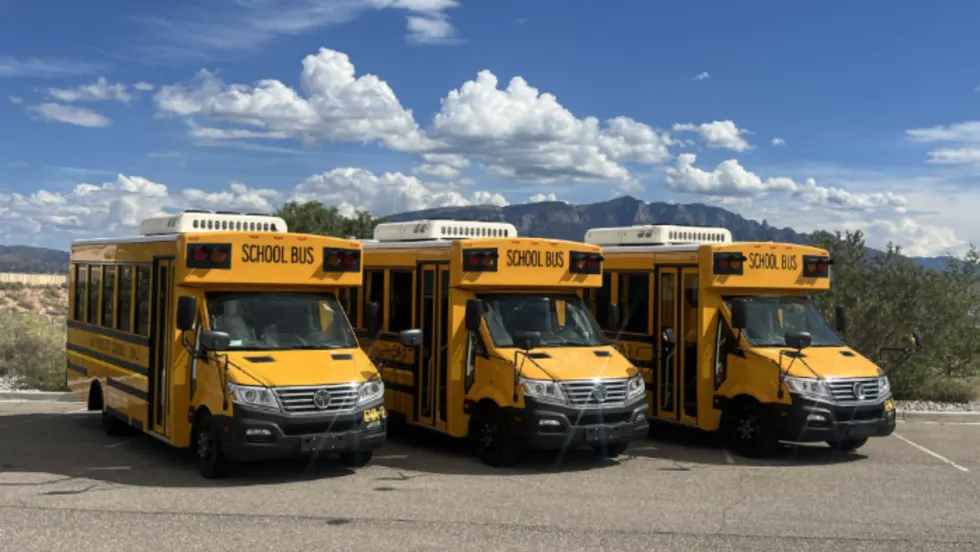
GreenPower Expands New Mexico EV Pilot With Larger Buses, V2G Testing
After logging more than 17,000 electric miles in the first year, New Mexico’s statewide pilot is moving into its second phase with larger vehicles, continued charging evaluations, and more.
Read More →
Can EV-as-a-Service Help Fleets Scale Electrification?
Sustainability Partners CEO Adam Cain explains how matching EVs, charging infrastructure, and duty cycles can help fleets scale electrification.
Read More →
How EV-as-a-Service Is Moving Fleets Beyond Pilots
Adam Cain, president and CEO of Sustainability Partners, explains how EV-as-a-service can help fleets scale deployments by addressing duty-cycle requirements and charging challenges.
Read More →
PowerFlex, The Mobility House Join Forces to Advance Fleet Electrification
Two EV charging providers are joining forces to deliver a broader portfolio of energy management and fleet electrification solutions.
Read More →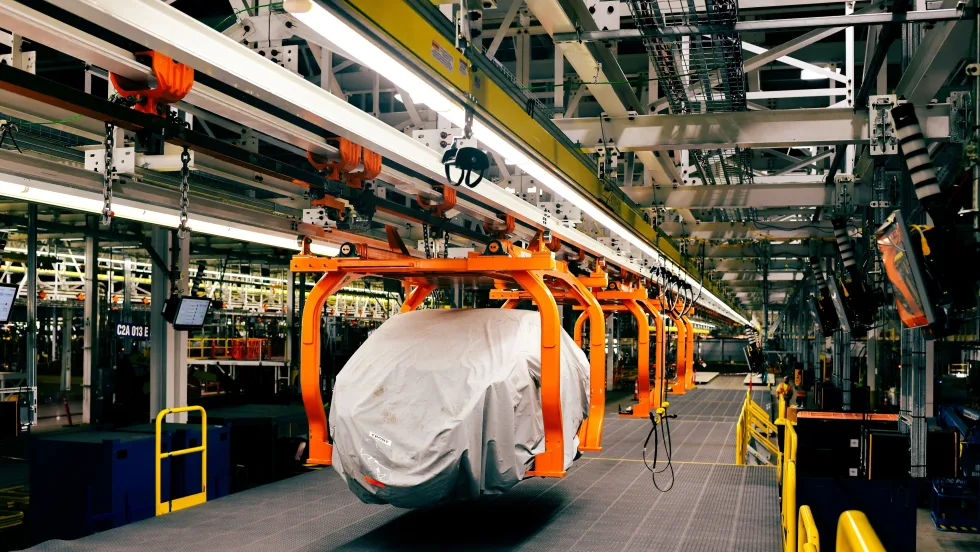
Ford Retools Louisville Plant for Fathom Electric Truck Production
Ford's $2 billion Louisville Assembly Plant overhaul introduces a three-part assembly process for the Fathom midsize electric truck, with production scheduled to begin in 2027.
Read More →
Merchants Fleet Reports 290M EV Miles as Fleets Navigate Changing Electrification Market
From millions in operating savings to hundreds of millions of EV miles, Merchants Fleet’s latest report reveals what’s working and what’s changing in fleet electrification.
Read More →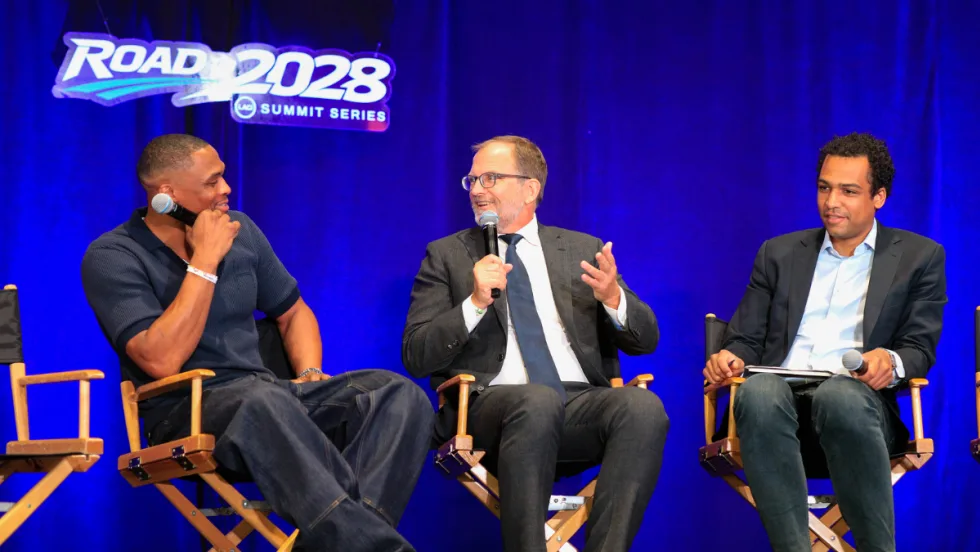
California District Commits to Electrify 25% of School Bus Fleet by 2028
One of the nation's largest school bus electrification projects to date demonstrates how grants, charging infrastructure, and public-private partnerships can help fleets transition to EVs at scale.
Read More →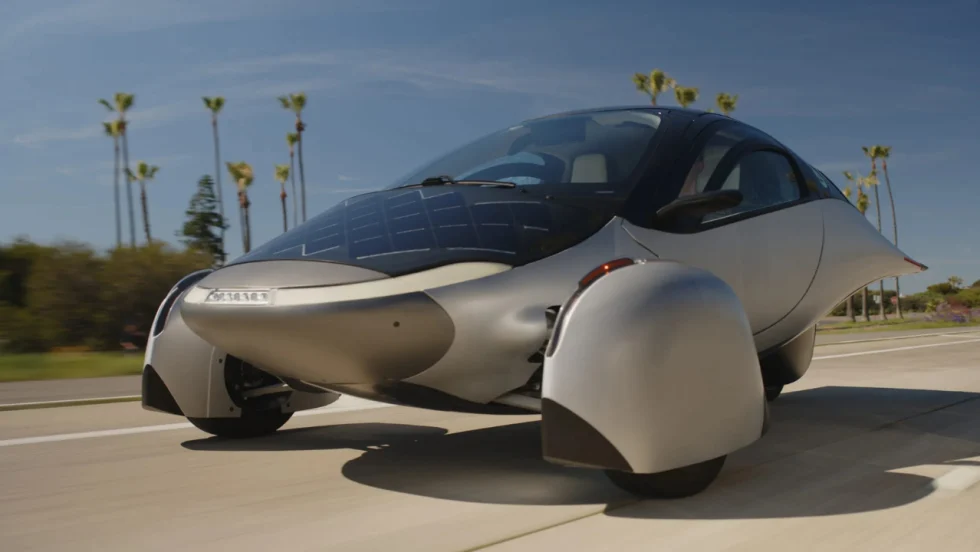
Aptera Orders Bodies and Chassis for Its First 40 Production Vehicles
Aptera Motors Corp. has issued purchase orders for the major structural components of its first 40 vehicles, and body and chassis components are expected to begin arriving in October.
Read More →