



Related: Canadian Grocery Fleet Installs All-Electric Reefer Units in Sustainability Bid
Using Autonomous Vehicles for Grocery Delivery
With a focus on providing last-mile logistics, autonomous vehicle startups like California-based AutoX and Udelv are deploying small fleets of self-driving vans and sedans to make the case for autonomous delivery.
January 16, 2019
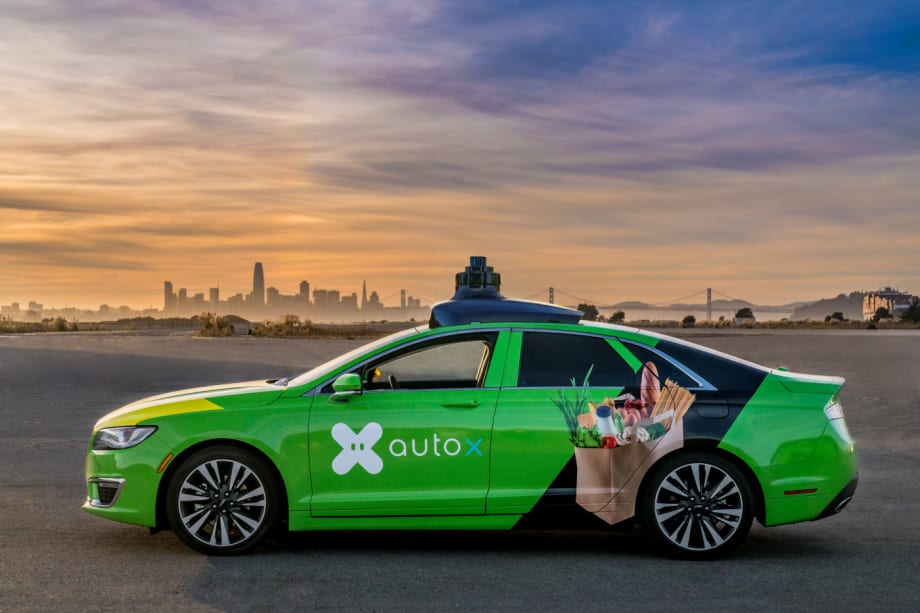
AutoX self-driving vehicles have built-in shelves with customers’ orders and also commonly stocked items, allowing customers to add on to their order if needed.
Photo via Udelv.
5 min to read
The autonomous vehicle revolution is permeating every market, from ride-hailing and public transit to semi-trucks and personal vehicles, and now, thanks to some startups, grocery delivery.With a focus on providing last-mile delivery logistics, autonomous vehicle startups like California-based AutoX and Udelv are working to incorporate autonomous technology in everyday life.
AutoX, founded in September 2016, is an autonomous driving technology company that has been running a grocery delivery pilot program in San Jose since August 2018. The company runs its modified fleet of 10 Lincoln MKZs at SAE Level 4 autonomy, according to chief operating officer Jewel Li.
In Level 4 autonomy, the vehicle has driver controls such as a steering wheel and pedals, but is capable of completing the journey without driver intervention. The journey may be “geofenced” or operated below a certain speed.
Udelv began building autonomous delivery vans (ADVs) in 2017 and completed its first successful public road test in January 2018. As of September 2018, Udelv has completed around 1,000 deliveries at Level 4 autonomy for over 10 merchants using two ADVs in California’s Bay Area.
AutoX builds all of the software, including mapping and localization. The company also creates the electrical component of the vehicles’ drive wire systems.
Similarly, Udelv makes its own drive-by-wire hardware and software. It assembles computing platforms by acquiring the parts from larger tech companies such as Intel; automated cargo space made in-house is installed on existing vehicle chassis. Custom made computing platforms are assembled from parts provided by larger tech companies like Intel.
Building Partnerships
Both AutoX and Udelv have been working with grocery stores across the country to implement ADVs into shoppers’ everyday lives.
In September, Udelv announced it had secured a partnership with Narnia Road and Esperanza Real Estate Investment to delivery groceries for Oklahoma City’s largest grocery store chain, which includes supermarkets such as Uptown Grocery, Buy For Less Super Mercado, and Smart Saver.
The partnership calls for 10 customized cargo vans — modified GEM eL XD electric trucks — to deliver online orders to residents. Udelv CEO Daniel Laury said that the company will deploy one vehicle at the beginning of 2019, with the subsequent nine being delivered throughout the year.
A press statement from September highlights the ability of Udelv’s self-driving vehicles to provide groceries and other household items to underserved communities, where a lack of quality grocery stores hinders healthy buying decisions.
In a statement, CEO of Esperanza and Co-Owner of the BFL Grocery Company Susan Binkowski called the deal with Udelv a “technological win for Oklahoma.” Laury said that working closely with partners, local communities, and government authorities is needed to ensure a smooth, seamless, and safe rollout.
A Learning Curve
Educating customers on how to properly order and retrieve the groceries via curbside delivery is one of the biggest hurdles both companies are working to overcome.
“People need to be able to open the trunk or open the compartments via their phone,” Li says. “So there’s some kind of user experience change. That is something we are learning very quickly in the pilot.”
For both companies, customers use their smartphones to order and unlock the compartments of the delivery vehicle to retrieve their groceries. The vehicles are temperature controlled to ensure produce remains fresh during the delivery period.
AutoX vehicles also have built-in shelves with commonly stocked items, allowing customers to add on to their order on the spot.
“A lot also needs to go into the way of educating store staff members, customers, and the broader community about the presence and use of these vehicles,” Laury said. “Introducing new tech like this cannot be done overnight because it comes with a lot of monitoring, evaluating, education and behavioral change.”
“We are learning very, very quickly,” Li says. “We’re constantly adapting so that we service customers better.”
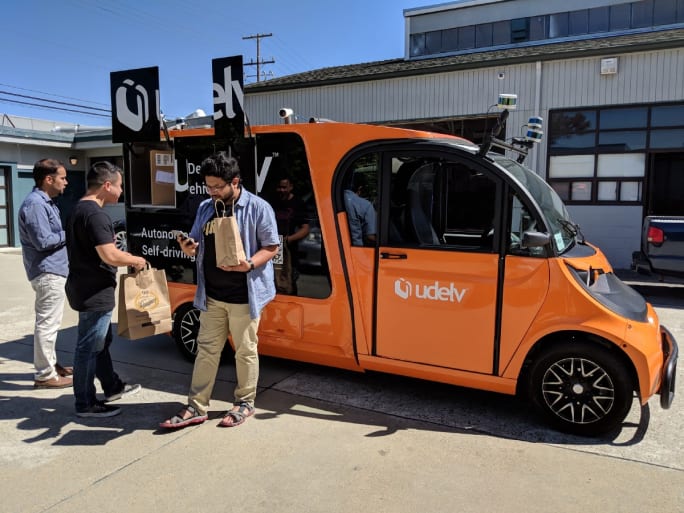
Udelv replaced this autonomous prototype vehicle with a van built on a Ford Transit Connect chassis and developed with Baidu’s autonomous driving platform. Udelv recently announced a partnership with Walmart for autonomous grocery delivery.
Photo via Udelv.
Prioritizing Safety
Following the death of an Arizona pedestrian by an Uber autonomous test vehicle last year, autonomous vehicle developers AutoX have been increasingly focused on safety.
Prior to any vehicles entering public roadways, AutoX conducts “intense” two- and three-dimensional scenario simulations. “We simulate the physics of the world and all the Lidar camera inputs,” Li says. (Lidar is a surveying method which measures distance to a target using lasers and the pulse they generate).
After successful completion of simulations, AutoX vehicles undergo testing on private campuses and land, and eventually on public roads. Finally, the vehicles are ready for the pilot program.Similarly, Udelv maintains safety as a top priority.
“The incident in Arizona was a terrible accident that should not have occurred,” Laury said. However, he noted that the company’s autonomous delivery vehicles are a separate class of vehicle from the one involved in the Arizona accident.
While Uber’s testing revolves around the ultimate goal of transporting people, Udelv’s and AutoX’s end goal is to transport a product. “This means they don’t need to go as fast as public transport vehicles, can handle situations differently and will always prioritize human safety,” Laury said.
Both companies’ autonomous vehicles have human operators who can override and guide vehicles if needed. Udelv also remotely supervises all vehicles.
“Until Udelv, authorities, merchants and the community are completely confident that autonomous vehicles are safe to operate on local roads without humans, we’re using highly trained safety operators in every vehicle, for every delivery,” Laury said.
Race to the Finish Line
With the autonomous revolution in full swing, “It’s a hot area so competition is fierce,” Li of AutoX says. “The market is huge and right now there is no one that has a clear first-mover advantage. So it’s actually a good thing for startups and for many other companies.”
Udelv has already moved in that direction by stepping outside of the grocery space. In December, the company announced it had entered into a partnership with a Texas-based auto aftermarket parts distribution company to use self-driving delivery vans in Houston.
Meanwhile, Li says that AutoX is focusing first on refining its San Jose pilot, then expanding it.
Topics:UdelvAutoXAutonomous VehiclesDelivery FleetsTechnologyMobile Appsmobile appsElectric VehiclesVehicle Research
Originally posted on Work Truck Online
Subscribe to Our Newsletter
More Electric Vehicles
EV Charging Use Is Outpacing Infrastructure Growth
ChargePoint’s 2026 Charging Forward Report points to rising charger use, higher-powered charging, commercial vehicle electrification, and energy-management technology. Here’s what fleets should know.
Read More →
EV Realty Names Henrik Holland President as Charging Platform Expands
The former Prologis Mobility and Shell executive will help expand EV Realty’s truck charging business and move its power-first infrastructure model into autonomous vehicle depots and other fleet sectors.
Read More →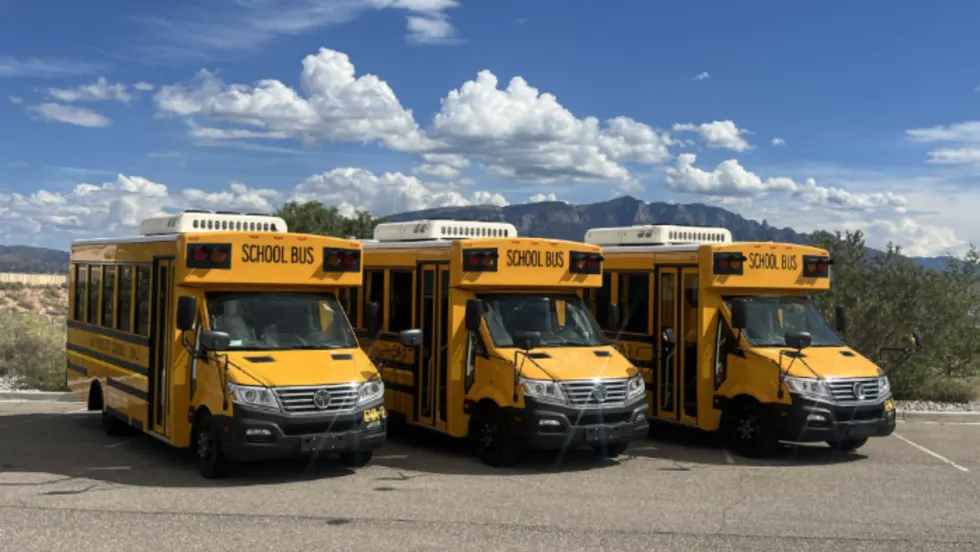
GreenPower Expands New Mexico EV Pilot With Larger Buses, V2G Testing
After logging more than 17,000 electric miles in the first year, New Mexico’s statewide pilot is moving into its second phase with larger vehicles, continued charging evaluations, and more.
Read More →
Can EV-as-a-Service Help Fleets Scale Electrification?
Sustainability Partners CEO Adam Cain explains how matching EVs, charging infrastructure, and duty cycles can help fleets scale electrification.
Read More →
How EV-as-a-Service Is Moving Fleets Beyond Pilots
Adam Cain, president and CEO of Sustainability Partners, explains how EV-as-a-service can help fleets scale deployments by addressing duty-cycle requirements and charging challenges.
Read More →
PowerFlex, The Mobility House Join Forces to Advance Fleet Electrification
Two EV charging providers are joining forces to deliver a broader portfolio of energy management and fleet electrification solutions.
Read More →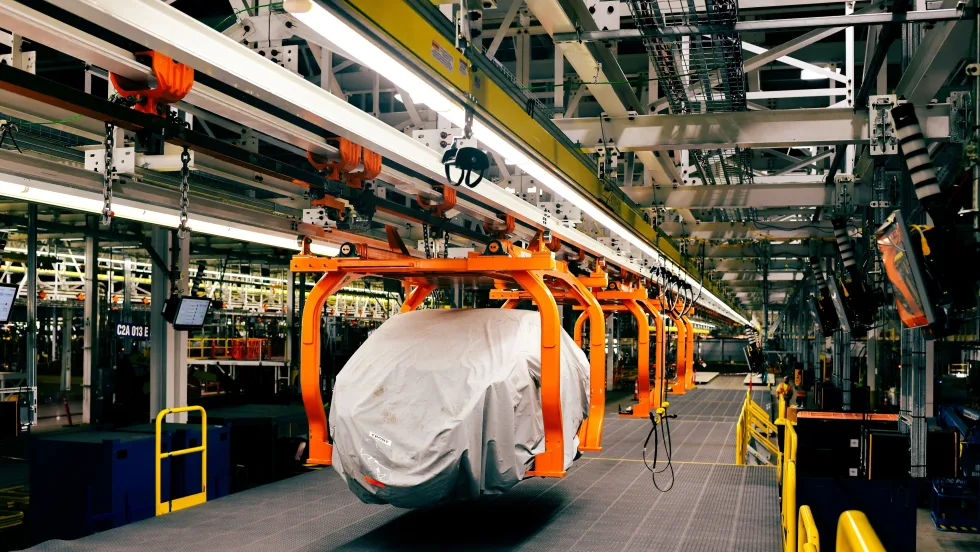
Ford Retools Louisville Plant for Fathom Electric Truck Production
Ford's $2 billion Louisville Assembly Plant overhaul introduces a three-part assembly process for the Fathom midsize electric truck, with production scheduled to begin in 2027.
Read More →
Merchants Fleet Reports 290M EV Miles as Fleets Navigate Changing Electrification Market
From millions in operating savings to hundreds of millions of EV miles, Merchants Fleet’s latest report reveals what’s working and what’s changing in fleet electrification.
Read More →
California District Commits to Electrify 25% of School Bus Fleet by 2028
One of the nation's largest school bus electrification projects to date demonstrates how grants, charging infrastructure, and public-private partnerships can help fleets transition to EVs at scale.
Read More →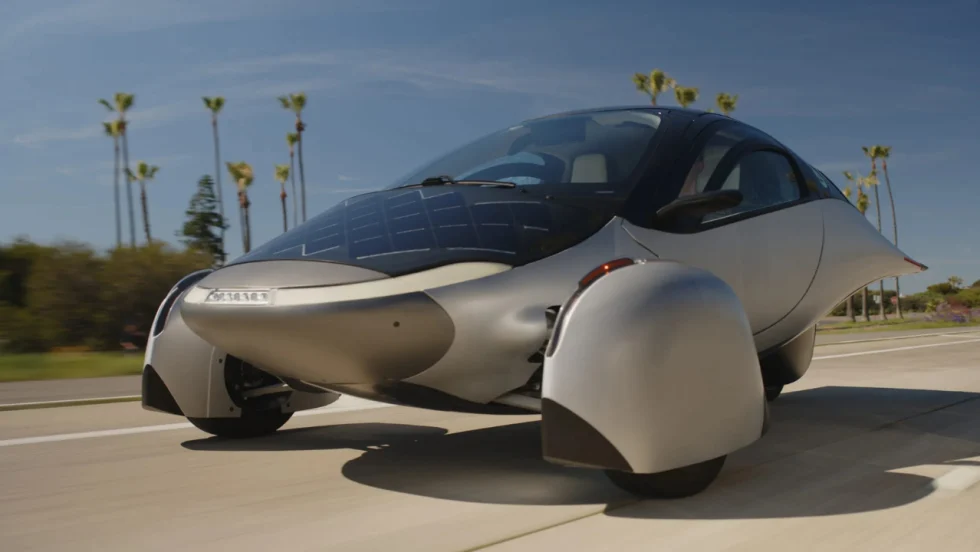
Aptera Orders Bodies and Chassis for Its First 40 Production Vehicles
Aptera Motors Corp. has issued purchase orders for the major structural components of its first 40 vehicles, and body and chassis components are expected to begin arriving in October.
Read More →