


Data Shows EV Battery Health Holds Up With More Fast Charging Use
Geotab’s latest analysis finds most batteries remain durable over time, but frequent high-power fast charging may accelerate degradation.

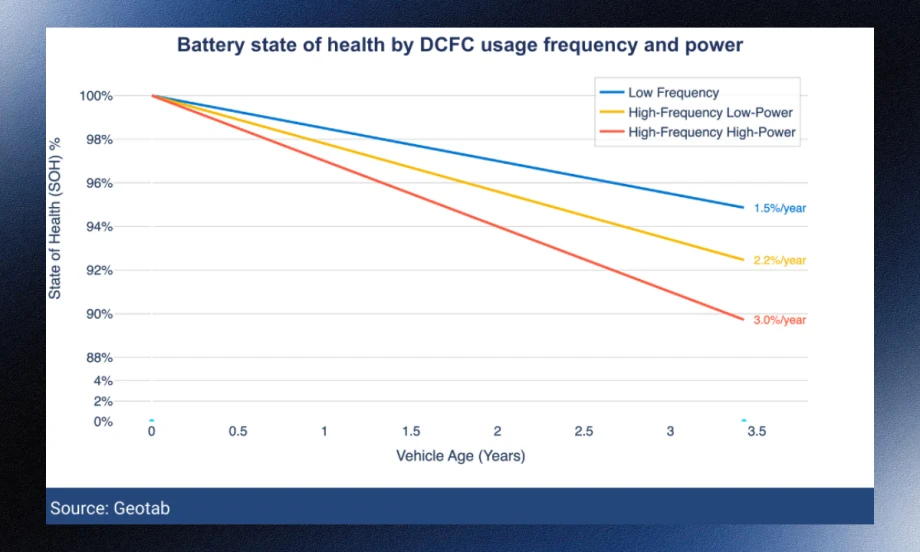
A Geotab analysis shows EVs that use high-power DC fast charging more often tend to see faster annual battery degradation than vehicles that rely primarily on lower-power charging.
Photo: Geotab
Updated battery health data from Geotab shows modern electric vehicle batteries continue to perform well over time, even as fast charging becomes more common.
Geotab’s updated EV battery health study analyzed real-world data from more than 22,700 electric vehicles across 21 makes and models using several years of aggregated telematics information. The results show an average annual battery degradation rate of 2.3%, up from 1.8% in the company’s 2024 findings.
The increase reflects shifting usage patterns, including a growing reliance on high-power DC fast charging. Battery longevity remains a concern for both individual drivers and fleet operators as EV adoption expands. Geotab said understanding how batteries age under different charging and operating conditions can help fleets manage performance and make informed decisions about vehicle deployment and charging strategy.
“EV battery health remains strong, even as vehicles are charged faster and deployed more intensively,” said Charlotte Argue, senior manager of sustainable mobility at Geotab, in a Jan. 12 news release. “Our latest data shows that batteries are still lasting well beyond the replacement cycles most fleets plan for.”
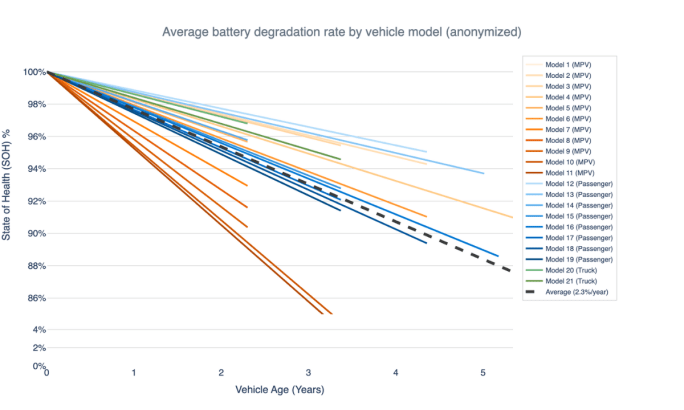
Geotab’s updated study highlights how battery degradation rates vary across EV makes and models, with an average annual decline of about 2.3% over several years of real-world data.
Photo: Geotab
Charging Behavior Is Key Factor In Battery Degradation
Geotab found that charging power had the biggest operational impact on battery health. Vehicles that relied heavily on DC fast charging above 100 kW experienced faster degradation, averaging up to 3% per year, compared with about 1.5% for vehicles that primarily used AC or lower-power charging.
Climate had a smaller independent effect, with vehicles operating in hotter regions degrading about 0.4% faster per year than those in milder climates.
Geotab also found that vehicles with a wider state-of-charge range showed no significant degradation unless they spent extended periods near full or near-empty charge levels.
Higher-use vehicles showed slightly faster degradation, increasing by about 0.8% per year compared to the lowest-use group. Geotab said this can be an acceptable tradeoff when weighed against the cost and operational advantages of keeping vehicles in service longer.
“For fleets, the focus should be balance,” Argue said. “Using the lowest charging power that still meets operational needs can make a measurable difference to long-term battery health without limiting vehicle availability.”
Telematics Data Helps Fleets Track Battery State Of Health
Battery degradation reduces the amount of energy a battery can store over time and is tracked using state of health (SOH). Batteries start at 100% SOH and gradually decline. For example, a 60 kWh battery operating at 80% SOH effectively behaves like a 48 kWh battery.
Geotab said its analysis shows most modern EV batteries remain usable well beyond typical fleet replacement timelines, although degradation can vary by model, charging habits, and usage patterns.
The company noted that telematics-based state-of-health tracking can help fleets estimate available battery capacity, monitor degradation trends, and better manage vehicles throughout their lifecycle.
More Charging
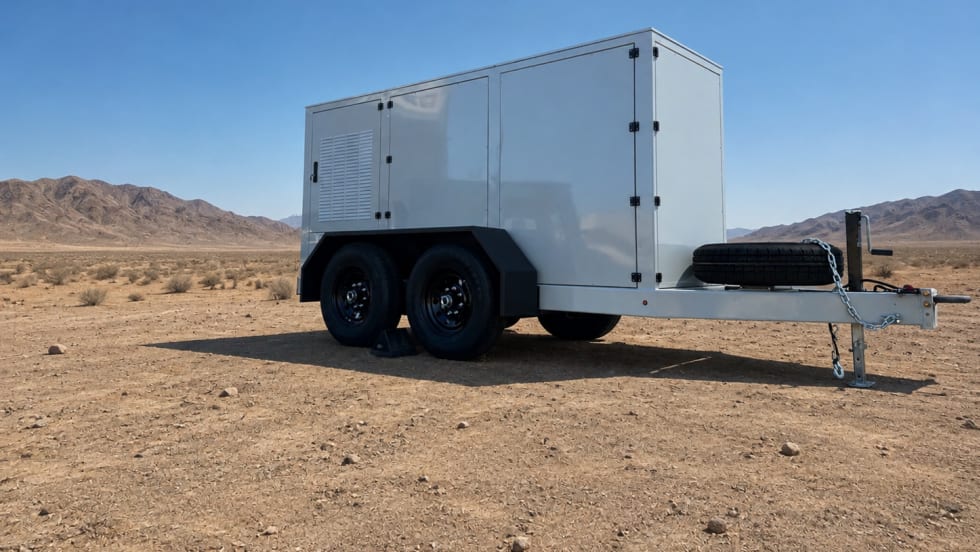
Xos Mobile Charging Hub Surpasses 1 GWh of Energy Delivered
As fleets electrify, charging capacity does not always arrive on the same timeline as the vehicles. Operating data from one Xos Hub shows how mobile, grid-independent charging can support vehicles when permanent infrastructure or utility upgrades aren't available.
Read More →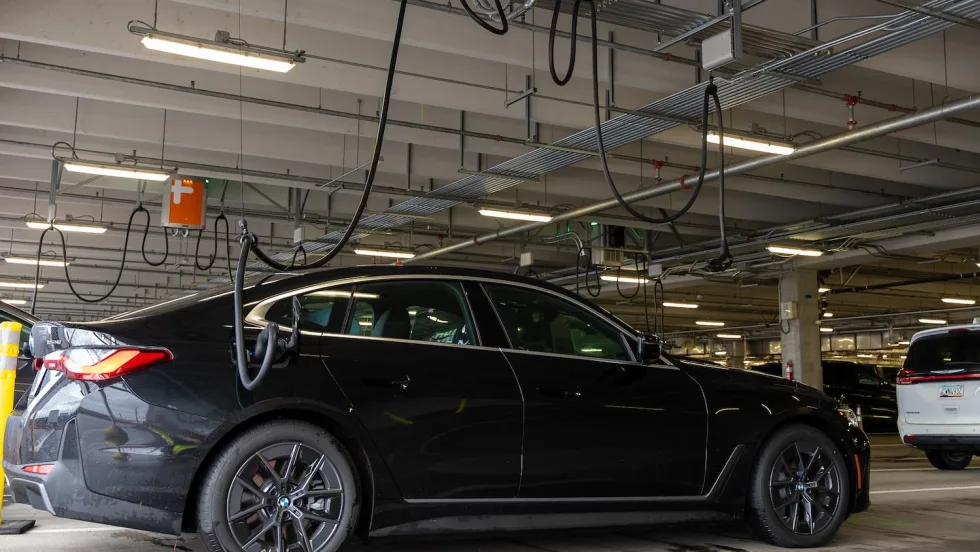
ChargePoint Adds Overhead EV Fast Charging at Portland International Airport
The installation can charge up to 20 rental vehicles simultaneously and uses overhead equipment to preserve ground-level space at the airport's Quick Turnaround Facility.
Read More →
Octopus Energy Launches Public EV Charging App in U.S.
Octopus Charge allows EV drivers to locate and access public charging stations through a single app, building on the company's Electroverse platform in Europe.
Read More →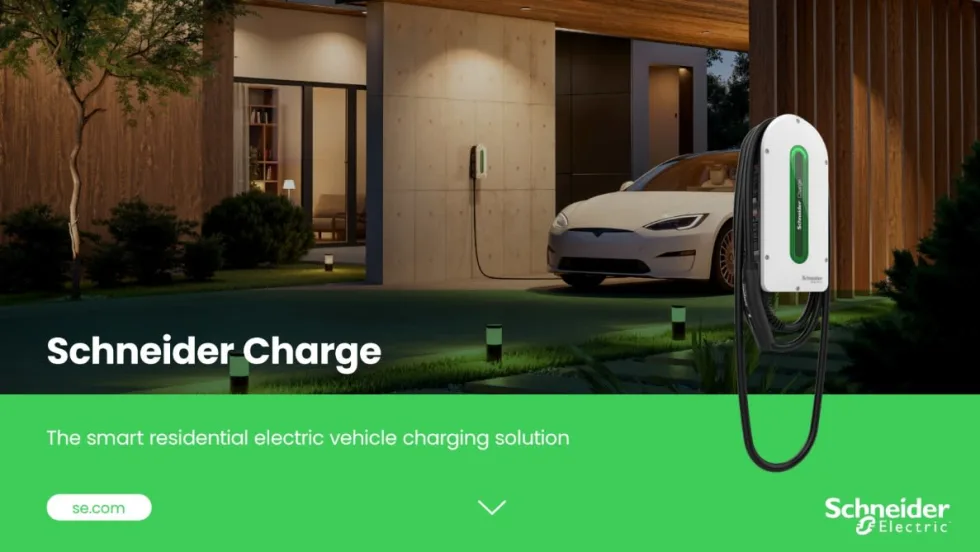
Schneider Electric Launches Level 2 Home EV Charger With Integrated Load Management
Schneider Charge uses integrated SmartAmp technology to adjust charging output based on household electrical demand and is available with NACS or J1772 connectors.
Read More →
Why EV Charging Reliability Is More Complicated Than It Looks
GridLink CEO Josh Silets explains what causes EV chargers to fail, why fleet operators often struggle to identify the source, and what questions they should ask charging vendors.
Read More →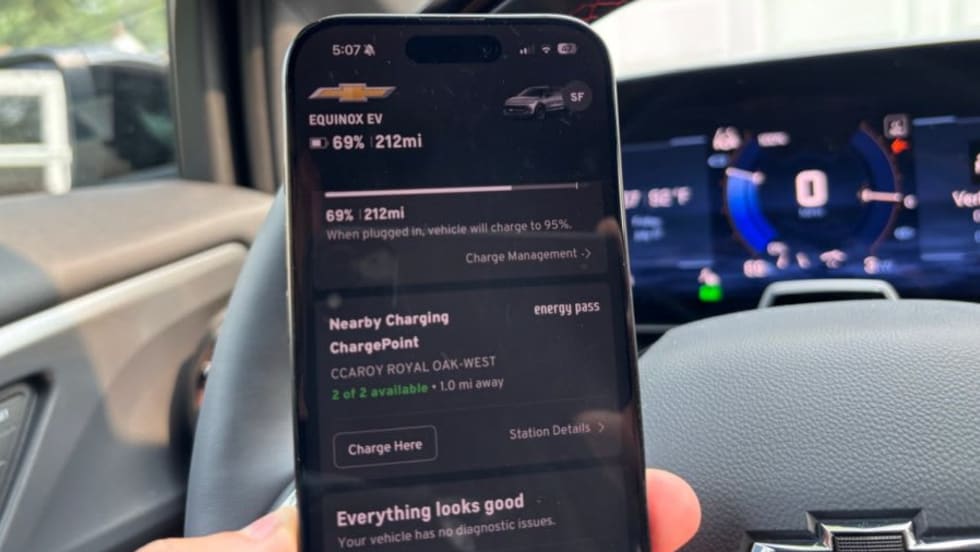
GM Adds ChargePoint Network to Energy Pass Platform
The integration gives GM EV drivers access to additional DC fast chargers and Level 2 stations through a single app while expanding the automaker's public charging ecosystem.
Read More →
Xos White Paper Asserts LA Olympics Will Lack Enough EV Chargers
The commercial EV fleet company recommends some faster and more flexible remedies to relieve the anticipated shortfall.
Read More →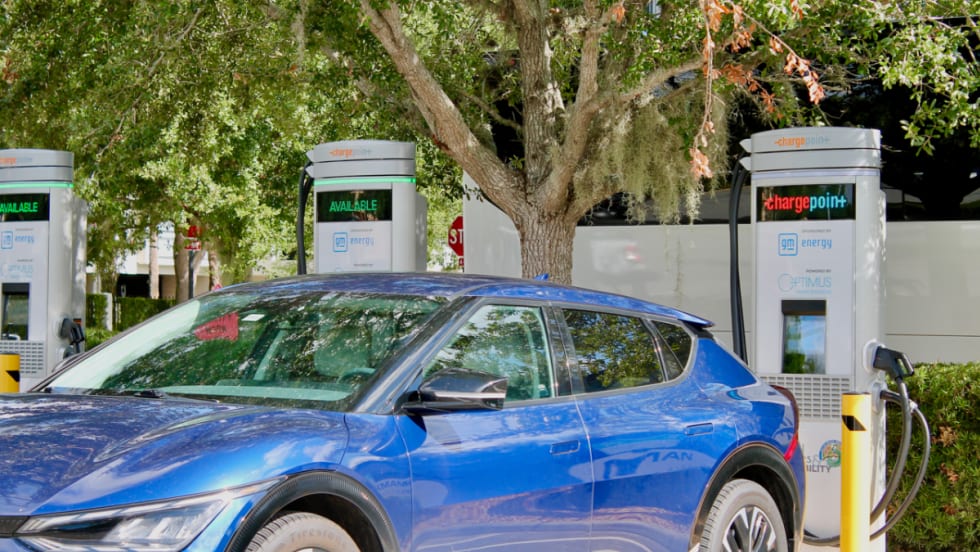
ChargePoint, Optimus Expand Fast-Charging Network Across Southeastern U.S.
ChargePoint will serve as the exclusive solutions provider, delivering hardware, software, and services to support Optimus’ growing charging network.
Read More →
Running A Profitable Electric Rental Fleet
How do you successfully operate an all-electric rental car fleet? Whether you manage a rental fleet or another commercial fleet, this conversation offers practical lessons on deploying, operating, and scaling electric vehicles.
Read More →
Why Charging May Never Be As Easy As Filling Up Gas
A seamless charge depends on a string of independent companies getting it right together, every time. How can electric fleets navigate the challenges to create a successful charging plan?
Read More →