


Consumers Maintain Demand for EVs Amid Market Uncertainty
A recent J.D. Power study finds a focus on affordability and education about electric vehicles can drive future adoption.

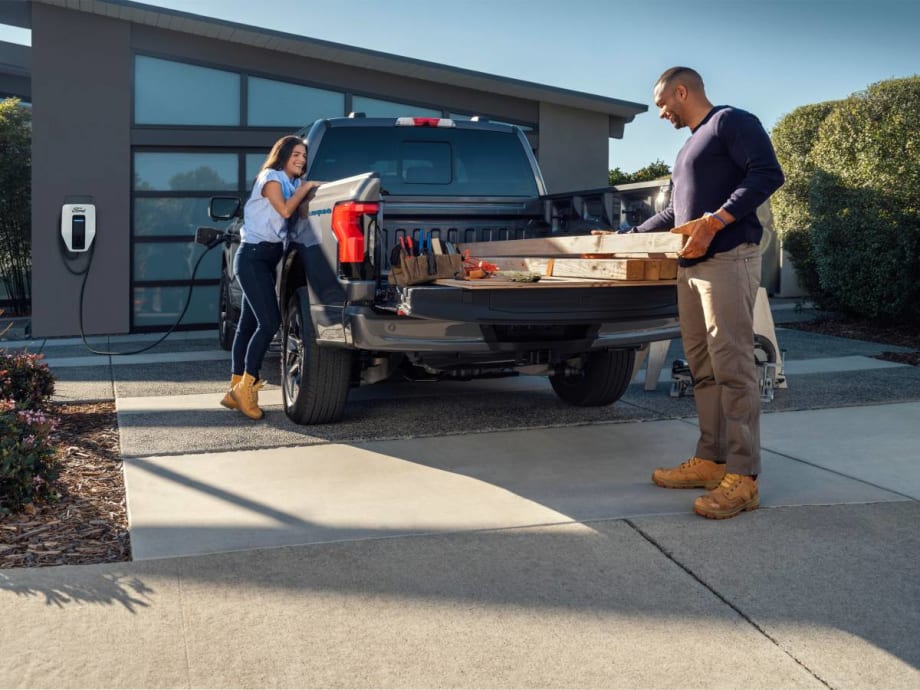
24% of vehicle shoppers say they are “very likely” to consider purchasing an EV, and 35% say they are “somewhat likely,” both of which remain unchanged from a year ago.
Photo: Ford
Despite wavering EV interest and economic challenges to the automotive industry, consumer demand for electric vehicles (EVs) has remained stable, according to the J.D. Power 2025 U.S. Electric Vehicle Consideration (EVC) Study.
The study, released May 15, reveals that 24% of vehicle shoppers say they are “very likely” to consider purchasing an EV, and 35% say they are “somewhat likely,” both of which remain unchanged from a year ago.
“To further capitalize on that interest and spur adoption moving forward, the industry needs to have products that meet consumer needs and wants at affordable prices,” said Brent Gruber, executive director of the EV practice at J.D. Power, in a news release. “Additionally, the industry should better educate consumers about EV ownership to ease concerns — many of which, such as those related to public charging, are less problematic than they might seem when actually owning an EV.”
Following are some key findings of the 2025 study:
EV customers active in cross-shopping: EV shoppers who say they are “very likely” to consider an EV cross-shop an average of 2.9 brands, while those who say they are “somewhat likely” shop an average of 2.8 brands. This is in alignment with the J.D. Power 2024 U.S. Sales Satisfaction Index Study, which found EV buyers shopped different dealer brands compared to 2.5 for gas-powered vehicle shoppers. “As more EV options come to market, this should serve as an encouraging sign for automakers because it’s an opportunity for them to gain a foothold and pull shoppers from outside their brands. This year’s study results also show that EV shoppers consider products from mass market and premium brands alike, highlighting the opportunity to capture consumer interest with brands or products that shoppers may not have otherwise considered,” Gruber said.
Purchase price and cost of ownership concerns decline, while charging concerns persist: Charging station availability remains the top concern, with 52% of shoppers citing it as a reason for rejecting EVs. The continuing problem with charging and flattening overall EV interest points to a lack of progress in consumer education on these issues. However, while consumer rejection due to purchase price has dropped four percentage points year over year to 43%, concern with cost of ownership has fallen two percentage points to 33%.
Young and higher-income shoppers show the most interest but rarely overlap: Only 17% of consumers in the 25-49 age range have an annual income of over $100,000. “It’s an interesting dichotomy because younger consumers are the most receptive to EVs, but also the least likely to be able to afford them, while older consumers have the financial means but show less interest,” Gruber said. “Much of the recent growth in the EV space has been fueled by products from mass market brands, demonstrating the pent-up demand for more affordable products.”
Midwest states are least enthusiastic about EVs: When looking at EV consideration by region, the lowest shares of consumers who say they are “very likely” to consider purchasing an EV live in Wisconsin and Kentucky (18% each), Minnesota (17%), and Ohio (16%). Several factors, including concerns about EV performance in cold climates and the stronger loyalty of consumers in these regions to traditional automakers, influence this.
The U.S. Electric Vehicle Consideration (EVC) Study, now in its fifth year, is an industry benchmark that focuses on gauging shopper consideration for fully electric or battery-electric vehicles. The study’s content includes overall EV considerations based on geography, demographics, vehicle experience and use, lifestyle, and psychographics.
It also includes model-level consideration details, such as “why buy” findings and an analysis of reasons for EV rejection. This year’s study, which was fielded from January through April 2025, measures responses from 8,164 consumers who intend to buy or lease a new vehicle in the next 12 months.
More Electric Vehicles
EV Charging Use Is Outpacing Infrastructure Growth
ChargePoint’s 2026 Charging Forward Report points to rising charger use, higher-powered charging, commercial vehicle electrification, and energy-management technology. Here’s what fleets should know.
Read More →
EV Realty Names Henrik Holland President as Charging Platform Expands
The former Prologis Mobility and Shell executive will help expand EV Realty’s truck charging business and move its power-first infrastructure model into autonomous vehicle depots and other fleet sectors.
Read More →
GreenPower Expands New Mexico EV Pilot With Larger Buses, V2G Testing
After logging more than 17,000 electric miles in the first year, New Mexico’s statewide pilot is moving into its second phase with larger vehicles, continued charging evaluations, and more.
Read More →
Can EV-as-a-Service Help Fleets Scale Electrification?
Sustainability Partners CEO Adam Cain explains how matching EVs, charging infrastructure, and duty cycles can help fleets scale electrification.
Read More →
How EV-as-a-Service Is Moving Fleets Beyond Pilots
Adam Cain, president and CEO of Sustainability Partners, explains how EV-as-a-service can help fleets scale deployments by addressing duty-cycle requirements and charging challenges.
Read More →
PowerFlex, The Mobility House Join Forces to Advance Fleet Electrification
Two EV charging providers are joining forces to deliver a broader portfolio of energy management and fleet electrification solutions.
Read More →
Ford Retools Louisville Plant for Fathom Electric Truck Production
Ford's $2 billion Louisville Assembly Plant overhaul introduces a three-part assembly process for the Fathom midsize electric truck, with production scheduled to begin in 2027.
Read More →
Merchants Fleet Reports 290M EV Miles as Fleets Navigate Changing Electrification Market
From millions in operating savings to hundreds of millions of EV miles, Merchants Fleet’s latest report reveals what’s working and what’s changing in fleet electrification.
Read More →
California District Commits to Electrify 25% of School Bus Fleet by 2028
One of the nation's largest school bus electrification projects to date demonstrates how grants, charging infrastructure, and public-private partnerships can help fleets transition to EVs at scale.
Read More →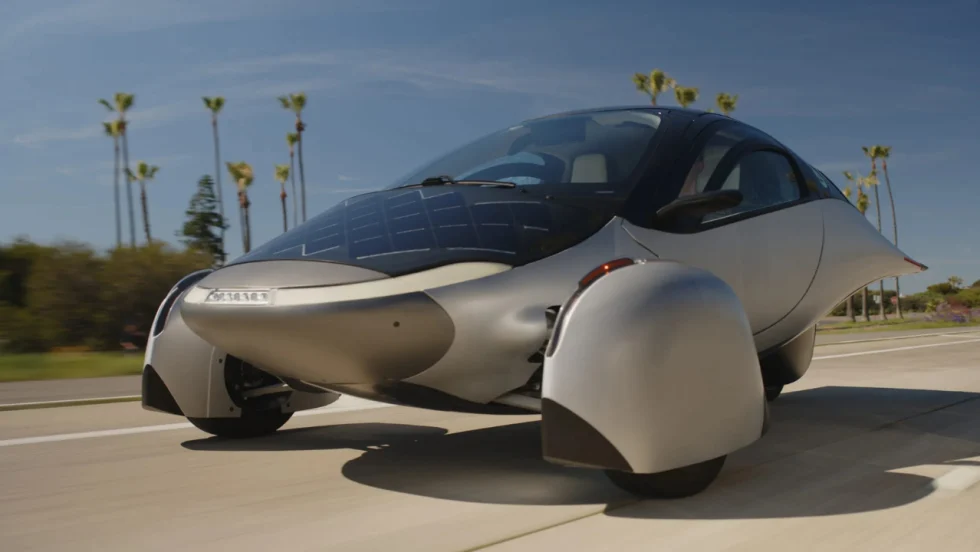
Aptera Orders Bodies and Chassis for Its First 40 Production Vehicles
Aptera Motors Corp. has issued purchase orders for the major structural components of its first 40 vehicles, and body and chassis components are expected to begin arriving in October.
Read More →