



Related: How Will Plug-and-Charge Technology Benefit Fleets?
Fleet Electrification: Level 2 or DC Fast Charging?
While the future of electrification infrastructure is DC fast charging, some fleets may never need it. James Kennedy of Tritium explains the decision process.
July 27, 2020
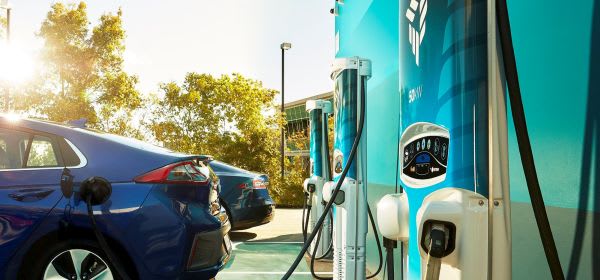
DC fast charging will be an absolute requirement for commercial and heavy-duty vehicles that require a fast turnaround time, but light-duty EVs that return to a central depot each night may only ever need Level 2.
Photo courtesy of Tritium.
6 min to read
In the era of Electrification 1.0, fleet first adopters coped with only a handful of electric passenger car models and unmanaged Level 2 charging technology. Today — yes, only five years later — fleets have a wider range of vehicle choices that will soon expand to commercial vehicles.
Charging is now managed, and infrastructure is better planned. The era is upon us where EVs can be charged to 80% capacity in potentially fewer than 15 minutes. These choices make fleet electrification more viable, yet much more complex moving forward.
The tantalizing charging speeds are owed to DC fast charging (DCFC) technology. While Level 2 chargers have become almost ubiquitous for home charging and in retail and commercial environments, DCFC chargers have only recently gained traction in the U.S. and internationally.
According to the U.S. Office of Energy Efficiency & Renewable Energy (EERE), as of May 2019, there were more than 68,800 Level 2 and DC fast charging units throughout the U.S. Of that total, 16%, or about 10,860 units, were DC fast chargers. Those numbers have obviously grown since, and a spike in DCFC penetration is on the horizon.
“The rollout of DC fast charging at the 150- and 350-kilowatt levels is happening incredibly rapidly right now,” says James Kennedy, cofounder and chief technology officer for Tritium, makers of DC fast charging technology.
In June, Electrify America completed the installation of a cross-country route of DC fast chargers from Los Angeles to Washington, DC along Interstates 15 and 70, with chargers every 70 miles. Electrify America says it will open a southern route, from Jacksonville to San Diego, later this year.
According to economic consulting service The Brattle Group, the number of public EV chargers has increased by about 40% per year in the last five years, a rate that must be maintained over the next decade to keep pace with the expected growth in EVs.
With a projected increase in the U.S. from 1.5 million electric vehicles in 2020 to 10 to 35 million by 2030, the group says investment of $75 to $125 billion will be needed across the electric power supply chain. This would necessitate the addition of 1 to 2 million public chargers.
A Land Grab
For the uninitiated, electric vehicles need to convert AC power from the grid to DC in the battery. With Level 2 (AC) charging, that conversion happens through a vehicle’s onboard charger. With DCFC, the conversion is done in a standalone charger.
Level 2 charging stations use AC at power capacities of less than 15 kilowatts (kW). In contrast, a single DCFC plug runs at a minimum of 50 kW. DCFCs can run at 150 kW and systems that run at 350 kW are coming online.
According to the EERE, the cost of a Level 2 single port unit ranges from $400 to $6,500, while a DC fast charger runs from $10,000 to $40,000. Installation costs vary greatly from site to site, with a ballpark range of $600 to $12,700 for Level 2, and $4,000 to $51,000 for DC fast charging.
Regarding infrastructure development, providers are eyeing plum charging sites such as the intersection of major road networks that have a good connection to the electric grid. “It is a bit of a land grab at the moment,” Kennedy says.
Older electric passenger vehicles operating with 400-volt battery packs can’t take advantage of the latest 350kW DC fast charging, topping out at the 150kW level. But newer vehicle generations are moving up to 800-volt battery packs, essentially doubling charging speed.
EV charging providers are thus looking long term.
“There may not be enough vehicles that use the site right now to justify the number of fast chargers,” Kennedy says. “But in just a few years, more chargers will be needed. The important thing is you've got that site, and the utility connection that goes with it.”
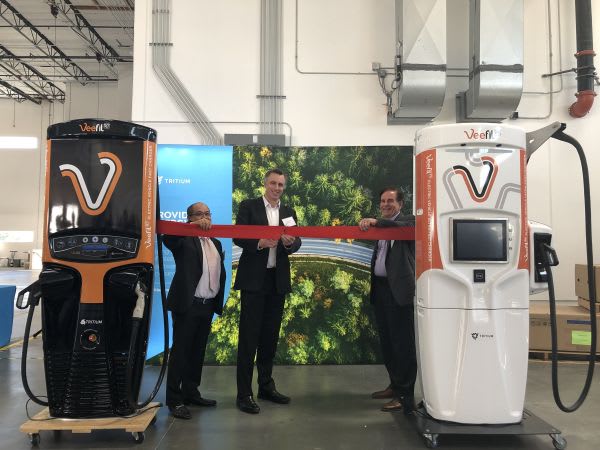
Tritium executives were on hand to open Tritium's R&D facility near Los Angeles, Calif. in 2019.
Photo by Chris Brown.
Utility Factors
DCFC will be an absolute requirement for commercial and heavy-duty vehicles that require a fast turnaround time, says Kennedy.
Moreover, when electrification finally comes to the heavy-duty market, Class 8 trucks will require charging speeds of 1- to 2-megawatts per vehicle to enable a recharge during the driver’s break time. An onboard charger in this application would require several megawatts worth of power electronics and cooling systems that it only needs while it's charging — an obvious impracticality.
The same principle is relevant for a light-duty fleet.
“We see DC fast charging becoming the default option at low power levels too because manufacturers won’t need to include them in the vehicles,” he says. “If you can save 5 kilograms and a few hundred dollars’ worth of onboard charger electronics by removing that onboard charger, that's a big deal.”
When it comes to the heavy-duty sector, there are greater issues to overcome: “The connection to the utility is shaping up as one of the larger barriers,” Kennedy says.
The massive 20- or 30-megawatt connection needed to power a city bus or delivery truck fleet could take several years to get approved and connected, he says. Utilities are working on reducing red tape to reduce the timeline from years to months, but it’s a complicated process involving multiple stakeholders.
“The utilities are well aware that this is rapidly turning into a problem,” he says. “There’s a large effort undertaken by charging equipment providers, charging network operators, and the utilities themselves to solve for load management of the electricity network.”
Kennedy acknowledges that the cost differences in charging types and rapidly changing technology increase the complexity of fleet electrification. But he says that fleets don’t need to put all their eggs in the DCFC basket today — they just need a plan.
Overcoming Complexity
As battery capacity increases and prices drop, auto manufacturers are installing EVs with bigger battery packs. This extended range is covering a greater percentage of fleets’ duty cycles on a single charge.
Smaller fleets running light-duty vehicles out of a central depot may never need DC fast charging. “If you can charge them overnight, then you don't need to charge faster than that, which makes upgrading the technology a non-issue,” Kennedy says.
Fleets can install Level 2 smart chargers inexpensively and charge at off-peak electricity rates.
The DC fast charging use case becomes more attractive — and necessary — if the fleet can’t complete a day’s job on a single charge. Yet fleets could adopt DCFC in a way that gets them into the technology gradually and cost effectively, he says.
Those fleets could install a single DC fast charger and charge the vehicles in a sequence, each one for 20 minutes, which spreads the cost of the DC charger over several vehicles.
The good news for fleets overall is that electrification is becoming more exponentially more viable. As infrastructure develops, battery prices are halving every three to four years and show every sign of continuing downward.
“When you look at the decreased cost per mile of an electric vehicle and the ranges those vehicles need for a day, you can switch to electric right now; the technology is good enough,” Kennedy says, adding that today’s accelerating market “is nothing compared to what it will look like in three- or four-years’ time.”
Fleets can jump into electrification at a pace that makes sense to them. But overcoming the increasing complexity in the electrification ecosystem starts with understanding the technology — which needs to start well before the plan is executed.
Subscribe to Our Newsletter
More Suppliers
Slate Debuts Colorful, Unique EV Models
A recent media and client event, studded with electric vehicles dressed up on platforms, planted a new position for the manufacturer in the wider EV market. Fleets will find cost-saving advantages.
Read More →
Slate Electric SUV, Pickup Switchable Model Aims For Light-Duty Fleets
Everything about this EV is counterintuitive and understated, making it stand out from the crowd.
Read More →
Polestar Barred from U.S. Market Under Connected Vehicle Rule
The automaker loses its authorization to sell new vehicles in the U.S., starting with the 2027 model year. Polestar owners will retain access to the brand's service network.
Read More →
Uber, Nuro and Lucid Plan Houston Robotaxi Service in 2027
The tripartite venture brings out the combined advantages of electric vehicles, mobility, and autonomy into ground transportation.
Read More →
Electrify America Opens EV Fast Charging Station in Southern California
The large-format depot features 20 hyper-fast chargers capable of delivering 350 kilowatts and is backed by a powerful battery energy storage system.
Read More →
Inspiration Mobility Acquires Key Electrada Assets
Inspiration Mobility Group has acquired select assets of Electrada, adding the fleet electrification provider's team, technology, and charging infrastructure development capabilities to its energy management business.
Read More →
Lucid Adds Hands-Free Highway Driving, Software Updates To Gravity SUV
Hands-free drive assist makes highway driving more comfortable while keeping drivers attentive to the road.
Read More →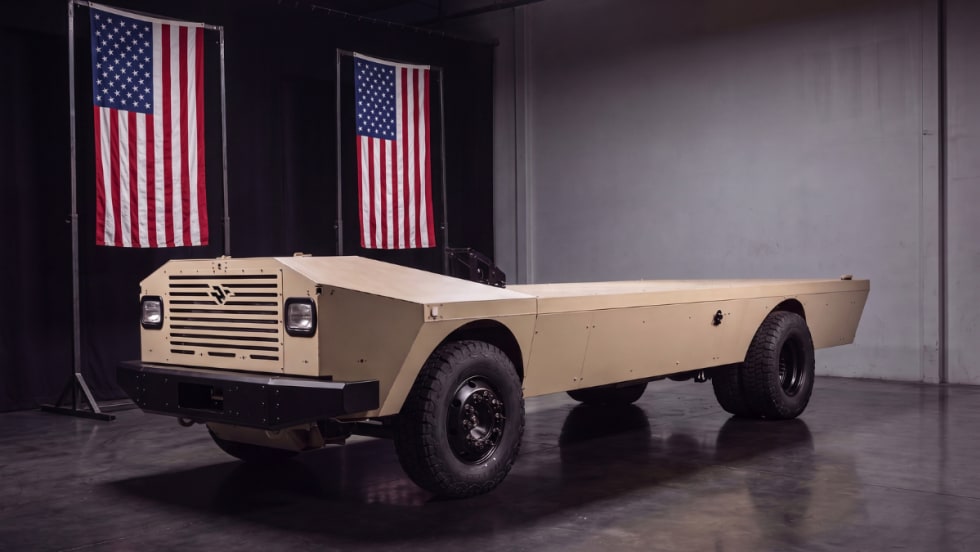
Harbinger Creates Hybrid-Electric Unmanned Vehicle Platform for Defense Use
The platform is based on the company's medium-duty plug-in hybrid chassis, which is also used in commercial vehicles.
Read More →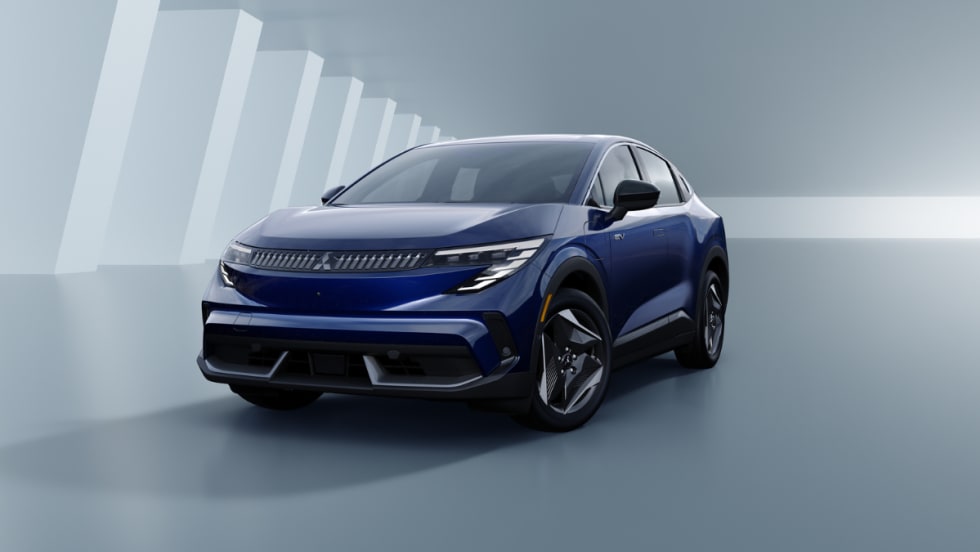
Mitsubishi To Debut All-Electric Eclipse Subcompact For North American Market
The 2027 Mitsubishi Eclipse Sportback is a small SUV that will go on sale by this fall.
Read More →
Stellantis To Build Smaller, Affordable EVs For European Market
Stellantis aims to expand access to urban EV mobility in Europe and address the decline in the smaller-vehicle segment.
Read More →