Why Reliable EV Charging Needs Massive New Resources
Video Excerpts: A recent study looks ahead at how to reconcile the demands and needs of electrification with the minerals, materials, and energy sources that can enable it to grow.
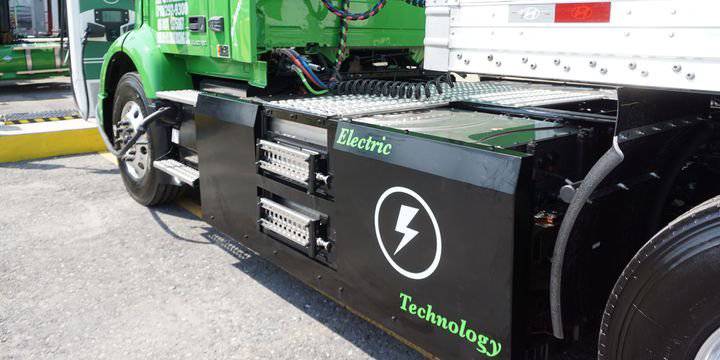
Future charging and parking infrastructure will have to be built so battery-electric trucks can charge at length while the driver complies with regulated rest periods.
Photo: Heavy Duty Trucking
5 min to read
When you look past the rosy scenarios and ambitious goals for electrifying U.S. fleet transportation, the provisions needed for widespread charging infrastructure will rack up a huge long-term tab.
If the estimated three million tractor trailers operating in the U.S. today converted instantly from diesel to electric power, they would consume about 10% of the nation's electricity.
“Although this transition would happen over years, it means overall electricity production will have to increase substantially,” said ATRI vice president Jeff Short in an episode of Charged Fleet’s video series. “Add to that cars and medium and heavy duty freight trucks that aren't tractor trailers, 40% more electricity will be needed. That’s quite substantial. The utilities will have to grow.”
The report cited a single rural parking facility in West Texas, which has about 60 truck parking spots to accommodate 126 trucks charging daily, would need the equivalent electricity needed by 5,000 households, Short said. “Utilities will have to generate more and transport more electricity, often to places that have never had electricity supply and demand at that level before.”
The 3,000 electric utility providers in the U.S. will need to spur major investments in power infrastructure and figure out how much power to generate in each local region. “Some states will need far more electricity than others based on current vehicle operations data and electricity production data,” Short said.
Jeff Short, vice president of the American Transportation Research Institute, says overall electricity production would have to increase substantially to accommodate widespread truck electrification.
Photo: ATRI
Matching Up the Charging Infrastructure
An ideal charging-scape that could meet the demand of widespread truck electrification, for example, would place a charger at every one of the 300,000 truck parking locations nationwide, Short said. “It will have to go beyond a diesel pump. And of course, there's a truck parking shortage. And it isn't even enough chargers to provide electricity to the industry.”
Ad Loading...
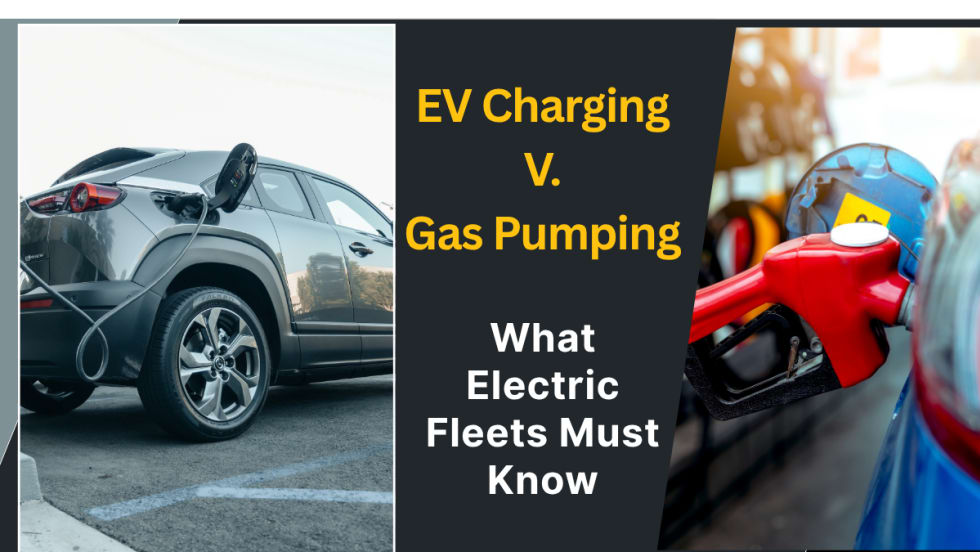
A diesel pump can fill a 300-gallon truck in five to 15 minutes, much shorter than the charging time required. Charging a truck will take many hours with 200 to 250 kilowatts per hour. A truck will need to charge long enough for a 500-mile range.
“The charging will need to coincide with several hours-of-service regulations that the drivers must follow,” Short said. “These hours dictate hours of driving and rest over the road.”
That means charging and extended parking infrastructures will have to be built together so the trucks can charge at length while the driver complies with regulated rest periods.
In assessing the global mining capacity for key battery materials, the demand will only increase exponentially, with current mine facilities inadequate to provide enough affordable supply. As electric vehicle batteries increase ranges, their size will need to increase absent space-saving advances in battery technology. Trucks will require larger batteries.
“Trucks will literally be hauling tons of batteries,” Short said. “If electrification is the solution, using today's technology, we calculated in our report how much the U.S. vehicle fleet would consume in battery materials such as cobalt, graphite and lithium.
Ad Loading...
For those three materials alone, the U.S. vehicle fleet would consume 25 to 35 years’ worth of global production. That doesn't include Europe. That doesn't include enormous countries like China and India. So obviously there's going to need to be a ramp up in global production.”
For full fleet electrification, the U.S. would consume nearly 65% of all known global reserves for cobalt, graphite and lithium. “Other countries will want these materials as well. So, we will have to do some exploring and find new sources of these materials beyond what we know about today.”
How Realistic are U.S. EV Goals?
2035. 2050. 2040. 2030. The motivational timelines for electrification and sustainability benchmarks could occupy annual calendars for decades to come, with no coherent grasp among the goal-setters of the time needed to get there. Is the U.S. falling behind? Will new technologies and discoveries speed the timelines up? What’s an accurate long-term perspective?
“We might not meet a 2050 goal, but goals change,” Short said. “They change with how much progress we're making. I don't necessarily think we are behind in metals, simply because electrification may not be the solution to decreasing emissions. There are still emissions associated with mining and the generation of electricity is not all renewable right now, and it won't be for many, many years.”
Citing various studies and reports, Short outlined how the U.S. will still need to rely on various energy sources other than renewables by 2050, such as natural gas projected to supply 40% of demand then.
Ad Loading...
“We have to also ask ourselves as we're moving in this direction, are we doing everything that we need to decrease emissions?” Short asked. “There may be other solutions out there. It’s good that we as a nation and as a trucking industry are testing the electrification option, but it may ultimately not be the solution, particularly for heavier fleets that operate longer distances.”
What Electrification Actions are Needed Now?
While timelines may change, industries and governments can still start acting now to ease the transition to electric vehicles, no matter what percentage of the automotive spectrum they will eventually occupy.
Trucking operations, for example, can start scouting out future parking locations and facilities, planning for the day when a percentage of fleets will need the space to charge trucks, Short said. “Trucks need to be able to park in a space that has a charger. An investment in truck parking is sort of the low-hanging fruit here.”
Even if electrification does not end up being a long-term solution, additional parking can serve other potential options, Short said. “Let's say we go with the hydrogen fuel cell instead. The parking spaces will still be useful for the trucking industry. Either way, more parking will address several issues facing the trucking industry. Not just the issue of CO2.
“I would also say that governments should be careful to avoid stifling innovation by choosing technology winners and losers.”
Ad Loading...
Short emphasizes electrification may not be the long-term solution for long haul trucks and vehicles, according to the ATRI reports.
“There's a common goal certainly of reducing CO2 and other emissions, but I'm not sure we've found the end solution without major advances in technologies that make the battery lighter and more dense, able to hold more energy, and that charge the battery faster. There may be other approaches out there that work better than electrification, and those should certainly be given the appropriate attention R&D funding that they deserve.”
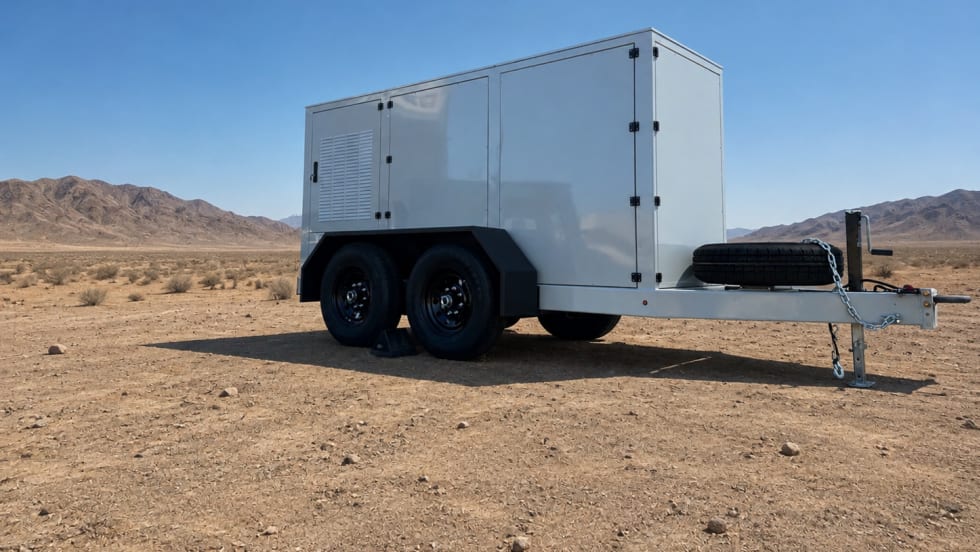
As fleets electrify, charging capacity does not always arrive on the same timeline as the vehicles. Operating data from one Xos Hub shows how mobile, grid-independent charging can support vehicles when permanent infrastructure or utility upgrades aren't available.
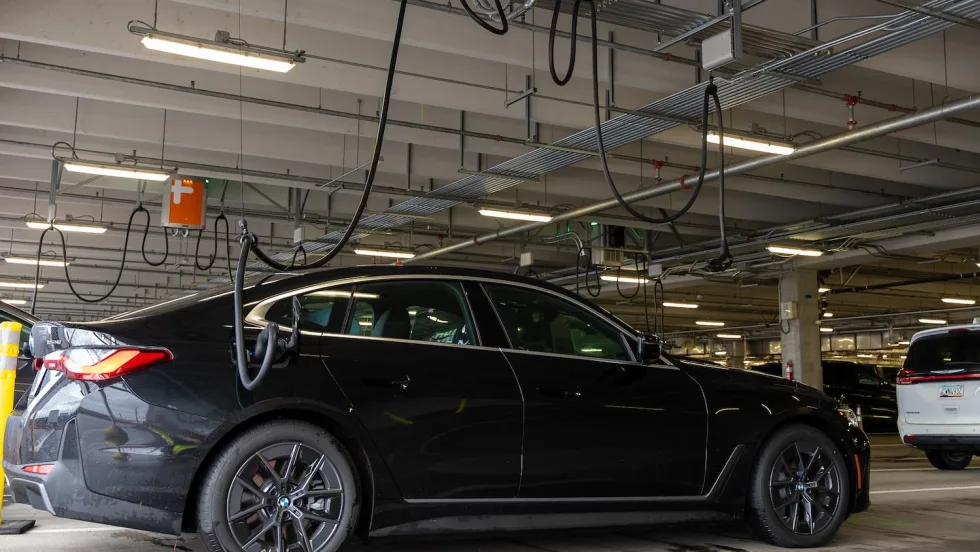
The installation can charge up to 20 rental vehicles simultaneously and uses overhead equipment to preserve ground-level space at the airport's Quick Turnaround Facility.
Octopus Charge allows EV drivers to locate and access public charging stations through a single app, building on the company's Electroverse platform in Europe.
Schneider Charge uses integrated SmartAmp technology to adjust charging output based on household electrical demand and is available with NACS or J1772 connectors.
GridLink CEO Josh Silets explains what causes EV chargers to fail, why fleet operators often struggle to identify the source, and what questions they should ask charging vendors.
The integration gives GM EV drivers access to additional DC fast chargers and Level 2 stations through a single app while expanding the automaker's public charging ecosystem.
How do you successfully operate an all-electric rental car fleet? Whether you manage a rental fleet or another commercial fleet, this conversation offers practical lessons on deploying, operating, and scaling electric vehicles.
A seamless charge depends on a string of independent companies getting it right together, every time. How can electric fleets navigate the challenges to create a successful charging plan?