


About the Author: Joy Gomez is an engineer, process automation expert, and the Founder of Field Promax. Known for his technical expertise and commitment to field service innovation, Joy writes about transforming traditional business models into paperless, efficient operations. He is a Lean Six Sigma Black Belt based in Rochester, Minnesota, dedicated to helping field professionals work smarter through better technology.
EV Fleet Reality Check: What Operators Wish They Knew Before Electrifying Their Work Vans
Electric work truck upfits bring new compatibility questions. Learn how parts availability, OEM guidance, power demands, and route planning can affect fleet performance.
by Joy Gomez, Field Promax
August 11, 2026
Electrifying a work truck fleet requires more than installing chargers. Route demands, vehicle availability, upfit requirements, and real-world operating conditions all affect whether an EV can reliably complete the job.
Credit:
Field Promax | Work Truck | Charged Fleet
6 min to read
A plumbing contractor I work with in Sacramento pulled three electric vans out of his rotation for two weeks last winter. Not because they broke down. Because his depot's 200-amp service could not charge all three overnight fast enough to get them back on the road by 7 a.m., and his dispatcher was running out of coffee and patience by 6:30. He is not anti-EV. He voted for electrification with a purchase order. What he did not vote for was becoming an amateur electrical engineer at 55.
That gap, between the marketing deck and the depot floor, is where most fleet electrification stories actually live. And it is why only 14% of fleets currently operate EVs, even though most fleet owners expect to own one within five years.
Range Anxiety Is Real, But It Is Not What You Think
The industry conversation about range assumes a driver watching a dashboard gauge on the highway. In service work, range anxiety looks different. It is the dispatcher at 2 p.m. deciding whether the tech on the far side of the metro area can take the emergency call, or has to hand it off because he is at 32% and the next customer is 40 minutes away with no charger between them.
The Alternative Fuels Data Center points out that EVs are especially efficient in stop-and-go driving, which sounds like good news for service fleets. It is, on paper. In practice, the variables that eat range are the ones service work is built on: HVAC load in July, ladder racks and toolboxes cutting aerodynamics, and long dwell times running the cab climate while a tech writes up a job.
The fence contractor in Phoenix I spoke with last spring said his F-150 Lightnings lose noticeable range when the crew runs the cab AC through a post-hole install. Nobody in the sales meeting mentioned that. He figured it out at 118 degrees.
Depot Charging Is a Utility Problem, Not a Vehicle Problem
Every experienced operator I know underestimated the utility side of this on their first pass. Not the vehicle price. Not the upfitting. The transformer.
The U.S. Department of Transportation's EV Fleet Toolkit is unusually direct about this: build utility relationships early, because electricity supply and infrastructure upgrades need to be timed before vehicle arrival, not after. Fleet operators in Europe are reporting that inconsistent grid processes can delay charger connections by up to five years in the worst cases. Five years. That is a full vehicle depreciation cycle.
Domestically, the picture is less catastrophic but still slow. A garage door operator I know in the Denver area waited 11 months for a service upgrade to support four Level 2 chargers. His vans arrived on schedule. His electrons did not.
A few things I would tell anyone in month one of planning:
- Call your utility before you spec vehicles, not after. Ask for a service capacity study in writing.
- Assume your existing panel needs an upgrade. Budget for it.
- If you have multiple depots, model each one separately. Load profiles are not portable.
- Ask about demand charges specifically. A depot that charges eight vans at 6 a.m. can trigger peak-demand billing that changes the whole TCO math.
Upfitting Compatibility Is Where the Real Surprises Live
This is the part nobody writes about because it is boring and specific. But it is where most operators lose weeks.
The chassis is electric. The ladder rack, the shelving, the inverter for on-site power tools, the interior lighting, the partition, the roof-mounted beacon, the telematics hardware, the fleet management dongle: those all have to talk to a vehicle whose 12V system, high-voltage battery, and CAN bus were engineered around a very different set of assumptions.
I have watched shops that have been upfitting Transits and ProMasters for 20 years get tripped up by the electric variants, mostly because the aftermarket parts inventory is thinner and the OEM guidance is still catching up.
If you run inverter-heavy applications, like a mobile locksmith cutting keys from the van or a fire service company running compressor equipment, you are pulling from the traction battery whether you meant to or not. Every amp you draw for the tool is an amp you do not have for the drive home.
Based on Field Promax usage patterns, fire service companies running quarterly and annual inspection routes get the most leverage out of recurring work order templates, since the same site can generate 4-12 scheduled visits per year with near-identical task lists. Those routes are predictable, which means range planning around them is possible. But only if the upfit does not add a variable nobody modeled.
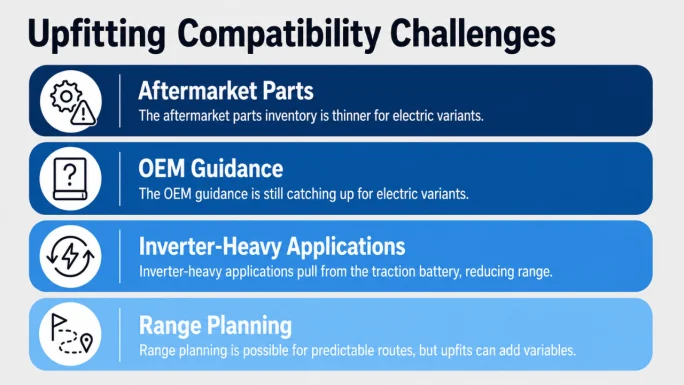
Electric vehicle upfits introduce additional planning considerations, from limited aftermarket parts and developing OEM guidance to equipment that draws power from the traction battery and reduces available range.
Credit:
Field Promax | Charged Fleet | Work Truck
Driver Adoption: The Softest Cost, and the Hardest
You can spec the perfect van and build the perfect depot and still have a rebellion in the parking lot if your senior techs feel like they are being retrained on a truck they did not ask for.
The Michelin Connected Fleet survey put driver-related concerns high on the list of stakeholder pain points, with 28% of managers naming at-home charging for drivers specifically. That is not a vehicle problem. That is a compensation and policy problem. Who pays for the electricity if the tech charges at home overnight? What kWh reimbursement rate feels fair when residential tariffs vary by state and by season? These questions do not have obvious answers, and I have seen shops lose two or three good techs while they figured it out.
The operators who navigate this well tend to do a few things:
- Pilot with one or two volunteers, not the whole crew.
- Publish the reimbursement math openly, in dollars per kWh, updated quarterly.
- Let drivers keep the same vehicle. Rotating EVs across techs kills the learning curve.
- Track charging behavior in the same system you track routes and jobs, so nobody feels surveilled specifically about the EV.
We've observed across the contractors using our platform that visibility into daily route data, drive time, and stop patterns changes the electrification conversation because operators can see, in numbers, whether a given tech's actual route fits an EV's actual range. Not the brochure range. The Tuesday-in-February range.
The Hybrid Question Nobody Wants to Answer Out Loud
Here is the contrarian take I will offer, and I know some readers will disagree. For most small and mid-sized service fleets in 2026, a mixed fleet is the honest answer for the next three to five years. Not because full EV is wrong. Because the depot infrastructure, the utility interconnect timelines, and the aftermarket upfit ecosystem are all still catching up to where the vehicles already are.
The EPA's greenhouse gas standards require roughly a 50% reduction in average CO₂ emissions between 2026 and 2032, and CARB's Advanced Clean Fleets rule phases out new combustion truck sales in California by 2036. The direction is fixed. The pace, for any individual fleet, is not. And the operators I trust the most are the ones who are honest about that instead of pretending otherwise.
BloombergNEF's 2026 outlook frames this well: global EV growth is continuing, but markets are moving on different trajectories rather than one global path. Your fleet is on its own trajectory too. Match your electrification pace to your route density, your depot capacity, and your utility's honest timeline, not to the calendar on someone else's press release.
Operator Takeaway
If you are weighing hybrid versus full EV for your work van fleet, do not start with the vehicle. Start with the utility bill, the depot's amperage, the routes your best tech actually drives on a bad-weather Wednesday, and the reimbursement policy you are willing to defend to a 22-year-veteran plumber.
The vans are ready. The question is whether the operation around them is, and that answer is worth being honest about before the first purchase order goes out.

Credit:
Field Promax | Work Truck | Charged Fleet
Quick Answers
Fleet operators may encounter challenges because their facilities might not have the infrastructure to charge multiple electric vans simultaneously, such as inadequate service capacity to charge all vehicles overnight.
*Summarized by AI
Originally posted on Work Truck Online
Subscribe to Our Newsletter
More Vehicle Research
2027 Lexus NX Moves to Fully Electrified Lineup
For 2027, the NX moves to an entirely electrified lineup, with either hybrid or plug-in hybrid powertrains.
Read More →
2027 Mitsubishi Eclipse Sportback Named Green SUV of the Year
Green Car Journal recognized Mitsubishi’s new battery-electric crossover, which offers NACS compatibility and DC fast charging at up to 150 kW.
Read More →
Dave Carroll Named President of Ford Energy
Carroll succeeds Lisa Drake, who will remain with Ford through Dec. 31 to support the leadership transition.
Read More →
City of Long Beach Named No. 1 Green Fleet of 2026
NAFA's 2026 Green Fleet Awards recognized fleets for sustainability efforts spanning alternative fuels, technology, facilities, workplace culture and fleet operations.
Read More →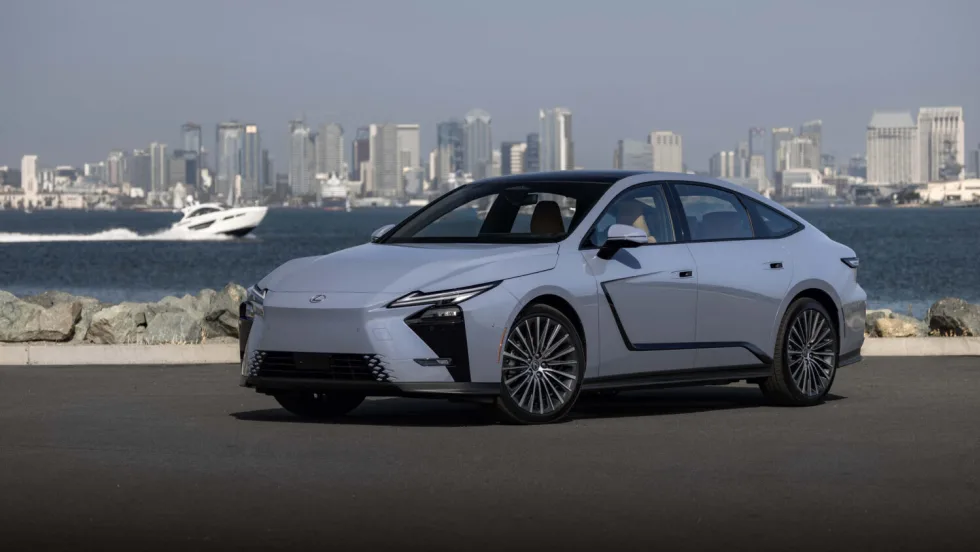
2027 Lexus ES Adds First Battery-Electric Models
The ES 350e and ES 500e join the hybrid ES lineup with up to 338 hp, an EPA-estimated 307 miles of range and standard NACS charging capability.
Read More →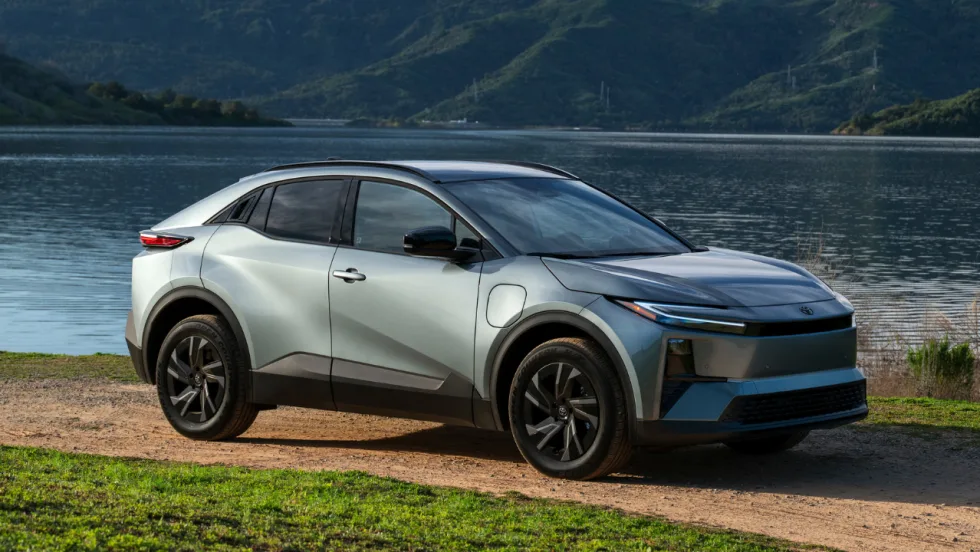
2027 Toyota C-HR Offers 287-Mile Range and Standard AWD
Toyota’s 2027 C-HR brings 287 miles of estimated range, standard all-wheel drive, and NACS fast-charging capability to the compact EV market. See what its mix of performance, cargo space, and everyday technology could offer business users.
Read More →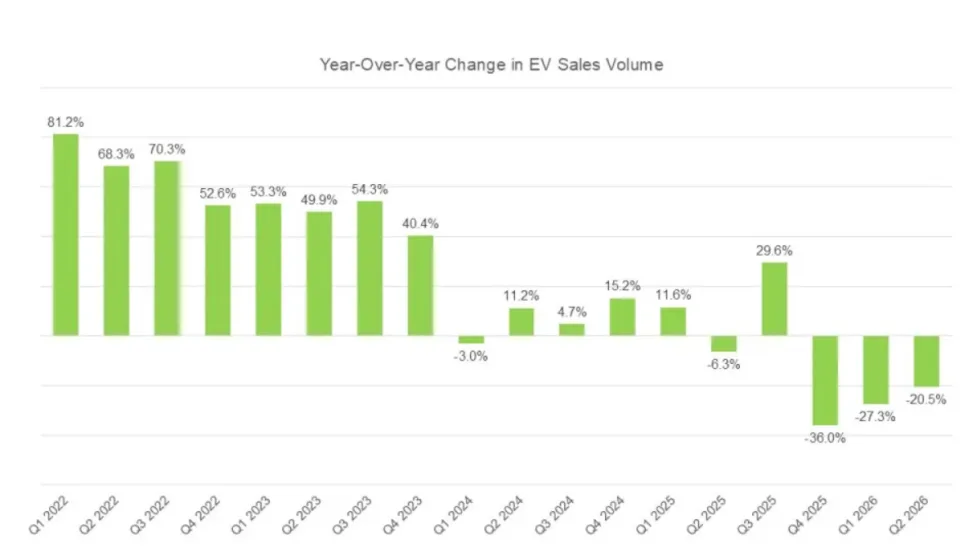
New Vehicle Models Stabilize Electrified Market In Q2
But more credit goes to hybrids than to all-electric vehicles, as more buyers look for fuel-efficient alternatives amid high gas prices.
Read More →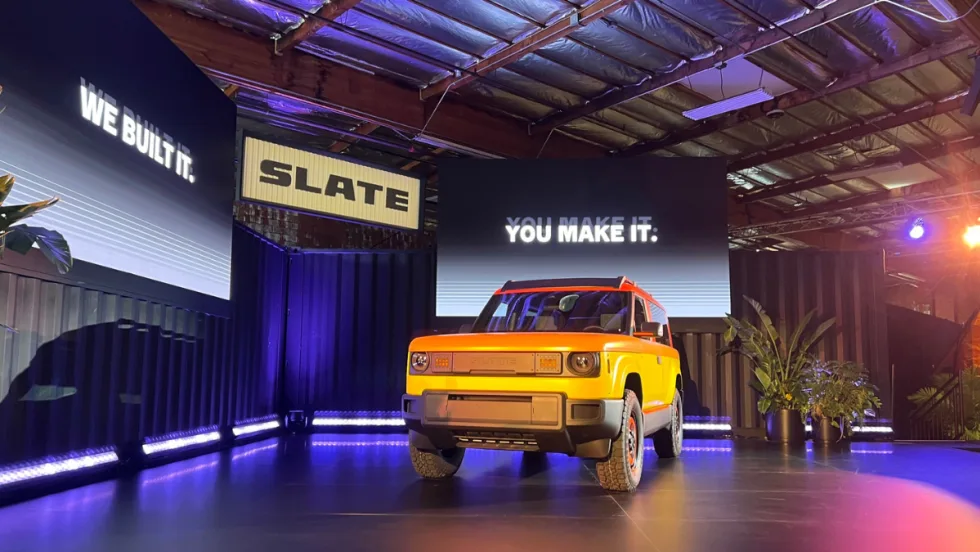
Slate Debuts Colorful, Unique EV Models
A recent media and client event, studded with electric vehicles dressed up on platforms, planted a new position for the manufacturer in the wider EV market. Fleets will find cost-saving advantages.
Read More →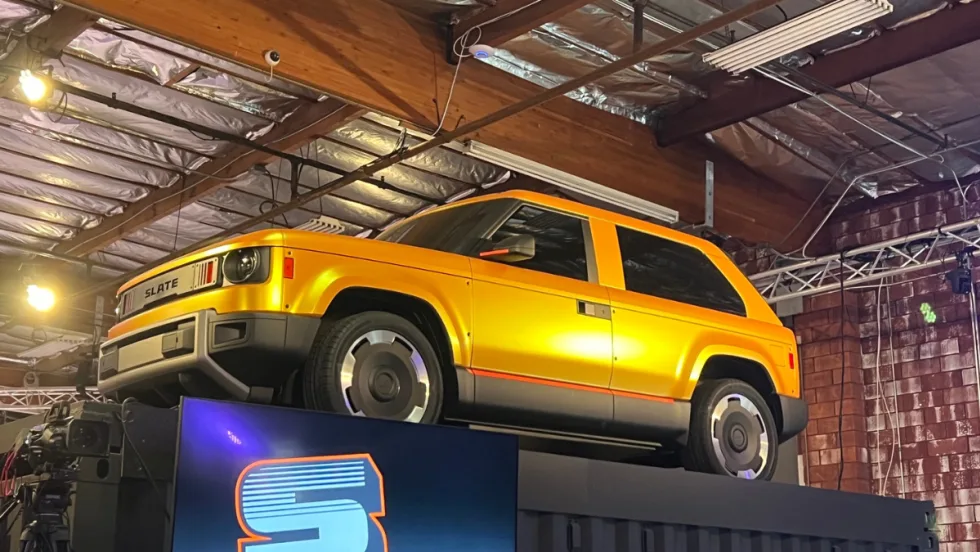
Slate Electric SUV, Pickup Switchable Model Aims For Light-Duty Fleets
Everything about this EV is counterintuitive and understated, making it stand out from the crowd.
Read More →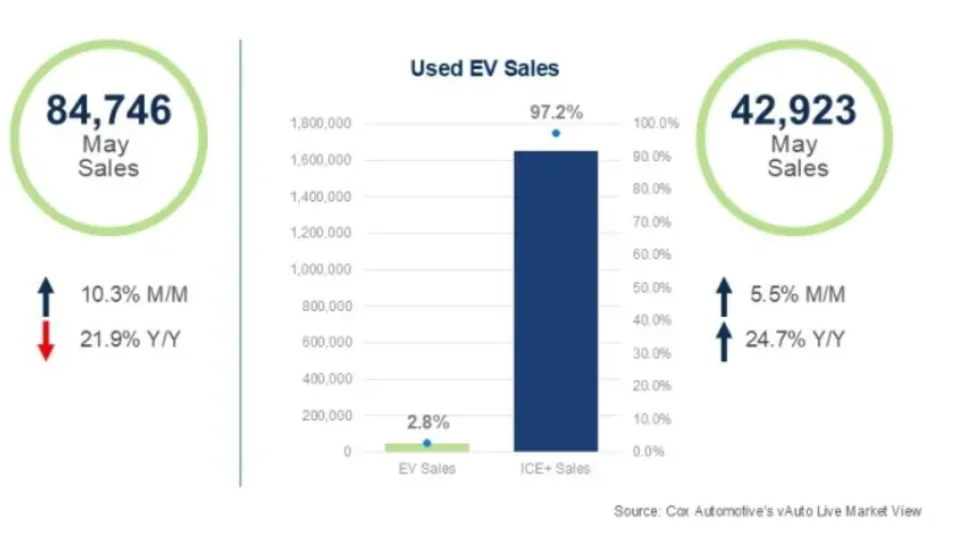
Used EVs Strengthen Overall Electric Vehicle Market
The latest sales data point to several reasons for the divergent trends in new and used EVs that can factor into fleet cycling decisions.
Read More →