


Electric Models: Depreciation Still Drags Down Ownership Costs
A lifecycle analysis by Vincentric found that total cost of ownership (TCO) for electric vehicles underperforms plug-in hybrid electric and traditional hybrid model counterparts. Running EVs more miles per year has a substantive positive impact on TCO.


BMW Group's range of electric models for 2021. The i3 (center, red) projected the lowest TCO for all electric models at 75,000 miles and five years of operation.
Photo courtesy of BMW Group.
As electric passenger vehicles continue to penetrate the mainstream, Fleet Forward wanted to see how electric vehicles stack up against each other in total cost of ownership (TCO), a key metric for fleets. FF collaborated with Vincentric, the lifecycle cost experts, to analyze TCO data for select battery electric vehicle (BEV) models, plug-in hybrid electric vehicle (PHEV) models, and traditional hybrid models.
For the analysis, Vincentric calculated its standard eight cost elements: depreciation, financing, fees and taxes, fuel, insurance, maintenance, opportunity cost, and repairs. This analysis covers 2021 model-year vehicles over a five-year period at both 15,000 miles a year and 20,000 miles a year. (2020-MY if data was used for that model isn’t yet available.)
Electric models enjoy federal rebates, which are crucial to lowering electric vehicles’ TCOs. The initial federal rebate of $7,500 diminishes as brands reach 200,000 units in EV sales. The Chevrolet Bolt and Tesla models have used up their rebate potential, though the Biden administration’s GREEN Act proposes to reinstate a $7,000 rebate for sales up to 600,000 units.
State programs also provide grant money for fleets, though the majority are concentrated in West Coast states. Applying grant money changes the TCO cost equation yet again, though grants were not included in these calculations.
Comparing costs for fuel, or more broadly “power,” for three propulsion types (ICE, BEV, PHEV) is an inexact science. For an apples-to-apples comparison, we needed to apply a uniform yearly mileage; however, BEVs and PHEVs are selected by fleets based on duty cycles that best fit their ranges.
Vincentric bases the “fuel” cost for BEVs and PHEVs on the average cost of electricity for each state and the EPA's measurement of total kilowatt hours used to drive the vehicle over its estimated range for a fully charged vehicle.
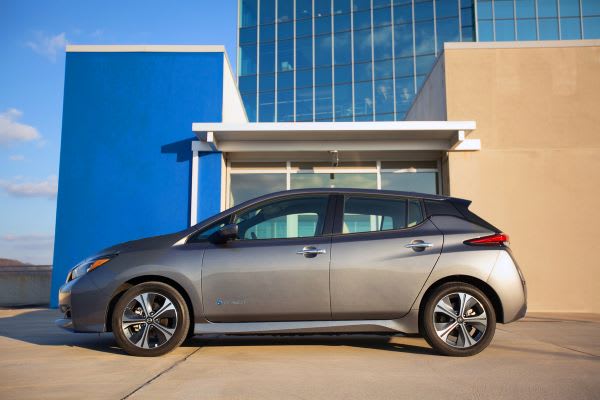
Photo courtesy of Nissan.
For plug-in hybrid vehicles, Vincentric divides the estimated annual mileage by 365 to create the daily mileage. Electric propulsion is assumed for the daily miles up to the EPA's estimated range for that vehicle. Additional mileage in excess of the EPA's estimated range assumes gas propulsion.
Fleet Forward completed a similar TCO study with Vincentric in August 2019. That study considered TCO at 15,000 miles per year for three years. For this study, we decided to elongate the hold period to five years and see how adding a 20,000-mile per year analysis affects TCO.
This study focuses purely on TCO, and does not consider other factors such as charging, driver satisfaction, environmental impact, or performance. With so many outside variables and a fast-changing market, this analysis should be considered directional at best.
Here are some conclusions from this study:
As in the 2019 study, the traditional hybrids and PHEVs are still the TCO champs over pure electric models. In this analysis of 20 models, the top 10 are almost exclusively hybrids and PHEVs.
The average TCO for the hybrids and PHEVs studied at 100,000 miles and five years was $55,778 or $.56 per mile, and for BEVs was $60,116 or $.60 per mile.
Depreciation is still the biggest cost factor putting downward pressure on TCO for BEVs. On average, the BEV models retain 26% of their original value after five years and 100,000 miles, while the PHEVs and hybrids retain 31%.
However, BEVs make up substantial ground on fuel and maintenance over five years. The BEVs project more maintenance savings ($2,743 after five years and 100,000 miles) than “fuel” savings ($2,094). Note that this analysis doesn’t take into account managed “smart” charging, which would cut charging bills even further.
Running electric vehicles more miles per year — in this case 100,000 miles over 75,000 miles — does result in a lower cost per mile as it maximizes electrification’s fuel/power savings advantage. The average cost per mile for BEVs running 15,000 miles per year was $.69 cents per mile, while that figure dropped to $.60 cents per mile at 20,000 miles for the same vehicles. The PHEVs and hybrids improved as well over the same mileage comparison, but only by $.04 per mile.
Looking at specific models, Nissan Leaf and BMW i3 lead the TCO pack for BEVs. The Tesla Model 3 falls in the middle, with Tesla’s luxury Model X and Model S fall to the bottom. The absence of federal rebates for Teslas play a factor.
As expected, luxury BEVs and PHEVs with acquisition costs over $50,000 have much higher TCOs and take up the bottom of the list — like their ICE counterparts.
Originally posted on Automotive Fleet
More Electric Vehicles
EV Charging Use Is Outpacing Infrastructure Growth
ChargePoint’s 2026 Charging Forward Report points to rising charger use, higher-powered charging, commercial vehicle electrification, and energy-management technology. Here’s what fleets should know.
Read More →
EV Realty Names Henrik Holland President as Charging Platform Expands
The former Prologis Mobility and Shell executive will help expand EV Realty’s truck charging business and move its power-first infrastructure model into autonomous vehicle depots and other fleet sectors.
Read More →
GreenPower Expands New Mexico EV Pilot With Larger Buses, V2G Testing
After logging more than 17,000 electric miles in the first year, New Mexico’s statewide pilot is moving into its second phase with larger vehicles, continued charging evaluations, and more.
Read More →
Can EV-as-a-Service Help Fleets Scale Electrification?
Sustainability Partners CEO Adam Cain explains how matching EVs, charging infrastructure, and duty cycles can help fleets scale electrification.
Read More →
How EV-as-a-Service Is Moving Fleets Beyond Pilots
Adam Cain, president and CEO of Sustainability Partners, explains how EV-as-a-service can help fleets scale deployments by addressing duty-cycle requirements and charging challenges.
Read More →
PowerFlex, The Mobility House Join Forces to Advance Fleet Electrification
Two EV charging providers are joining forces to deliver a broader portfolio of energy management and fleet electrification solutions.
Read More →
Ford Retools Louisville Plant for Fathom Electric Truck Production
Ford's $2 billion Louisville Assembly Plant overhaul introduces a three-part assembly process for the Fathom midsize electric truck, with production scheduled to begin in 2027.
Read More →
Merchants Fleet Reports 290M EV Miles as Fleets Navigate Changing Electrification Market
From millions in operating savings to hundreds of millions of EV miles, Merchants Fleet’s latest report reveals what’s working and what’s changing in fleet electrification.
Read More →
California District Commits to Electrify 25% of School Bus Fleet by 2028
One of the nation's largest school bus electrification projects to date demonstrates how grants, charging infrastructure, and public-private partnerships can help fleets transition to EVs at scale.
Read More →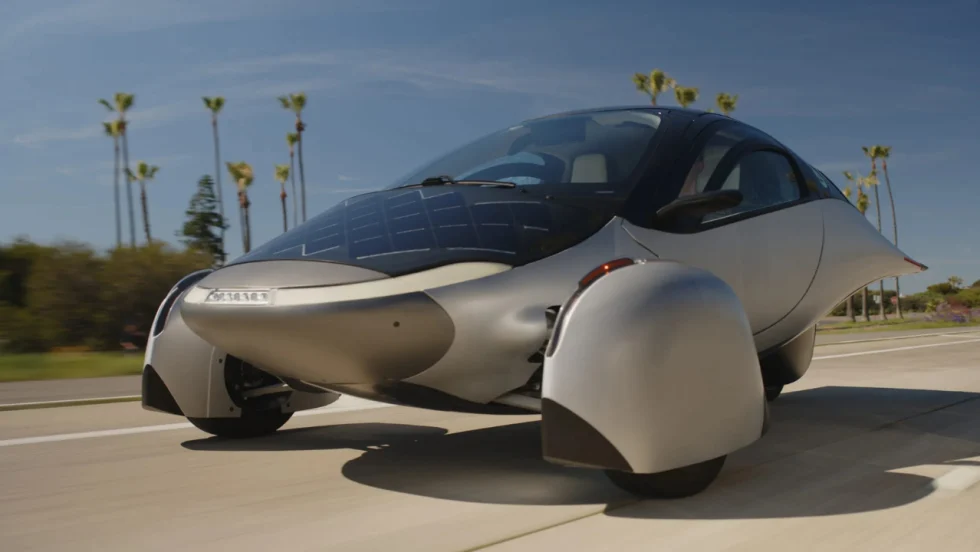
Aptera Orders Bodies and Chassis for Its First 40 Production Vehicles
Aptera Motors Corp. has issued purchase orders for the major structural components of its first 40 vehicles, and body and chassis components are expected to begin arriving in October.
Read More →