



Related News: Corporate Action on EVs Double in 2020
Study: Fleets Can Electrify Faster Than Assumed
New analysis finds businesses and governments can grow used electric vehicles market by 40% in 2030 by transforming fleets.
July 13, 2021
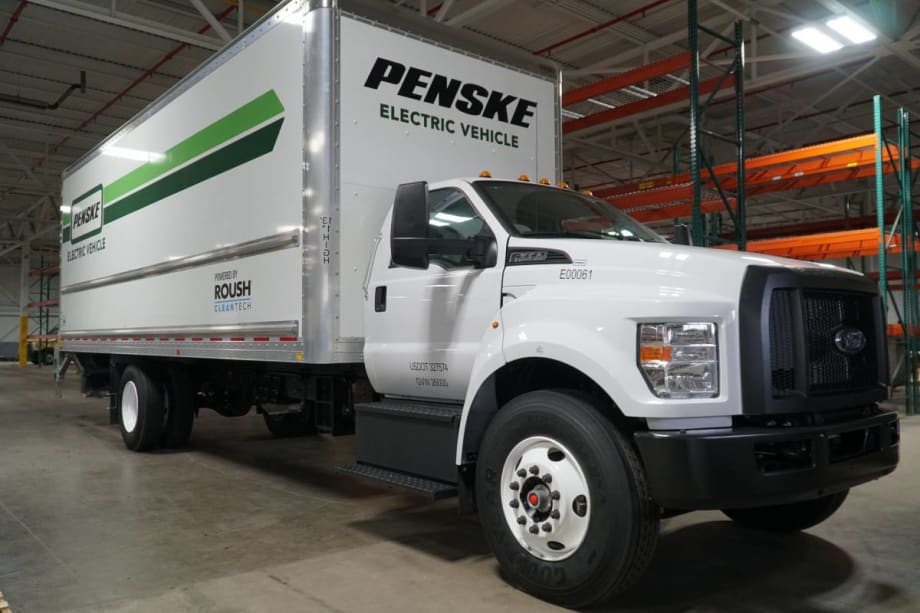
Businesses and governments that own and operate vehicles can commit to EVs today, sending a demand signal to help trigger investments in increased production capacity from vehicle manufacturers and within the battery value chain.
Photo: Penske
4 min to read
A new report released July 13 by international non-profit the Climate Group has found that most buses and light duty fleet vehicles can switch to EVs in leading markets[iii] by 2030. Doing so would reduce carbon and deliver benefits, including for health, infrastructure and battery innovation, according to a news release.
The analysis, which was carried out in partnership with global sustainability consultancy SYSTEMIQ, sets out to understand the effects of businesses and governments accelerating the electrification of their fleet vehicles. Calculations show that buses and light duty vehicle fleets make up a fifth (21%) of vehicles on the road yet contribute to a quarter (26%) of road transport emissions. At present, fleet vehicles are being left behind in the electrification race as most EVs driven today are privately owned passenger vehicles, while just 11% are part of fleets.
By modelling a high ambition scenario where most new bus and light duty fleet vehicle sales are EVs by 2030, the report shows faster electrification is possible and would have far-reaching effects.
Helen Clarkson, CEO of Climate Group, said: Businesses, governments and public sector organizations have about half a billion light duty vehicles in their fleets around the world. Not only can fleets use their purchasing power to electrify faster, but crucially it would help to bring about a wider shift to clean road transport by supercharging demand, boosting infrastructure and growing the used EV market, making them more readily available and affordable for consumers.
COP26 (U.N. Climate Change Conference) President-Designate Alok Sharma said:"Reaching net zero by the middle of the century requires a step change across all sectors. And switching to electric vehicles is a crucial part of the action we need to take to hit this goal and keep the target of limiting global temperature rise by 1.5°C alive."
Cutting Carbon Emissions
Accelerating the electrification of fleets could cumulatively avoid over 3 billion tons of carbon dioxide (3.1 GT CO2e) by 2030, when compared to the BloombergNEF Electric Vehicle Outlook 2020. This emissions saving is similar to the annual contribution of India, the world’s third highest emitter.
On top of this, the positive knock-on effects of fleet electrification, such as a bigger used EV market, would contribute savings of a further 700 million tons of carbon dioxide, resulting in a total combined reduction close to the annual emissions of the European Union[iv] (3.8 GT CO2e).
Boosting the Used EV Market
The used car market for EVs would be around 40% larger in 2030 and 75% larger in 2040, under this accelerated scenario. This would mean an extra 7.2 million second-hand EVs on the market in 2030, increasing choice and affordability for individuals and organizations without ready access to finance.
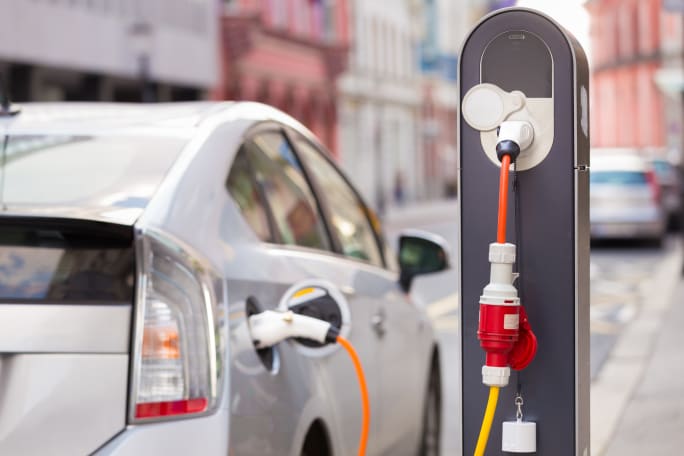
Some benefits of faster fleet electrification: Increase the size of the used electric vehicle (EV) market by 40%; add four million public charging units; lower battery costs by 14%; and avoid an estimated 120,000 premature deaths from transport-related pollution, according to a study from The Climate Group.
Photo: Climate Group
Improving Public Health
As EVs help to reduce transport-related air pollution, the accelerated scenario would avoid an estimated 120,000 premature deaths annually in 2030, with the greatest benefit occurring in densely populated urban areas in the Global South. This would also help to save on global healthcare costs caused by air pollution, which contributes to trillions of dollars of spending every year[v].
Increasing Public Chargers
Meeting charging demand under this accelerated scenario would on average require an extra 14,000 charging units to be installed every day through to 2030, over and above current projections[vi]. This means that faster fleet electrification would result in an additional four million public chargers being built – enough to meet the needs of 29 million EVs.
Stimulating Battery Innovation
As the accelerated scenario would mean greater EV demand, this would lead to battery costs being a further 14% cheaper by 2030 than has been forecast[vii], thanks to advances in the efficiency of production. This would also help to bring forward the tipping point where EVs reach purchase price parity with equivalent internal combustion engine (ICE) vehicles by around one year, with this occurring as early as 2023 in some markets and vehicle categories.
Making the Scenario a Reality
To ensure the accelerated scenario can be reached, it has been stress-tested against potential constraining factors that could limit EV growth. These include the availability of raw materials for batteries, such as lithium carbonate, as well as installed battery manufacturing capacity.
The report also highlights that the right commitments, policy support and additional investment will be required to make faster fleet electrification a reality, providing clear recommendations for governments, investors and businesses. For example, businesses and governments that own and operate vehicles can commit to EVs today, sending a demand signal to help trigger investments in increased production capacity from automotive manufacturers and within the battery value chain.
Global initiatives such as EV100, led by the Climate Group, are helping to aggregate this demand. Through EV100, there are more than 100 corporates with some of the world’s largest fleets, including BT Group, LeasePlan and Siemens, committed to transition more than 5 million light duty vehicles to electric by 2030.
More Electric Vehicles

EV Charging Use Is Outpacing Infrastructure Growth
ChargePoint’s 2026 Charging Forward Report points to rising charger use, higher-powered charging, commercial vehicle electrification, and energy-management technology. Here’s what fleets should know.
Read More →
EV Realty Names Henrik Holland President as Charging Platform Expands
The former Prologis Mobility and Shell executive will help expand EV Realty’s truck charging business and move its power-first infrastructure model into autonomous vehicle depots and other fleet sectors.
Read More →
GreenPower Expands New Mexico EV Pilot With Larger Buses, V2G Testing
After logging more than 17,000 electric miles in the first year, New Mexico’s statewide pilot is moving into its second phase with larger vehicles, continued charging evaluations, and more.
Read More →
Can EV-as-a-Service Help Fleets Scale Electrification?
Sustainability Partners CEO Adam Cain explains how matching EVs, charging infrastructure, and duty cycles can help fleets scale electrification.
Read More →
How EV-as-a-Service Is Moving Fleets Beyond Pilots
Adam Cain, president and CEO of Sustainability Partners, explains how EV-as-a-service can help fleets scale deployments by addressing duty-cycle requirements and charging challenges.
Read More →
PowerFlex, The Mobility House Join Forces to Advance Fleet Electrification
Two EV charging providers are joining forces to deliver a broader portfolio of energy management and fleet electrification solutions.
Read More →
Ford Retools Louisville Plant for Fathom Electric Truck Production
Ford's $2 billion Louisville Assembly Plant overhaul introduces a three-part assembly process for the Fathom midsize electric truck, with production scheduled to begin in 2027.
Read More →
Merchants Fleet Reports 290M EV Miles as Fleets Navigate Changing Electrification Market
From millions in operating savings to hundreds of millions of EV miles, Merchants Fleet’s latest report reveals what’s working and what’s changing in fleet electrification.
Read More →
California District Commits to Electrify 25% of School Bus Fleet by 2028
One of the nation's largest school bus electrification projects to date demonstrates how grants, charging infrastructure, and public-private partnerships can help fleets transition to EVs at scale.
Read More →
Aptera Orders Bodies and Chassis for Its First 40 Production Vehicles
Aptera Motors Corp. has issued purchase orders for the major structural components of its first 40 vehicles, and body and chassis components are expected to begin arriving in October.
Read More →