



Related News: Lucid Gravity Centers The Grand EV Debate
Lucid Misses Earnings Targets, Slows EV Growth
Lucid reported higher production and revenue in 2025 and issued guidance to build up to 27,000 vehicles in 2026.
March 5, 2026
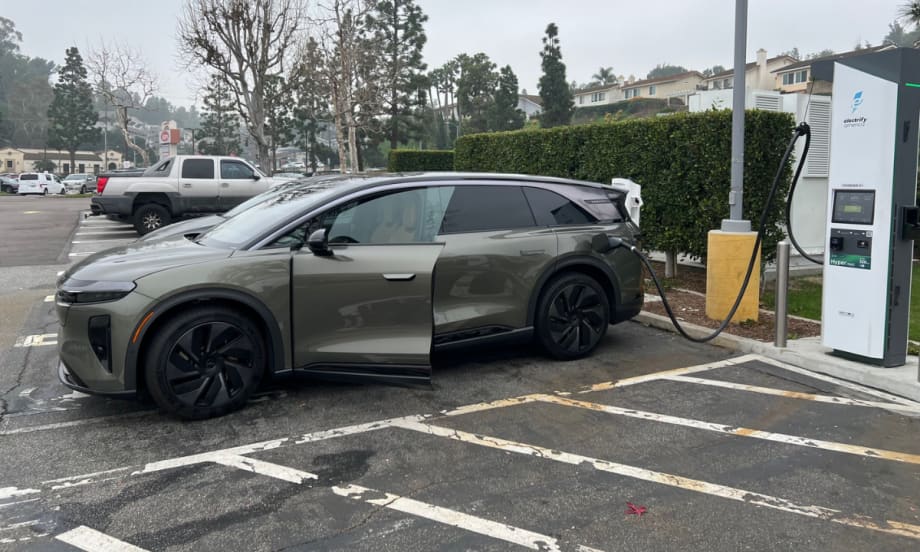
Lucid reported $522.7 million in fourth-quarter revenue and $1.35 billion for the full year, along with 15,841 vehicle deliveries in 2025. The company also issued 2026 production guidance of 25,000 to 27,000 vehicles.
Photo: Martin Romjue / Charged Fleet
2 min to read
EV maker Lucid Group Inc. reported financial results for Q4 and full year ended Dec. 31, 2025 that showed a key loss and a gain: The company lost $3.62 per share in the quarter versus an expected loss of $2.62 per share, but revenue reached $523 million instead of an expected $468 million.
Earnings and Production Results
The company reported full-year revenue of $1.35 billion. Lucid ended the quarter with about $4.6 billion in total liquidity.
Lucid delivered 15,841 vehicles in 2025. The company issued annual production guidance for 2026 of 25,000 to 27,000 vehicles and said it will continue adjusting production levels to align with sales and delivery demand.
“2025 was focused on execution and strategic adjustments to position Lucid for long-term growth,” said Marc Winterhoff, interim CEO at Lucid, in a Feb. 24 news release. He said the company increased production, reduced unit costs, and strengthened its financial position during the year.
Winterhoff added that Lucid advanced its autonomy strategy in 2025 and is preparing to produce its Midsize vehicles and deploy Lucid robotaxis with partners in 2026.
Taoufiq Boussaid, chief financial officer at Lucid, said in a news release that Q4 reflected improvements in production and unit economics.
“Our liquidity position remains strong, providing flexibility to execute near-term objectives while investing in future growth,” Boussaid said. He added that the company is making targeted adjustments to its U.S.-based, non-manufacturing workforce to reallocate resources as it prepares for product and production expansion.
Production Revision
On Jan. 5, 2026, Lucid reported preliminary production of 18,378 vehicles for the full year and 8,412 vehicles for the fourth quarter of 2025.
Following that announcement, the company determined that 538 vehicles had not completed internal procedures required under its final validation process to be classified as produced. As a result, Lucid revised its reported production totals to 17,840 vehicles for the full year and 7,874 vehicles for Q4 2025.
The company said the vehicles are expected to complete the validation process in 2026. The revision relates to the timing of when vehicles are classified as produced under Lucid’s internal criteria and does not affect previously reported financial results.
Media outlets reported that Lucid’s results were released a few days after the company laid off 12% of its U.S. salaried workforce, about 300 employees, in an effort to streamline operations, and “operate with greater efficiency and deliver on our commitments to gross margin improvement and long-term growth,” according to a statement from the company.
More Electric Vehicles
EV Charging Use Is Outpacing Infrastructure Growth
ChargePoint’s 2026 Charging Forward Report points to rising charger use, higher-powered charging, commercial vehicle electrification, and energy-management technology. Here’s what fleets should know.
Read More →
EV Realty Names Henrik Holland President as Charging Platform Expands
The former Prologis Mobility and Shell executive will help expand EV Realty’s truck charging business and move its power-first infrastructure model into autonomous vehicle depots and other fleet sectors.
Read More →
GreenPower Expands New Mexico EV Pilot With Larger Buses, V2G Testing
After logging more than 17,000 electric miles in the first year, New Mexico’s statewide pilot is moving into its second phase with larger vehicles, continued charging evaluations, and more.
Read More →
Can EV-as-a-Service Help Fleets Scale Electrification?
Sustainability Partners CEO Adam Cain explains how matching EVs, charging infrastructure, and duty cycles can help fleets scale electrification.
Read More →
How EV-as-a-Service Is Moving Fleets Beyond Pilots
Adam Cain, president and CEO of Sustainability Partners, explains how EV-as-a-service can help fleets scale deployments by addressing duty-cycle requirements and charging challenges.
Read More →
PowerFlex, The Mobility House Join Forces to Advance Fleet Electrification
Two EV charging providers are joining forces to deliver a broader portfolio of energy management and fleet electrification solutions.
Read More →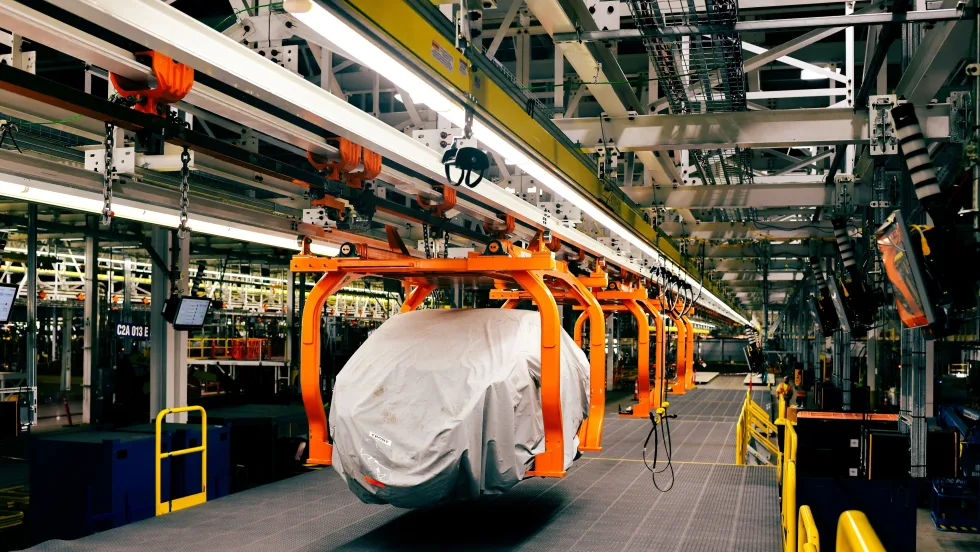
Ford Retools Louisville Plant for Fathom Electric Truck Production
Ford's $2 billion Louisville Assembly Plant overhaul introduces a three-part assembly process for the Fathom midsize electric truck, with production scheduled to begin in 2027.
Read More →
Merchants Fleet Reports 290M EV Miles as Fleets Navigate Changing Electrification Market
From millions in operating savings to hundreds of millions of EV miles, Merchants Fleet’s latest report reveals what’s working and what’s changing in fleet electrification.
Read More →
California District Commits to Electrify 25% of School Bus Fleet by 2028
One of the nation's largest school bus electrification projects to date demonstrates how grants, charging infrastructure, and public-private partnerships can help fleets transition to EVs at scale.
Read More →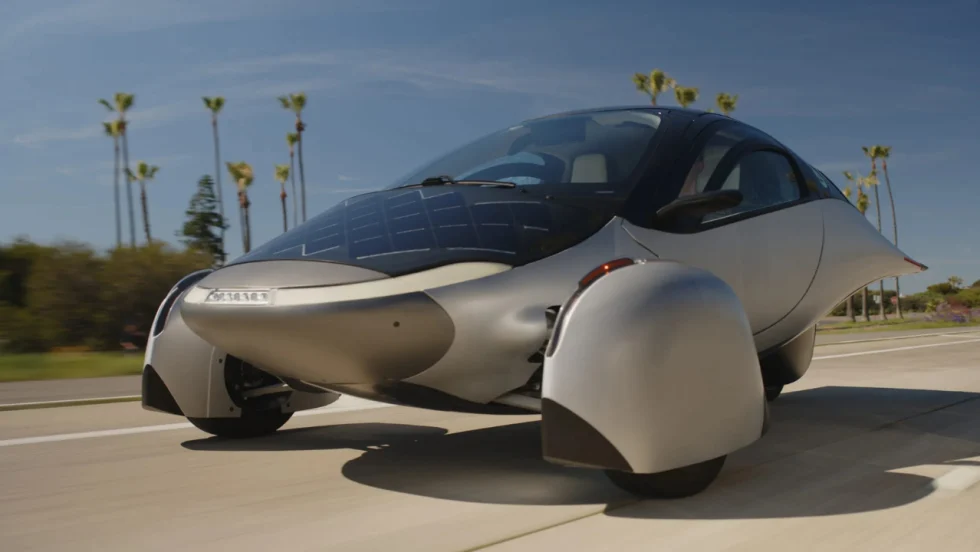
Aptera Orders Bodies and Chassis for Its First 40 Production Vehicles
Aptera Motors Corp. has issued purchase orders for the major structural components of its first 40 vehicles, and body and chassis components are expected to begin arriving in October.
Read More →