


Related: House Bill Would Spend $319 Billion on Highways, Postpone New HOS Rules
House Infrastructure Bill Heavy on Electrification Spending
The $1.5 trillion package of infrastructure priorities includes federal support for electric vehicles and infrastructure. Trucking groups oppose the bill’s provision that calls for higher motor carrier insurance minimums.
by Staff
July 7, 2020
The bill would require at least 75% percent of new vehicles purchased by the U.S. Postal Service to be electric and install EV charging stations at all public post office locations by 2026.
Photo via Depositphotos.
3 min to read
Last week, the U.S. House of Representatives passed the Moving Forward Act (HR 2), a $1.5 trillion, 2,300-page package of infrastructure priorities. The nucleus of the bill authorizes $494 billion for surface transportation programs such as roads and bridges yet it also expands programs to accelerate electric fleets and infrastructure.
The bill provides $350 million in grants to build electric vehicle chargers, and hydrogen, natural gas and propane fueling infrastructure for 2022 through 2025.
The bill would create a new tax credit of up to $2,500 for buyers of used electric vehicles, or 30% of the sale price. It would increase the cap on an auto manufacturer’s federal EV tax credits from 200,000 to 600,000.
The bill would require at least 75% percent of new vehicles purchased by the U.S. Postal Service to be electric and install EV charging stations at all public post office locations by 2026.
The bill also looks to modernize the electric grid to be capable of handling more EVs and gives credits to renewable energy companies for the development of future products.
Alternative energy trade groups expressed support for the bill: “The Electric Drive Transportation (EDTA) applauds the bill’s support for electric drive transportation and its recognition that electric transportation is a central element of a 21st century transportation sector and of a meaningful climate change strategy.”
Yet the bill includes a provision that would more than double the minimum level of financial responsibility for trucking companies, which would mandate higher motor carrier insurance minimums, if adopted.
Trucking associations voiced their opposition:
The National Association of Small Trucking Companies stated: “… we write in opposition to H.R. 2, the INVEST in America Act, noting especially an amendment, mandating higher motor carrier insurance minimums, adopted in markup to an already egregious bill.”
The Owner-Operator Independent Drivers Association stated: “OPPOSE Final Passage of H.R. 2 …
“Section 4408 will do absolutely NOTHING to improve safety on our highways. There is not an ounce of reputable research that indicates imposing such a dramatic increase in insurance coverage do anything to reduce crash rates. In fact, federal research reveals how unnecessary this proposal is by confirming only 0.06% of crashes result in damages that exceed today’s minimum coverage limits.
“What this provision will do is destroy small trucking businesses in every corner of the country. Increasing the minimum insurance requirements from $750,000 to $2,000,000 in the midst of a major economic downturn would be nothing short of disastrous for many small motor carriers and owner-operators, who are currently struggling to stay in business due to historically low freight rates.”
Republicans ridiculed the bill as filled with Democratic priorities, while Democrats said an alternative Republican committee proposal did not contain any mandates to address carbon emissions or climate change.
The bill has been sent to the Senate, where it likely won’t be taken up as written. “This so-called infrastructure bill would siphon billions in funding from actual infrastructure to funnel into climate change policies,” said Senate Majority Leader Mitch McConnell on the Senate floor last Wednesday.
Originally posted on Automotive Fleet
More Electric Vehicles
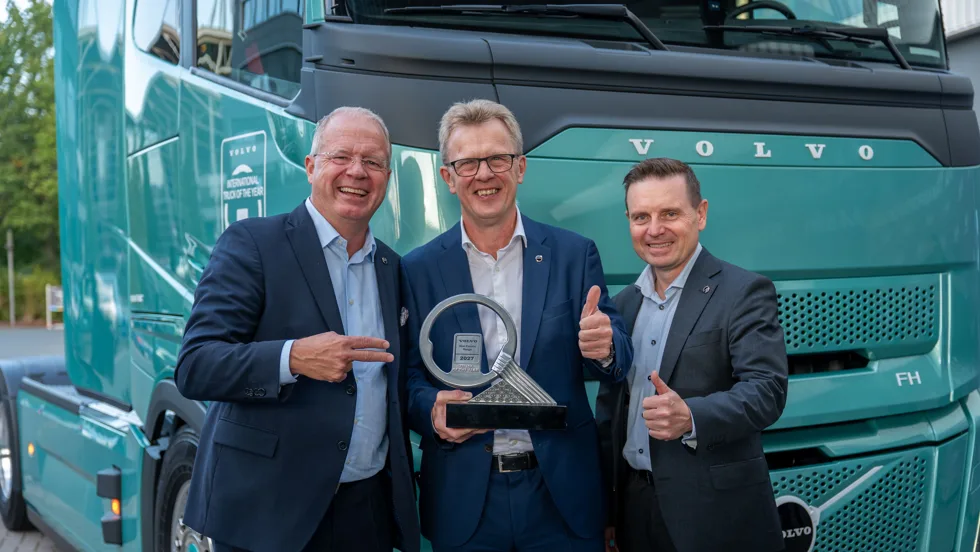
Volvo Trucks’ Electric Range Named International Truck of the Year 2027
The award recognizes Volvo’s global heavy-duty electric lineup, while more than 750 VNR Electric trucks have accumulated nearly 37 million miles in U.S. and Canadian fleet operations.
Read More →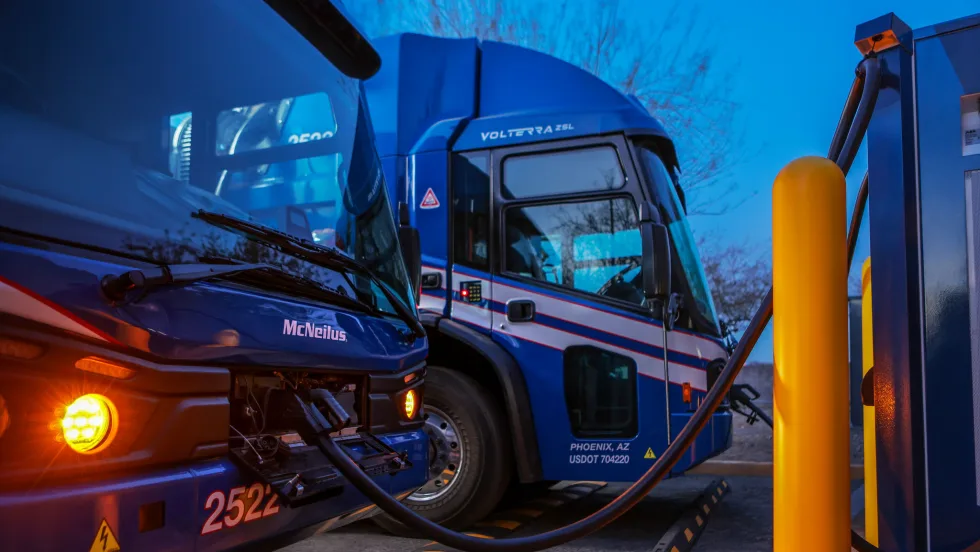
How Republic Services Decides Where Its Next Electric Trucks Can Go
With 250 electric collection trucks now in service, Republic Services is learning that scaling electrification depends less on proving the vehicle and more on whether each site can support what comes next.
Read More →
EV Charging Use Is Outpacing Infrastructure Growth
ChargePoint’s 2026 Charging Forward Report points to rising charger use, higher-powered charging, commercial vehicle electrification, and energy-management technology. Here’s what fleets should know.
Read More →
EV Realty Names Henrik Holland President as Charging Platform Expands
The former Prologis Mobility and Shell executive will help expand EV Realty’s truck charging business and move its power-first infrastructure model into autonomous vehicle depots and other fleet sectors.
Read More →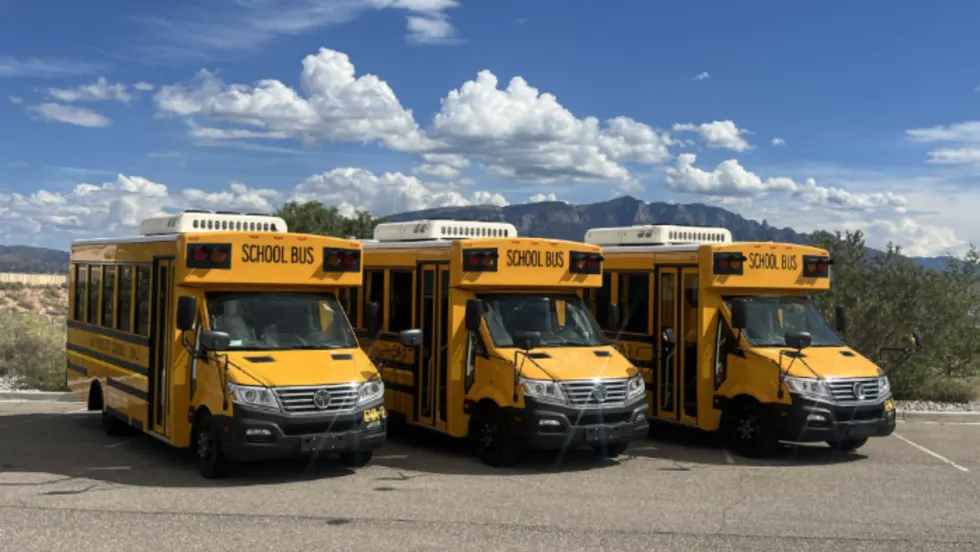
GreenPower Expands New Mexico EV Pilot With Larger Buses, V2G Testing
After logging more than 17,000 electric miles in the first year, New Mexico’s statewide pilot is moving into its second phase with larger vehicles, continued charging evaluations, and more.
Read More →
Can EV-as-a-Service Help Fleets Scale Electrification?
Sustainability Partners CEO Adam Cain explains how matching EVs, charging infrastructure, and duty cycles can help fleets scale electrification.
Read More →
How EV-as-a-Service Is Moving Fleets Beyond Pilots
Adam Cain, president and CEO of Sustainability Partners, explains how EV-as-a-service can help fleets scale deployments by addressing duty-cycle requirements and charging challenges.
Read More →
PowerFlex, The Mobility House Join Forces to Advance Fleet Electrification
Two EV charging providers are joining forces to deliver a broader portfolio of energy management and fleet electrification solutions.
Read More →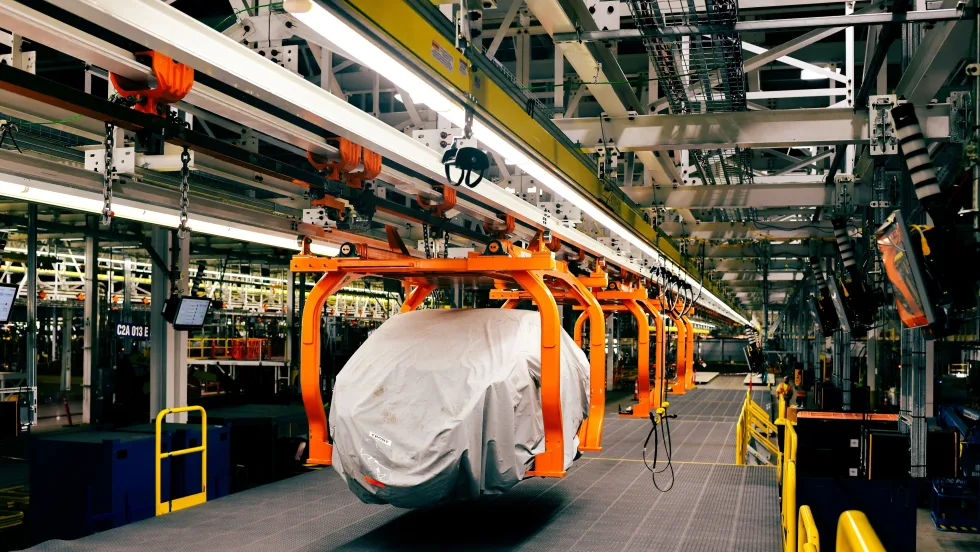
Ford Retools Louisville Plant for Fathom Electric Truck Production
Ford's $2 billion Louisville Assembly Plant overhaul introduces a three-part assembly process for the Fathom midsize electric truck, with production scheduled to begin in 2027.
Read More →
Merchants Fleet Reports 290M EV Miles as Fleets Navigate Changing Electrification Market
From millions in operating savings to hundreds of millions of EV miles, Merchants Fleet’s latest report reveals what’s working and what’s changing in fleet electrification.
Read More →