


Five Active Safety Features for New GM Model Cars
The improvements include every new electric vehicle launching this year, including the Chevrolet Blazer EV and Equinox EV.

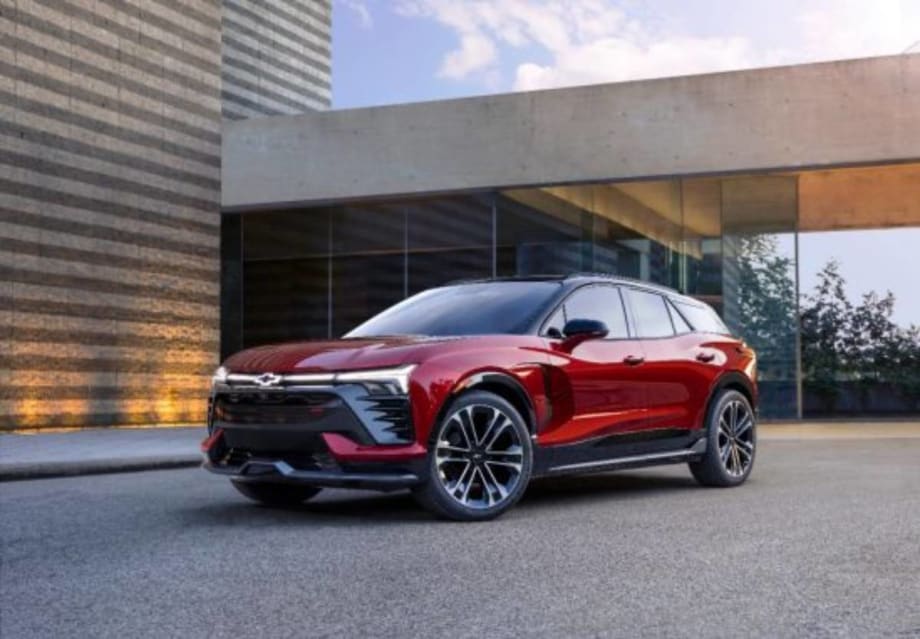
Most of General Motors 2023 models will include four additional active safety features.
Photo: General Motors
Automatic emergency braking, as well as four additional active safety features proven to reduce crashes, will be set as standard equipment on 98% of General Motors 2023 model year vehicles, the company announced May 31.
This encompasses every new electric vehicle launching this year, including the Chevrolet Blazer EV and Equinox EV.
GM is on track to meet a previously signed industry commitment to make automatic emergency braking standard on 95% of all new vehicles sold.
Because of this advocacy and collaboration among automakers, more new vehicles than ever will now provide this key active safety feature as standard equipment.
GM has now also gone a step further to make these four additional active safety features standard on most of its 2023 model year vehicles:
Forward collision alert.
Front pedestrian braking.
Lane keep assist with lane departure warning.
IntelliBeam auto high-beam control.
“GM has gone well beyond the safety commitment we made to our customers for the 2023 model year, with a handful of additional standard safety features shown to bring real-world results,” said John Capp, director of global safety technology and strategies at General Motors, in a news release.
GM is using safety research data to guide option packages that make the most beneficial features more widely available.
A 2023 University of Michigan Transportation Research Institute (UMTRI) study examining these GM safety features indicated automatic emergency braking, together with forward collision alert, reduced rear-end striking crashes by 42%.
“As we look ahead toward a future vision of zero crashes, zero emissions and zero congestion, these technologies are significant building blocks with proven benefits for reducing common crashes,” Capp said.
Additional GM safety features have shown positive results. Front pedestrian braking reduced front pedestrian crashes by 23% and lane keep assist with lane departure warning reduced roadway departure crashes by 15%.
A 2022 UMTRI study also indicated IntelliBeam reduced nighttime crashes with animals, pedestrians, and bicyclists by 22%.
The Cadillac LYRIQ, and the all-new 2023 Chevrolet Colorado and GMC Canyon, provide these five standard active safety features and usher in a new generation of front sensors with an expanded field of vision and added benefits.
Available benefits of this new sensor suite include:
Extending automatic emergency braking operation up to 80 mph.
Adding bicyclist automatic emergency braking to front pedestrian braking operation.
Providing smoother lane keep assist engagement.
Adding blind zone steering assist, which provides a brief, firm turn of the steering wheel to help avoid lane change crashes.
Additional future products will gain these same advancements in upcoming model years.
GM’s latest affordable internal combustion engine products also reflect the company’s standard active safety features.
Models as affordable as the 2024 Chevrolet Trax, with a starting price of $21,495, will feature standard automatic emergency braking, forward collision alert, front pedestrian braking, lane keep assist with lane departure warning and IntelliBeam headlights.
The Trax, along with the 2024 Buick Envista, provides customers more options for new vehicles priced well below $30,000.
Safety or driver assistance features are no substitute for the driver's responsibility to operate the vehicle in a safe manner. The driver should remain attentive to traffic, surroundings and road conditions at all times. Visibility, weather, and road conditions may affect feature performance.
Originally posted on Automotive Fleet
More Electric Vehicles

EV Charging Use Is Outpacing Infrastructure Growth
ChargePoint’s 2026 Charging Forward Report points to rising charger use, higher-powered charging, commercial vehicle electrification, and energy-management technology. Here’s what fleets should know.
Read More →
EV Realty Names Henrik Holland President as Charging Platform Expands
The former Prologis Mobility and Shell executive will help expand EV Realty’s truck charging business and move its power-first infrastructure model into autonomous vehicle depots and other fleet sectors.
Read More →
GreenPower Expands New Mexico EV Pilot With Larger Buses, V2G Testing
After logging more than 17,000 electric miles in the first year, New Mexico’s statewide pilot is moving into its second phase with larger vehicles, continued charging evaluations, and more.
Read More →
Can EV-as-a-Service Help Fleets Scale Electrification?
Sustainability Partners CEO Adam Cain explains how matching EVs, charging infrastructure, and duty cycles can help fleets scale electrification.
Read More →
How EV-as-a-Service Is Moving Fleets Beyond Pilots
Adam Cain, president and CEO of Sustainability Partners, explains how EV-as-a-service can help fleets scale deployments by addressing duty-cycle requirements and charging challenges.
Read More →
PowerFlex, The Mobility House Join Forces to Advance Fleet Electrification
Two EV charging providers are joining forces to deliver a broader portfolio of energy management and fleet electrification solutions.
Read More →
Ford Retools Louisville Plant for Fathom Electric Truck Production
Ford's $2 billion Louisville Assembly Plant overhaul introduces a three-part assembly process for the Fathom midsize electric truck, with production scheduled to begin in 2027.
Read More →
Merchants Fleet Reports 290M EV Miles as Fleets Navigate Changing Electrification Market
From millions in operating savings to hundreds of millions of EV miles, Merchants Fleet’s latest report reveals what’s working and what’s changing in fleet electrification.
Read More →
California District Commits to Electrify 25% of School Bus Fleet by 2028
One of the nation's largest school bus electrification projects to date demonstrates how grants, charging infrastructure, and public-private partnerships can help fleets transition to EVs at scale.
Read More →
Aptera Orders Bodies and Chassis for Its First 40 Production Vehicles
Aptera Motors Corp. has issued purchase orders for the major structural components of its first 40 vehicles, and body and chassis components are expected to begin arriving in October.
Read More →