



Check This Out: Fleet Favorite EVs Earn Big Safety Accolades
EVs: An IIHS Researcher Speaks Out About a Weighty Issue
Many of the new generation of EVs weigh upward of 6,000 pounds in part due to excessively heavy lithium-ion batteries. An expert explores how all that extra weight poses new dangers for the nation’s motorists, bicyclists, and pedestrians while offering solutions as well.
March 23, 2023
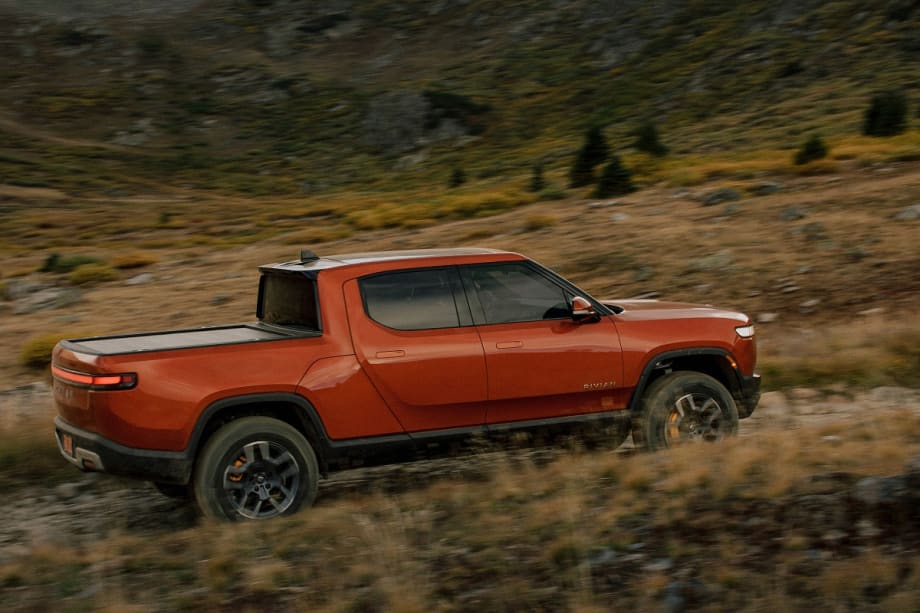
The 2022 Rivian R1T is just one example of a new generation of electric vehicles that are heavier than their predecessors. The R1T weighs in at a whopping 7,000 pounds.
Photo: Rivian
4 min to read
Researchers at the Insurance Institute for Highway Safety (IIHS) recently voiced concern about the safety implications linked to the weight of new electric vehicles (EVs).
Lithium-ion batteries are very heavy and all that extra weight could pose new danger to other vehicles on the road as well as vulnerable road users like pedestrians and cyclists, notes Raul Arbelaez, vice president of the vehicle research center at IIHS, in a recent article.
EVs are on their way to eclipsing sales of conventional vehicles soon, and they will be here to stay. In his article, Arbelaez explores the potential safety problems and possible solutions.
Weighty Concerns
There’s a significant difference between the first all-electric vehicle IIHS tested — a 3,339-pound 2011 Nissan LEAF — and the current generation of EVs, many of which exceed 6,000 pounds. These are large SUVs and pickups, packed with power that requires a massive battery.
The scary issue is the problem this extra weight poses when one of these extremely heavy EVs crashes into a non-electric car or SUV with a typical weight of 3,000-4,000 pounds. When two vehicles collide, the heavier vehicle pushes the lighter one backward, resulting in higher forces on the people in the lighter vehicle and lower forces on people in the heavier vehicle.
Clearly, all that heft on the part of the latest generation of EVs poses a new hazard to traditional vehicles. Moreover, the extra weight may also present a threat to pedestrians and bicyclists, though the danger for them is not as straightforward. The weight differential between a person and any type of passenger vehicle is already so enormous that the additional weight from an EV battery would make little difference in most cases.
That said, it’s unclear whether or not all EVs have braking performance that matches their additional mass. If the extra weight leads to longer stopping distances, that will likely lead to an increase in pedestrian and cyclist deaths — which already have been on the rise in recent years.
Rapid acceleration is another major concern. Today’s supersized EVs are a double whammy of weight and horsepower, notes Arbelaez. While there were many heavy vehicles on our roads before EVs, a delivery truck isn’t designed to go from 0 to 60 in about three seconds — but the 7,000-pound Rivian R1T pickup is engineered to do so. Even the Kia EV6, a small SUV that weighs about 4,500 pounds, boasts the same rapid acceleration.
The bottom line: If the trend toward heavier, more powerful EVs continues, we will soon be surrounded by a plethora of super-heavy, high-acceleration vehicles all around us — including in residential neighborhoods. That, in turn, means collisions involving a huge weight disparity will be much more likely.
Safety Solutions
EVs are an important step in the evolution of motor vehicles. But due to the weight issue, long stopping distance, and speedy acceleration, Arbelaez says stakeholders should engage in some fresh thinking about the kinds of vehicles we want on our roads.
As a society, we should consider how much mass individuals should be driving around. There are EVs with more reasonable weights. The heaviest of the new EVs are heavier because they are bigger, but also because larger batteries afford them longer range and higher horsepower.
The ability to travel 400 miles on a charge is convenient but unnecessary for most commutes. As charging speed and infrastructure improves, it will arguably be less important for road trips too.
As for horsepower, Arbelaez wonders if the kind of rapid acceleration the new models boast is really important or even a good idea. Vehicles with extreme levels of power simply encourage more speeding, which leads to more fatal crashes.
Also, automakers should consider other design changes to improve crash compatibility. For example, heavier EVs could be built with additional crush space in their front ends to help compensate for the effect of their extra weight in a crash with another vehicle. Additional space would protect not only occupants, but also people in other, lighter vehicles. With no engine taking up space in the front of the vehicle, there may also be more flexibility to design front ends that are less likely to injure pedestrians and bicyclists.
Finally, expected improvements in battery technology will help by allowing smaller batteries to store more energy and an expanding network of fast public chargers will take away some of the need for long ranges in the future.
In the meantime, Arbelaez says manufacturers should equip all new vehicles with high-performing crash avoidance systems that recognize and brake for pedestrians and bicyclists, in addition to other vehicles, and good headlights that allow drivers to react quickly at night. States and local governments should consider lowering speed limits, factoring in the increased danger from weight disparities, and backing them up with increased enforcement.
Originally posted on Automotive Fleet
More Electric Vehicles

EV Charging Use Is Outpacing Infrastructure Growth
ChargePoint’s 2026 Charging Forward Report points to rising charger use, higher-powered charging, commercial vehicle electrification, and energy-management technology. Here’s what fleets should know.
Read More →
EV Realty Names Henrik Holland President as Charging Platform Expands
The former Prologis Mobility and Shell executive will help expand EV Realty’s truck charging business and move its power-first infrastructure model into autonomous vehicle depots and other fleet sectors.
Read More →
GreenPower Expands New Mexico EV Pilot With Larger Buses, V2G Testing
After logging more than 17,000 electric miles in the first year, New Mexico’s statewide pilot is moving into its second phase with larger vehicles, continued charging evaluations, and more.
Read More →
Can EV-as-a-Service Help Fleets Scale Electrification?
Sustainability Partners CEO Adam Cain explains how matching EVs, charging infrastructure, and duty cycles can help fleets scale electrification.
Read More →
How EV-as-a-Service Is Moving Fleets Beyond Pilots
Adam Cain, president and CEO of Sustainability Partners, explains how EV-as-a-service can help fleets scale deployments by addressing duty-cycle requirements and charging challenges.
Read More →
PowerFlex, The Mobility House Join Forces to Advance Fleet Electrification
Two EV charging providers are joining forces to deliver a broader portfolio of energy management and fleet electrification solutions.
Read More →
Ford Retools Louisville Plant for Fathom Electric Truck Production
Ford's $2 billion Louisville Assembly Plant overhaul introduces a three-part assembly process for the Fathom midsize electric truck, with production scheduled to begin in 2027.
Read More →
Merchants Fleet Reports 290M EV Miles as Fleets Navigate Changing Electrification Market
From millions in operating savings to hundreds of millions of EV miles, Merchants Fleet’s latest report reveals what’s working and what’s changing in fleet electrification.
Read More →
California District Commits to Electrify 25% of School Bus Fleet by 2028
One of the nation's largest school bus electrification projects to date demonstrates how grants, charging infrastructure, and public-private partnerships can help fleets transition to EVs at scale.
Read More →
Aptera Orders Bodies and Chassis for Its First 40 Production Vehicles
Aptera Motors Corp. has issued purchase orders for the major structural components of its first 40 vehicles, and body and chassis components are expected to begin arriving in October.
Read More →