


China’s New Climate Policy to Focus on Carbon Emission Reductions
China is expected to shift its climate policy focus to reducing carbon emissions, an effort to help the country achieve its Paris Climate Accord and carbon neutrality target by 2060

NuclearVacuum
China is expected to shift its climate policy focus to reducing carbon emissions, an effort to help the country achieve its Paris Climate Accord and carbon neutrality target by 2060 while creating a sustainable electric vehicle (EV) economy, according to GlobaData, a leading data and analytics company.
The policy move will replace China’s green-car credit system—NEV credits—which the country has been phasing out over recent years.
Under the NEV credits, auto manufacturers earn points for selling electric or fuel-efficient vehicles. Tradable to other companies, the credits earned revenues or offset corporate average fuel consumption (CAFC) deficits and/or penalties on vehicles with greater carbon emissions.
According to GlobalData Senior Automotive Analyst Bakar Sadik Agwan, at GlobalData, “The policy is aimed at replacing ‘multiple’ regional incentives with a standard country-wide policy that emphasizes automakers to achieve carbon neutrality via EV sales.”
The new China policy is similar to the EU Emissions Trading System (ETS), which is based on the “cap and trade principle”: a cap is set on the permissible emissions in auto manufacturing and reduced over time, according to GlobalData. Within the cap, manufacturing companies can buy emission allowances that can be traded with other manufacturers when needed.
“The existing credit policy has attracted many manufacturers to go for EV manufacturing over ICE,” said Agwan, “but the industry now struggles with overcapacity and market fragmentation which is a concern for the government.”
Originally posted on Automotive Fleet
More Electric Vehicles
EV Charging Use Is Outpacing Infrastructure Growth
ChargePoint’s 2026 Charging Forward Report points to rising charger use, higher-powered charging, commercial vehicle electrification, and energy-management technology. Here’s what fleets should know.
Read More →
EV Realty Names Henrik Holland President as Charging Platform Expands
The former Prologis Mobility and Shell executive will help expand EV Realty’s truck charging business and move its power-first infrastructure model into autonomous vehicle depots and other fleet sectors.
Read More →
GreenPower Expands New Mexico EV Pilot With Larger Buses, V2G Testing
After logging more than 17,000 electric miles in the first year, New Mexico’s statewide pilot is moving into its second phase with larger vehicles, continued charging evaluations, and more.
Read More →
Can EV-as-a-Service Help Fleets Scale Electrification?
Sustainability Partners CEO Adam Cain explains how matching EVs, charging infrastructure, and duty cycles can help fleets scale electrification.
Read More →
How EV-as-a-Service Is Moving Fleets Beyond Pilots
Adam Cain, president and CEO of Sustainability Partners, explains how EV-as-a-service can help fleets scale deployments by addressing duty-cycle requirements and charging challenges.
Read More →
PowerFlex, The Mobility House Join Forces to Advance Fleet Electrification
Two EV charging providers are joining forces to deliver a broader portfolio of energy management and fleet electrification solutions.
Read More →
Ford Retools Louisville Plant for Fathom Electric Truck Production
Ford's $2 billion Louisville Assembly Plant overhaul introduces a three-part assembly process for the Fathom midsize electric truck, with production scheduled to begin in 2027.
Read More →
Merchants Fleet Reports 290M EV Miles as Fleets Navigate Changing Electrification Market
From millions in operating savings to hundreds of millions of EV miles, Merchants Fleet’s latest report reveals what’s working and what’s changing in fleet electrification.
Read More →
California District Commits to Electrify 25% of School Bus Fleet by 2028
One of the nation's largest school bus electrification projects to date demonstrates how grants, charging infrastructure, and public-private partnerships can help fleets transition to EVs at scale.
Read More →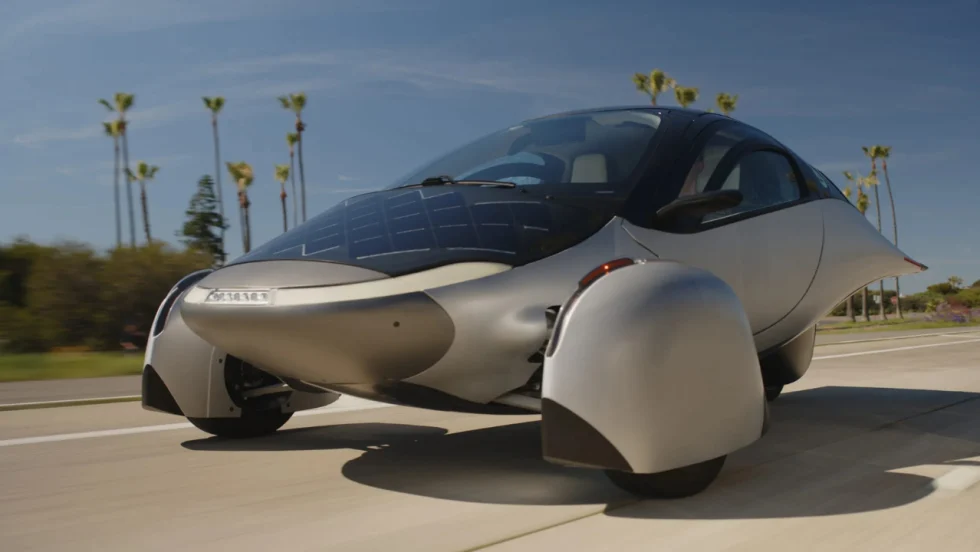
Aptera Orders Bodies and Chassis for Its First 40 Production Vehicles
Aptera Motors Corp. has issued purchase orders for the major structural components of its first 40 vehicles, and body and chassis components are expected to begin arriving in October.
Read More →