



Building Smarter Cybersecurity Policies for Fleet Operations
Polestar Barred from U.S. Market Under Connected Vehicle Rule
The automaker loses its authorization to sell new vehicles in the U.S., starting with the 2027 model year. Polestar owners will retain access to the brand's service network.
June 25, 2026
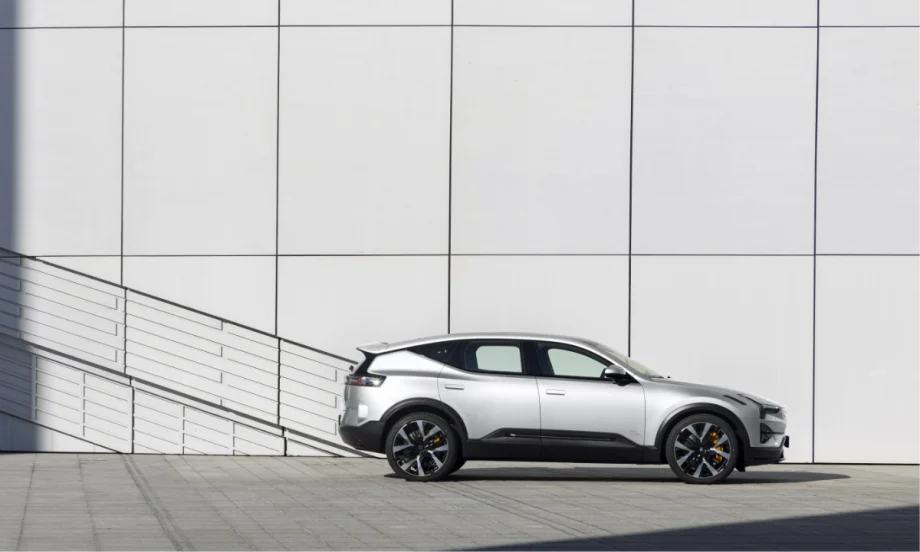
Polestar expects to release four new models in the next three years, though no longer in the U.S. market. Polestar 3 is shown.
Credit:
Polestar
3 min to read
Polestar, the Swedish EV brand owned by Chinese automaker Geely, announced Thursday that the U.S. Department of Commerce declined to grant it authorization under the Connected Vehicle Rule, effectively barring the company from marketing or selling new model-year 2027 vehicles in the United States.
The company said it will continue to sell existing stock of the Polestar 3 and Polestar 4 in the U.S.
In its official statement, Polestar said it "will continue to support customers, including providing access to its service network."
Polestar's Response: A Strategic Pivot
Polestar is characterizing its U.S. exit not as a forced retreat but as an acceleration of a strategy already largely centered on Europe.
Said CEO Michael Lohscheller in the statement: "The automotive industry is entering a new phase, based on regional dynamics. Our strategy reflects that, with Europe being our largest growth engine and our plan to manufacture Polestar 7 in Europe. Our record sales in 2025 and the first quarter of 2026 show that we are making strong progress, with several new market launches taking place in Europe this year. In addition, we will continue to invest in markets where we have opportunities to continue to grow, like Southeast Asia, Eastern Europe, Latin America and Canada."
Lohscheller also pointed to a full product pipeline as evidence of the company's broader health: "Polestar continues to challenge bigger, more established players thanks to our impressive cars and growing model line-up. Polestar 5 has received incredible feedback from the global media, with customer deliveries set to start during the summer. A new variant of our global bestseller, Polestar 4, is planned for the second half of this year, followed by the all-new Polestar 2 in 2027, and thereafter the Polestar 7 compact SUV."
None of those models, under the current rule, will be available to U.S. fleet buyers.
What Is the Connected Vehicle Rule?
The Connected Vehicle Rule, finalized in January 2025, bans connected vehicles with a "sufficient nexus" to China or Russia from the U.S. market, with software prohibitions taking effect for model year 2027 and hardware restrictions following in 2030. It covers telematics, cameras, microphones, GPS, Bluetooth, cellular modules, and automated driving software across gas, hybrid, and electric vehicles alike.
The argument is that Chinese-linked vehicle technology — including automated driving and connectivity systems — poses a national security risk.
The rule also covers American-made models that use Chinese software, meaning factory location alone is not sufficient to secure authorization. That's a relevant consideration for fleet procurement teams evaluating vehicles from brands with complex global ownership structures.
The Polestar 3 is built at Volvo's plant in Charleston, South Carolina, while the Polestar 4 is assembled in Busan, South Korea. Neither fact was sufficient to secure the company's authorization.
Volvo Cars Granted Authorization
The Polestar decision comes just a few months after the Trump administration granted the same authorization to Volvo Cars — Polestar's sibling company. Both automakers are publicly traded and operate under Geely's control, although Volvo Cars remains a separate listed company while Polestar is majority controlled by Geely-affiliated entities.
Volvo Cars operates as a more established automaker with a larger U.S. footprint, while Polestar is more closely tied to Geely's broader corporate structure and shares vehicle platforms and software with other Geely brands.
The Commerce Department has not publicly detailed the specific criteria that differentiated the two outcomes.
Volvo announced the exemption in a press statement on May 26:
"Under the rule Volvo Car USA was required to follow a process with the US Department of Commerce to obtain a specific authorization for the continued import and sale of connected cars in the US. The process is carried out on a case-by-case basis and the issuance of a specific authorization follows constructive discussions with the US Department of Commerce and other US officials regarding Volvo Cars' governance, technology and data security."
"With this specific authorization, Volvo Cars can continue its growth plans in the US."
Topics:vehicle technologyvehicle warrantyregulationswireless networksPolestarElectric VehiclesSuppliersOperations
Originally posted on Automotive Fleet
More Electric Vehicles
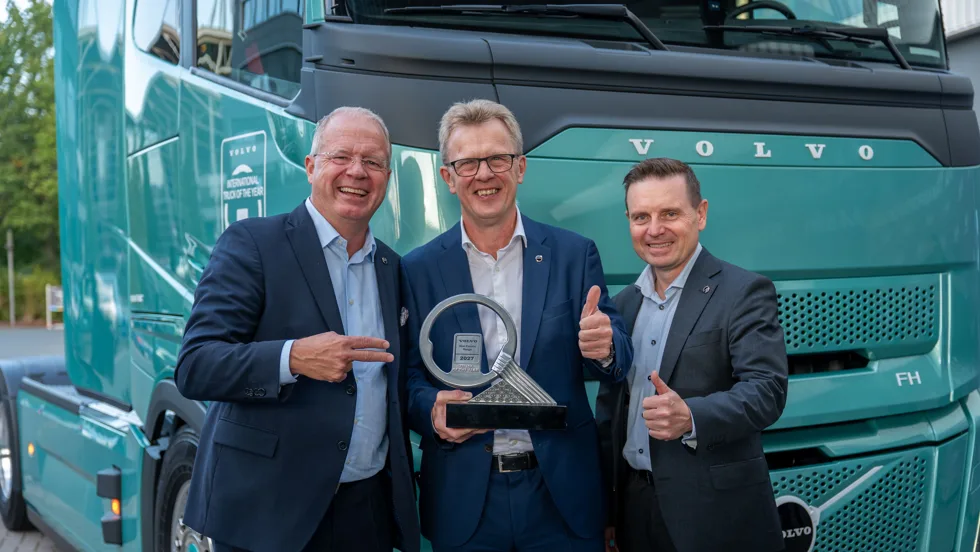
Volvo Trucks’ Electric Range Named International Truck of the Year 2027
The award recognizes Volvo’s global heavy-duty electric lineup, while more than 750 VNR Electric trucks have accumulated nearly 37 million miles in U.S. and Canadian fleet operations.
Read More →
How Republic Services Decides Where Its Next Electric Trucks Can Go
With 250 electric collection trucks now in service, Republic Services is learning that scaling electrification depends less on proving the vehicle and more on whether each site can support what comes next.
Read More →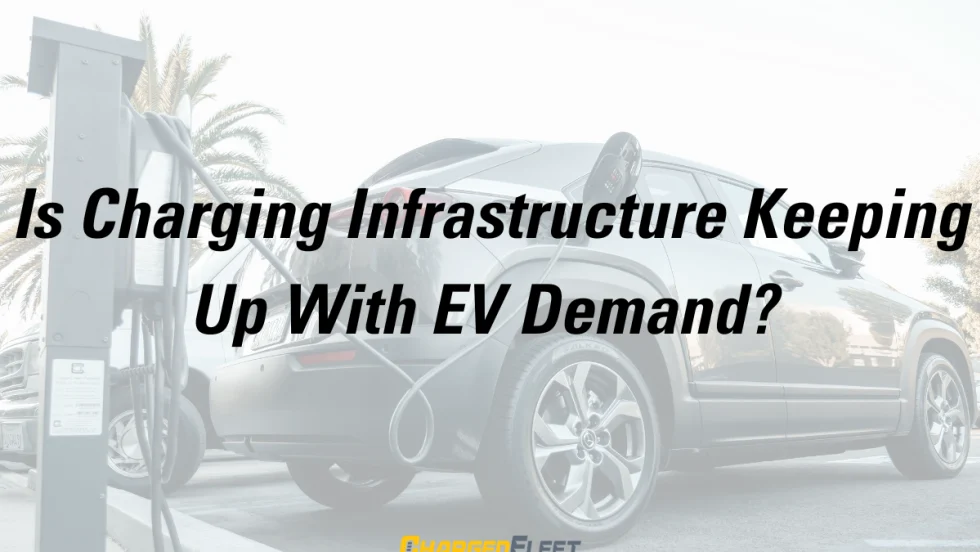
EV Charging Use Is Outpacing Infrastructure Growth
ChargePoint’s 2026 Charging Forward Report points to rising charger use, higher-powered charging, commercial vehicle electrification, and energy-management technology. Here’s what fleets should know.
Read More →
EV Realty Names Henrik Holland President as Charging Platform Expands
The former Prologis Mobility and Shell executive will help expand EV Realty’s truck charging business and move its power-first infrastructure model into autonomous vehicle depots and other fleet sectors.
Read More →
GreenPower Expands New Mexico EV Pilot With Larger Buses, V2G Testing
After logging more than 17,000 electric miles in the first year, New Mexico’s statewide pilot is moving into its second phase with larger vehicles, continued charging evaluations, and more.
Read More →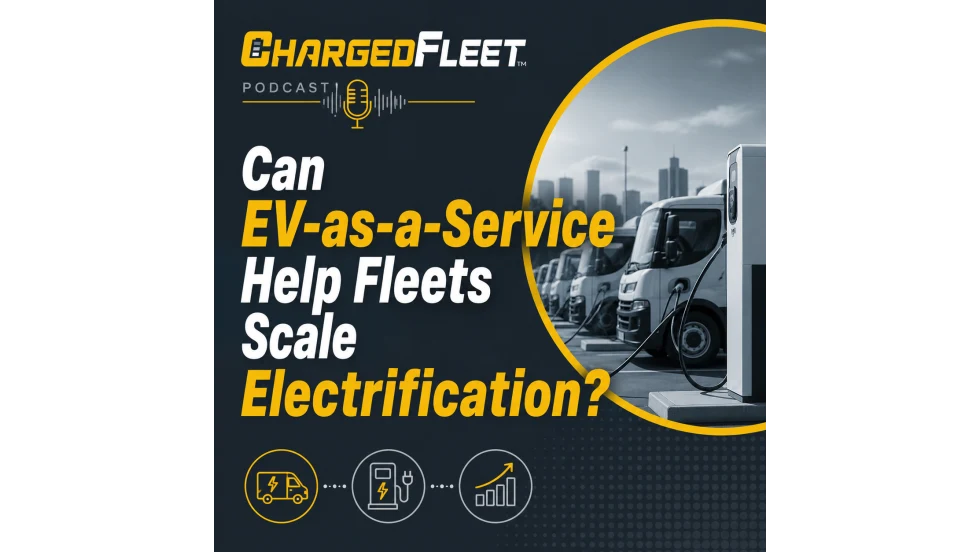
Can EV-as-a-Service Help Fleets Scale Electrification?
Sustainability Partners CEO Adam Cain explains how matching EVs, charging infrastructure, and duty cycles can help fleets scale electrification.
Read More →
How EV-as-a-Service Is Moving Fleets Beyond Pilots
Adam Cain, president and CEO of Sustainability Partners, explains how EV-as-a-service can help fleets scale deployments by addressing duty-cycle requirements and charging challenges.
Read More →
PowerFlex, The Mobility House Join Forces to Advance Fleet Electrification
Two EV charging providers are joining forces to deliver a broader portfolio of energy management and fleet electrification solutions.
Read More →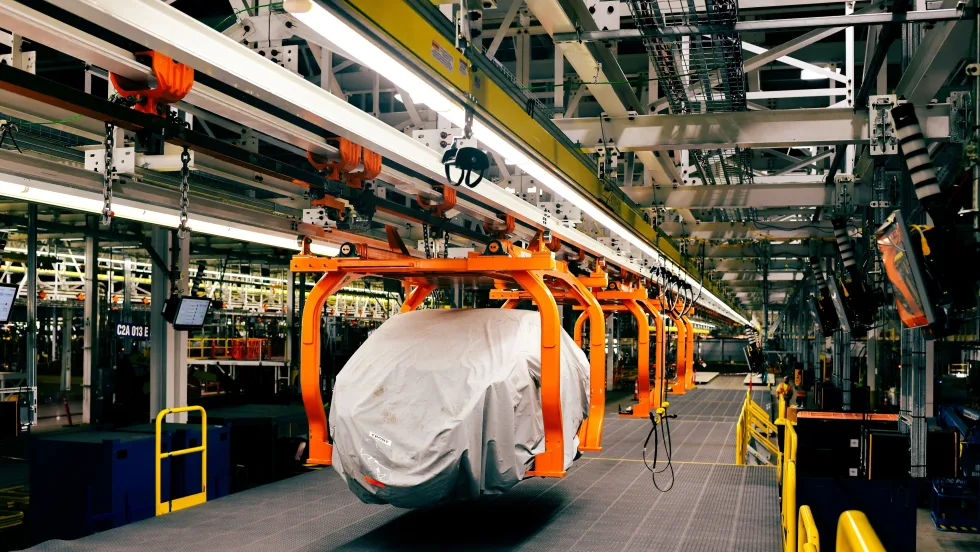
Ford Retools Louisville Plant for Fathom Electric Truck Production
Ford's $2 billion Louisville Assembly Plant overhaul introduces a three-part assembly process for the Fathom midsize electric truck, with production scheduled to begin in 2027.
Read More →
Merchants Fleet Reports 290M EV Miles as Fleets Navigate Changing Electrification Market
From millions in operating savings to hundreds of millions of EV miles, Merchants Fleet’s latest report reveals what’s working and what’s changing in fleet electrification.
Read More →