


Be Prepared: Why Most Fleet Operations Are Not Ready for an EV Battery Fire
The Battle of NACS vs CCS: Will There Be a Winner?
As EV charging infrastructure is developed across the U.S., a battle is emerging between Tesla’s North American Charging Standard (NACS) and Combined Charging System (CCS). Automakers are taking sides.

Hillary Weiss・Senior Editor
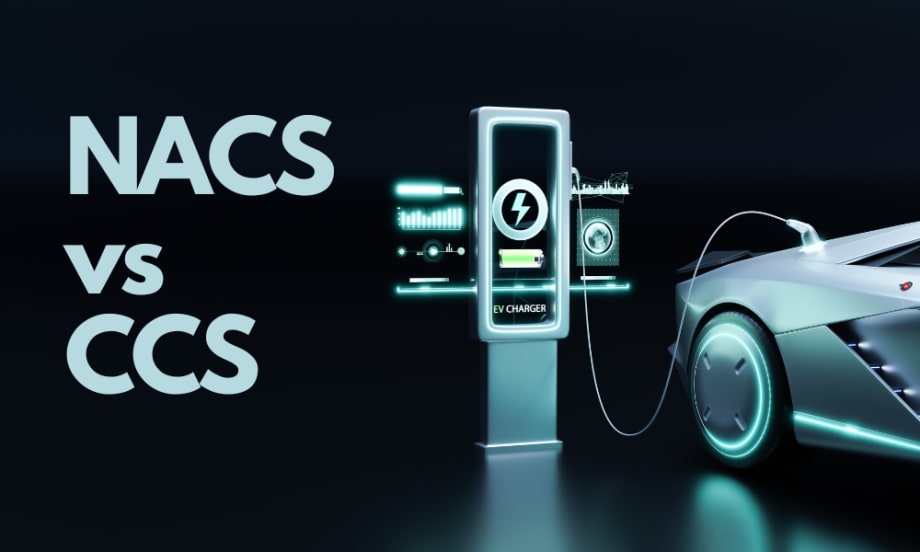
As the electric vehicle landscape evolves, NACS emerges as a strong contender, but challenges and opportunities remain.
Photo: Canva
6 min to read
The electric vehicle (EV) revolution is in full swing, with an increasing number of automakers vying for a slice of the EV market.
With this surge in interest comes a pivotal question among industry experts, automakers, and EV enthusiasts: North American Charging Standard (NACS) versus Combined Charging System (CCS) — which will emerge as the dominant charge port standard?
One thing is clear: More charging stations are needed to support the growing number of EVs on the road.
The National Renewable Energy Laboratory estimates that 182,000 DC fast chargers will be needed to support 30-42 million plug-in vehicles expected on the road by 2030.
Whether they are CCS or NACS, there are significant implications for both fleets and individual consumers.
Shaping the Electric Horizon: Analyzing the Numbers
As of July 2023, the U.S. Department of Energy reports a count of 32,000 publicly accessible DC fast chargers across the United States, catering to approximately 2.3 million EVs. This equates to a ratio of 72 vehicles per charger.
Of those chargers, 12,000 are Tesla Superchargers — more than a third.
For the longest time, only Tesla EVs could use Superchargers. However, throughout the summer of 2023, various automakers announced agreements to equip their EVs with NACS charge ports. Those automakers are:
Ford.
Mercedes-Benz.
Nissan.
Rivian.
Volkswagen.
Honda.
BMW.
Toyota.
Volvo.
Nick Esch, research analyst, Grid Edge, Wood Mackenzie, pointed out, "These six automakers account for 433,000, or 49%, of all EVs sold with the CCS port type in North America."
This big shift in the industry helps solidify NACS as the go-to standard of the future.
Andres Pinter, Co-CEO, Bullet EV Charging Solutions, an EV charger installation, and maintenance company added, “With most EV OEMs moving to NACS, Tesla has a huge advantage with its charging business in the short term because of its existing NACS-enabled Supercharger network. In the long run, charging will be simpler for all EV drivers. But these announcements create a lot of confusion for consumers today.”
But CCS is tenuously clinging to its market share with several OEMs still manufacturing EVs with this standard.
The current automakers using CCS are:
BMW Group.
General Motors.
Honda.
Hyundai.
Kia.
Mercedes-Benz Group.
Stellantis NV.
There are just under 7,000 CCS charging points in the U.S., according to CharIN.
That is less than Tesla’s Superchargers. But it’s worth noting that there are over 45,000 global Superchargers and over 60,000 global CCS chargers (CCS is the dominant standard in Europe and Asia).
Is this a significant difference for CCS chargers to win globally?
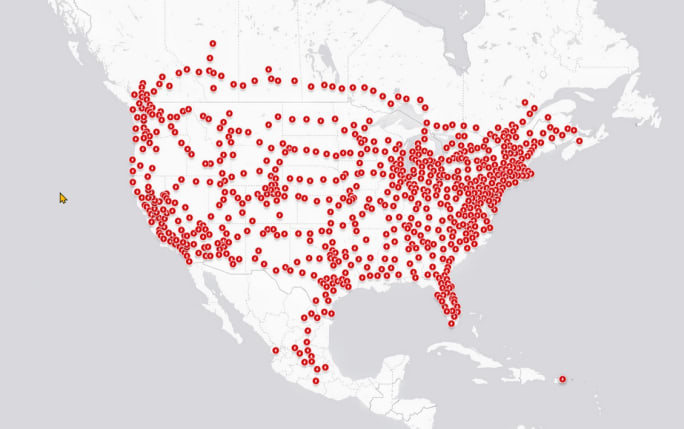
Tesla Supercharger locations in North America.
Photo: Tesla
Examining Quality and Convenience: What the Tea Leaves Predict
While potential charging speeds exhibit similarities, NACS has certain advantages over CCS.
Tesla has a decade's head start on developing and building charging infrastructure. As a result, it costs around 20% less than its competitors regarding deploying charging stations.
“It’s not surprising NACS is winning the war, the format is widely regarded as a superior design, a lightweight port that supports both AC and DC fast charging,” added Pinter from Bullet EV.
Tesla has unprecedented equipment uptime and provides site and wait time data for its Telsa customers, while other EVs don’t always provide this data.
As we’ve seen with the growing popularity of Apple products, customers are all about convenience and ease of use. And that can help NACS in the war in the long term.
“We view the increasing adoption of the NACS standard as great for fleet owners, operators, and consumers. NACS is smaller and more compact; the feedback is that it’s easier to use. Today, fleet operators we work with worry their early EV investments won't be future-proof. Consolidation and standardization could boost infrastructure investments since it reduces the risk of incompatible charging systems in the future,” said Luke Carlson, Director of Preconstruction, Mortenson Construction.
Despite NACS's advancements, it's important to consider the current state of play. CCS has not ceded the battle.
Ned Funnell, Charging Solution Architect at Electrada said, “NACS does appear poised to dominate the public charging space. However, fleets rely on medium- and heavy-duty vehicles, and manufacturers may hesitate to switch to NACS solely based on the public charging trend which affects light-duty vehicles almost exclusively.”
Because of this, it is speculated that Ford and GM could potentially maintain the provision of CCS for fleet orders, sidestepping the need for their clientele to maintain a depot with both NACS and CCS charging.
These announcements have not decisively indicated a comprehensive transition, leaving the door open for CCS vehicles to roll off their production lines for years to come.
“Predicting the optimal connector strategy for fleet charging infrastructure isn't straightforward — but stalling isn't an option. A possible connector change may tempt a fleet operator to wait and see, but the urgency to establish fleet charging infrastructure is only escalating. Lead times for electrical equipment and utility capacity aren't improving.” Funnell from Electrada added.
Federal Funding Changes the Game for Public Charging
While automakers decide which charging standard to use in their EVs, the Biden-Harris Administration is focused on building a reliable EV charging network. Its goal is to have 1.2 million public chargers by 2030.
The Administration has taken steps to establish national criteria for Federally funded EV chargers, including those supported by the National Electric Vehicle Infrastructure (NEVI) program.
The Federally funded fast chargers are mandated to incorporate CCS connectors- but not NACS connectors.
Several states, including Texas and Washington, have already indicated their intention to stipulate CCS and NACS connectors as required for their NEVI-funded charging networks.
"The expansion of NEVI funding to include stations with both CCS and NACS port types is a significant development. It's a clear indicator that we are moving toward a future where both port types will play a role in public fast-charging infrastructure," said Esch, Wood Mackenzie.
This approach showcases a commitment to flexibility and responsiveness to the evolving landscape of EV charging technology.
“Charging should be easily accessible to anyone who wants it. This announcement and Tesla opening its network create a new world of free-range charging,” said Pinter from Bullet EV.
Moving Toward a Common Goal
The overarching theme is clear: standardization and consolidation are key to a successful transition to EVs. Consumer confusion is the enemy of EV adoption.
General Motors, BMW Group, Honda, Hyundai, Kia, Mercedes-Benz, and Stellantis announced they’re pooling their efforts to deploy a minimum of 30,000 charging stations in both the United States and Canada.
A joint venture by several major OEMs underscores a commitment to capturing EV market share in the United States.
By pooling resources and investing together in building a robust EV charging network, these manufacturers aim to catch up to Tesla's significant head start.
As the EV landscape evolves, consumers and fleet operators stand to gain from this competition.
The eventual democratization of charging, where all major players may possibly converge on a single standard, will simplify the charging experience, and alleviate concerns about compatibility. This move toward standardization aligns with the broader goal of achieving mass EV adoption in the country.
The NACS versus CCS debate is far from settled, but the tide seems to be shifting in favor of NACS.
While CCS remains a strong contender, the collective efforts of industry giants are tilting the balance toward NACS.
Originally posted on Automotive Fleet
Subscribe to Our Newsletter
More Charging
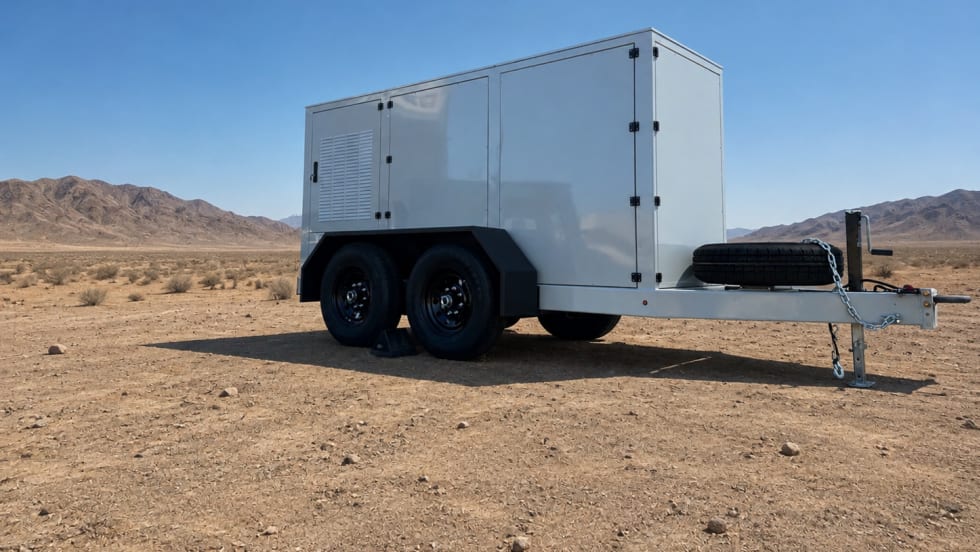
Xos Mobile Charging Hub Surpasses 1 GWh of Energy Delivered
As fleets electrify, charging capacity does not always arrive on the same timeline as the vehicles. Operating data from one Xos Hub shows how mobile, grid-independent charging can support vehicles when permanent infrastructure or utility upgrades aren't available.
Read More →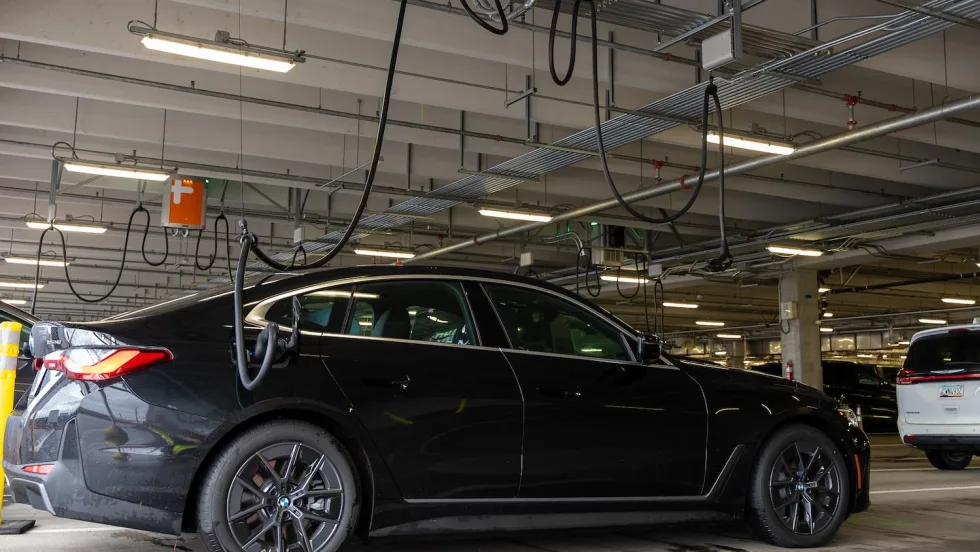
ChargePoint Adds Overhead EV Fast Charging at Portland International Airport
The installation can charge up to 20 rental vehicles simultaneously and uses overhead equipment to preserve ground-level space at the airport's Quick Turnaround Facility.
Read More →
Octopus Energy Launches Public EV Charging App in U.S.
Octopus Charge allows EV drivers to locate and access public charging stations through a single app, building on the company's Electroverse platform in Europe.
Read More →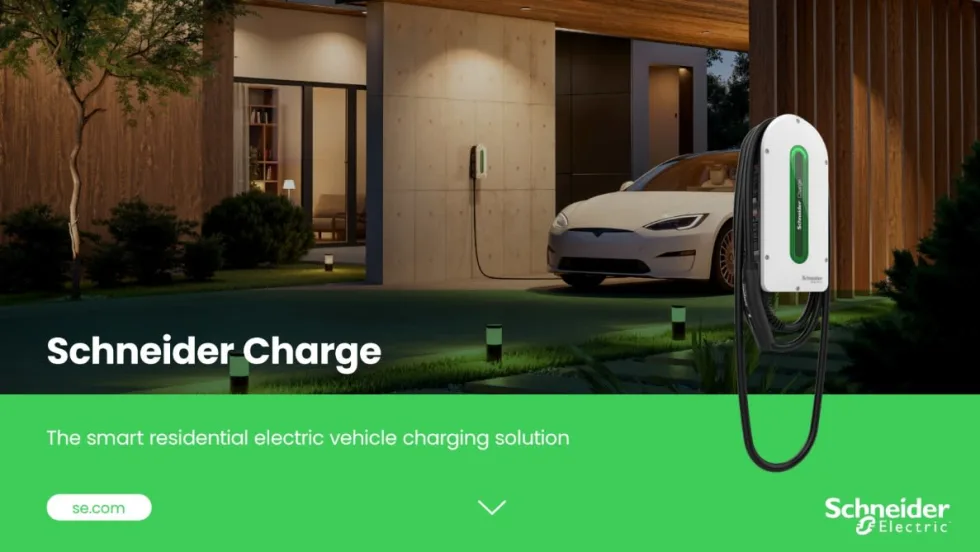
Schneider Electric Launches Level 2 Home EV Charger With Integrated Load Management
Schneider Charge uses integrated SmartAmp technology to adjust charging output based on household electrical demand and is available with NACS or J1772 connectors.
Read More →
Why EV Charging Reliability Is More Complicated Than It Looks
GridLink CEO Josh Silets explains what causes EV chargers to fail, why fleet operators often struggle to identify the source, and what questions they should ask charging vendors.
Read More →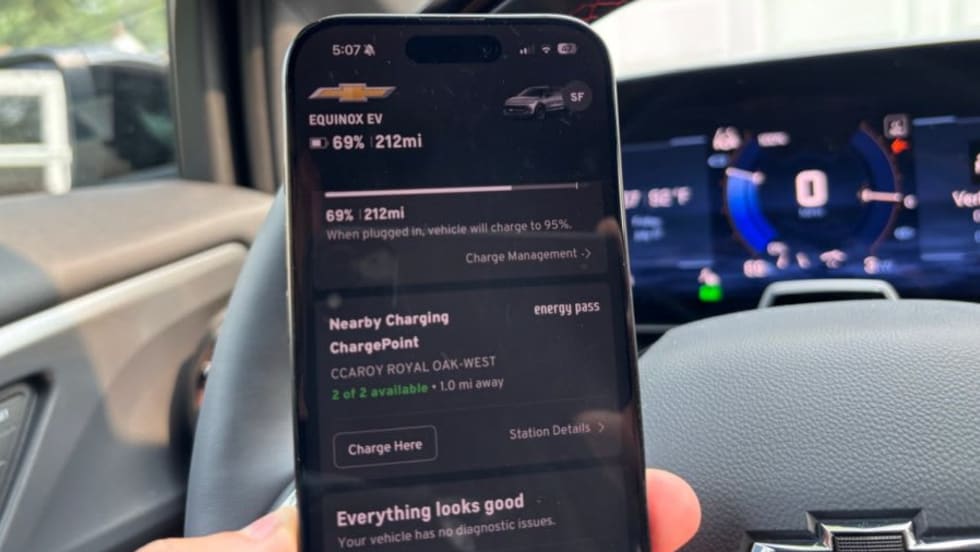
GM Adds ChargePoint Network to Energy Pass Platform
The integration gives GM EV drivers access to additional DC fast chargers and Level 2 stations through a single app while expanding the automaker's public charging ecosystem.
Read More →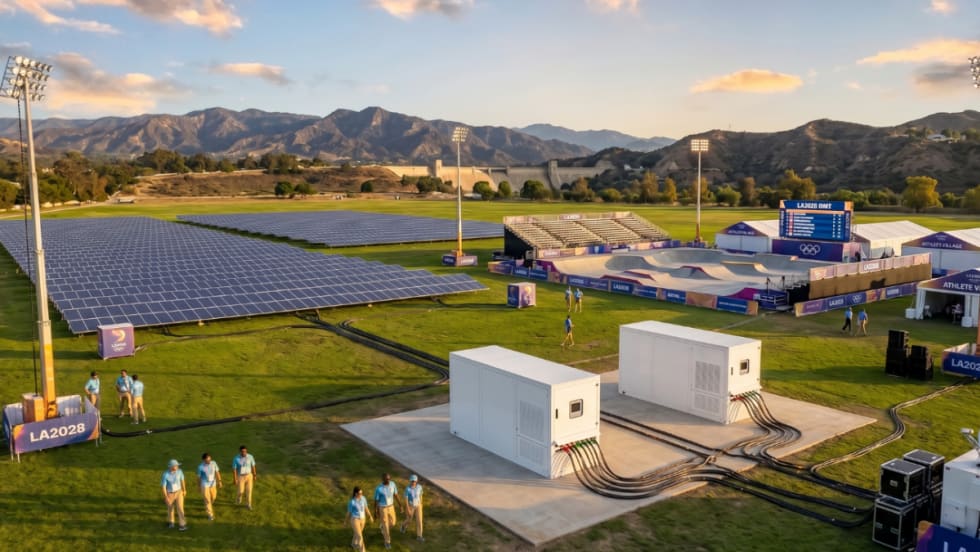
Xos White Paper Asserts LA Olympics Will Lack Enough EV Chargers
The commercial EV fleet company recommends some faster and more flexible remedies to relieve the anticipated shortfall.
Read More →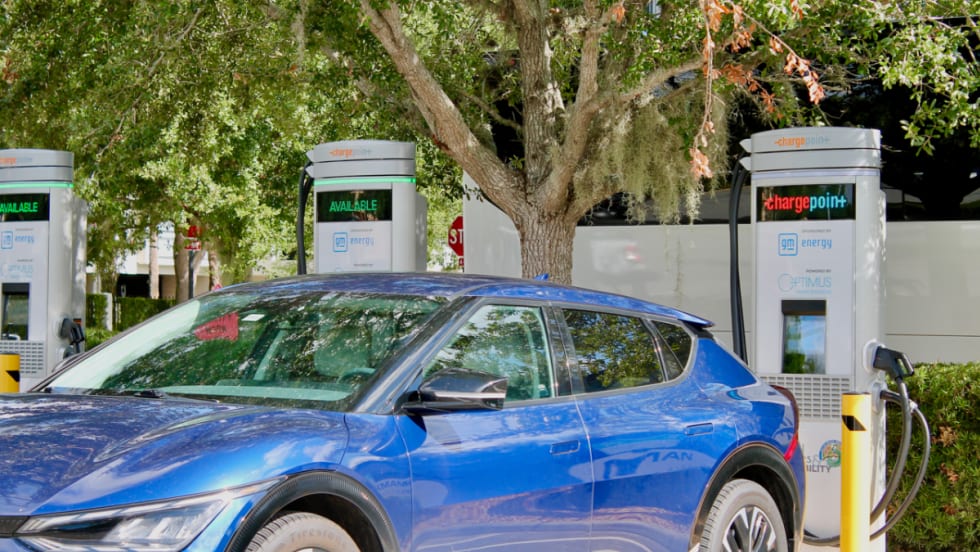
ChargePoint, Optimus Expand Fast-Charging Network Across Southeastern U.S.
ChargePoint will serve as the exclusive solutions provider, delivering hardware, software, and services to support Optimus’ growing charging network.
Read More →
Running A Profitable Electric Rental Fleet
How do you successfully operate an all-electric rental car fleet? Whether you manage a rental fleet or another commercial fleet, this conversation offers practical lessons on deploying, operating, and scaling electric vehicles.
Read More →
Why Charging May Never Be As Easy As Filling Up Gas
A seamless charge depends on a string of independent companies getting it right together, every time. How can electric fleets navigate the challenges to create a successful charging plan?
Read More →