


Related: Sustainability Inertia: The Fear of Getting Ahead of the Curve
TCO for EVs: Working Toward a Solution
One of the most challenging issues surrounding electric vehicles is how to project TCO. Fuel costs are far more complex, and small samples make depreciation difficult to project. A new company, eIQ Mobility, has a process which can eliminate guesswork.
by Bob Cavalli
January 21, 2020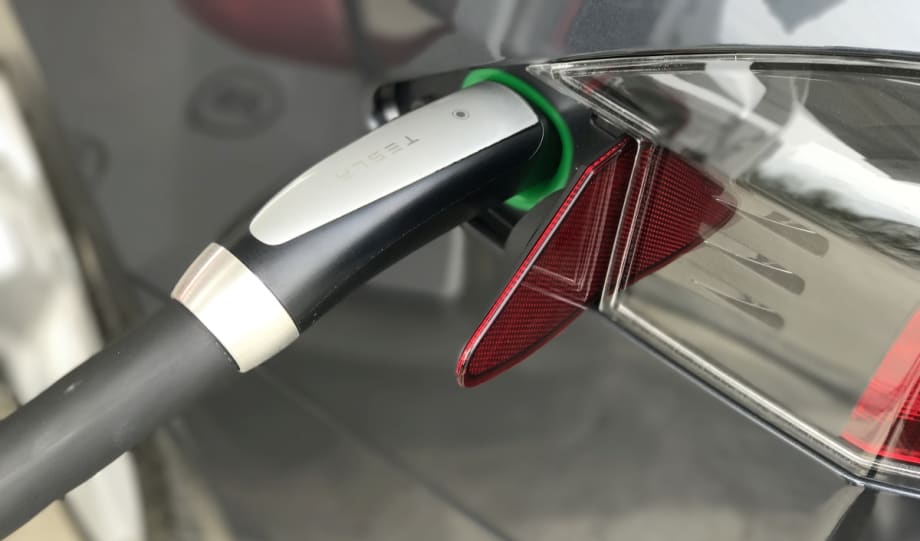
Photo by Eric Gandarilla.
8 min to read
As we move toward the third decade of the 21st Century, fleet managers are faced with more and more options when developing vehicle selections. One of those options that has been around the longest are electric vehicles.
The benefits of EVs can be enticing, such as very little in the way of maintenance costs, a range of government subsidies to offset higher purchasing prices, and “fueling” the vehicle with electricity that is far cheaper than gasoline. But there are drawbacks as well: lack of widespread national charging infrastructure, limited driving range, and the associated range anxiety that goes with it.
Automotive Fleet spoke with Yann Kulp, eIQ Mobility’s VP of business development, who cofounded the company with CEO Sila Kiliccote.
AF: How long has eIQ Mobility been in existence?
Kulp: We formalized the idea of developing a company that not only can provide a single per mile cost for EVs, but work with our customers in planning, implementing, and managing an EV solution in July 2018. The company was incorporated in December 2018, and was fully funded in January 2019, so about 11 months in operation.
AF: It looks like the eIQ solution leans heavily on detailed analytics of substantial streams of data. Doesn’t the word analytics strike fear into those who aren’t “techies?”

Yann Kulp, eIQ Mobility’s VP of business development
Photo courtesy of eIQ Mobility.
Kulp: I suppose in some cases it does, but it shouldn’t. Fleet managers use analytics every day. The operation of a fleet of vehicles throws off reams of data, some of it important, some not so much. Fleet managers use the data that is actionable, meaning that it can be used to take action or solve problems in developing vehicle selection, benchmarking costs, even building fleet policy and procedures. Calling it analytics doesn’t change the fact that gathering and analyzing data is the foundation of the fleet management profession.
AF: What was it that prompted you and your team to address the issue of EV data and TCO?
Kulp: Clearly, fleet management analytics have for a long time focused on internal combustion engine (ICE) vehicles. Fleet managers have developed an expertise and experience in capturing and using the data that ICE vehicles create. There are, however, substantial differences between the operating data for EVs and ICE units, most prominently in that variable expense that dominates either fuel.
AF: How are such differences manifested? What are the major elements?
Kulp: Again, fuel costs for ICE vehicles are relatively simple to capture and track. Though the cost at the pump does vary by location, that cost is expressed in simple dollars and cents, i.e., “x” dollars per gallon of fuel, whether it’s gasoline or diesel. The only variable in ICE fuel costs is the price at the pump, and that cost is expressed either financially, cents per mile driven, or efficiency, miles per gallon of fuel. Plus, fuel pricing is fairly stable in the short term (days) and only fluctuates in the longer term (months and years).
EVs, powered by electricity, have a far more complex data set involved in developing “fuel” costs, and there are 3,200 utilities in the U.S. But the industry is fortunate that nearly all cost data is now accessed digitally, and that benefit helps us to capture that data set for the fleet manager.
AF: What are the elements that eIQ captures, and how do they impact “fuel” costs?
Kulp: Think about your home electric bill. The cost of electricity differs in a number of ways from place to place and time to time. That cost can literally change depending upon the time of day, mode of transmission, time of year, even the weather. The concepts of demand charges, time of use, or peak power are new for fleets. So, the cost of charging a battery can vary depending upon whether it’s charged overnight, during the day, during the week or on a weekend, etc.
What we’ve done is develop a data driven platform that captures data from utilities, fleets, EV and charger manufacturers, and other sources, which then builds a detailed cost model for fleets to use to determine the technical feasibility and best implementation of an EV strategy.
We capture data on weather patterns (weather can have a substantial impact on EV range), details on driver activity — how far a driver drives doing the job — and contrast the nominal range of the vehicle, that is, the range an OEM advertises, with the expected range based on the above mentioned variables. And we can do that for thousands or tens of thousands of vehicles anywhere in the country in just a few days.
AF: As you know, TCO requires other data as well. for example, ICE vehicle maintenance, tires on the variable side and depreciation and insurance on the fixed cost side. Does EV data differ for these other costs as well?
Kulp: It does. However primarily on the maintenance and repair side; it is nearly nil for an EV, no fluid changes, no engine to maintain, and so the cost per mile driven is a great deal lower. For tires it is a little different. Depreciation is depreciation, the difference between original cost and resale return, and both are captured in the same manner as they are for ICE vehicles.
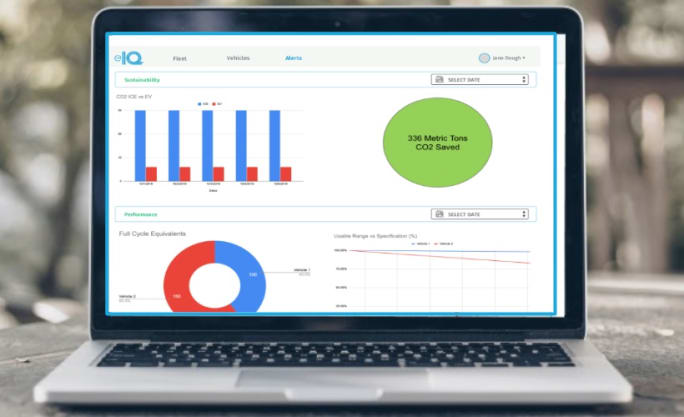
eiQ has developed a platform that captures data from various sources to provide fleets with a detailed cost model to use to determine the feasibility of implementing an EV strategy.
Photo courtesy of eIQ Mobility.
That said, the sample of historical data for most EVs is a great deal smaller than it is for ICE vehicles, particularly for used vehicle values, making depreciation more difficult to project. Our flat cost per mile options include one which depreciates the full value over the course of time in service; TCO might be a bit higher, but it eliminates risk. Or, the customer can choose an open-ended model.
AF: What about that original cost? Aren’t those costs higher for EVs than for equivalent ICE models?
Kulp: They can be, in isolation, however it is important to include in that cost the various incentives at the federal, state, even local levels, even from utilities, to apply to a purchase cost. Those incentives, plus the dramatically lower costs of fuel, and minimal maintenance costs help to make EVs more price competitive. We track every incentive in the U.S. and include them.
AF: Let’s talk a bit about what kind of planning a fleet user needs to do to implement an EV program. What kind of charging infrastructure is needed?
Kulp: Yes, that is one of the two most often quoted objections to EVs we hear: lack of charging infrastructure, and the resulting “range anxiety” users have. But that so-called lack of infrastructure is only for outside, public charging.
Our research and analysis on more than 45,000 vehicles has determined that most fleets, when properly deploying EVs, don’t need anything more than a fairly simple Level 2 charger. In most cases we recommend they install a Level 2 charger in an employee’s home or at their depots.
AF: What kind of deployment?
Kulp: First, companies need to know how their vehicles are used; how many miles are driven in what period of time. Every fleet we’ve worked with knows this inside out, and they have access to fuel card or telematics data. Certainly, a fleet vehicle that is driven hundreds of miles per day, tens of thousands of miles per year is not the best application for an EV. But most fleets are local and regional, with business conducted in a more compact geography, and vehicles driven less than 100 miles per day. Such use doesn’t require that kind of public EV fast charging infrastructure. Vehicles can plug into a Level 2 charger and be fully charged the next morning. Our research finds that over 90% of company fleets in the U.S. can operate EVs using overnight charging.
AF: So companies need to know how their vehicles are used and how far they’re driven daily.
Kulp: Exactly. When we show our analysis to customers, so called range anxiety can be turned into range awareness knowing how far a vehicle is driven, and the expected range, drivers don’t need to be concerned with charging the vehicle while they’re driving it.
AF: What about charging times? Don’t EVs take hours and hours to charge?
Kulp: I think this is an area where the OEMs can do a better job of communicating with their customers. There are three charging options: Level 1 via a 110V outlet, Level 2 via a 220V charger, and Level 3 fast charge (DC versus AC). Most of the marketing material I’ve seen says that a Level 1 charges in 22 hours, Level 2 in 8 hours, and Level 3 in 20 minutes (to 80% charge).
But this is charging a “dead” battery to full charge; one would no more run an EV battery dead than they would a gas tank dry. Charging times depend entirely upon how much charge the battery has when connected to the grid. Let’s say an EV is driven 75 miles a day, and the expected range is 150 miles. At the end of the day the battery already has a 50% charge in it; plugging it in a Level 2 outlet at 5 or 6 p.m. for a couple of hours will find it fully charged in the morning.
It’s that simple, and that’s the message potential EV users need to get.
AF: Makes sense. So eIQ Mobility captures reams of data, both internally and via vehicle telematics. What is the ultimate product?
Kulp: Right now, we’ve developed EValuate, a fully functional analytical platform that uses data to help companies with the ultimate electrification and sustainability decisions. This includes helping decide the best models to use, optimal routing, charging options, and even emissions reduction outcomes from the recommendations. This product is available now.
Sometime in the first quarter of 2020, we’re targeting the launch of our management software product, which companies will use just like they use existing fleet management software for ICE vehicles, but specific to EVs. And just as important is our work with fleet management companies to provide “full solution” contracts, where EV users will pay a fixed price for the life of a vehicle in the fleet, a fixed price that can include full depreciation, even the telematics product.
AF: Talk about “range anxiety,” this kind of product can eliminate “budget anxiety” in the use of EVs.
Kulp: And that is the ultimate goal. Imagine knowing up front nearly exactly what a vehicle will cost over its useful fleet life. We’ll take fully actionable data and translate it into a single cost for the life of the EV. You can learn more at our website, www.eiqmobility.com.
Originally posted on Automotive Fleet
Subscribe to Our Newsletter
More Charging
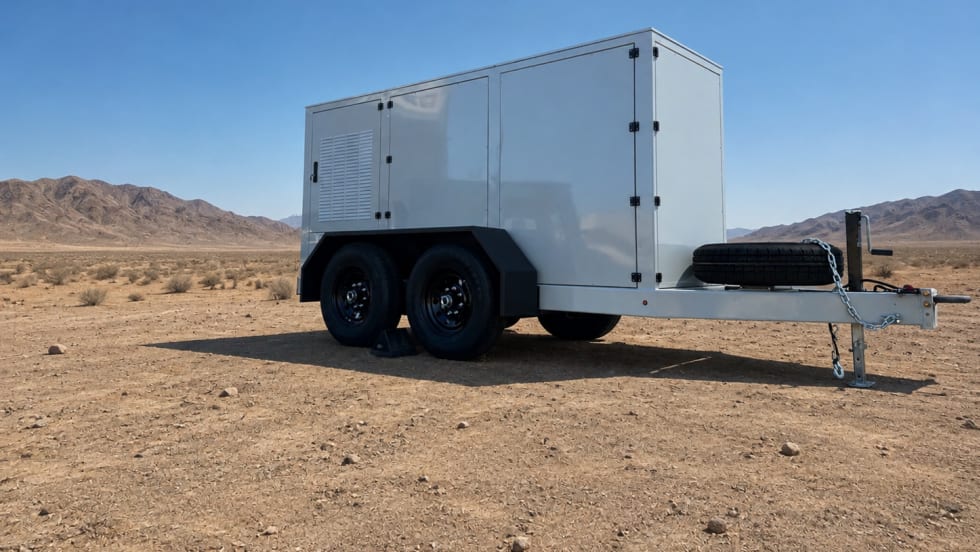
Xos Mobile Charging Hub Surpasses 1 GWh of Energy Delivered
As fleets electrify, charging capacity does not always arrive on the same timeline as the vehicles. Operating data from one Xos Hub shows how mobile, grid-independent charging can support vehicles when permanent infrastructure or utility upgrades aren't available.
Read More →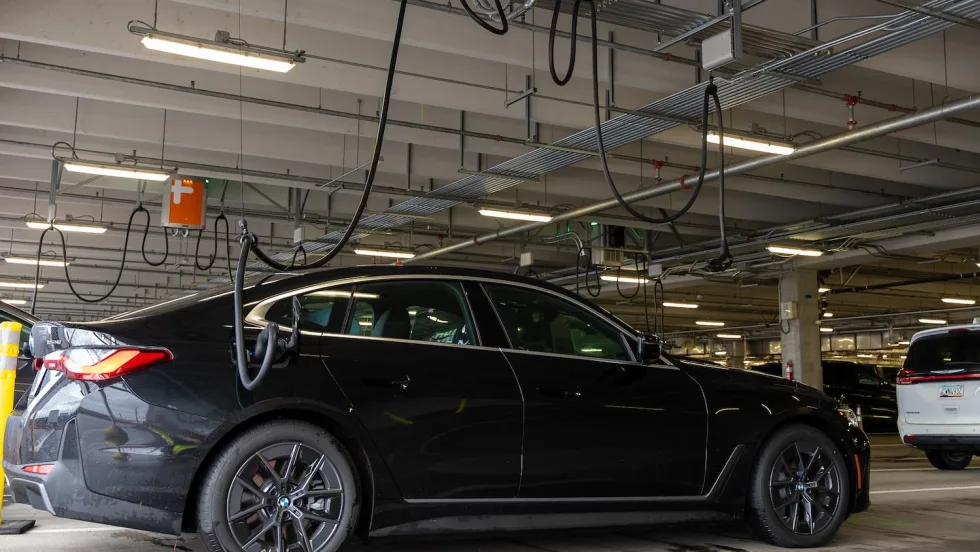
ChargePoint Adds Overhead EV Fast Charging at Portland International Airport
The installation can charge up to 20 rental vehicles simultaneously and uses overhead equipment to preserve ground-level space at the airport's Quick Turnaround Facility.
Read More →
Octopus Energy Launches Public EV Charging App in U.S.
Octopus Charge allows EV drivers to locate and access public charging stations through a single app, building on the company's Electroverse platform in Europe.
Read More →
Schneider Electric Launches Level 2 Home EV Charger With Integrated Load Management
Schneider Charge uses integrated SmartAmp technology to adjust charging output based on household electrical demand and is available with NACS or J1772 connectors.
Read More →
Why EV Charging Reliability Is More Complicated Than It Looks
GridLink CEO Josh Silets explains what causes EV chargers to fail, why fleet operators often struggle to identify the source, and what questions they should ask charging vendors.
Read More →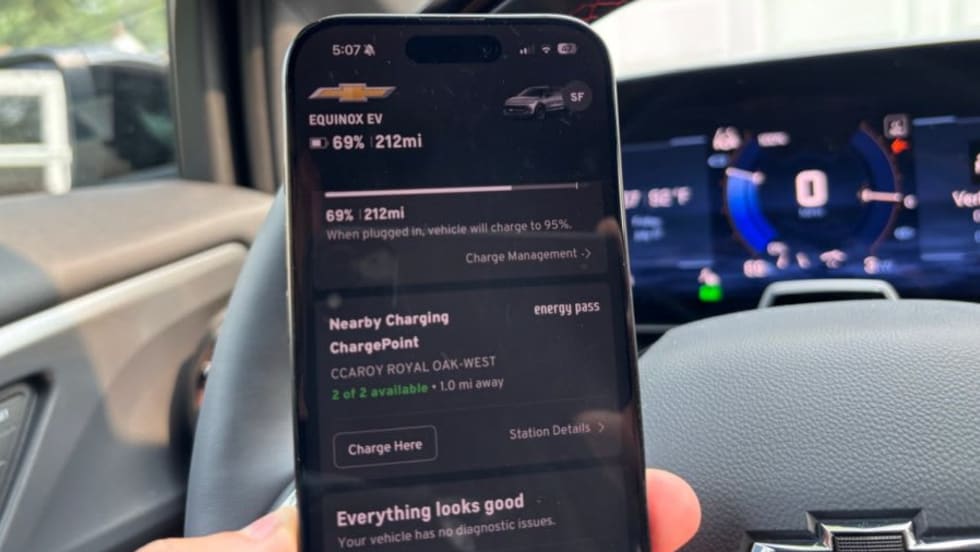
GM Adds ChargePoint Network to Energy Pass Platform
The integration gives GM EV drivers access to additional DC fast chargers and Level 2 stations through a single app while expanding the automaker's public charging ecosystem.
Read More →
Xos White Paper Asserts LA Olympics Will Lack Enough EV Chargers
The commercial EV fleet company recommends some faster and more flexible remedies to relieve the anticipated shortfall.
Read More →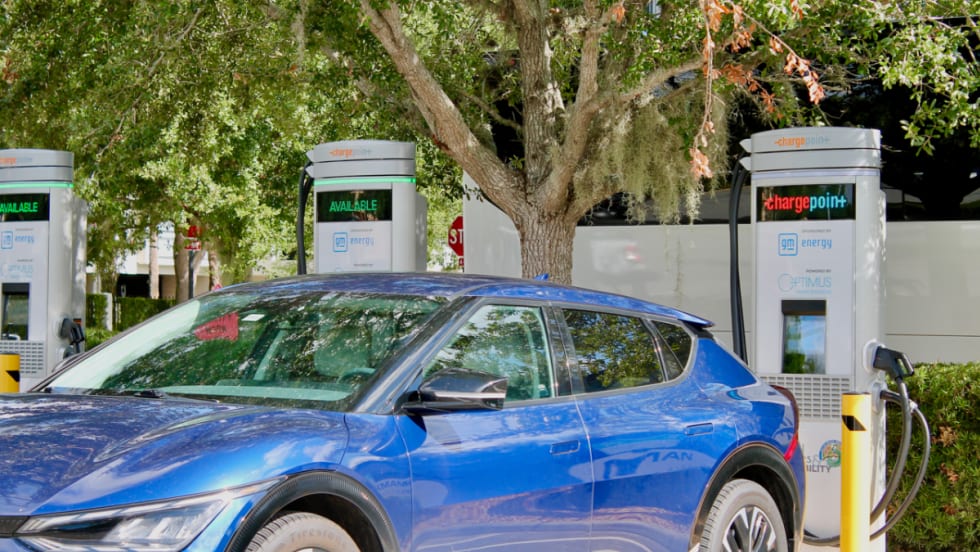
ChargePoint, Optimus Expand Fast-Charging Network Across Southeastern U.S.
ChargePoint will serve as the exclusive solutions provider, delivering hardware, software, and services to support Optimus’ growing charging network.
Read More →
Running A Profitable Electric Rental Fleet
How do you successfully operate an all-electric rental car fleet? Whether you manage a rental fleet or another commercial fleet, this conversation offers practical lessons on deploying, operating, and scaling electric vehicles.
Read More →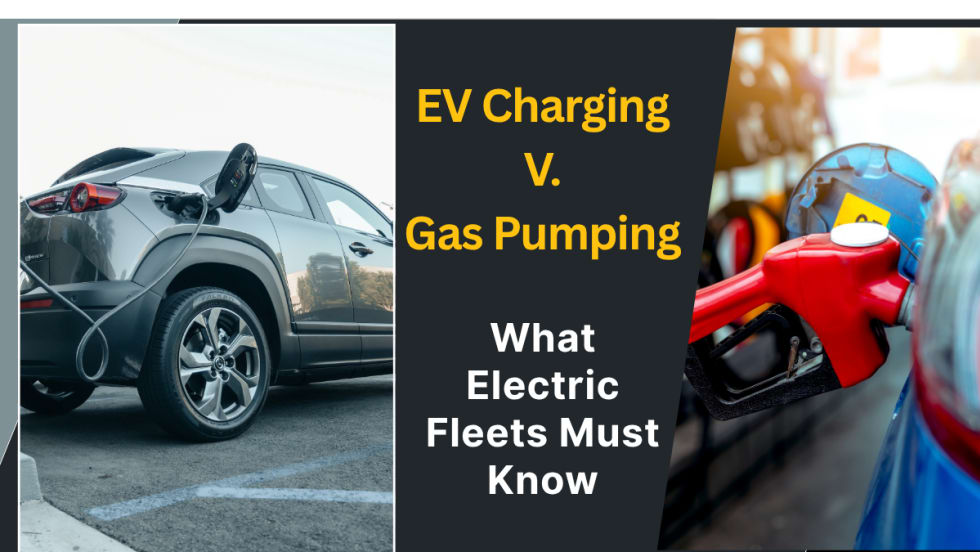
Why Charging May Never Be As Easy As Filling Up Gas
A seamless charge depends on a string of independent companies getting it right together, every time. How can electric fleets navigate the challenges to create a successful charging plan?
Read More →