


Penske Defines Path for Electric Truck Early Adopters
With recent investments in Fuso eCanters and charging infrastructure, Penske’s Paul Rosa puts the emerging electric truck market in context for fleets.

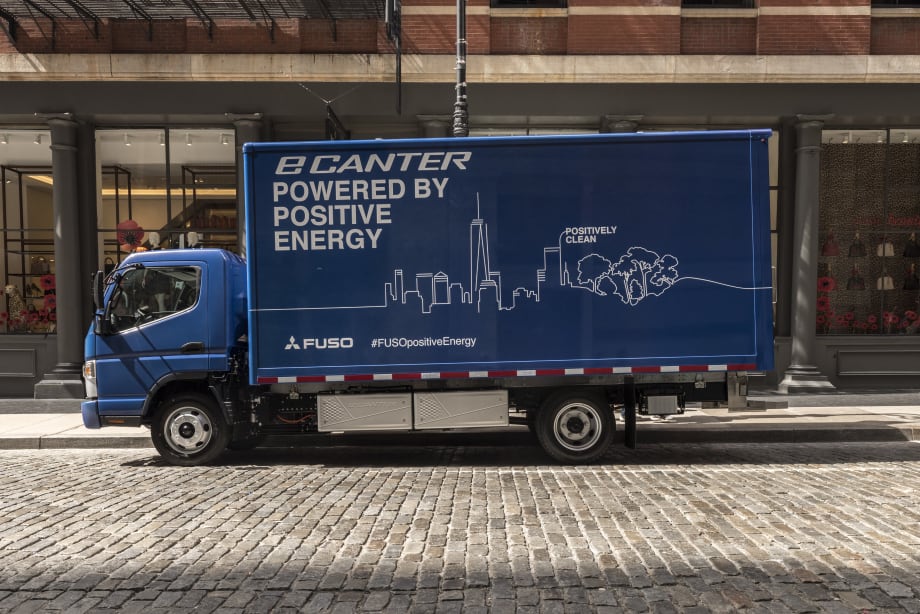
Penske Truck leasing has taken delivery of four Fuso eCanter battery-electric work trucks, the first commercialized all-electric truck available in the U.S. in the Class 3-to-6 segment.
Photo via Penske.
As part of its investment in electric vehicles, Penske Truck Leasing announced in March the addition of four Mitsubishi Fuso eCanter battery-electric work trucks to its logistics, leasing, and rental fleets.
Penske is initially taking delivery of four Fuso eCanters for use in California. Two trucks are headed to its San Francisco market, and the other two will be part of the Los Angeles fleet.
Penske will first offer the eCanters as a commercial rental offering for Penske’s existing lease customers, according to Paul Rosa, senior vice president of procurement and fleet planning at Penske.
With the eCanter, Fuso is the first to commercialize a series-produced, all-electric work truck. In limited production today, Penske is among the first fleet operators to take delivery of these medium-duty vehicles.
According to Rosa, Penske is working with its lease customers to determine electric truck viability in terms of routing, payload, charging, and operations. “There's a lot of criteria that has to be evaluated to see where it will work for early adopters,” he says.
Where First?
While many manufacturers have announced plans for electric truck models, and some are in pre-production testing, there are few models available to fleets today and not in large numbers.
Penske is also testing the all-electric Freightliner eM2 and eCascadia models from Daimler Trucks North America, a sister organization of Fuso. Mitsubishi has not yet announced the production cadence of the Fuso eCanter and its supply into the U.S.
From a demand standpoint, Rosa sees opportunities for electric trucks around ports with air quality mandates, in urban environments, for last-mile deliveries, and fleets with short routes that return to a home base to charge.
Fleets must consider the additional weight of the batteries (removing available payload), as well as operating environment such as hot weather, which affects range due to air conditioning load, Rosa says.
When it comes to charging, Level II infrastructure is available today, but fleets must be able to accommodate the 12- to 14-hour charge times. DC fast chargers offer dramatically faster charge times but come at a steeper price and are only beginning to come online.
On April 24, Penske announced the opening of commercial heavy-duty electric vehicle charging stations with 14 high-speed chargers at four of its facilities in Southern California. These are the first DC fast-charging stations in the U.S. designed specifically for heavy-duty commercial electric vehicles, Penske says.
Rosa notes that there are other, more mature clean fuel options for fleets today such as compressed natural gas (CNG), liquified natural gas (LNG), and propane. “We will certainly go forward with those when it makes sense for a customer,” he says.
Battery technology is outpacing advances in those alternative fuels, but that can be a double-edged sword when considering the right time to jump in. “What if two years down the road the batteries cost half as much, and you get twice as much range?” Rosa asks.
Still, Rosa and many others see a clear path for battery-electric propulsion as batteries become smaller, cheaper, and with greater range. “When technology advances and improves, (the market) will open up to more prospects and customers,” he says.
“This is very exciting. But we're so early in this game, there's so much to learn.”
Originally posted on Automotive Fleet
More Electric Vehicles
EV Charging Use Is Outpacing Infrastructure Growth
ChargePoint’s 2026 Charging Forward Report points to rising charger use, higher-powered charging, commercial vehicle electrification, and energy-management technology. Here’s what fleets should know.
Read More →
EV Realty Names Henrik Holland President as Charging Platform Expands
The former Prologis Mobility and Shell executive will help expand EV Realty’s truck charging business and move its power-first infrastructure model into autonomous vehicle depots and other fleet sectors.
Read More →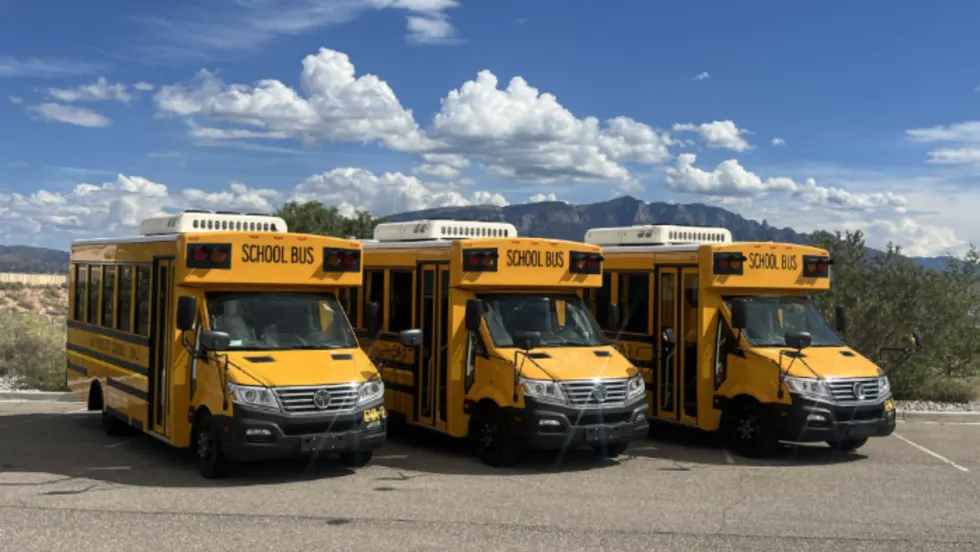
GreenPower Expands New Mexico EV Pilot With Larger Buses, V2G Testing
After logging more than 17,000 electric miles in the first year, New Mexico’s statewide pilot is moving into its second phase with larger vehicles, continued charging evaluations, and more.
Read More →
Can EV-as-a-Service Help Fleets Scale Electrification?
Sustainability Partners CEO Adam Cain explains how matching EVs, charging infrastructure, and duty cycles can help fleets scale electrification.
Read More →
How EV-as-a-Service Is Moving Fleets Beyond Pilots
Adam Cain, president and CEO of Sustainability Partners, explains how EV-as-a-service can help fleets scale deployments by addressing duty-cycle requirements and charging challenges.
Read More →
PowerFlex, The Mobility House Join Forces to Advance Fleet Electrification
Two EV charging providers are joining forces to deliver a broader portfolio of energy management and fleet electrification solutions.
Read More →
Ford Retools Louisville Plant for Fathom Electric Truck Production
Ford's $2 billion Louisville Assembly Plant overhaul introduces a three-part assembly process for the Fathom midsize electric truck, with production scheduled to begin in 2027.
Read More →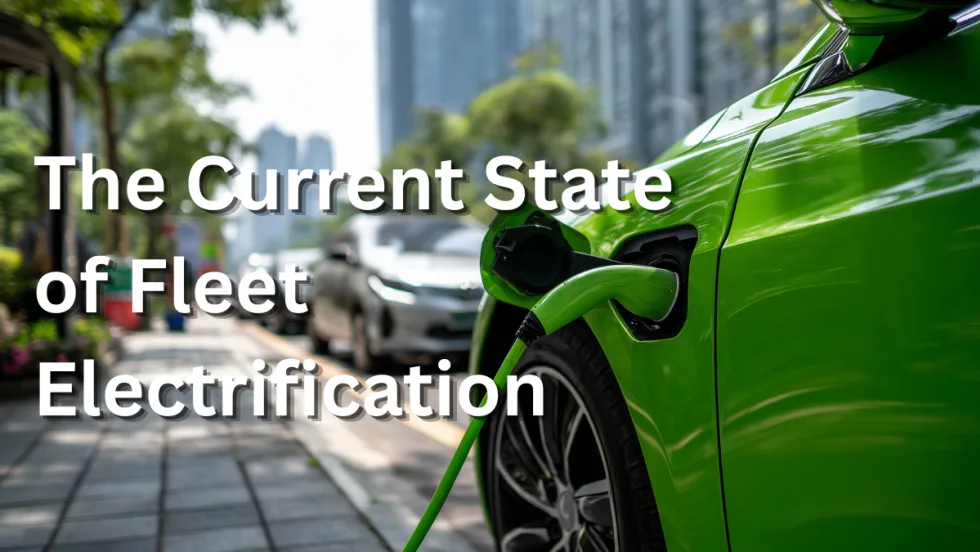
Merchants Fleet Reports 290M EV Miles as Fleets Navigate Changing Electrification Market
From millions in operating savings to hundreds of millions of EV miles, Merchants Fleet’s latest report reveals what’s working and what’s changing in fleet electrification.
Read More →
California District Commits to Electrify 25% of School Bus Fleet by 2028
One of the nation's largest school bus electrification projects to date demonstrates how grants, charging infrastructure, and public-private partnerships can help fleets transition to EVs at scale.
Read More →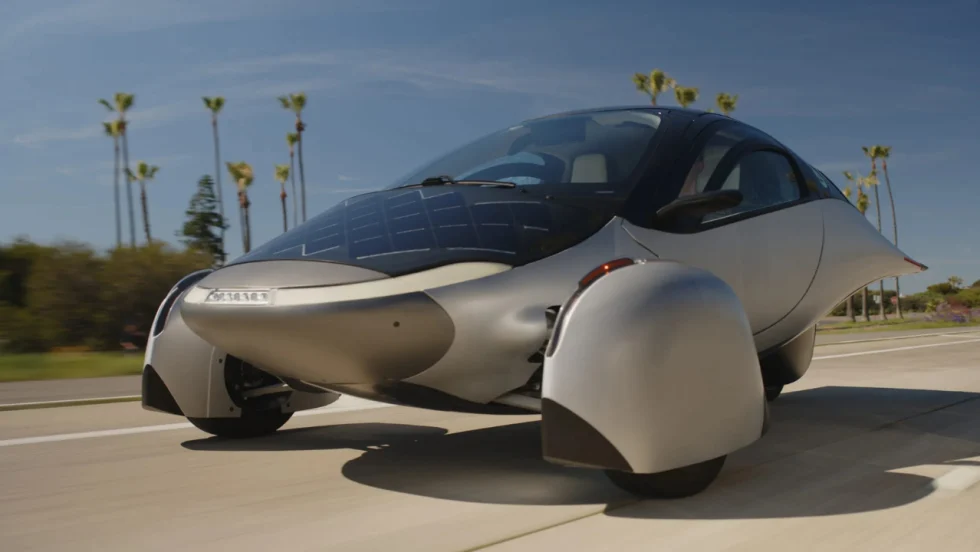
Aptera Orders Bodies and Chassis for Its First 40 Production Vehicles
Aptera Motors Corp. has issued purchase orders for the major structural components of its first 40 vehicles, and body and chassis components are expected to begin arriving in October.
Read More →