


LeasePlan’s Smolka Shares Challenges to EV Fleet Implementation
To understand those challenges firsthand, LeasePlan’s global employee fleet intends to go fully electric by 2021.

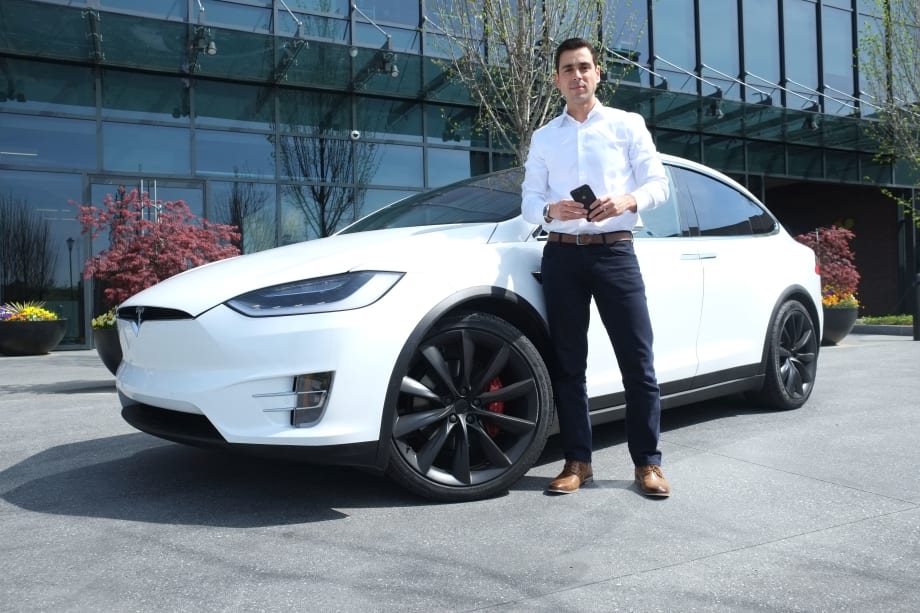
Felipe Smolka is executive vice president of transformation at LeasePlan USA.
Photo courtesy of LeasePlan USA.
Felipe Smolka, executive vice president of transformation at LeasePlan USA, is fully aware of the challenges of deploying electric vehicles (EVs) in fleets, from firsthand experience — as part of its commitment as a founding member of the EV100 Global Initiative, LeasePlan will transition its own employee fleet globally to fully electric vehicles by 2021.
“We’re committed to being early adopters of EVs,” Smolka says. “We’re taking the first steps. This is a big task, but we’ll learn from this implementation and we’ll use our experience to help our fleet customers in their own transitions to electric vehicles.”
One of the primary challenges to implementation, he says, is educating fleets on the path to EV adoption. More than just vehicle knowledge, this entails understanding battery technology and charging infrastructure, analyzing lifecycle costs in new ways, educating drivers, and defining the use cases that are right for EVs — and those that aren’t.
While the market was hampered by limited model choice for years, automakers are planning an onslaught of new BEV (pure electric) and plug-in hybrid electric vehicles (PHEV) models in the near term.
Even more important, from an education, acceptance, and infrastructure standpoint, is the growth of the number of EVs on the road, Smolka says. According to Bloomberg New Energy Finance (BNEF), the first million EVs took 20 years to sell; the next million took 18 months; the third million took 8 months. Sales surpassed 4 million units this year. That number is projected to grow to 11 million globally by 2025, according to BNEF.
That said, “Adoption [of EVs] is still largely driven today by the policy environment,” Smolka says. “We have to make sure our legislators understand how effective policy, combined with rebates and incentives, are working to drive EV implementation with consumers and businesses, which has encouraged manufacturers to scale up production.”
The growth of charging infrastructure goes hand in hand with EV adoption. As most EV charging takes place at home, fleets must plan for installing Level II chargers at employees’ homes, Smolka says.
The growth of public charging stations will help to alleviate EV drivers’ “range anxiety.” There are more than 17,000 public charging stations in the U.S., Smolka points out, though that still only represents a one-in-10 ratio to gas stations.
“LeasePlan is just starting to work with charging station partners on effective deployment,” Smolka says.
Charging stations offer proprietary accounts, which limit availability. “Even if you have charging stations near you, you’d need a charge card from that provider,” he says. “There is no aggregator today. But that will happen.”
The other factor in range anxiety — battery technology — is evolving as well.
The average all-electric battery range of current EVs (minus Tesla models) is about 140 miles, while a few luxury models offer up to 350 miles on a charge. That average range is still not sufficient for many journeys, however the overall estimated range has increased significantly.
For example, base models of the Nissan Leaf and Tesla Model S grew from 75 and 208 miles per charge in 2013, respectively, to about 107 and up to 249 miles in 2017. The 2018 Chevrolet Bolt EV offers an EPA-estimated 238 miles range.
Along with range improvements, lowering battery prices — the largest cost of an EV — is critical. Among the large EV battery makers, battery costs have fallen 15% to 18% per year in the past four years, according to BNEF. Thus the Holy Grail of $100 per kWh battery pack price could be achieved by 2019 or 2020 — though prices could drop further to $50/kWh by 2023 or 2024.
“When battery prices achieve parity with internal combustion engines in a few years, that will greatly accelerate adoption,” Smolka says.
Defining total cost of ownership (TCO) — an integral part of fleet — remains elusive. “It’s too early to tell the TCO of a fleet EV in the U.S., due to a lack of data,” Smolka says.
This is primarily due to lack of supply and therefore pricing in the used car market. Greater used EV sales will drive a more reliable pool of wholesale values, which in turn will help shape TCO. This is another arena in which fleet management companies can become leaders, Smolka says, by fostering the development of the wholesale market for well-maintained off-lease EVs.
TCO for EVs also carries different cost factors. While EV models may have a higher capitalized cost, the cost to operate an EV is less than half of those for vehicles with internal combustion engines. This is owed to the lower price to “fill up” on electricity, fewer vehicle parts, and negligible scheduled maintenance.
Adoption will also differ based on fleet makeup, which differs by worldwide region. For instance, Smolka compares the U.S. and European markets.
In the U.S., 18% of all vehicles sold are to fleets, while that figure rises to about 57% in Europe. The dramatic difference is based on usage. In Europe, a greater percentage of fleet vehicles are given as job perks. In the U.S., the great majority of fleet vehicles are configured to a specific job function.
“For those who are only commuting back and forth, electric vehicles are perfect,” Smolka says. “In the U.S., it’s a little harder. They’re work tools. So the more consumer type of use cases will probably adopt EVs quicker because of their very good alignment to commuting.”
In the U.S., this makes the analysis of which fleet vehicles are appropriate to switch to electric all the more important.
“There are ways to determine which fleet applications are candidates to use EVs, and which EV models will fit those needs,” he says. “When we’re talking to a client, only a segment of their fleet will be eligible [for EV adoption] at first. For some, it’s an easy shift — but not for the guy who has to deliver 15 packages a day,” Smolka says.
Overall, Smolka is surprised to see the level of interest in EVs with LeasePlan clients. “They’re looking for alternatives,” he says. “We just need to be transparent about the challenges. At the same time, there is no turning back.”
Felipe Smolka will present the seminar “Blueprints for EV Fleet Adoption” along with David Peterson of ChargePoint will present the seminar "Blueprints for EV Fleet Adoption" at the 2018 Fleet Forward Conference, convening Oct. 8-10 in San Francisco. Click here for more information.
Originally posted on Work Truck Online
More Electric Vehicles
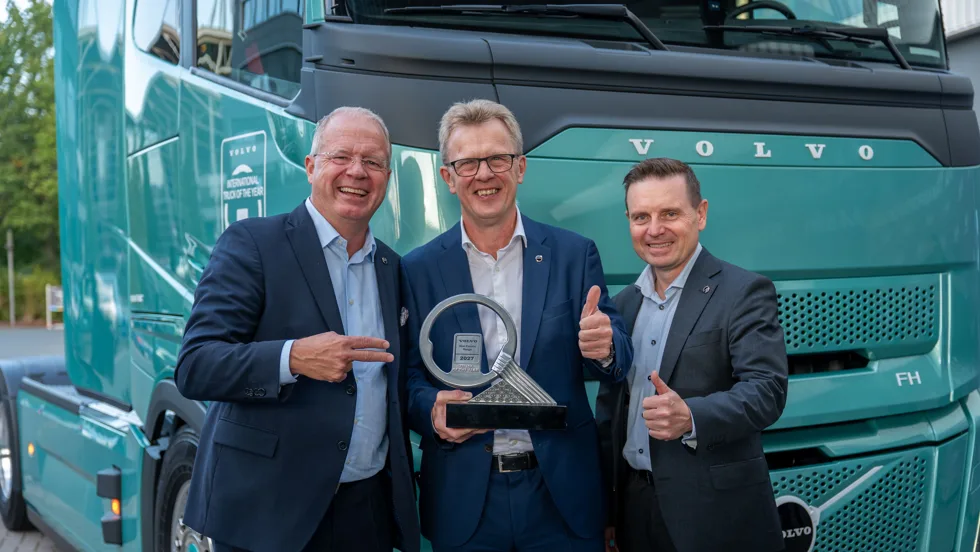
Volvo Trucks’ Electric Range Named International Truck of the Year 2027
The award recognizes Volvo’s global heavy-duty electric lineup, while more than 750 VNR Electric trucks have accumulated nearly 37 million miles in U.S. and Canadian fleet operations.
Read More →
How Republic Services Decides Where Its Next Electric Trucks Can Go
With 250 electric collection trucks now in service, Republic Services is learning that scaling electrification depends less on proving the vehicle and more on whether each site can support what comes next.
Read More →
EV Charging Use Is Outpacing Infrastructure Growth
ChargePoint’s 2026 Charging Forward Report points to rising charger use, higher-powered charging, commercial vehicle electrification, and energy-management technology. Here’s what fleets should know.
Read More →
EV Realty Names Henrik Holland President as Charging Platform Expands
The former Prologis Mobility and Shell executive will help expand EV Realty’s truck charging business and move its power-first infrastructure model into autonomous vehicle depots and other fleet sectors.
Read More →
GreenPower Expands New Mexico EV Pilot With Larger Buses, V2G Testing
After logging more than 17,000 electric miles in the first year, New Mexico’s statewide pilot is moving into its second phase with larger vehicles, continued charging evaluations, and more.
Read More →
Can EV-as-a-Service Help Fleets Scale Electrification?
Sustainability Partners CEO Adam Cain explains how matching EVs, charging infrastructure, and duty cycles can help fleets scale electrification.
Read More →
How EV-as-a-Service Is Moving Fleets Beyond Pilots
Adam Cain, president and CEO of Sustainability Partners, explains how EV-as-a-service can help fleets scale deployments by addressing duty-cycle requirements and charging challenges.
Read More →
PowerFlex, The Mobility House Join Forces to Advance Fleet Electrification
Two EV charging providers are joining forces to deliver a broader portfolio of energy management and fleet electrification solutions.
Read More →
Ford Retools Louisville Plant for Fathom Electric Truck Production
Ford's $2 billion Louisville Assembly Plant overhaul introduces a three-part assembly process for the Fathom midsize electric truck, with production scheduled to begin in 2027.
Read More →
Merchants Fleet Reports 290M EV Miles as Fleets Navigate Changing Electrification Market
From millions in operating savings to hundreds of millions of EV miles, Merchants Fleet’s latest report reveals what’s working and what’s changing in fleet electrification.
Read More →