


In the Switch to EVs, Many Are Leaving Big Money on the Table
With all fleets racing to electrify their fleets, many have been failing to take advantage of some money-saving incentives.

There are more than 800 EV-related incentives, from numerous governmental agencies and both public and private utilities. Navigating them is a byzantine endeavor — but resources are available.
Photo: Automotive Fleet
Commercial fleet operators today are confronting one of the most critical challenges they have faced in decades. In the past few years, legislators have passed laws forcing them to electrify their fleets. Using the "carrot and stick" approach, much of the legislation surrounding electric vehicles includes both stringent requirements and generous incentives.
Often, fleet managers are so frightened by the requirements that they miss out on the incentives. In this new era of imposed electrification, being unaware of the incentives that can soften the financial blow the switch entails is often a million-dollar mistake.
Grants and Incentives
Here is a very telling real-life example: At a recent conference, one fleet manager was shocked to learn that their fleet management company could have received $7,500 for each of the nearly 100 electric passenger vehicles they had leased. Quickly running the math, she exclaimed her company was out of pocket to the tune of over $600,000.
While $600,000 in “free money” is a big number, it only represents the federal electric vehicle purchase incentive. The discussion that ensued revealed that the “pyramid” of available incentives could have been extended to include not just additional incentives from utilities, counties, and cities for those passenger vehicles, but far more sizable amounts for larger vehicles.
Beyond that, more available incentive money could have provided thousands of additional dollars to cover the costs of buying and installing the charging equipment required to service the new EV fleet.
Rookie Mistakes
While failing to take advantage of a million dollars in incentive money might appear to be an egregious “rookie mistake,” the simple fact is it is happening every day. Why? In managing the transition from a conventionally fueled fleet to an EV fleet virtually everyone is a rookie.
There are over 800 electric vehicle-related incentives, and they are offered not just by the federal government but also by states, counties, cities, and governmental agencies such as air quality management districts. In addition, both public and private utilities offer incentives, grants, and rebates designed to promote the switch from internal combustion engine (ICE) vehicles to electrics. But navigating these free-flowing rivers and finding these incentives is a byzantine operation.
Given the almost stupefyingly difficult task of identifying opportunities, it is not surprising that fleet managers are leaving money on the table, often without even knowing it is happening.
To illustrate, let’s look at the various incentives available for electric vehicles across federal, state, and local levels. On the most basic level are the federal purchase incentives, a $7,500 tax credit available to individual consumers who purchase qualifying EVs. In the past 18 months, this fairly simple-to-grasp credit has become significantly more complicated. It now includes specific criteria such as income thresholds, assembly location, and mineral sourcing requirements for batteries.
Some EVs don’t qualify, and some consumers don’t qualify. On the commercial side, companies purchasing EVs can receive a $7,500 tax credit without any of the consumer-specific qualifying criteria. For larger vehicles over 14,000 pounds, the credit can go up to $40,000.
Regionally, many air quality management districts such as the Bay Area Air Quality Management District’s Carl Moyer Program for School Buses provide substantial incentives, such as over $500,000 per bus for school buses or $120,000 for each new class 8 Freightliner eCascadia tractor. With many of these incentives, potential beneficiaries need to track funding availability because these incentives often operate on a limited, first-come-first-served basis.
Your company might qualify, but if the incentive is oversubscribed you might receive a fraction of what you expected, or you may be completely out of luck.
Beyond Vehicles
Beyond vehicle-purchase incentives, grants and credits can also help finance ancillaries that often can equal or exceed the cost of the vehicle.
For example, incentives exist for charging equipment, including federal tax credits for consumers and grants from utilities towards the purchase and installation of Level 2 and DC fast chargers. The funds available typically range from a couple of hundred dollars to several thousand dollars. There's also a focus on federal investment in communities designated as disadvantaged or “Justice40 communities," aiming to direct more incentives towards these areas.
The challenge of monitoring these incentives is often beyond a fleet manager's ability to track them, much less to jump the procedural hoops to capitalize on them. Those responsible for managing fleets — and OEM vehicle and charger sales teams – simply don't have time to search for and read through pages of FAQs, terms, and conditions.
The good news is that utilities, OEMs, and fleet management companies are starting to offer tools that quickly and painlessly identify a list of incentives applicable to a specific electrification project. A few of these such as GM / BrightDrop’s TCO tool even calculate the likely incentive amounts and roll them into a "cost of ownership" that compares the total cost of ownership of continuing conventional diesel or gasoline vehicles with operating electric vehicles.
Utilities and OEMs need not devote significant staff to finding incentives or building complex cost comparison models. They can use off-the-shelf products such as J.D. Power’s EV Fleets and Incentive Dashboard, which appears as a “white label” tool on the public and private websites of utilities and automakers.
So, the advice is don’t make a rookie mistake. You do not want to let a million dollars slip through your fingers. By seeking out the available tools created by experts in EV incentives, you can avoid the agony of defeat.
Originally posted on Automotive Fleet
More Electric Vehicles

EV Charging Use Is Outpacing Infrastructure Growth
ChargePoint’s 2026 Charging Forward Report points to rising charger use, higher-powered charging, commercial vehicle electrification, and energy-management technology. Here’s what fleets should know.
Read More →
EV Realty Names Henrik Holland President as Charging Platform Expands
The former Prologis Mobility and Shell executive will help expand EV Realty’s truck charging business and move its power-first infrastructure model into autonomous vehicle depots and other fleet sectors.
Read More →
GreenPower Expands New Mexico EV Pilot With Larger Buses, V2G Testing
After logging more than 17,000 electric miles in the first year, New Mexico’s statewide pilot is moving into its second phase with larger vehicles, continued charging evaluations, and more.
Read More →
Can EV-as-a-Service Help Fleets Scale Electrification?
Sustainability Partners CEO Adam Cain explains how matching EVs, charging infrastructure, and duty cycles can help fleets scale electrification.
Read More →
How EV-as-a-Service Is Moving Fleets Beyond Pilots
Adam Cain, president and CEO of Sustainability Partners, explains how EV-as-a-service can help fleets scale deployments by addressing duty-cycle requirements and charging challenges.
Read More →
PowerFlex, The Mobility House Join Forces to Advance Fleet Electrification
Two EV charging providers are joining forces to deliver a broader portfolio of energy management and fleet electrification solutions.
Read More →
Ford Retools Louisville Plant for Fathom Electric Truck Production
Ford's $2 billion Louisville Assembly Plant overhaul introduces a three-part assembly process for the Fathom midsize electric truck, with production scheduled to begin in 2027.
Read More →
Merchants Fleet Reports 290M EV Miles as Fleets Navigate Changing Electrification Market
From millions in operating savings to hundreds of millions of EV miles, Merchants Fleet’s latest report reveals what’s working and what’s changing in fleet electrification.
Read More →
California District Commits to Electrify 25% of School Bus Fleet by 2028
One of the nation's largest school bus electrification projects to date demonstrates how grants, charging infrastructure, and public-private partnerships can help fleets transition to EVs at scale.
Read More →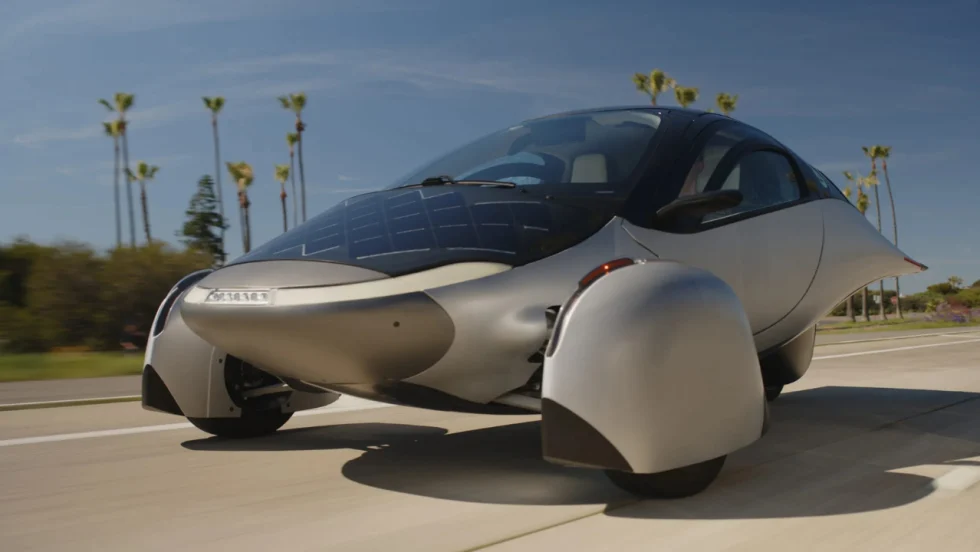
Aptera Orders Bodies and Chassis for Its First 40 Production Vehicles
Aptera Motors Corp. has issued purchase orders for the major structural components of its first 40 vehicles, and body and chassis components are expected to begin arriving in October.
Read More →