



Related: Fleet Forward Experience Day 3: Removing Barriers to Corporate Fleet Electrification
Fleet Forward Experience Wrap: IoT, Electric Infrastructure, and the Supply Chain
Panelists during Day 4 and 5 of the Fleet Forward Experience explored how technology is enabling smart mapping and a more efficient supply chain, while others stressed the considerable planning involved to implement electric infrastructure and IoT networks.
November 16, 2020

The 2020 Fleet Forward Experience convened 18 virtual seminars spanning five days last week.
[EMPTY CREDIT]
7 min to read
The 2020 Fleet Forward Experience is a wrap, with 18 seminars spanning five days last week. The final two days convened seminars on prognosticating changes in the commercial truck market, lessons learned from fleeting early-adopter commercial electric vehicles, the development of intelligent mapping solutions, and how IoT is revolutionizing fleet management.
The seminars are available on demand, and can be viewed by registrants on the conference website’s agenda page.
Here are those seminars’ key takeaways:
The commercial truck market supply chain is becoming more efficient but will be strained in 2021 in the post-pandemic recovery.
Stephen Latin-Kasper, economist for NTEA, outlined the pandemic’s overall impact on truck sales. He said the fleet purchasing cycle for commercial trucks had reached a peak between late 2018 and the middle of 2019, with a projected decline in sales for 2019. “The pandemic made the recession we were expecting much worse, but it also made it much shorter,” he said.
Data now suggests a return to annual sales growth in 2021 and 2022, as opposed to having been expected to fall in 2021 prior to the onset of the pandemic. However, sales for Classes 3 through 8 won’t return to 2019 levels until at least 2024, Latin-Kasper said. “There's a long climb back, though that should not come as a great surprise to anyone.”
Latin-Kasper does project some growth in commercial electric vehicle sales, though continued low oil prices will have a dampening impact as it weakens the business use case to switch to EVs.
Pete Dondlinger of Auto Truck Group pointed to changes in design for commercial EVs to fit work applications, particularly with the lack of an internal combustion engine. “We see a dramatic shift towards considering the driver and tools storage being in cab and not just behind the cab,” he said. “How do we utilize spaces that historically haven't been available?”
Dondlinger also sees the vehicle acquisition supply chain becoming more efficient through connected vehicle technologies and using data to determine vehicle specifications, as well as leveraging vertically integrated partners to shorten order to delivery time.
Kirk Mann of Hitachi Capital America sees peer-to-peer networks integrating into the commercial vehicle space, in which operators can post or rent a vehicle from a third-party platform. This is particularly relevant for delivery fleets with uneven yet sharp peak demands, such as independent contractors for Amazon or logistics giant XPO.
Kathryn Schifferle of Work Truck Solutions pointed to the yo-yo effect in used commercial vehicle pricing. In March and early April, trucks were being sold for $5,000 lower than their normal values. But with the pandemic driving spikes in home construction and landscaping, the market soon overcorrected to $5,000 above normal value. At the same time, supply of medium-duty vocational vehicles shrunk on slower production, fewer lease deferrals, and fleets extending lifecycles.
Jim Press, advisor to Work Truck Solutions and Hyundai, said the supply chain will remain strained through next year. New vehicle inventory supply is 59 days today, where it is usually around 80 days, he said.
For this reason, “I am advising all our dealers to get their orders into their OEMs because there will be a big demand,” Schifferle said.
When fleeting commercial electric vehicles, don’t underestimate infrastructure planning.
When asked what they would’ve paid more attention to in the process of fleet electrification, Banny Allison of Aramark and Eric McCann of Bimbo Bakeries answered planning and executing the infrastructure, from working with the utilities and permitting to upgrading the buildings and transformers to understanding the grid.
“For me, it was not the vehicles,” said Allison, who along with McCann has fleeted Class 6 electric step vans through Motiv, a maker of electrified chasses. “I've learned more about electricity and the grid than I ever thought I would. I probably would have hired a full-time person to deal with this.”
Matt O’Leary of Motiv insisted customers analyze their infrastructure needs before they place an order, which will affect their decision making.
Serge Viola of Purolator said deciding the best and safest place to put the chargers for easy truck access was a challenge. Viola put together a planning team that consisted of Purolator’s facility manager, an electrical engineer, a facility maintenance contractor, and a Motiv consultant.
“We needed their input on getting a charger that wasn’t too big or small to be able to match the number of hours that the vehicles would be off the road overnight to charge,” he said.
In addition to vehicle funding, fleets should look for infrastructure incentives, O’Leary said.
With help from Motiv, McCann said he was able to secure incentive funding from his utility, PG&E, and California’s Hybrid and Zero-Emission Truck and Bus Voucher Incentive Project (HVIP) to shave 75% off infrastructure costs at one site and 50% in another.
In carrier databases, imprecise info on drop-off points for deliveries led to 25% of locations being off by more than half a mile. Smart mapping is solving for that.
Deborah Lockridge of Bobit’s Heavy Duty Trucking summarized the panel she moderated on map intelligence that included Rishi Mehra of Trimble and John Paape of Roehl Transport, a 2,000-truck truckload fleet based in Wisconsin.
Paape shared how collaborating with Trimble Maps helped develop smart mapping technology that improved estimated times of arrival, visibility for shippers, and improved driver safety and satisfaction by providing more accurate direction to their final destinations, Lockridge wrote.
As shippers increasingly demand more visibility and trucking companies are trying to eke the most efficiency out of their capacity during a severe driver shortage, smart mapping technology is a new tool that can help on both sides, wrote Lockridge. Map intelligence can help in planning, driving, and analysis, including such things as strategic planning and network modeling, daily routing, navigation, and analysis of things such as routes, profitability, and driver performance, explained Rishi Mehra, director of operations and strategy at Trimble Maps.
John Paape, Roehl CIO, explained that one challenge it solved through the project was that the company had for years and years collected information from shippers and receivers about the best way for trucks to access their facilities — but it didn’t have a way to incorporate that information into their turn-by-turn onboard navigation systems. Drivers had to rely on text-based instructions from the shipper for information on the best roads to take to get to the specific gate they needed to at a facility.
When Trimble looked at carrier databases, it found that some 25% of locations were off by more than half a mile. “Even worse, a lot of customer records only had zip codes,” Mehra explained. “You could be off by more than 20 miles.”
“A truckload carrier might have to make a much longer detour or change in plan to get to that location,” Mehra said. That can result in missed time windows and missed ETAs, not to mention driver frustration, and risks involved in sometimes having to back out and make U-turns.
Roehl and Trimble worked together to develop a solution, now available to other customers, incorporating last-mile data into CoPilot’s turn-by-turn directions, Lockridge wrote.
IoT and edge computing will be used to effectively manage the torrent of data coming from vehicles — just don’t underestimate the planning before implementation.
IoT is an acronym for an oft-used buzz phrase. Some 127 new IoT devices are being connected to the internet every second in 2020. Yet are you still not getting a handle on how IoT is used in fleet?
IoT (Internet of Things) extends your enterprise out to your fleet vehicles so that a driver and vehicle are visible and manageable, as if they were connected to your operations center directly, said John Szpak of Cisco.
IoT relies on the concept of edge computing, which uses computing resources on the gateway itself or on a separate compute platform at the source of the data (in this case, the vehicle). The benefit to edge computing is that it reduces data size and only sends data that’s important, thereby reducing bandwidth on a cellular network while normalizing data from different vendors.
“The sum total of IoT is the ability to support your fleet management applications to help you manage fleet business and fleet data more efficiently,” Szpak said.
Added Ryan Wilkinson of Intellishift: “It's really understanding that an IoT solution that's deployed on a fleet asset is capturing a lot of meaningful information for other operations stakeholders within your organization. How can we use IoT to bring the meaningful data to the cloud, and then tie that to positive business outcomes?”
Wilkinson gave the example of capturing driver behavior information, sending it to the cloud and allowing risk compliance or finance to use the data to improve safety, reduce maintenance costs, and mitigate fleet turnover.
In one use case, Wilkinson said an operator reduced the fleet’s annual maintenance spend on 1,500 assets by over $500,000. The company implemented a mobile digital inspection using an IoT device at the edge to communicate back to the office.
But to derive value and not install underused technology, the panelists stressed no to underestimate the time it takes to plan. “You need to know where you’re spending money,” Szpak said, “and what information and data you need to improve your operational efficiency or reduce costs that you don't have access to.”
Originally posted on Automotive Fleet
Subscribe to Our Newsletter
More Charging
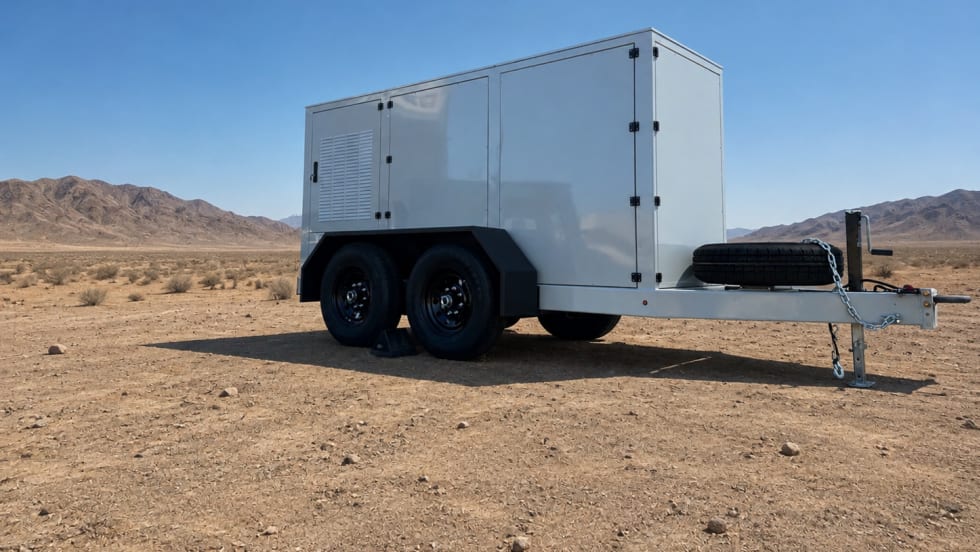
Xos Mobile Charging Hub Surpasses 1 GWh of Energy Delivered
As fleets electrify, charging capacity does not always arrive on the same timeline as the vehicles. Operating data from one Xos Hub shows how mobile, grid-independent charging can support vehicles when permanent infrastructure or utility upgrades aren't available.
Read More →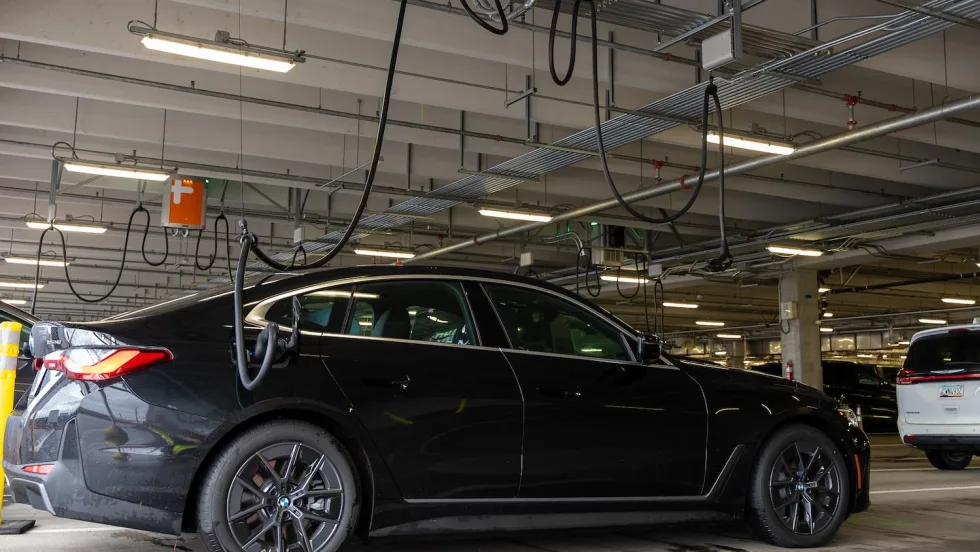
ChargePoint Adds Overhead EV Fast Charging at Portland International Airport
The installation can charge up to 20 rental vehicles simultaneously and uses overhead equipment to preserve ground-level space at the airport's Quick Turnaround Facility.
Read More →
Octopus Energy Launches Public EV Charging App in U.S.
Octopus Charge allows EV drivers to locate and access public charging stations through a single app, building on the company's Electroverse platform in Europe.
Read More →
Schneider Electric Launches Level 2 Home EV Charger With Integrated Load Management
Schneider Charge uses integrated SmartAmp technology to adjust charging output based on household electrical demand and is available with NACS or J1772 connectors.
Read More →
Why EV Charging Reliability Is More Complicated Than It Looks
GridLink CEO Josh Silets explains what causes EV chargers to fail, why fleet operators often struggle to identify the source, and what questions they should ask charging vendors.
Read More →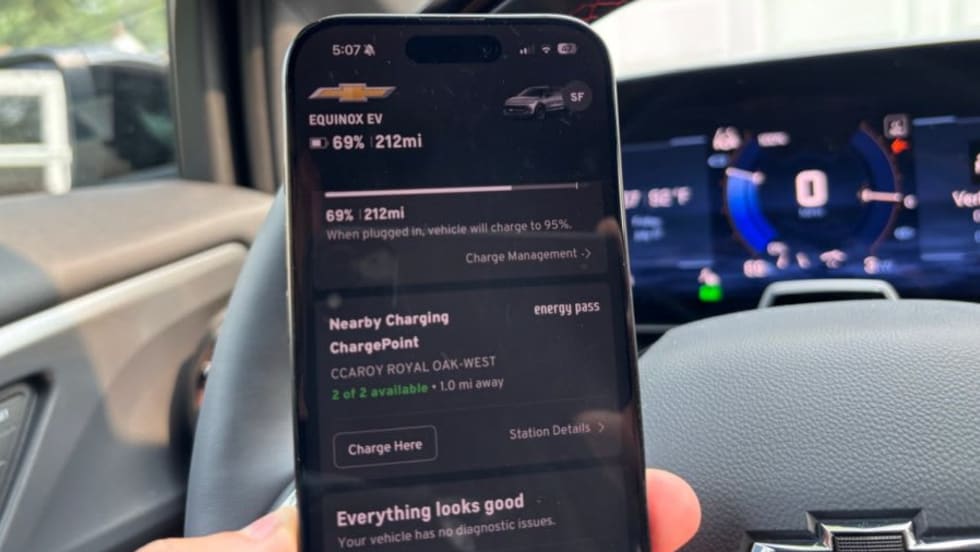
GM Adds ChargePoint Network to Energy Pass Platform
The integration gives GM EV drivers access to additional DC fast chargers and Level 2 stations through a single app while expanding the automaker's public charging ecosystem.
Read More →
Xos White Paper Asserts LA Olympics Will Lack Enough EV Chargers
The commercial EV fleet company recommends some faster and more flexible remedies to relieve the anticipated shortfall.
Read More →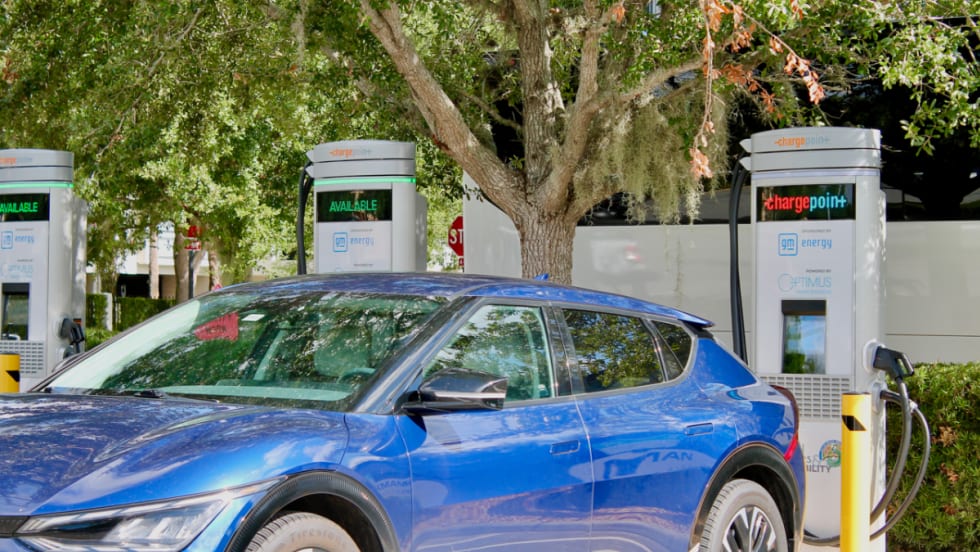
ChargePoint, Optimus Expand Fast-Charging Network Across Southeastern U.S.
ChargePoint will serve as the exclusive solutions provider, delivering hardware, software, and services to support Optimus’ growing charging network.
Read More →
Running A Profitable Electric Rental Fleet
How do you successfully operate an all-electric rental car fleet? Whether you manage a rental fleet or another commercial fleet, this conversation offers practical lessons on deploying, operating, and scaling electric vehicles.
Read More →
Why Charging May Never Be As Easy As Filling Up Gas
A seamless charge depends on a string of independent companies getting it right together, every time. How can electric fleets navigate the challenges to create a successful charging plan?
Read More →