


Want More? No Truck Powertrain Type to Dominate by 2050
Fleet Electrification: How to Avoid a Utility Upgrade
If your initial electrical load calculations indicate a lack of capacity, you may be able to support charging infrastructure with the appropriate load management.
by Bernardo Raymundo
September 30, 2024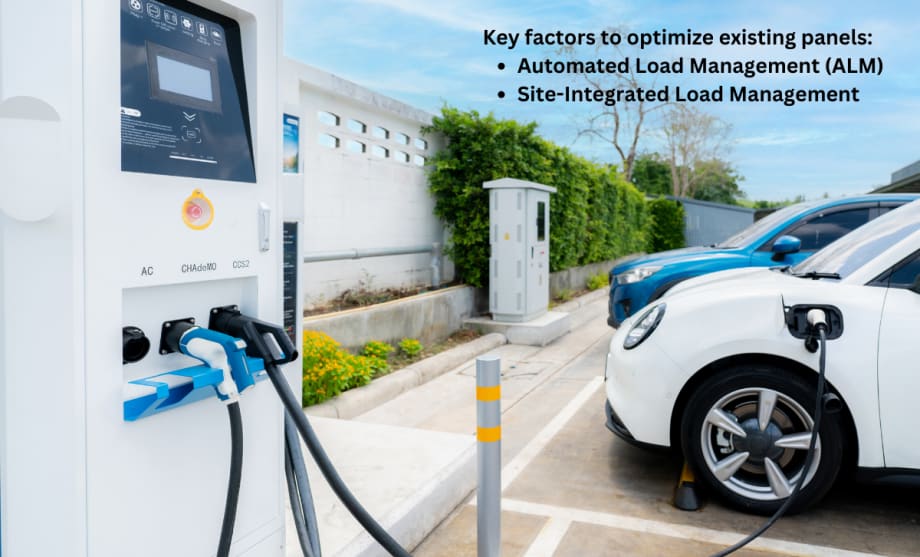
If the total capacity of chargers can be allowed to exceed the panel's rated capacity with ALM, and uncontrolled loads on-site can be monitored by the CMS, then chargers can be installed and managed under a required electrical limit.
Photo: Automotive Fleet
3 min to read
As fleet electrification gains momentum, the timely and cost-effective installation of charging infrastructure continues to be one of the biggest challenges. Fleet managers often ask, “How can we install charging infrastructure more quickly and affordably?”
One increasingly popular solution is to avoid utility upgrade delays and expenses by optimizing the use of the site’s existing electrical infrastructure with the help of a charge management system (CMS).
Why Leverage Existing Infrastructure?
Many fleet operators face tight deadlines to deploy infrastructure quickly to take advantage of expiring grants, or to comply with regulatory deadlines such as the Advanced Clean Fleet rule in California. Others may want to start the electrification journey with a pilot program at a minimal cost to test and learn about the technology.
For these and many other cases, utilizing existing electrical infrastructure can be the difference between an “impossible site” and a “feasible site.”
For fleets aiming to deploy a limited number of vehicles, the time and expense associated with requesting new utility services and constructing those upgrades can be overwhelming and unnecessary. When facing tight deployment schedules, waiting for a dedicated service for EV charging might not be a viable option.
Many sites already have existing 200- to 800-amp panels that can support charging infrastructure when paired with the appropriate load management technology.
Optimizing Your Existing Panel
Two key features of an advanced CMS can help fleets maximize the charger capacity that can be installed on an existing panel:
Automated Load Management (ALM): This technology allows the total capacity of chargers to exceed the panel's rated capacity by enabling the CMS to strategically share available power for charging across multiple charge ports.
Site-Integrated Load Management: The CMS monitors building energy loads (or other loads at a site) and adjusts charging based on real-time available capacity as building loads fluctuate (e.g., when HVAC systems cycle on and off).
If the total capacity of chargers can be allowed to exceed the panel's rated capacity with ALM, and uncontrolled loads on-site can be monitored by the CMS, then chargers can be installed and managed under a required electrical limit, even for sites where building loads occupy the majority of panel capacity at some hours of the day.
This will often allow a fleet depot electrification project manager to install chargers — in compliance with electrical codes — at a site where it might not otherwise be possible.
A Practical Example of Load Management
Consider the following scenario:
A fleet secures a state grant to fund four electric vehicles.
The fleet's garage has an existing 100% rated, 400-amp main panel.
Electrical load calculations indicate that the panel has no available capacity.
However, the actual overnight load is significantly below capacity, approximately 100 amps.
To ensure each vehicle can complete its route, four 19.2 kW 80-amp AC chargers are recommended.
Modeling shows that to meet charging needs for the four routes, the CMS can ensure that the total draw will never exceed 250 amps and that all vehicles will have plenty of time to get a full charge for the day.
By using ALM and site-integrated load management, the fleet is able to safely install four chargers with combined total capacity of 320 amps on the existing panel, and meet its funding deadline.
Without the combined automated and site-integrated load management capabilities of the CMS, this situation would necessitate a service upgrade or a new service to support additional charging.
However, by utilizing both ALM and site-integrated load management, this fleet can present a feasible, safe, and effective plan to their utility and local permitting authority. This approach allows them to install all four chargers immediately, comply with the National Electric Code, proceed with the planned pilot program, and retain their grant funding.
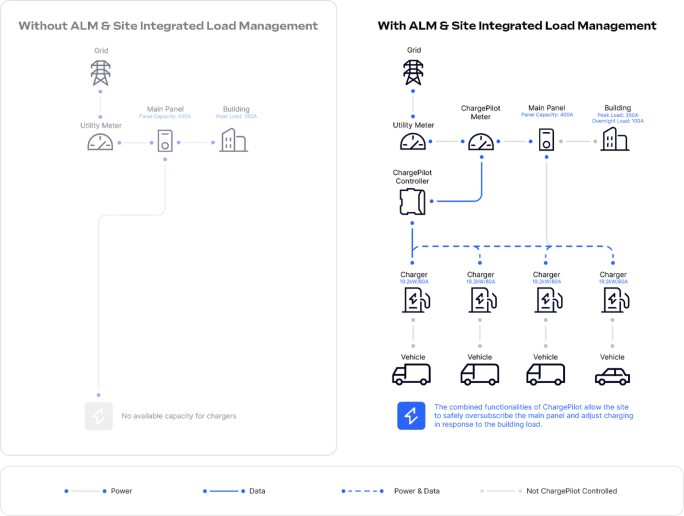
By using ALM and site-integrated load management, a fleet is able to safely install chargers on the existing panel.
Source: Mobility House
Overcoming Infrastructure Challenges
Leveraging existing electrical infrastructure for fleet electrification not only saves time and money but also opens new opportunities for fleet operators to deploy electric vehicles at difficult sites without unnecessary delays.
With the right CMS, fleets can overcome infrastructure challenges and move forward confidently with their electrification plans.
Originally posted on Automotive Fleet
Subscribe to Our Newsletter
More Electric Vehicles
EV Charging Use Is Outpacing Infrastructure Growth
ChargePoint’s 2026 Charging Forward Report points to rising charger use, higher-powered charging, commercial vehicle electrification, and energy-management technology. Here’s what fleets should know.
Read More →
EV Realty Names Henrik Holland President as Charging Platform Expands
The former Prologis Mobility and Shell executive will help expand EV Realty’s truck charging business and move its power-first infrastructure model into autonomous vehicle depots and other fleet sectors.
Read More →
GreenPower Expands New Mexico EV Pilot With Larger Buses, V2G Testing
After logging more than 17,000 electric miles in the first year, New Mexico’s statewide pilot is moving into its second phase with larger vehicles, continued charging evaluations, and more.
Read More →
Can EV-as-a-Service Help Fleets Scale Electrification?
Sustainability Partners CEO Adam Cain explains how matching EVs, charging infrastructure, and duty cycles can help fleets scale electrification.
Read More →
How EV-as-a-Service Is Moving Fleets Beyond Pilots
Adam Cain, president and CEO of Sustainability Partners, explains how EV-as-a-service can help fleets scale deployments by addressing duty-cycle requirements and charging challenges.
Read More →
PowerFlex, The Mobility House Join Forces to Advance Fleet Electrification
Two EV charging providers are joining forces to deliver a broader portfolio of energy management and fleet electrification solutions.
Read More →
Ford Retools Louisville Plant for Fathom Electric Truck Production
Ford's $2 billion Louisville Assembly Plant overhaul introduces a three-part assembly process for the Fathom midsize electric truck, with production scheduled to begin in 2027.
Read More →
Merchants Fleet Reports 290M EV Miles as Fleets Navigate Changing Electrification Market
From millions in operating savings to hundreds of millions of EV miles, Merchants Fleet’s latest report reveals what’s working and what’s changing in fleet electrification.
Read More →
California District Commits to Electrify 25% of School Bus Fleet by 2028
One of the nation's largest school bus electrification projects to date demonstrates how grants, charging infrastructure, and public-private partnerships can help fleets transition to EVs at scale.
Read More →
Aptera Orders Bodies and Chassis for Its First 40 Production Vehicles
Aptera Motors Corp. has issued purchase orders for the major structural components of its first 40 vehicles, and body and chassis components are expected to begin arriving in October.
Read More →