


Electric Vehicles Now Hit the Road Fork of Hype vs. Reality
All-electric vehicles will not be an all-or-nothing option as many market and technological factors will influence the course of fleet electrification.


Steve Greenfield, CEO of Automotive Ventures, recently spelled out such conflicting signals and mixed outcomes in the years ahead as America pursues its experiment in vehicle electrification. He spoked at the IARA Summer Roundtable in Chicago on Aug. 24, 2023.
Photo: Martin Romjue / Bobit
As electric vehicles phase out of their start-up cycle, the path to mass acceptance will face many of the same setbacks and unforeseen outcomes as any revolutionary product.
Electric vehicle and automotive industry expert-consultant Steve Greenfield, CEO of Automotive Ventures, recently spelled out such conflicting signals and mixed outcomes in the years ahead as America pursues its experiment in vehicle electrification.
Greenfield updated the state of the EV market and industry during a keynote session Aug. 24 at the annual conference of the International Automotive Remarketers Alliance in Chicago.
EVs Tapped Out Until Technology Catches Up
The EV market appears to have hit a plateau as 93% of the population are not buying them, due to a combination of high purchasing costs, range anxiety, and charger speed, reliability, and availability, Greenfield said.
A recent J.D. Power survey showed one out of five public chargers are not working on any given day in the U.S. Motorists drive an average of about 30 miles per day.
Greenfield pointed out that lithium-ion EV batteries are more subject to fire risk than solid-state. As EV batteries advance, they will retain more energy and provide more range, he said.
Most OEMs will shift their new vehicle portfolios to EVs from ICE vehicles in the early 2030s, with 130 new EV models coming online in the next three years compared to 33 different models on the market in 2023. “You’ll see screaming deals for EVs in future years as OEMs are eager to sell,” he said.
EVs Require High Costs and Lots of Subsidies
For now, price drops from Tesla are causing huge losses for dealerships, many of which resist taking Tesla trades, and for OEMs that are not making any profit on their EV operations.
“Tesla has higher margins, and can afford to drop prices,” he said. “Ford may never drive profitability on their EV operations. They lose $4.5 billion per year on EVs — ICE vehicles and commercial vehicles bail them out.”
Greenfield added, “This will suck wind for a while. When will they drive profitability? Good freakin’ luck, dude.”
He described the core problem and challenge with this quote from a Wall Street Journal editorial: “Policy makers have adopted a view that EVs are the future but haven’t invented the economics to go with it.”
As a result, the automotive market will see an oversupply of EVs for a few years.
Meanwhile, China has locked up most of the minerals and ingredients to go into batteries, and processes most of them domestically. 66% of the world’s EV batteries are made in China.
Japan and other Asian countries are deliberate about owning raw ingredients, refining, building the batteries, keeping intellectual properties, and building EVs. If the U.S. goes all-electric, it will be in a vulnerable position if it doesn’t have the EV battery mining and processing on its soil. The lead time to open a lithium mine takes 10 years.
All-Electric Everywhere Not Happening
Because of these global market dynamics and U.S. consumer behavior, “100% of GM sales being EVs is not going to happen,” Greenfield said. “Lithium prices are already very high and will go through the roof.”
He cited Toyota as a rational automaker that questions whether going all in on all electric is a viable long-term strategy. Toyota sees hybrid is a bridge technology to various forms of electric and other energy sources.
The Truths & Consequences of Electric Vehicles
Greenfield further delineated other consequences and changes due to a more EV-centric automotive industry:
Since EVs run on simpler drivetrains requiring fewer parts and maintenance visits, dealerships will sustain losses in their now-profitable service and parts departments. But for fleet owners and operators, that’s a plus. A typical EV has about one-third of the service work of an ICE vehicle.
40% of the cost of new EV is related to electronics, such as sensors, ADAS calibration, software updates, and microchips. That makes EV repairs costlier and longer.
Nicks and dents can lead to catastrophic repair costs, prompting insurers to total and write off the vehicles, which then results in higher premium costs for EV owners. Replacing an EV battery on a Tesla can cost from $20,000 to $40,000.
EV owners will increasingly be monitored via all the connected electronics in the vehicles. OEMs and EV providers can program the software of an EV to provide tiers of amenities, service, performance, and comfort, Greenfield explained. Want lumbar support with turbo-level driving? Buy the connected package.
That likely will lead to more EV subscriptions, where an owner temporarily buys into the usage of an EV and adds a set of driving and experience options available through OEM-controlled electronic and software access that can regulate amenities, performance, and features that it toggles on and off based on driver preferences, Greenfield said. Such a scenario likely will anger those generations used to buying a vehicle that includes all amenities and features in one price, while digital-native younger generations will like the flexibility of ordering what they want from software-defined vehicles.
It already costs $650 per year to subscribe to a Ford F-150 Lightning all-electric pickup truck.
With EVs potentially more durable, drivers or subscribers could enter longer-term, lease-type subscriptions. The average car in the U.S. is already on the road of 12 years.
EVs could lead to higher insurance cost more to repair and accidents are more likely to be total incidents. That could deter younger consumers from taking on more expensive EVs and opting for ICE vehicles.
For remarketers, EVs pose a list of undefinable questions: How do you assess the value of EVs with various software options that can add or subtract features and performance? What about irrelevancy? How do you set resale values? What does it mean for MSRPs? Leasing terms? How do used EVs affect resale values for ICE vehicles?
As cars collect more data, remarketers, dealerships, and related businesses will need to find more sophisticated ways to protect themselves from data privacy invasions and liabilities.
In sum, Greenfield advised remarketers to be more open-minded and child-like toward the changes that are coming. “This is not time to dig in heels about what will and will not work.”
But he predicted ICE vehicles will be on American roads for years to come.
“The U.S. government will not force consumers to do anything. We will not get to more than 50% EVs in our lifetime. I’ll be long dead, and we will still have ICE vehicles in America. It’ll take another 10-12 years before most vehicles are electric. We’ll see a good co-existence of EVs and ICE vehicles.”
More Electric Vehicles
EV Charging Use Is Outpacing Infrastructure Growth
ChargePoint’s 2026 Charging Forward Report points to rising charger use, higher-powered charging, commercial vehicle electrification, and energy-management technology. Here’s what fleets should know.
Read More →
EV Realty Names Henrik Holland President as Charging Platform Expands
The former Prologis Mobility and Shell executive will help expand EV Realty’s truck charging business and move its power-first infrastructure model into autonomous vehicle depots and other fleet sectors.
Read More →
GreenPower Expands New Mexico EV Pilot With Larger Buses, V2G Testing
After logging more than 17,000 electric miles in the first year, New Mexico’s statewide pilot is moving into its second phase with larger vehicles, continued charging evaluations, and more.
Read More →
Can EV-as-a-Service Help Fleets Scale Electrification?
Sustainability Partners CEO Adam Cain explains how matching EVs, charging infrastructure, and duty cycles can help fleets scale electrification.
Read More →
How EV-as-a-Service Is Moving Fleets Beyond Pilots
Adam Cain, president and CEO of Sustainability Partners, explains how EV-as-a-service can help fleets scale deployments by addressing duty-cycle requirements and charging challenges.
Read More →
PowerFlex, The Mobility House Join Forces to Advance Fleet Electrification
Two EV charging providers are joining forces to deliver a broader portfolio of energy management and fleet electrification solutions.
Read More →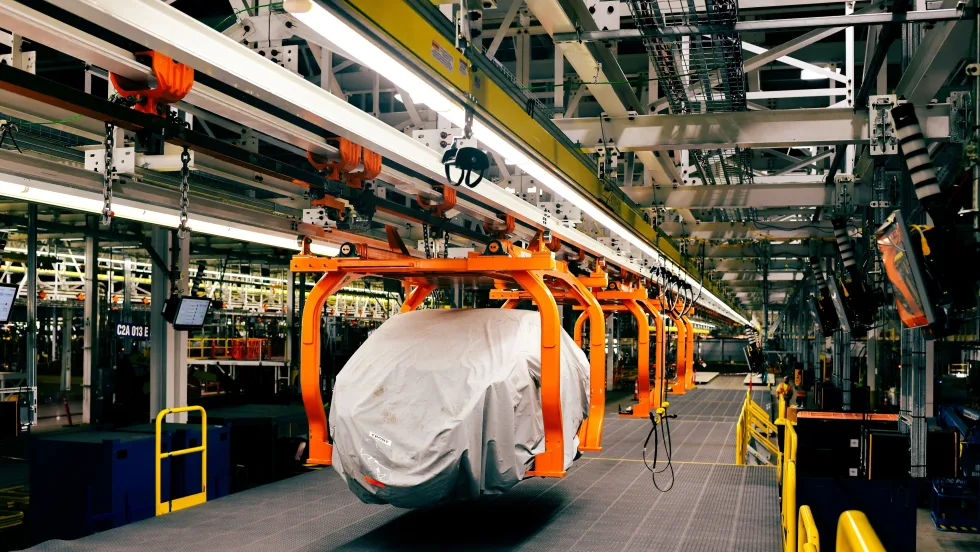
Ford Retools Louisville Plant for Fathom Electric Truck Production
Ford's $2 billion Louisville Assembly Plant overhaul introduces a three-part assembly process for the Fathom midsize electric truck, with production scheduled to begin in 2027.
Read More →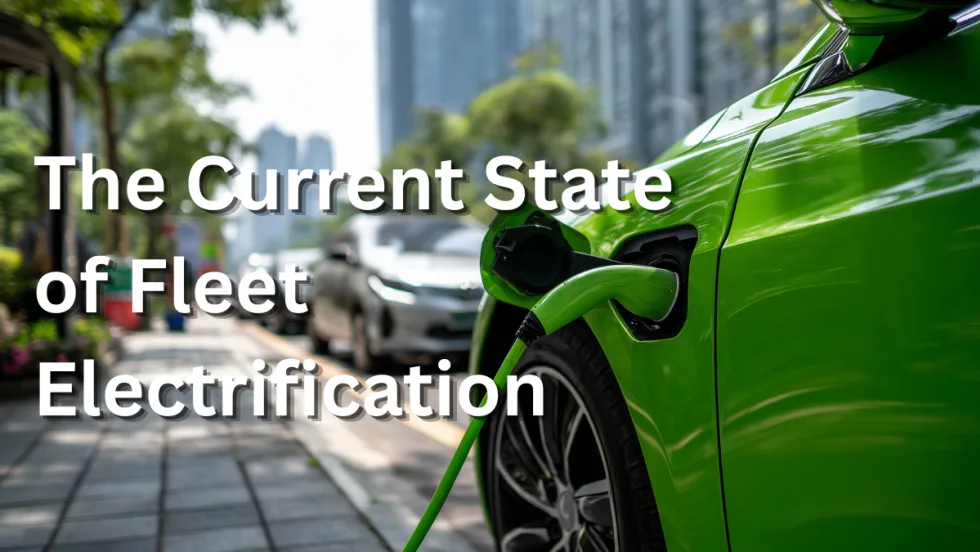
Merchants Fleet Reports 290M EV Miles as Fleets Navigate Changing Electrification Market
From millions in operating savings to hundreds of millions of EV miles, Merchants Fleet’s latest report reveals what’s working and what’s changing in fleet electrification.
Read More →
California District Commits to Electrify 25% of School Bus Fleet by 2028
One of the nation's largest school bus electrification projects to date demonstrates how grants, charging infrastructure, and public-private partnerships can help fleets transition to EVs at scale.
Read More →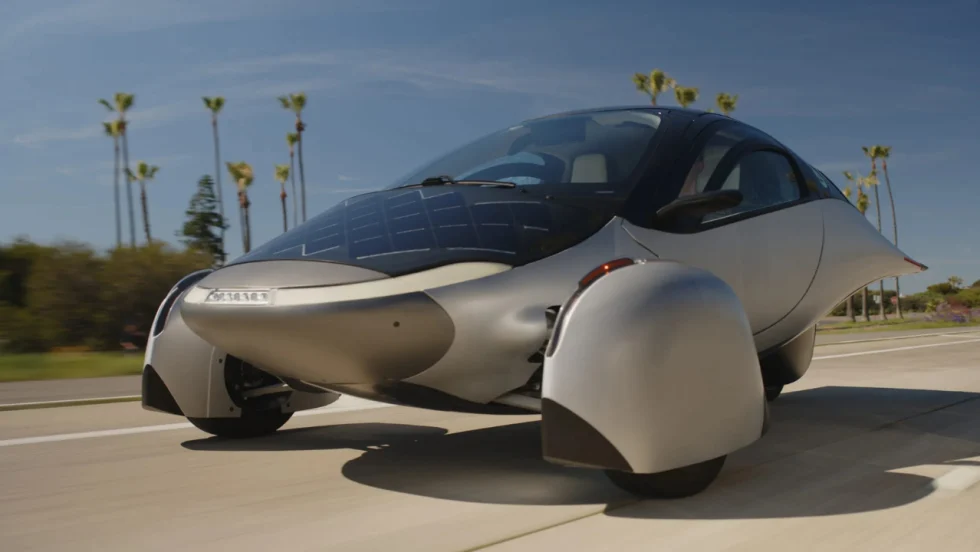
Aptera Orders Bodies and Chassis for Its First 40 Production Vehicles
Aptera Motors Corp. has issued purchase orders for the major structural components of its first 40 vehicles, and body and chassis components are expected to begin arriving in October.
Read More →