


Cost-Cutting Initiatives that Work
One service fleet manager has found several ways to cut costs through the use of data analysis, creative solutions, and use of tried-and-true methods.
by Daryl Lubinsky
March 12, 2018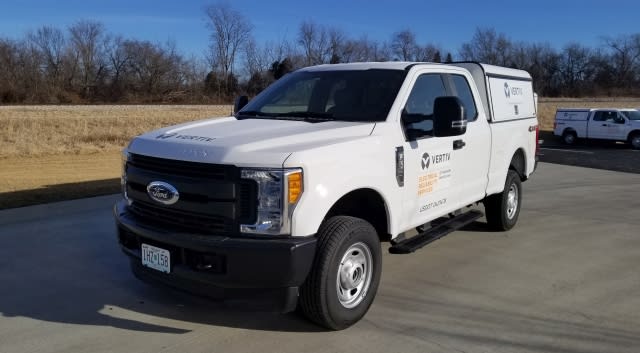
Vertiv operates a number of vehicles, but is currently under contract with Ford for all of its replacement units. (Photo courtesy of Vertiv)
6 min to read
The Columbus, Ohio-headquartered Vertiv fleet was made up almost completely of Dodge Ram trucks with the Hemi V-8 5.7L engine at the time Dave Buhn became fleet operations manager for the company in 2016. Buhn eventually decided to switch much of the Vertiv fleet to Ford F-150 trucks with the 2.7L engine. Lower vehicle acquisition cost was just one benefit of that decision.
“The smaller engine they have in place today, that’s turbocharged and has more horsepower than the Hemi V-8 that we were using,” said Buhn, who oversees a fleet of about 1,800 vehicles.
Vertiv, formerly Emerson Electric/Emerson Network Power, designs and builds infrastructure for data centers that house the storage for computer servers and other systems for such large companies as AT&T, Apple, and Facebook. About 90% of Vertiv’s fleet drivers are engineers who service the data centers and about 10% are sales staff.
The company employs more than 20,000 people and operates more than 25 manufacturing and assembly facilities around the world. The U.S. fleet serves seven different business units with offices in all 50 states.
“I was able to achieve more horsepower with a smaller engine, lighter weight, less fuel, and across-the-board savings on maintenance,” Buhn said. He also noted the new Ford trucks are approximately 700-pounds lighter than the previous trucks because of their aluminum body.
That initiative alone resulted in a 10% annual reduction in maintenance costs. It was one of many cost-cutting and efficiency-related initiatives that Buhn implemented soon after starting with Vertiv.
When he first started with the company, he began working on reorganizing his fleet’s data as it was shown in the computer program of Vertiv’s fleet management company, Element. Then, he worked on a program to reduce the number of different models in the fleet to further improve efficiencies.
That process led to many additional cost-controlling initiatives Buhn would implement in a little more than two years with Vertiv.
Bailment Pool Alleviates Downtime
Vertiv’s fleet includes GM, Chrysler, and Ford vehicles but is currently under contract with Ford for all of its replacement vehicles. The field engineer fleet is mostly cargo vans and pickup trucks, while the sales vehicles are mostly cars and SUVs. Buhn decided to implement a bailment pool at a local Ford dealership, which includes about 30 of the most common vehicles the fleet uses out in the field. He started the system with Ford models and noted that the initiative has decreased fleet vehicles’ downtime and rental costs.
“We can draw from that pool within just a few weeks, which eliminates about 16 weeks of build time from the manufacturers,” said Buhn, who previously managed the fleets for Scotts Miracle-Gro and American Electric Power. Once a Vertiv fleet vehicle comes out of service for maintenance or for collision repair, the fleet brings a vehicle out of the bailment pool for a faster replacement time. Vertiv does not pay for the bailment pool vehicles until they come into service, or until a cutoff time of about eight months, when the company must start paying Ford for the vehicle’s storage costs.
Statistical Analysis Determines Optimal Lifecycles
Buhn’s cost-cutting initiatives did not stop there. Using an Element Fleet Management program, Buhn performed statistical modeling analyses to study when maintenance costs increase related to vehicle depreciation. The analyses help him determine optimal vehicle lifecycles.
“By doing so, can I extend the life of the lease? What is the magic number of replacing vehicles? I’m trying to determine when it is optimal to change out certain vehicles and at what time,” Buhn said.
The Element program shows him the costs associated with his fleet vehicles every month, broken out by model and year.
“You can take different chunks of costs for all different types of vehicles,” he said. “Then you can put all these things on a graph, do a regression analysis, and see where your costs will be in the future.”
At the time he started with Vertiv, the fleet leased vehicles for a term of four years or 100,000 miles. He determined that by using synthetic oil, his fleet could stretch the life of the lease out to five years or 150,000 miles.
“We were replacing vehicles too quickly, and by replacing vehicles too quickly, we were incurring more licensing and titling costs, more sales tax costs, and more interest rate costs by turning vehicles more quickly,” Buhn said. “Every time we would buy a vehicle, the cost for the vehicle was higher, thus the interest rate sales tax turning the licensing and titling was all being done more often and quicker than stretching the payments and the life of the vehicle out a little further.”
Buhn decided to change the fleet’s Element Fleet Management fuel card to a service card that combines fuel and maintenance.
“The service card for fuel and maintenance, and the connection of the national accounts with our fleet management company are all tied together. This bundling saves costs,” he said. “It automatically takes a card out of service when I replace a vehicle, and when a new vehicle comes on board, that card is already being processed and turned on by the time that vehicle goes into service.”
In 2016, the Vertiv fleet paid $25,000 in toll violations. Vertiv managed the toll violations for its drivers who rang up toll costs while driving through toll roads, bridges, and tunnels.
Buhn was able to make some changes to address this issue. Now, the vehicles are registered with the fleet management company in states where toll transponders are used. That means Vertiv pays no toll violations at all.
“My drivers and managers don’t have to go out and register the vehicles, as they are already pre-registered through the fleet management company,” he said.
Focus on Tires & Oil, Lowers Expenses
Buhn implemented a program for his fleet to buy tires only from Bridgestone-Firestone, Michelin, and Goodyear through Element’s national account program.
“Through Element’s national accounts, I can get volume discounts on the number of tires I buy,” he said, adding that the discounts were on the higher-priced tires, but pay off in the long run. “The life of the tires far exceeds the cost of buying lesser-quality tires,” he said.
The fleet also moved to synthetic oils “as much as possible where we increase the life of our engines and vehicles,” Buhn said.
Buhn is working on reducing costs associated with U.S. Department of Transportation (DOT) regulations by switching as many vehicles as possible to under 10,000 pounds GVW. He is also working on determining the need for certain vehicles, as well as the number of vehicles and where they are needed.
“We’re re-evaluating sales vehicles and operations vehicles right now, so we’re in the process of determining whether we need to cut vehicles or ramp up vehicles in certain areas.”
For the vehicles that remain, he tries to make them as functional as possible for drivers.
“Anywhere I can see a benefit to putting in functionality for safety, or navigation systems for our salespeople to make their work life better, I try to do so. I’m not trying to increase the cost of the vehicle astronomically, but if those parameters are in place by the manufacturers where I can see a value and increase the safety and ergonomics and design of the vehicle, I try to put those elements in place as much as possible,” Buhn concluded.
Topics:Bailment PoolsFordService FleetsFuel CardsUtility FleetsMaintenanceLifecycle CostsRam CommercialElectric Vehicles
Originally posted on Work Truck Online
Subscribe to Our Newsletter
More Electric Vehicles

EV Charging Use Is Outpacing Infrastructure Growth
ChargePoint’s 2026 Charging Forward Report points to rising charger use, higher-powered charging, commercial vehicle electrification, and energy-management technology. Here’s what fleets should know.
Read More →
EV Realty Names Henrik Holland President as Charging Platform Expands
The former Prologis Mobility and Shell executive will help expand EV Realty’s truck charging business and move its power-first infrastructure model into autonomous vehicle depots and other fleet sectors.
Read More →
GreenPower Expands New Mexico EV Pilot With Larger Buses, V2G Testing
After logging more than 17,000 electric miles in the first year, New Mexico’s statewide pilot is moving into its second phase with larger vehicles, continued charging evaluations, and more.
Read More →
Can EV-as-a-Service Help Fleets Scale Electrification?
Sustainability Partners CEO Adam Cain explains how matching EVs, charging infrastructure, and duty cycles can help fleets scale electrification.
Read More →
How EV-as-a-Service Is Moving Fleets Beyond Pilots
Adam Cain, president and CEO of Sustainability Partners, explains how EV-as-a-service can help fleets scale deployments by addressing duty-cycle requirements and charging challenges.
Read More →
PowerFlex, The Mobility House Join Forces to Advance Fleet Electrification
Two EV charging providers are joining forces to deliver a broader portfolio of energy management and fleet electrification solutions.
Read More →
Ford Retools Louisville Plant for Fathom Electric Truck Production
Ford's $2 billion Louisville Assembly Plant overhaul introduces a three-part assembly process for the Fathom midsize electric truck, with production scheduled to begin in 2027.
Read More →
Merchants Fleet Reports 290M EV Miles as Fleets Navigate Changing Electrification Market
From millions in operating savings to hundreds of millions of EV miles, Merchants Fleet’s latest report reveals what’s working and what’s changing in fleet electrification.
Read More →
California District Commits to Electrify 25% of School Bus Fleet by 2028
One of the nation's largest school bus electrification projects to date demonstrates how grants, charging infrastructure, and public-private partnerships can help fleets transition to EVs at scale.
Read More →
Aptera Orders Bodies and Chassis for Its First 40 Production Vehicles
Aptera Motors Corp. has issued purchase orders for the major structural components of its first 40 vehicles, and body and chassis components are expected to begin arriving in October.
Read More →