As more electric trucks emerge, fleet managers need to improve their understanding of what it will take to procure, maintain, and charge them efficiently.
Lexi Tucker・Former Senior Editor
June 8, 2021
As more electric trucks emerge, fleet managers need to improve their understanding of what it will take to procure, maintain, and charge them efficiently.
Photo: Phoenix Motorcars
6 min to read
It seems like news of medium-duty electric vehicles (EVs) hitting the scene is coming fast and frequently. Vocational fleets are becoming aware of new advances in vehicle technology and may want to adopt more EVs into their operation. Thomas Allen, director of sales for Phoenix Motorcars in Ontario, California, discussed what considerations fleet managers need to take as they step forward into a future of trucks not powered by liquid fuels.
Providing for Increased Interest
As new state and federal government guidelines emerge, Thomas said Phoenix Motorcars is seeing a climb in interest in medium-duty EVs.
Ad Loading...
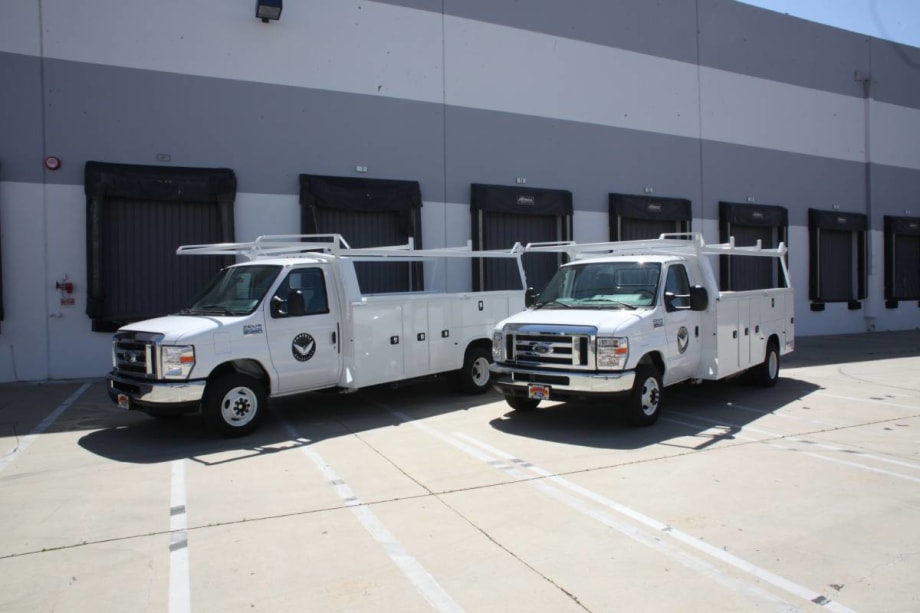
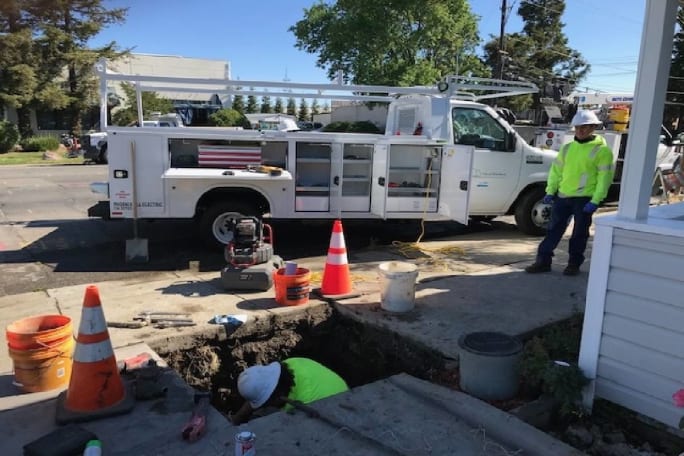
“We're getting more vocational truck, work truck, and cargo and last-mile industry interest. We talk to end-users to get a feel for what they're looking for in a vehicle - what it's being used for, whether they're carrying tools or equipment, or if they're changing city transformers or doing street work. We offer dump trucks and flatbeds with liftgates as well as service and utility trucks. We can do customized tool compartments and enclosed boxes and cargoes, too,” he said.
The company now also offers a custom electric inverter. Wanting to offer a fully zero-emission solution, they’ve developed a 6-kW custom inverter that draws off the high voltage battery and converts it back into AC current. They can customize the outlets depending on the types of tools a vocational fleet might need, whether it's 30 amp plugs for air compressors, or smaller 15-amp duplex receptacles for charging cordless batteries and drills.
Thomas said he’s seeing a nationwide push for fleets to go electric. Many states and regional government organizations are putting out climate action plans, and there’s a lot of push politically to start improving air quality and taking environmental impact more seriously.
Photo: Phoenix Motorcars
What to Know Before You Buy
Thomas said he’s seeing a nationwide push for fleets to go electric. Many states and regional government organizations are putting out climate action plans, and there’s a lot of push politically to start improving air quality and taking environmental impact more seriously.
“Companies are asking about what kind of EVs are out there, the infrastructure required, and how they can better prepare for an all-electric future,” he said. “It’s opened up a lot of aspects of planning they haven’t tackled before.”
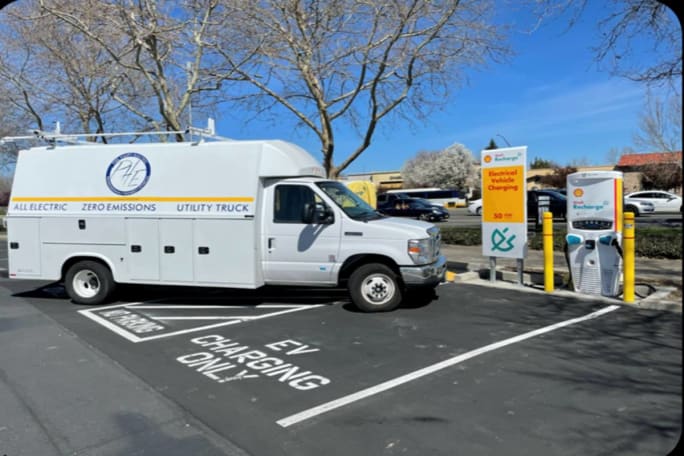
Unlike gas-powered vehicles, where one can drive up to any gas station and know they’ll have the fuel you’ll need, EVs require a bit more thought. A few points to consider are:
Ad Loading...
Which chargers will work with the different types of vehicles you plan to purchase?
Do you have the right infrastructure in place to charge the specific kind of vehicles you want?
What opportunity is there for fast charging?
Phoenix Motorcars, for example, offers four different battery sizes. It focuses on helping match payload or seating capacity to the correct battery for the job.
“You’ll want to take note of the duty cycle of the route because each is different. Depending on the distance the vehicle will need to go, you don't necessarily need the largest battery. Even if you drive a significant number of miles in a day, have downtime, or do a rotation of vehicles, different charging strategies will help ease range anxiety,” he explained.
When it comes to picking the appropriate charger(s) for vehicles, it’s important to consider the initial deployment, but also look forward to what your needs might become in the years ahead.
Unlike gas-powered vehicles, where one can drive up to any gas station and know they’ll have the fuel you’ll need, EVs require a bit more thought.
Photo: Phoenix Motorcars
Challenges and Hurdles
Some points those looking to purchase a medium-duty electric vehicle may want to consider are the following:
Ad Loading...
Demand charges - If you're drawing a certain amount of current at peak times, the rate you're paying for electricity will skyrocket. It's different with every utility when this rate will kick in. Setting up smart charging to help avoid this can be a challenge.
“You start to diminish the cost savings you were initially planning for if you don’t charge smart,” Thomas said. “If you know you have a certain commercial electrical kilowatt rate, then we can help customers budget to understand what the cost savings are going to be. When you start messing with the kilowatt rate and factor in demand charges, often it's not what the customer was expecting.”
Thomas Allen
Analyzing routes and understanding the duty cycles of every deployment can also help in figuring out the best time for charging to minimize cost.
Infrastructure - Older city or commercial buildings will need a panel upgrade. This brings up the topic of needing new service lines, transformers, and upgraded switchgear to handle extra loads. According to Thomas, the utility companies he works with see the long-term goals increasing demand for their product, so many have medium-duty incentive programs.
“If a company plans to deploy two or more trucks, many utilities will help with the cost of upgrading your infrastructure,” he said.
Ad Loading...
Something to keep in mind is it does take a bit longer (six to 12 months) for lead time on the sales cycle of the deployment.
Range anxiety – While fear of mileage capabilities is lessening, it remains an issue if fleets don’t calculate routes properly.
“We're seeing lower cost per cell every year, year over year. We're also seeing higher efficiencies and densities in metals, and the chemistry of the batteries themselves. Hopefully, within the next decade, we’ll see more breakthroughs in solid-state batteries, which are much more efficient than our current technology, and that will lead to mass production,” he explained.
Points of Consideration
Thomas had a few tips for fleets looking into medium-duty electric trucks:
Start planning today: Inventory your vehicles and understand what the year, make, model, and engine type is of your current fleet. A lot of the funding that's available for zero-emission vehicles requires scrappage, so it's very important to understand what you're working with. For instance, some scrappage requires that the vehicle be 2009 or older diesel of equivalent size. If you know you have four or five of those that you use, even just periodically, you could get some serious money towards switching to electric by scrapping those.
Ad Loading...
List the odometer reading and the VINs and keep all information ready on a single document so companies built to help fleets electrify can easily reference them to help you get the funding you need. This makes it easy to keep your eyes open all year long for opportunities that arise.
“It saves a lot of time when you don’t have to start from scratch,” he said. “Sometimes with big businesses that have multiple locations it could take a month or two just to get every location to submit all their information on what vehicles they run and how old they are.”
Building requirements: Understand the voltage and load capacity of your current building where your transformers are. When you're installing charging stations, it's generally cheaper to install them close to where the transformer or the switchgear is.
“Every foot is an extra piece of copper wire, metal pipe, and more trenching. If you're going to need a new service line, reaching out and doing the preliminary paperwork for some of those incentive programs offered by your utility companies will save you some headaches,” he explained.
Understanding utilization: Thomas said you'd be surprised how many fleets don't think about how many miles they drive because gas is so readily available. Understanding idle time, power consumption by using features such as air conditioning all day, etc., will help you calculate energy draw.
About Phoenix Motorcars
The company has been making fully electric zero-emission drive systems since 2003. It started designing its first medium-duty vehicles in 2010 and now has over a total of 2.3 million miles driven on its all-electric drive systems. Together with cities, transit agencies, municipalities, seaports, airports, parking companies, smaller Mom and Pop contractors, and more, Phoenix Motorcars has been working to design systems that meet the need of any kind of vocational fleet.
The former Prologis Mobility and Shell executive will help expand EV Realty’s truck charging business and move its power-first infrastructure model into autonomous vehicle depots and other fleet sectors.
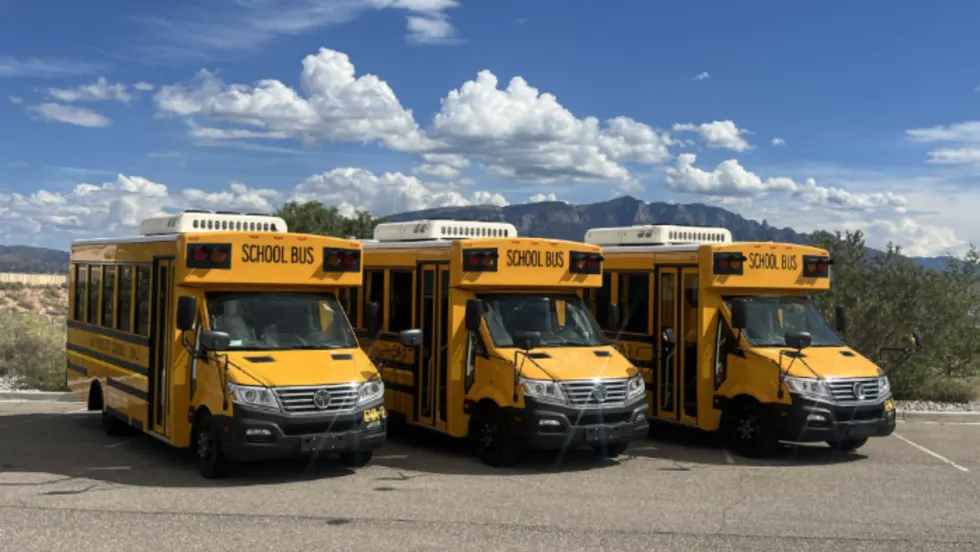
After logging more than 17,000 electric miles in the first year, New Mexico’s statewide pilot is moving into its second phase with larger vehicles, continued charging evaluations, and more.
Adam Cain, president and CEO of Sustainability Partners, explains how EV-as-a-service can help fleets scale deployments by addressing duty-cycle requirements and charging challenges.
Ford's $2 billion Louisville Assembly Plant overhaul introduces a three-part assembly process for the Fathom midsize electric truck, with production scheduled to begin in 2027.
From millions in operating savings to hundreds of millions of EV miles, Merchants Fleet’s latest report reveals what’s working and what’s changing in fleet electrification.
One of the nation's largest school bus electrification projects to date demonstrates how grants, charging infrastructure, and public-private partnerships can help fleets transition to EVs at scale.
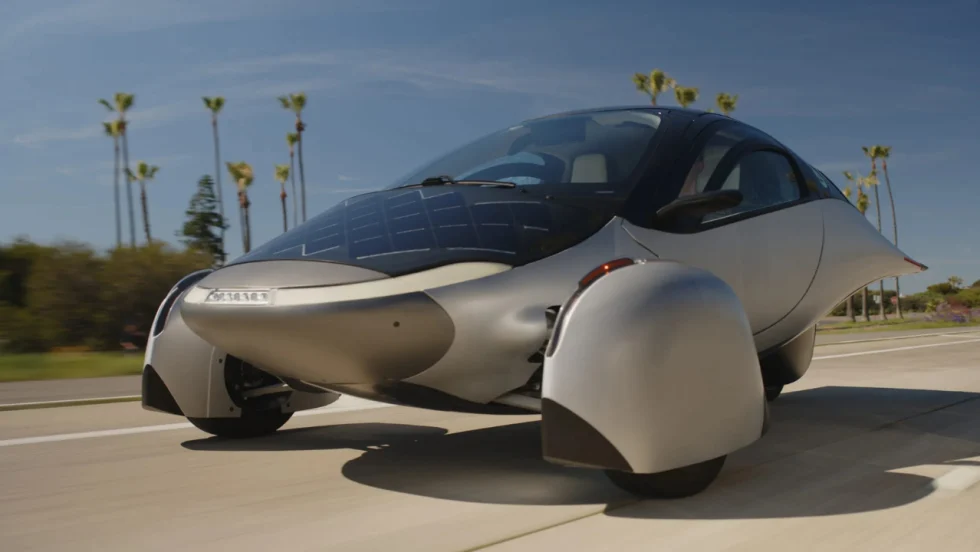
Aptera Motors Corp. has issued purchase orders for the major structural components of its first 40 vehicles, and body and chassis components are expected to begin arriving in October.