


Mercedes-Benz eSprinter Completes Winter Endurance Tests
In real-world testing at Sweden's Arjeplog, the all-electric van performed well in extreme conditions, including snowy and icy roadways, in cutting winds, and at temperatures up to negative 30 degrees.

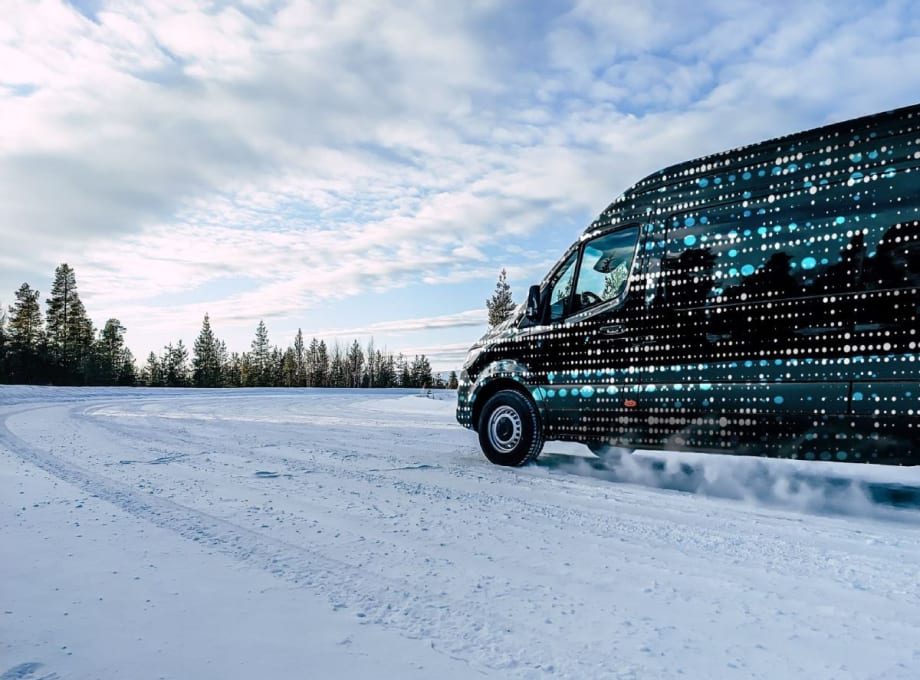
The new eSprinter will have about double the range of the current van. It will come to the U.S. and Canada, with production to start in the second half of 2023.
Photo: Mercedes-Benz
To meet customer demands for reliability in even the most difficult weather conditions, Mercedes-Benz conducts real-world endurance tests for all of its battery-electric vans, just as it does for equivalent vehicles with combustion engines.
At the challenging testing grounds at Sweden's Arjeplog, close to the Arctic Circle, vehicles undergo a variety of tests in which the effects of extreme cold on handling, ergonomics, thermal management, and cabin comfort are examined. The low-temperature resistance of drive components, heating systems, software, and interfaces are tested in cold chambers, where the vehicles are cooled down before the test drives. The charging behavior and charging management are then examined and optimized.
In this case, Merecedes-Benz said in a Feb. 11 news report that after completing half of the several weeks of planned tests, it became clear that the eSprinter defies both ice and snow, extreme temperatures, and can handle the most difficult test cycles.
What is required of the next-generation eSprinter was defined in close cooperation with customers, i.e. from the CEP sector (courier, express, and parcel services) and bodybuilders, the announcement said.
Global offerings will include three battery versions and numerous body variants – from the panel van to the chassis for box bodies, the next-generation eSprinter will open up new customer segments and new markets such as the U.S. and Canada. Compared with the current eSprinter, the range will be more than double, depending on the configuration, the brand said.
Production of the next-generation eSprinter will start beginning in the second half of 2023 in Charleston, South Carolina, and then in Germany's Duesseldorf and Ludwigsfelde. The next-generation eSprinter will be produced CO₂-neutrally.
Mercedes-Benz has invested around 350 million euros in the next-generation eSprinter. Approximately 50 million euros have been invested in adapting the production in the three plants.
The OEM has its sights set toward a fully electric future – wherever market conditions allow. This means that from 2025, all new vehicle architectures will be exclusively electric. In line with this, Mercedes-Benz Vans will also develop a new, purely electric vehicle architecture for the third generation of eVans, called VAN.EA. The first vans based on VAN.EA will launch from the mid-2020s.
Originally posted on Automotive Fleet
More Electric Vehicles

EV Charging Use Is Outpacing Infrastructure Growth
ChargePoint’s 2026 Charging Forward Report points to rising charger use, higher-powered charging, commercial vehicle electrification, and energy-management technology. Here’s what fleets should know.
Read More →
EV Realty Names Henrik Holland President as Charging Platform Expands
The former Prologis Mobility and Shell executive will help expand EV Realty’s truck charging business and move its power-first infrastructure model into autonomous vehicle depots and other fleet sectors.
Read More →
GreenPower Expands New Mexico EV Pilot With Larger Buses, V2G Testing
After logging more than 17,000 electric miles in the first year, New Mexico’s statewide pilot is moving into its second phase with larger vehicles, continued charging evaluations, and more.
Read More →
Can EV-as-a-Service Help Fleets Scale Electrification?
Sustainability Partners CEO Adam Cain explains how matching EVs, charging infrastructure, and duty cycles can help fleets scale electrification.
Read More →
How EV-as-a-Service Is Moving Fleets Beyond Pilots
Adam Cain, president and CEO of Sustainability Partners, explains how EV-as-a-service can help fleets scale deployments by addressing duty-cycle requirements and charging challenges.
Read More →
PowerFlex, The Mobility House Join Forces to Advance Fleet Electrification
Two EV charging providers are joining forces to deliver a broader portfolio of energy management and fleet electrification solutions.
Read More →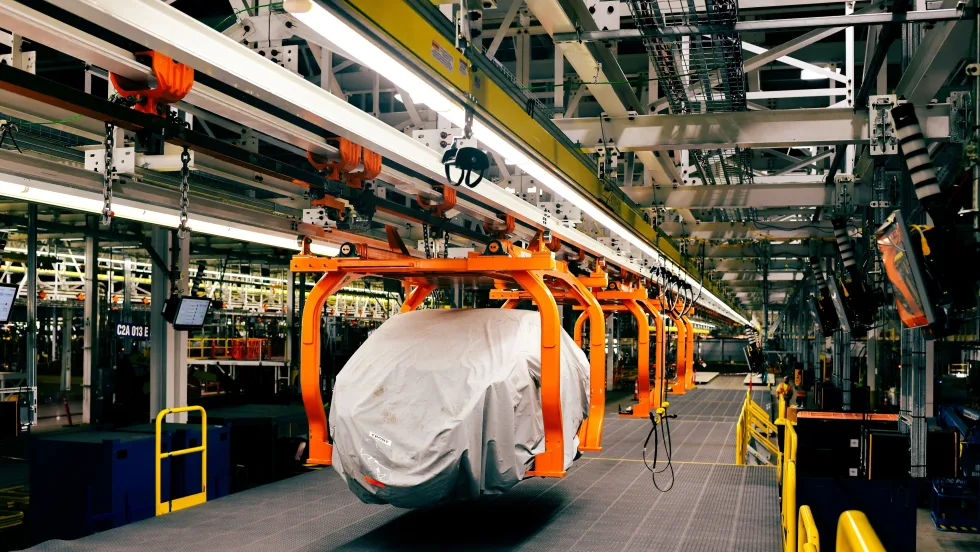
Ford Retools Louisville Plant for Fathom Electric Truck Production
Ford's $2 billion Louisville Assembly Plant overhaul introduces a three-part assembly process for the Fathom midsize electric truck, with production scheduled to begin in 2027.
Read More →
Merchants Fleet Reports 290M EV Miles as Fleets Navigate Changing Electrification Market
From millions in operating savings to hundreds of millions of EV miles, Merchants Fleet’s latest report reveals what’s working and what’s changing in fleet electrification.
Read More →
California District Commits to Electrify 25% of School Bus Fleet by 2028
One of the nation's largest school bus electrification projects to date demonstrates how grants, charging infrastructure, and public-private partnerships can help fleets transition to EVs at scale.
Read More →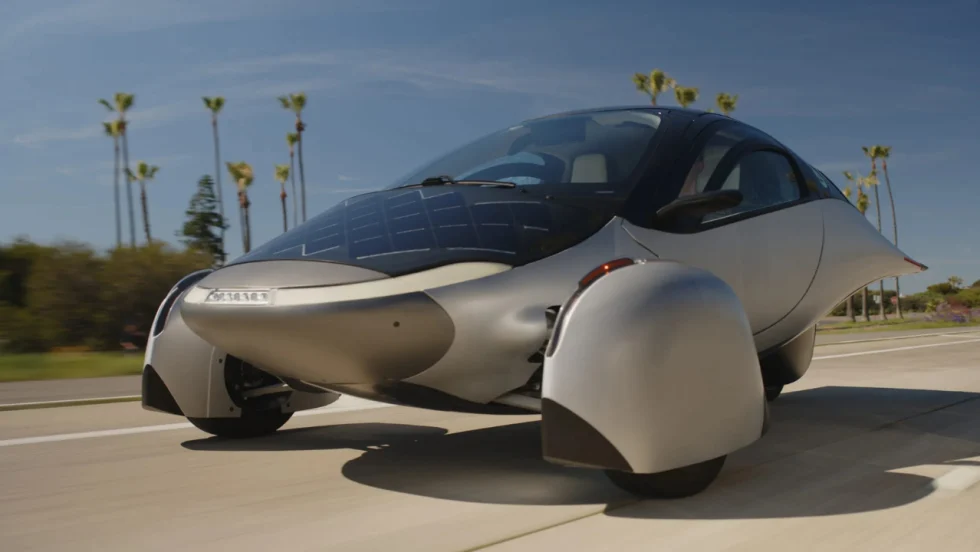
Aptera Orders Bodies and Chassis for Its First 40 Production Vehicles
Aptera Motors Corp. has issued purchase orders for the major structural components of its first 40 vehicles, and body and chassis components are expected to begin arriving in October.
Read More →