


Will Trump Make the Auto Industry Great Again?
Analysis/Commentary: Billions have already been deployed toward EV manufacturing, and the industry cannot walk away from it, but we need to find a way to do this profitably.
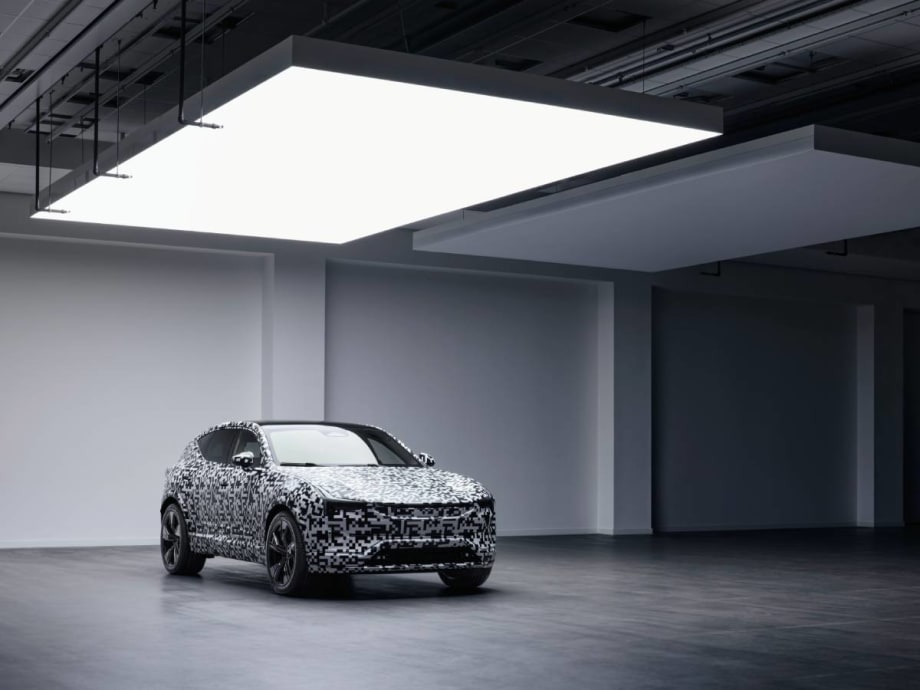
The future of EV incentives and emissions regulations looks uncertain under a new Presidential administration.
Photo: Polestar
The auto industry has been experiencing more disruption and innovation than any period during the past 100 years.
Automakers are struggling to contend with the compounding impact of the transition to electric vehicles, tariffs, the rise of Chinese automakers, and a complicated web of government regulations across the globe. With President Trump entering the White House for his second term, the industry is bracing for even more upheaval. The question on everyone’s mind: Will Trump make the auto industry great again?
I see three ways in which the new Trump administration will reshape the current landscape:
Emissions Regulations: A Double-Edged Sword
EV Incentives: A Shifting Landscape
New Tariffs: Widespread Concern
Let’s take a closer look at these topics to understand the potential impact:
Emissions Regulations: A Double-Edged Sword
One of the most contentious issues facing the industry is emissions regulations. The Biden administration enacted aggressive new standards to improve industry fuel economy to over 50 miles per gallon by model year 2031.
As our industry is delivering about 27 mpg, that’s like asking a car company to put a man on the moon. The federal government uses carrots and sticks to drive automaker compliance: those who miss the standards will face billions in penalties, but those who achieve the standard are rewarded by selling emissions credits to those who missed, creating a wealth transfer within the industry. Last year, nearly $3 billion of Tesla’s profit was generated by selling emissions credits to companies like Stellantis.
Trump has signaled he’ll likely reduce emissions standards, which could be good or bad news depending on the automaker. Companies like Ford, GM, and Hyundai, which invested billions in new EV production facilities and R&D, prefer that the standards stay unchanged. Other brands like Stellantis, who paid billions to purchase emissions credits last year, will likely benefit from less financial exposure. In November, an industry lobbyist group, the “Alliance for Automotive Innovation,” sent a letter to the incoming Trump administration asking for “stability and predictability in auto-related emissions standards.”
I believe the benefits of reducing the aggressiveness of the standards will outweigh the downside of keeping them. Ford will report over $6 billion in losses from their EV division in 2024. VW offers a $149 per month iD.4 2-year lease with $999 down. These types of deals and associated financial losses are unsustainable. Hopefully, the new Trump administration will take a long-term approach that does not force automakers to decide between paying emissions fines or sustaining operational losses.
EV Incentives: A Shifting Landscape
Tax credits established under the Inflation Reduction Act (IRA) will likely face heightened scrutiny under the Trump administration. Over the past two years, the U.S. taxpayer has funded an estimated $77 billion worth of loans, grants, and tax credits to support domestic EV battery production and $2 billion in 2024 to fund the $7,500 EV incentive for consumers.
Some legacy car companies’ EV lease share of retail sales is over 70%, well above the typical lease rate of 20% for ICE vehicles. The language in the IRA explicitly restricts incentive payments to high-income households and EVs with batteries produced outside North America. As a workaround, the Treasury Department agreed to provide the $7,500 incentive towards leases, regardless of the household income or the battery’s country of origin. This ‘leasing loophole’ was created partly to appease Korean and Japanese automakers who have invested billions in U.S. EV manufacturing.
The incoming Trump administration has been vocal in its opposition to this loophole. It’s no coincidence that EV sales in the fourth quarter of 2024 were up 15% compared to the prior year, as many consumers rushed to take advantage of the $7,500 incentive before it gets revoked.
Sunsetting the leasing loophole will help automakers by reducing their exposure to heightened residual risk. Manheim auction data reveals the 3-year residual on an EV at 42% versus an ICE vehicle at 61%. By 2026, the number of returned off-lease EVs will be up 230%, unleashing even more financial pain on the automakers as these vehicles are resold at losses. The car companies may not acknowledge it publicly, but they will be happy to see this leasing loophole closed.
New Tariffs: Widespread Concern
Automakers are lined up to donate to Trump’s inauguration fund partly because they are concerned about his aggressive posture on tariffs, specifically on vehicles produced in Mexico and Canada. Mexico produces 16% of all vehicles sold in the U.S., while Canada accounts for 7%. Not to mention the $200 billion of auto parts made in Mexico and shipped to U.S. assembly plants and repair facilities. A potential 25% tariff would add $50 billion of incremental parts cost from Mexico. These costs would make their way to American consumers, resulting in higher prices.
New tariffs will only compound the affordability crisis for auto shoppers. Last month, Kelley Blue Book reported the fourth-highest average MSRP sold at nearly $50,000. Vehicles in the more affordable compact sedan and SUV segments are primarily produced in Mexico. New tariffs may disproportionately affect the lower end of the market, forcing owners to hold their vehicles longer or purchase used cars.
Hopefully, the incoming Trump administration will use the threat of tariffs as leverage to carry out other political goals and not as an actual policy with so many adverse effects.
Balancing Act: The Road Ahead
Undoubtedly, the Trump administration is looking to shake things up in this second term, and their policy decisions will affect the industry’s future. I’m sympathetic to the automaker’s plight as they attempt to balance the constantly shifting regulatory landscape every four years while making huge manufacturing investments, meeting the demands of car buyers and their shareholders.
Billions have already been deployed toward EV manufacturing, and the industry cannot walk away from it, but we need to find a way to do this profitably. Collaboration between policymakers, industry stakeholders, and consumers will be essential to navigating the complexities and uncertainties of the road ahead. President Trump will have his work cut out for him.
Originally posted on Automotive Fleet
More Electric Vehicles

EV Charging Use Is Outpacing Infrastructure Growth
ChargePoint’s 2026 Charging Forward Report points to rising charger use, higher-powered charging, commercial vehicle electrification, and energy-management technology. Here’s what fleets should know.
Read More →
EV Realty Names Henrik Holland President as Charging Platform Expands
The former Prologis Mobility and Shell executive will help expand EV Realty’s truck charging business and move its power-first infrastructure model into autonomous vehicle depots and other fleet sectors.
Read More →
GreenPower Expands New Mexico EV Pilot With Larger Buses, V2G Testing
After logging more than 17,000 electric miles in the first year, New Mexico’s statewide pilot is moving into its second phase with larger vehicles, continued charging evaluations, and more.
Read More →
Can EV-as-a-Service Help Fleets Scale Electrification?
Sustainability Partners CEO Adam Cain explains how matching EVs, charging infrastructure, and duty cycles can help fleets scale electrification.
Read More →
How EV-as-a-Service Is Moving Fleets Beyond Pilots
Adam Cain, president and CEO of Sustainability Partners, explains how EV-as-a-service can help fleets scale deployments by addressing duty-cycle requirements and charging challenges.
Read More →
PowerFlex, The Mobility House Join Forces to Advance Fleet Electrification
Two EV charging providers are joining forces to deliver a broader portfolio of energy management and fleet electrification solutions.
Read More →
Ford Retools Louisville Plant for Fathom Electric Truck Production
Ford's $2 billion Louisville Assembly Plant overhaul introduces a three-part assembly process for the Fathom midsize electric truck, with production scheduled to begin in 2027.
Read More →
Merchants Fleet Reports 290M EV Miles as Fleets Navigate Changing Electrification Market
From millions in operating savings to hundreds of millions of EV miles, Merchants Fleet’s latest report reveals what’s working and what’s changing in fleet electrification.
Read More →
California District Commits to Electrify 25% of School Bus Fleet by 2028
One of the nation's largest school bus electrification projects to date demonstrates how grants, charging infrastructure, and public-private partnerships can help fleets transition to EVs at scale.
Read More →
Aptera Orders Bodies and Chassis for Its First 40 Production Vehicles
Aptera Motors Corp. has issued purchase orders for the major structural components of its first 40 vehicles, and body and chassis components are expected to begin arriving in October.
Read More →