


Report Highlights EV Growth, Public Charging Shortfalls
At 9.5% for 2023, EVs have reached their highest-ever sales penetration in the U.S. Yet an analysis by the Alliance for Automotive Innovation (AAI) shows the extreme disparity in the geographic distribution of EVs and charging infrastructure.

In 2023, 20% of all new charging ports were in California. However, 33% of new charging ports were located in just 1% of U.S. counties.
Photo: Canva/Automotive Fleet
Some 437 public chargers will need to be installed every day, for the next seven years — or nearly three chargers every 10 minutes through the end of 2030 — to adequately meet charging demand.
This is one of the findings from a state-by-state analysis of the U.S. electric vehicle market for the fourth quarter and full year 2023 released by the Alliance for Automotive Innovation.
The Get Connected Electric Vehicle Report summarizes EV sales and purchasing trends across all 50 states for the fourth quarter and full year of 2023.
EV Models, % Share of U.S. Total Sales
The report found that 114 EV models were available for sale in the U.S. in Q4 2023. That drove 10.2% of new light-duty vehicle sales in the fourth quarter, up from 10.1% in Q3 2023 and 8.5% in Q4 2022.
For the full year, EVs represent 9.5% of new light-duty vehicle sales, from 7% in 2022 and 4.3% in 2021. Some 377,000 EVs were sold in the U.S. in Q4 2023, a 34% increase over Q4 2022.
Public EV Charging Statistics
Not surprisingly, the report concludes that the installation of U.S. public chargers is not keeping up with current and projected EV sales. The AAI report has data to show the imbalance:
While EV sales increased 51% in 2023, the number of publicly available EV chargers increased only 27% year-over-year.
For the fourth quarter specifically, 377,383 EVs were registered in the U.S. in Q4 2023, but only 8,869 new public chargers were added — a ratio of 43 EVs for every new public port.
Overall, there are 4.3 million EVs on the road (1.5% of all light-duty vehicles in operation) and a total of 159,842 publicly available charging outlets in the U.S., for a ratio of 27 EVs for every public port.
To meet the National Renewable Energy Laboratory’s necessary infrastructure estimate for 2030, 1.2 million public chargers need to be installed by then. Put another way, 437 chargers will need to be installed every day, for the next 7 years — or nearly 3 chargers every 10 minutes — through the end of 2030.
Installed Charging Data by Geographic Area
The top 25 counties with the most public charging ports accounted for one-third of all available U.S. public chargers.
Of the more than 3,100 counties in the U.S., 31% had zero public charging ports at the end of 2023, compared to 39% in 2022. In 2023, 90 counties installed their first public charge.
In 2023, there were 33,023 new public EV chargers (22,591 Level 2 and 10,432 DC Fast) added.
12% of U.S. counties added zero new charging ports.
40% of U.S. counties added 10 or fewer charging ports.
33% of new charging ports were located in just 1% of U.S. counties.
20% of all new charging ports were in California.
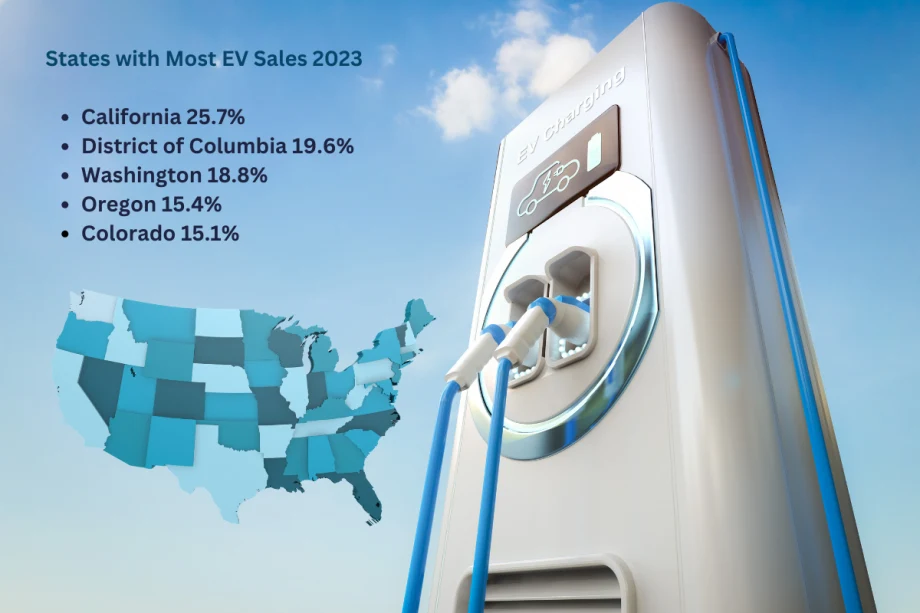
States with Most EV Sales 2023
California 25.7%
District of Columbia 19.6%
Washington 18.8%
Oregon 15.4%
Colorado 15.1%
Originally posted on Automotive Fleet
More Electric Vehicles
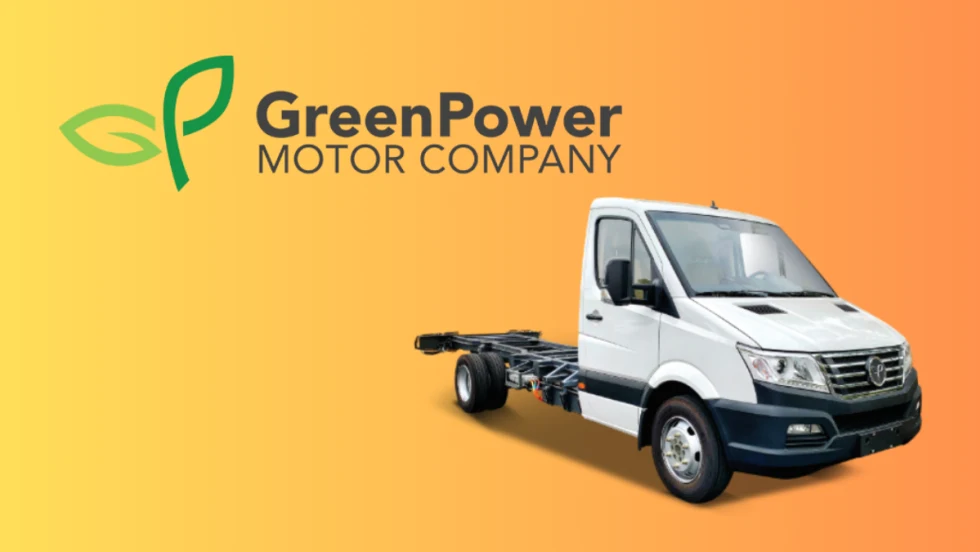
GreenPower Plans 50 Electric Shuttle Buses for Mexico
GreenPower plans to build 50 electric shuttle buses for Mexico using its EV Star Cab & Chassis platform, partnering with local body builders to expand its market reach.
Read More →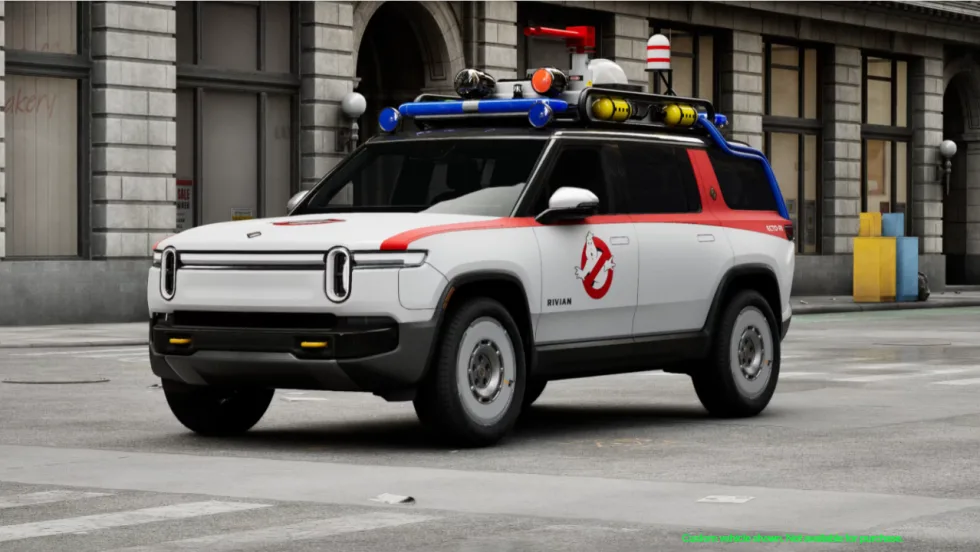
Who You Gonna Call? Rivian Turns Electric Vehicles Into Ghostbusters Rides
Rivian teams up with Sony Pictures for a Ghostbusters-inspired Halloween software update, complete with custom sounds, lighting effects, and a special Ecto-R1.
Read More →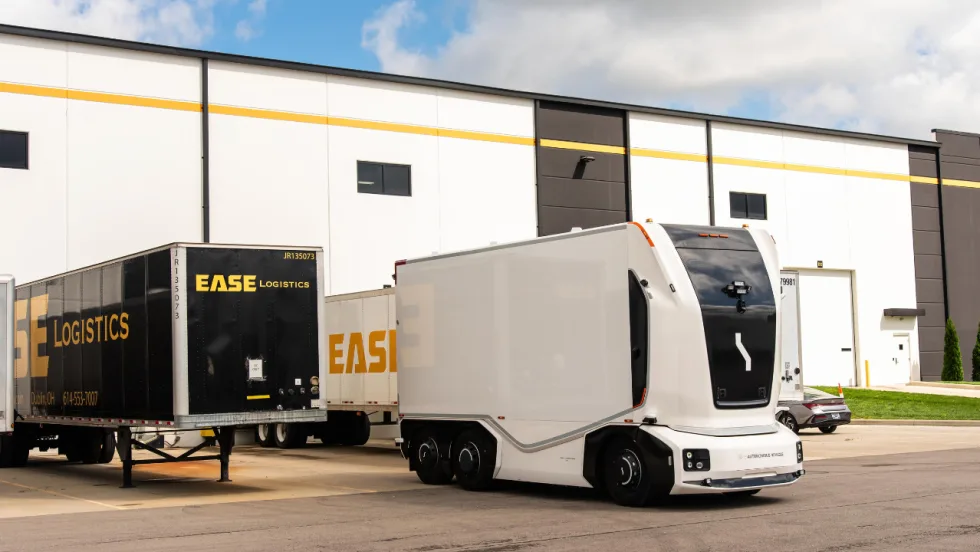
Einride Electric Driverless Trucks Begin Daily Freight Operations in Ohio
Two cabless electric trucks are now moving freight between EASE Logistics facilities, putting autonomous EV technology into daily commercial operations.
Read More →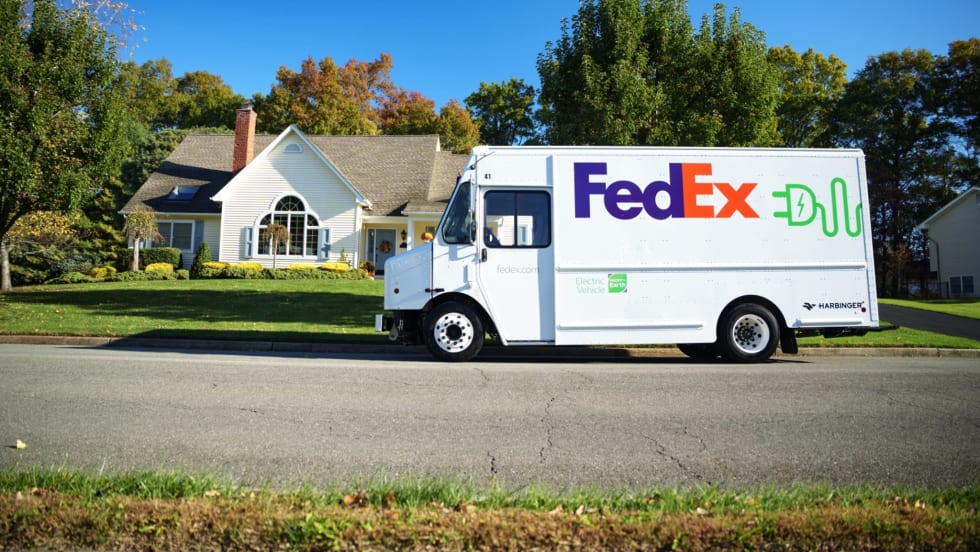
FedEx Orders 2,000 Harbinger Electric Trucks in $300 Million Deal
The Class 5 and 6 electric trucks are planned for delivery by the end of 2027 and will be deployed in FedEx pickup and delivery operations across the U.S. and Canada.
Read More →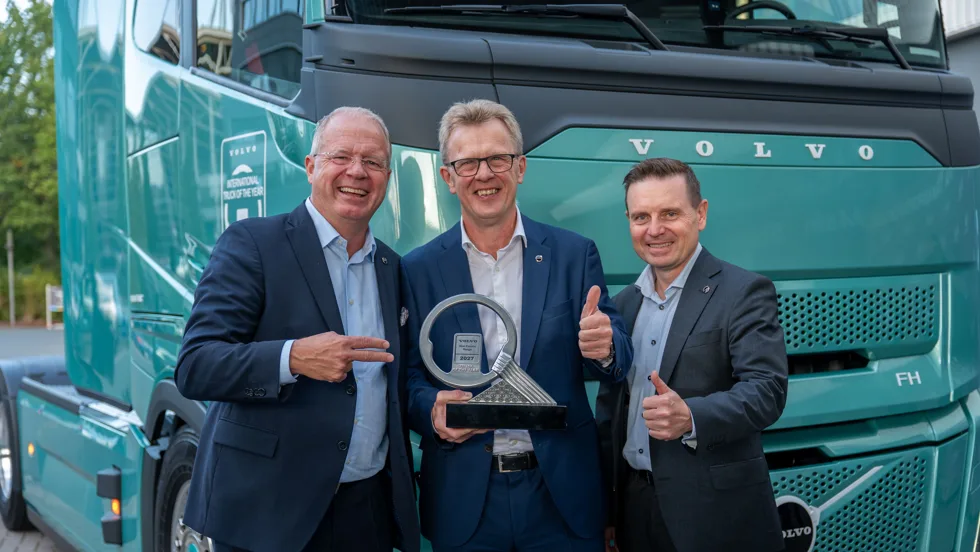
Volvo Trucks’ Electric Range Named International Truck of the Year 2027
The award recognizes Volvo’s global heavy-duty electric lineup, while more than 750 VNR Electric trucks have accumulated nearly 37 million miles in U.S. and Canadian fleet operations.
Read More →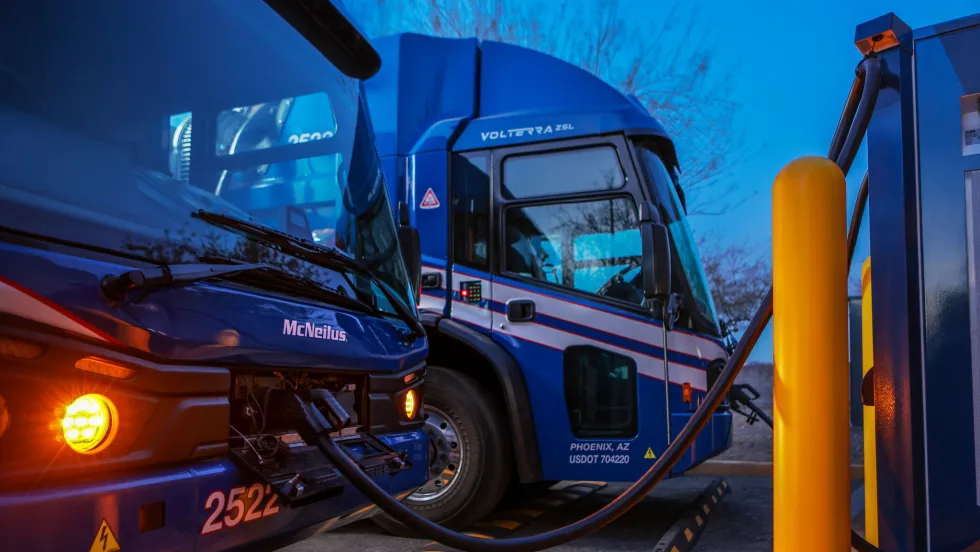
How Republic Services Decides Where Its Next Electric Trucks Can Go
With 250 electric collection trucks now in service, Republic Services is learning that scaling electrification depends less on proving the vehicle and more on whether each site can support what comes next.
Read More →
EV Charging Use Is Outpacing Infrastructure Growth
ChargePoint’s 2026 Charging Forward Report points to rising charger use, higher-powered charging, commercial vehicle electrification, and energy-management technology. Here’s what fleets should know.
Read More →
EV Realty Names Henrik Holland President as Charging Platform Expands
The former Prologis Mobility and Shell executive will help expand EV Realty’s truck charging business and move its power-first infrastructure model into autonomous vehicle depots and other fleet sectors.
Read More →
GreenPower Expands New Mexico EV Pilot With Larger Buses, V2G Testing
After logging more than 17,000 electric miles in the first year, New Mexico’s statewide pilot is moving into its second phase with larger vehicles, continued charging evaluations, and more.
Read More →
Can EV-as-a-Service Help Fleets Scale Electrification?
Sustainability Partners CEO Adam Cain explains how matching EVs, charging infrastructure, and duty cycles can help fleets scale electrification.
Read More →