


Politicians Beat the Auto Industry Like a Piñata
Commentary/Analysis: The Democratic Party has challenged the industry by pushing an aggressive green agenda while the Trump administration is now forcing tariffs – a one-two punch the industry hardly deserves.

In an industry where manufacturers strive to find pennies of cost savings from parts suppliers, a 25% tariff is practically unfathomable.
Photo: Markus Winkler / Pexels
We have all seen the celebrations where blindfolded participants swing wildly at piñatas, breaking them open, so the treats tumble to the floor. In Washington, DC, and in some states, it seems like politicians, without blindfolds, are taking turns treating the auto industry like a piñata, until their earnings hit the floor.
The Inflation Reduction Act, enacted during the Biden administration, had sweeping implications for the industry. With a combination of carrots and sticks, the legislation sent automakers a clear message: The transition to electrification was not optional. Automakers collectively committed more than $200 billion in the U.S. to ramp up production of an electrified portfolio to meet new government targets.
Companies that aligned their product line-up with consumer demand rather than EPA emission standards faced the prospect of transferring their hard-earned profits to climate-friendly competitors with emissions credits to sell. Tesla booked nearly $3 billion in profits from emission credit sales in 2024, by selling to automakers with a heavy sales mix of trucks and SUVs.
California Governor Gavin Newsom believed the IRA was not aggressive enough and obtained a waiver from the EPA to impose stricter state emissions standards. In addition to California, sixteen states have adopted the California Air Resources Board (CARB) Advanced Clean Car II regulations, mandating that 35% of new-vehicle sales by model year 2026 must be Zero Emission Vehicles (ZEVs), such as battery electric vehicles and hydrogen fuel cell vehicles. The requirement increases over time to 100% ZEV sales by 2035.
Automakers that fail to meet the requirement may purchase credits from other manufacturers to avoid fines, which can reach up to $20,000 per vehicle. Any shortfall is then added to the target for the following year, potentially leading to a cycle of indefinite fines. The ambitious 35% ZEV target starkly contrasts with the national average of about 8% EV sales, and California’s best-in-the-nation rate of 25%, which has stagnated over the past two years.
Automakers have offered attractive incentives to drive EV adoption and sales gains, albeit at the cost of eye-watering financial losses. Cox Automotive reports that incentives as a percentage of average transaction price (ATP) stand at 7% across the industry but have been near 15% for EVs in recent months. $159 per month lease offers in ZEV states are cheap to the consumer, but not to the car companies.
Many automakers spend over $10,000 per vehicle on EV lease support (plus the $7,500 federal money), only to face future financial setbacks from residual losses when off-lease EVs are sold at auction. Manheim auction data reveals that EVs depreciate almost four times faster than ICE vehicles in the first 3 years.
Ford is the sole manufacturer that smartly breaks out its EV division within its financial statement, and the numbers clearly show the pain of being a politician’s piñata: Over the past three years, the Ford Model eTM division has reported more than $15 billion in losses, chasing federal and state guidelines. Despite constructing two new EV plants in Kentucky and Tennessee, Ford has announced a strategic shift towards building more hybrids and delaying EV product launches.
Yes, the Democratic Party has challenged the industry by pushing an aggressive green agenda. The Trump administration is now swinging forcefully at the piñata with tariffs – a one-two punch the industry hardly deserves.
Tariffs Prove 'Crushing' and 'Lethal'
Almost 50% of vehicles sold in the United States are imported from strong trading partners, including Canada, Germany, Japan, Mexico, and South Korea. The 25% imported vehicle tariff on April 2 is a crushing blow. In an industry where manufacturers strive to find pennies of cost savings from parts suppliers, a 25% tariff is practically unfathomable. One auto executive told me, “These tariffs are almost lethal, and nobody is safe.”
Automakers cannot save or sell their way out of this tariff problem. A small compact sedan made in Mexico with a $24,000 window sticker generates roughly $2,400 in gross profit for an automaker, but the tariff will cost $6,000. Automakers cannot afford to offset the added cost, despite President Trump’s reported request to CEOs not to pass the cost onto consumers. This extra $6,000, equal to a $125 uptick to a monthly car payment, will not be easily digested by auto shoppers increasingly struggling with affordability.
Should the administration move forward with a tariff on imported auto parts, the situation will become even more dire in May. Last year, the U.S. imported $200 billion in automotive parts from Mexico and over $400 billion from Canada. Car makers will need to radically change their complex supply chains to mitigate the impact of these tariffs – work that will not be easy or timely. I recently saw an example of the complexity of assembling a piston, which required seven production facilities in different states and four border crossings. Imagine the level of exponential complexity, considering a typical vehicle requires 30,000 parts.
Some good news: Current auto factory utilization in the United States stands at only 65%, down from 75-80% before the pandemic, according to the latest data from the Board of Governors of the Federal Reserve System. BMW has announced plans to increase annual production at its South Carolina plant by 80,000 units. Honda is contemplating building 90% of their U.S. sales here. Ford, GM, Nissan, Stellantis, Toyota, and others are all investigating ways to boost domestic production, but increasing vehicle assembly will be much easier than sourcing parts locally.
The White House’s tariff policy may shift by the time you read this, which is also part of the problem. A constantly shifting regulatory landscape is the enemy of a thriving auto industry. Automakers make investments based on 5-10-year horizons, not 2-4-year political cycles.
I hope that more politicians in Washington, DC, and state governments take a moment to recognize the importance of a healthy U.S. auto industry. According to a report from the Alliance for Automotive Innovation, the auto industry supports over 10 million jobs and accounts for $730 billion of annual paychecks. The report also notes that nine additional jobs are created in industries across the economy for every ONE auto manufacturing job. Even Cox Automotive, which employs me and my 25,000 colleagues in the U.S., depends on a healthy, vibrant auto industry.
I can picture the perfect political cartoon: An elephant and a donkey at a backyard BBQ taking turns swinging at the auto industry piñata. The elephant takes a swing by reducing EV incentives while increasing the price of EVs built in Mexico through new tariffs, while the donkey simultaneously pounds on the piñata for failing to achieve ambitious EV sales targets. This is not a cartoon for automakers: It’s their current reality. Our elected officials better start taking a more reasonable and consistent approach to the auto industry, or there will be no treats left for any of us.
Originally posted on Automotive Fleet
More Electric Vehicles
EV Charging Use Is Outpacing Infrastructure Growth
ChargePoint’s 2026 Charging Forward Report points to rising charger use, higher-powered charging, commercial vehicle electrification, and energy-management technology. Here’s what fleets should know.
Read More →
EV Realty Names Henrik Holland President as Charging Platform Expands
The former Prologis Mobility and Shell executive will help expand EV Realty’s truck charging business and move its power-first infrastructure model into autonomous vehicle depots and other fleet sectors.
Read More →
GreenPower Expands New Mexico EV Pilot With Larger Buses, V2G Testing
After logging more than 17,000 electric miles in the first year, New Mexico’s statewide pilot is moving into its second phase with larger vehicles, continued charging evaluations, and more.
Read More →
Can EV-as-a-Service Help Fleets Scale Electrification?
Sustainability Partners CEO Adam Cain explains how matching EVs, charging infrastructure, and duty cycles can help fleets scale electrification.
Read More →
How EV-as-a-Service Is Moving Fleets Beyond Pilots
Adam Cain, president and CEO of Sustainability Partners, explains how EV-as-a-service can help fleets scale deployments by addressing duty-cycle requirements and charging challenges.
Read More →
PowerFlex, The Mobility House Join Forces to Advance Fleet Electrification
Two EV charging providers are joining forces to deliver a broader portfolio of energy management and fleet electrification solutions.
Read More →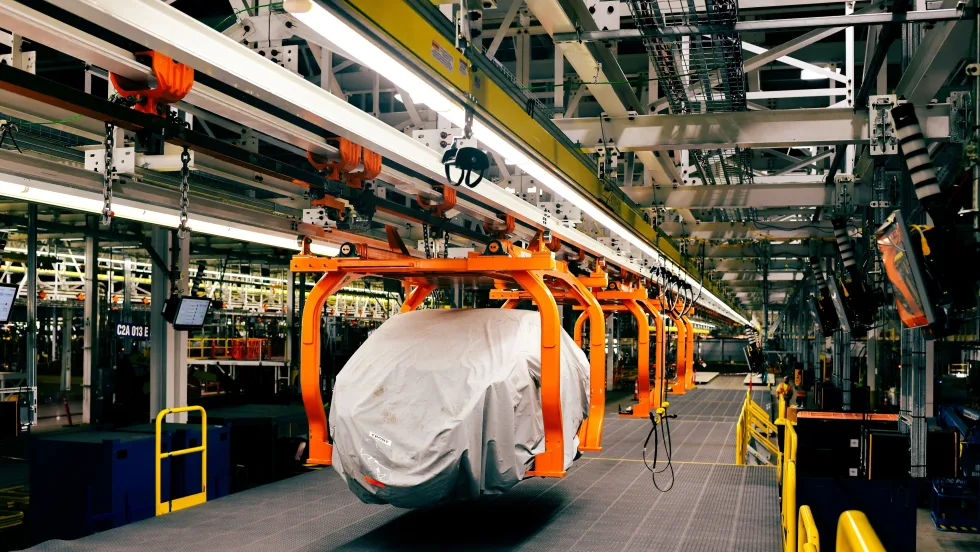
Ford Retools Louisville Plant for Fathom Electric Truck Production
Ford's $2 billion Louisville Assembly Plant overhaul introduces a three-part assembly process for the Fathom midsize electric truck, with production scheduled to begin in 2027.
Read More →
Merchants Fleet Reports 290M EV Miles as Fleets Navigate Changing Electrification Market
From millions in operating savings to hundreds of millions of EV miles, Merchants Fleet’s latest report reveals what’s working and what’s changing in fleet electrification.
Read More →
California District Commits to Electrify 25% of School Bus Fleet by 2028
One of the nation's largest school bus electrification projects to date demonstrates how grants, charging infrastructure, and public-private partnerships can help fleets transition to EVs at scale.
Read More →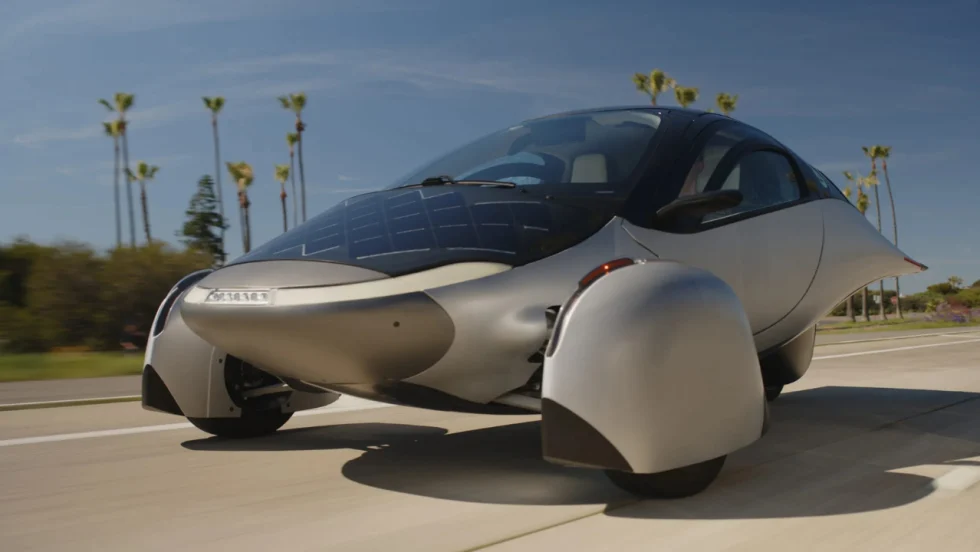
Aptera Orders Bodies and Chassis for Its First 40 Production Vehicles
Aptera Motors Corp. has issued purchase orders for the major structural components of its first 40 vehicles, and body and chassis components are expected to begin arriving in October.
Read More →