


NAFA Pushes for Practical EV Policy, Data Access, and Tariff Relief in 2025
New bills, federal trade actions, and evolving EV incentives drive NAFA’s focus on compliance flexibility, data rights, and cost stability for public and commercial fleets.
April 8, 2025

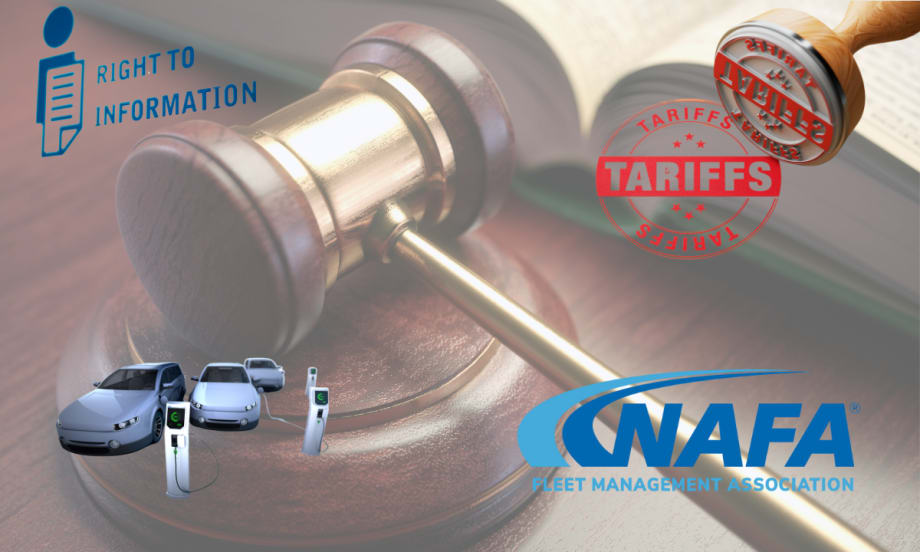
NAFA recently helped to unanimously pass California Senate Bill 496 through the Senate Environmental Quality Committee. The bill aims to make fleet compliance with CARB’s Advanced Clean Fleets rule more feasible.
Photo: Automotive Fleet
5 min to read
NAFA, the Fleet Management Association, delivered key policy updates during a media briefing on Friday, April 4. The briefing outlined wins and challenges ahead in clean fleet mandates, vehicle tariffs, EV infrastructure, and data privacy.
NAFA CEO Bill Schankel and legislative counsel Michael Parr of HillStaffer led the conversation, offering a roadmap for fleet managers navigating a shifting regulatory landscape.
ACF Rule Reform Gathers Bipartisan Momentum
A major focus of the briefing was California’s Advanced Clean Fleets (ACF) rule. Parr reported that California Senate Bill 496 — an effort to make ACF compliance more feasible for fleets — passed the Senate Environmental Quality Committee unanimously, signaling growing legislative awareness around the challenges fleets face with ZEV (zero-emission vehicle) adoption.
“That’s a pretty big deal,” Parr said. We did a more limited bill last year that didn’t get through the committee. The fact that we got an expanded bill through on a unanimous vote reflects the growing awareness of some of the challenges with the regulation.”
NAFA has been working with a broad coalition in California to drive practical improvements to ACF, including exemptions and delayed timelines. Fleets and lawmakers have met face-to-face at fleet operations across the state to better understand the complexity behind electrifying public sector fleets.
“We’re not trying to undermine the regulation or its purposes,” he said. “We’re just trying to make it easier for fleets to comply and reduce the risk of fleets being forced against for matters out of their control.”
The bill now heads to the California Senate Transportation Committee later this month.
Other States Take Note, but Some Hit Pause
While other states are adopting related rules like Advanced Clean Cars and Clean Trucks, Parr said none have yet embraced ACF. “I think they have watched the challenges that CARB had in implementing it and wanted to see how it played out a little further and what changes got made in California.”
In New Jersey, NAFA is helping support a bill that would create a Fleet Advisory Council made up of utilities, OEMs, fleets, and service companies to advise regulators and legislators. “We’re going to take that model around other states to try to expand the access to knowledge about fleets,” said Parr.
Tariffs Create Cost Uncertainty for Fleets
NAFA is also watching recent federal tariff announcements with concern. “It started with the 25% tariffs on motor vehicles from Canada and Mexico, which I think you all know are our two biggest trading partners,” said Parr. “Then just this week, announcing wide-ranging tariffs on virtually every trading partner in the world.”
While the administration’s stated intent is mixed — ranging from supply chain security to reshoring jobs — Parr noted that the tariffs could raise vehicle prices by thousands of dollars. “Typically, you’re seeing on the order of five to $10,000 increase in the cost of typical light- and medium-duty vehicles.”
Fleet costs represent just one potential impact. “A lot of economists are concerned that this sudden shock to the economy could result in recession. Some economists are even suggesting it could lead to stagflation,” he said.
EV Infrastructure and Incentives in Flux
Parr said that light-duty EV adoption continues to grow, but infrastructure remains an obstacle. “We have problems both with the availability of charging, the reliability of charging systems, and the fact that there are multiple companies establishing charging networks — everybody with their own payment system, their own app.”
He added that charging issues are even more complex for fleets. “If the driver has to have 10 apps on their phone and take time to find a charger that works, that’s really not a particularly good system.”
There’s also uncertainty around EV-related tax credits. “We are seeing a push to reduce the 30D EV tax credit (for consumers), and less talk on 45W clean commercial vehicle tax credit,” said Parr. Still, he noted these incentives are politically challenging to remove, particularly as EV manufacturing grows in Republican-led states.
Data Access: Gaining Traction in Congress
Data access and privacy remain top-tier priorities for NAFA. “Fleets rightly point out, well, we created that data, we bought the darn vehicle, and we created the data — we ought to have access to it,” Parr said.
He noted that bipartisan support is building for legislation that ensures vehicle owners, including fleets, have unrestricted access to telematics data. “We don’t have any problem with OEMs having access to the data for their own purposes,” he said. “We want to ensure fleets have full access to the data that’s relevant to their operations.”
NAFA is part of several coalitions pushing for federal data access rules and is also advocating for measures to curb catalytic converter theft.
Looking Ahead: Priorities for 2025
NAFA will continue to push for policies that balance environmental goals with fleet realities. “We want to ensure that the OEMs continue to make progress on producing ZEVs that meet fleet needs and bringing the cost down, particularly medium- and heavy-duty,” said Parr.
He previewed an upcoming thought leadership session at NAFA’s annual conference in Long Beach, California, which will bring together fleets, OEMs, utilities, NGOs, and FMCs. “How do we work together better to help advance the full suite of technologies that help fleets reduce emissions and costs?” he asked.
Parr closed with a shoutout to NAFA’s engaged membership: “We speak with the knowledge of our members, and our members are at the table in these negotiations. One of our members testified in favor of this bill that we just recently passed in the California Senate Environmental Quality Committee, and the elected officials particularly called out his testimony as compelling.”
Topics:LegislationNAFAData PrivacyAdvanced Clean FleetsElectrificationFleet electrificationtariffsElectric VehiclesLegal/Legislative
Originally posted on Automotive Fleet
More Electric Vehicles
EV Charging Use Is Outpacing Infrastructure Growth
ChargePoint’s 2026 Charging Forward Report points to rising charger use, higher-powered charging, commercial vehicle electrification, and energy-management technology. Here’s what fleets should know.
Read More →
EV Realty Names Henrik Holland President as Charging Platform Expands
The former Prologis Mobility and Shell executive will help expand EV Realty’s truck charging business and move its power-first infrastructure model into autonomous vehicle depots and other fleet sectors.
Read More →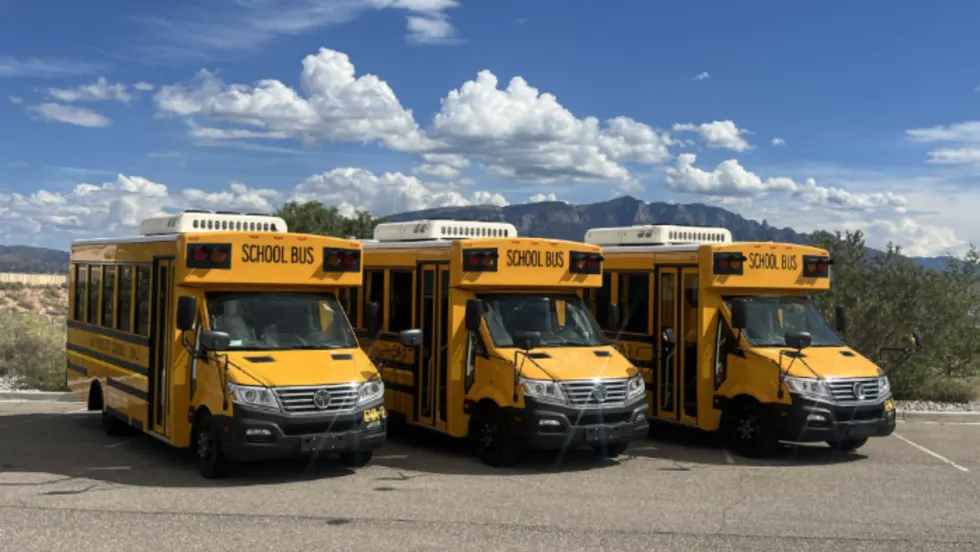
GreenPower Expands New Mexico EV Pilot With Larger Buses, V2G Testing
After logging more than 17,000 electric miles in the first year, New Mexico’s statewide pilot is moving into its second phase with larger vehicles, continued charging evaluations, and more.
Read More →
Can EV-as-a-Service Help Fleets Scale Electrification?
Sustainability Partners CEO Adam Cain explains how matching EVs, charging infrastructure, and duty cycles can help fleets scale electrification.
Read More →
How EV-as-a-Service Is Moving Fleets Beyond Pilots
Adam Cain, president and CEO of Sustainability Partners, explains how EV-as-a-service can help fleets scale deployments by addressing duty-cycle requirements and charging challenges.
Read More →
PowerFlex, The Mobility House Join Forces to Advance Fleet Electrification
Two EV charging providers are joining forces to deliver a broader portfolio of energy management and fleet electrification solutions.
Read More →
Ford Retools Louisville Plant for Fathom Electric Truck Production
Ford's $2 billion Louisville Assembly Plant overhaul introduces a three-part assembly process for the Fathom midsize electric truck, with production scheduled to begin in 2027.
Read More →
Merchants Fleet Reports 290M EV Miles as Fleets Navigate Changing Electrification Market
From millions in operating savings to hundreds of millions of EV miles, Merchants Fleet’s latest report reveals what’s working and what’s changing in fleet electrification.
Read More →
California District Commits to Electrify 25% of School Bus Fleet by 2028
One of the nation's largest school bus electrification projects to date demonstrates how grants, charging infrastructure, and public-private partnerships can help fleets transition to EVs at scale.
Read More →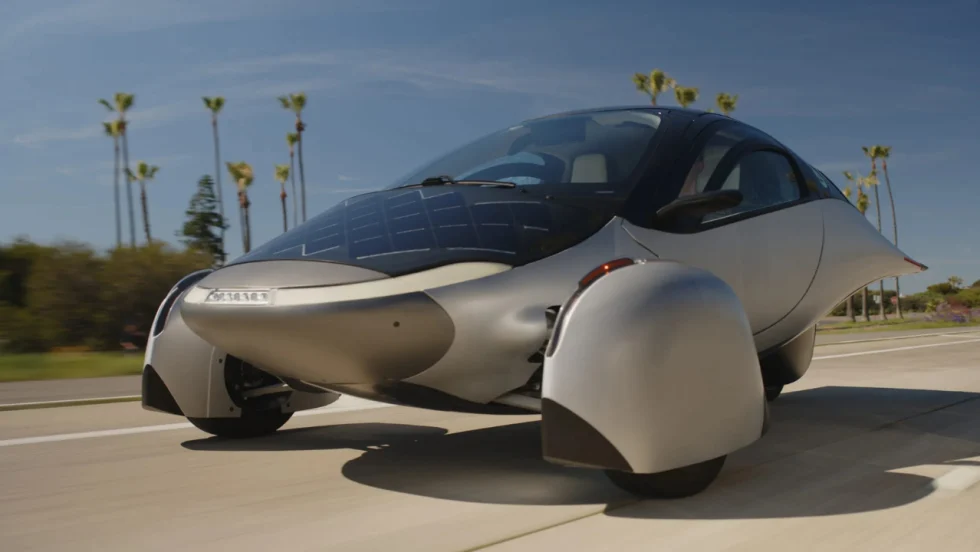
Aptera Orders Bodies and Chassis for Its First 40 Production Vehicles
Aptera Motors Corp. has issued purchase orders for the major structural components of its first 40 vehicles, and body and chassis components are expected to begin arriving in October.
Read More →