



Related: GM Introduces Charging Product to Speed Up EV Adoption
GM to Boost EV, AV Investments Through 2025
GM will pull ahead construction of two new Ultium battery cell plants in the U.S., and has plans to expand and accelerate the rollout of EVs for retail and fleet customers, and deploy self-driving technology at scale through its Cruise subsidiary.
June 21, 2021
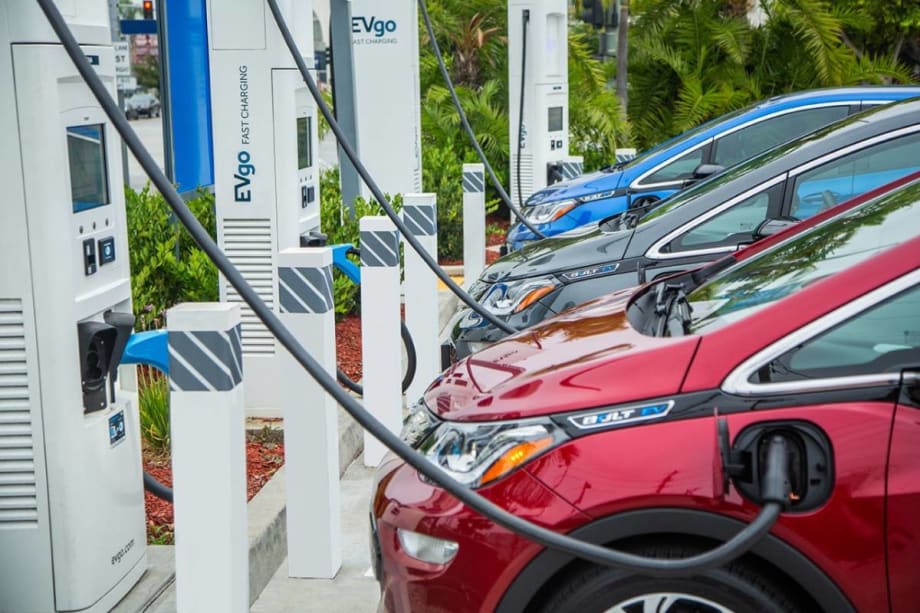
GM says it's enhanced commitment will accelerate its transformative strategy to become the market leader in EVs in North America; the global leader in battery and fuel cell technology; and the first to safely commercialize self-driving technology at scale.
Photo: GM
4 min to read
General Motors plans to increase its EV and AV investments from 2020 through 2025 to $35 billion, representing a 75% increase from its initial commitment prior to the pandemic, according to a recent news release.
“We are investing aggressively in a comprehensive and highly-integrated plan to make sure that GM leads in all aspects of the transformation to a more sustainable future,” said GM Chair and CEO Mary Barra. “GM is targeting annual global EV sales of more than 1 million by 2025, and we are increasing our investment to scale faster because we see momentum building in the United States for electrification, along with customer demand for our product portfolio.”
GM shared its vision of a world with zero crashes, zero emissions, and zero congestion about four years ago. This new announcement builds on GM’s initial commitment to invest $20 billion from 2020 through 2025, including capital, engineering expenses, and other development costs, to accelerate its transition to EVs and AVs. In November 2020, the company increased its planned investment over the same period to $27 billion.
“There is a strong and growing conviction among our employees, customers, dealers, suppliers, unions, and investors, as well as policymakers, that electric vehicles and self-driving technology are the keys to a cleaner, safer world for all,” Barra said.
These investments are enabled by GM’s underlying business, including record EBIT-adjusted in the last three quarters. GM now expects to deliver better-than-expected results in the second quarter despite the industry-wide impact of the semiconductor shortage, the release also said.
The company now expects its first-half EBIT-adjusted to be between $8.5 and $9.5 billion due to continued strong demand, better-than-expected results at GM Financial, and improved near-term production from the pull forward of semiconductors from the third quarter. GM expects the second half of 2021 will continue to be complex and fluid. The company will provide additional updates on its year-to-date financial results and outlook for the second half of 2021 during its second-quarter earnings conference call on Aug. 4.
GM also confirmed that it will host an Investor Day in the Detroit area October 6-7.
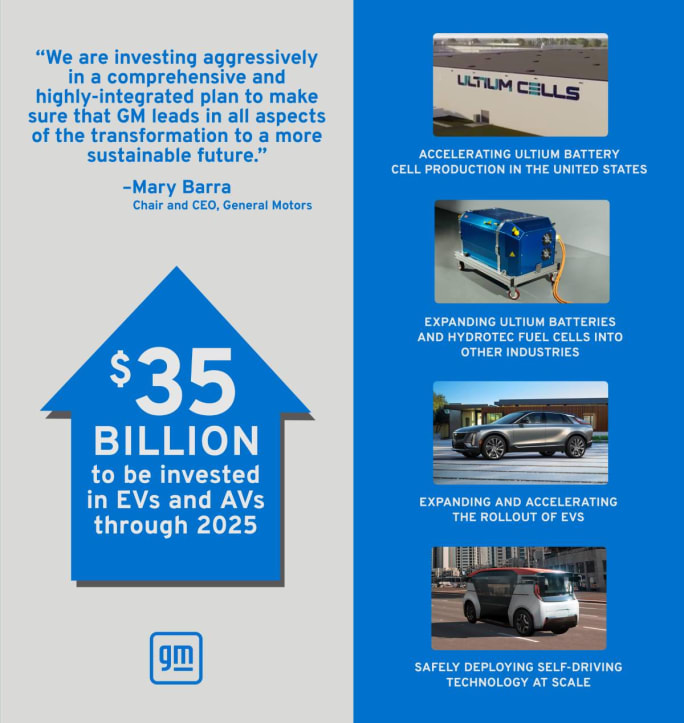
Photo: GM
GM’s additional investments and new collaborations include:
Accelerating Ultium battery cell production in the United States: GM is accelerating plans to build two new battery cell manufacturing plants in the United States by mid-decade to complement the Ultium Cells LLC plants under construction in Tennessee and Ohio. Further details about these new U.S. plants, including the locations, will be announced at a later date.
Commercializing U.S.-made Ultium batteries and HYDROTEC fuel cells: In addition to collaborating with Honda to build two EVs using Ultium technology – one SUV for the Honda brand and one for the Acura brand – GM announced on June 15 it has signed a memorandum of understanding to supply Ultium batteries and HYDROTEC fuel cells to Wabtec Corporation, which is developing a 100% battery-powered locomotive.
Separately, GM will supply HYDROTEC to Navistar, Inc., which is developing hydrogen-powered heavy trucks to launch in 2024, and Liebherr-Aerospace, which is developing hydrogen-powered auxiliary power units for aircraft. Lockheed Martin and GM also are teaming up to develop the next generation of lunar vehicles to transport astronauts on the surface of the Moon.
GM is confirming plans to launch its third-generation HYDROTEC fuel cells with greater power density and lower costs by mid-decade. GM manufactures its fuel cells in Brownstown Charter Township, Michigan, in a joint venture with Honda.
Expanding and accelerating the rollout of EVs for retail and fleet customers: In November 2020, GM announced it would deliver 30 new EVs by 2025 globally, with two-thirds available in North America. GM will add to its North America plan new electric commercial trucks and other products that will take advantage of the creative design opportunities and flexibility enabled by the Ultium platform. In addition, GM will add additional U.S. assembly capacity for EV SUVs. Details will be announced at a later date.
Safely deploying self-driving technology at scale: Cruise, GM’s majority-owned subsidiary, recently received permission from regulators in California to provide a driverless AV passenger service to the public. Cruise also was recently selected as the exclusive provider of AV rideshare services to the city of Dubai and is working with Honda to begin development of an AV testing program in Japan. In addition, GM Financial will provide a multi-year, $5 billion credit facility for Cruise to scale its Cruise Origin fleet. Developed through a partnership between GM, Honda, and Cruise, the Cruise Origin will be built at GM’s Factory ZERO Detroit-Hamtramck Assembly Center starting in early 2023.
Originally posted on Automotive Fleet
More Electric Vehicles
EV Charging Use Is Outpacing Infrastructure Growth
ChargePoint’s 2026 Charging Forward Report points to rising charger use, higher-powered charging, commercial vehicle electrification, and energy-management technology. Here’s what fleets should know.
Read More →
EV Realty Names Henrik Holland President as Charging Platform Expands
The former Prologis Mobility and Shell executive will help expand EV Realty’s truck charging business and move its power-first infrastructure model into autonomous vehicle depots and other fleet sectors.
Read More →
GreenPower Expands New Mexico EV Pilot With Larger Buses, V2G Testing
After logging more than 17,000 electric miles in the first year, New Mexico’s statewide pilot is moving into its second phase with larger vehicles, continued charging evaluations, and more.
Read More →
Can EV-as-a-Service Help Fleets Scale Electrification?
Sustainability Partners CEO Adam Cain explains how matching EVs, charging infrastructure, and duty cycles can help fleets scale electrification.
Read More →
How EV-as-a-Service Is Moving Fleets Beyond Pilots
Adam Cain, president and CEO of Sustainability Partners, explains how EV-as-a-service can help fleets scale deployments by addressing duty-cycle requirements and charging challenges.
Read More →
PowerFlex, The Mobility House Join Forces to Advance Fleet Electrification
Two EV charging providers are joining forces to deliver a broader portfolio of energy management and fleet electrification solutions.
Read More →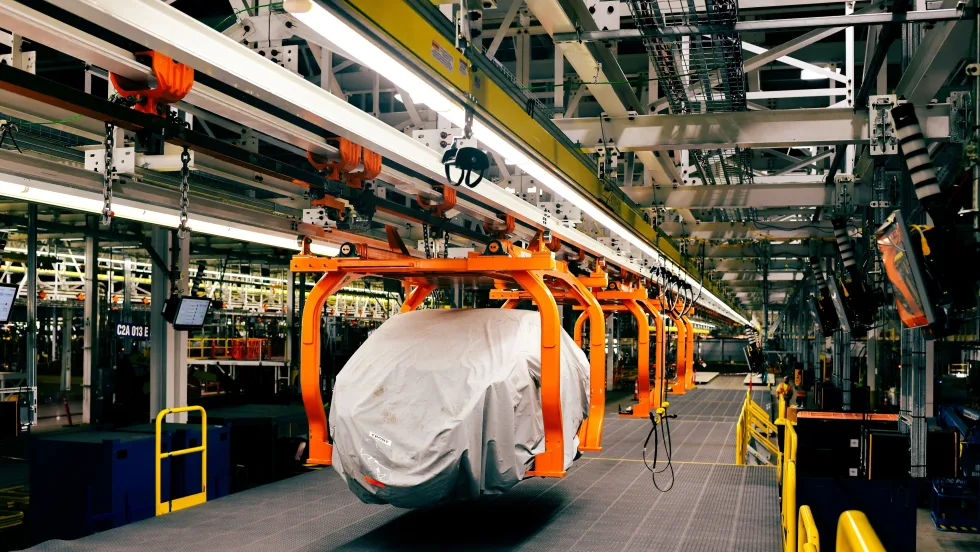
Ford Retools Louisville Plant for Fathom Electric Truck Production
Ford's $2 billion Louisville Assembly Plant overhaul introduces a three-part assembly process for the Fathom midsize electric truck, with production scheduled to begin in 2027.
Read More →
Merchants Fleet Reports 290M EV Miles as Fleets Navigate Changing Electrification Market
From millions in operating savings to hundreds of millions of EV miles, Merchants Fleet’s latest report reveals what’s working and what’s changing in fleet electrification.
Read More →
California District Commits to Electrify 25% of School Bus Fleet by 2028
One of the nation's largest school bus electrification projects to date demonstrates how grants, charging infrastructure, and public-private partnerships can help fleets transition to EVs at scale.
Read More →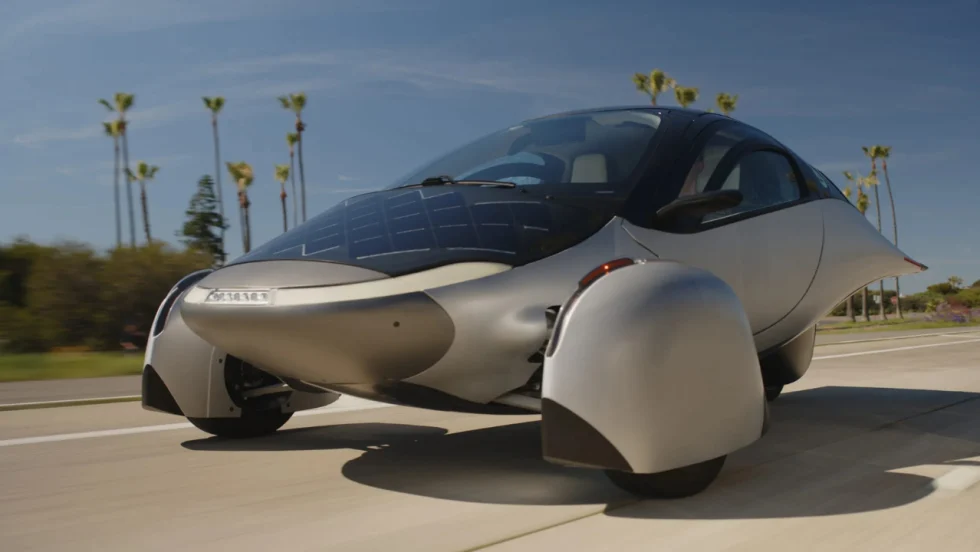
Aptera Orders Bodies and Chassis for Its First 40 Production Vehicles
Aptera Motors Corp. has issued purchase orders for the major structural components of its first 40 vehicles, and body and chassis components are expected to begin arriving in October.
Read More →