



Keep Reading! EV Charging Use Is Outpacing Infrastructure Growth
How Republic Services Decides Where Its Next Electric Trucks Can Go
With 250 electric collection trucks now in service, Republic Services is learning that scaling electrification depends less on proving the vehicle and more on whether each site can support what comes next.
September 21, 2026
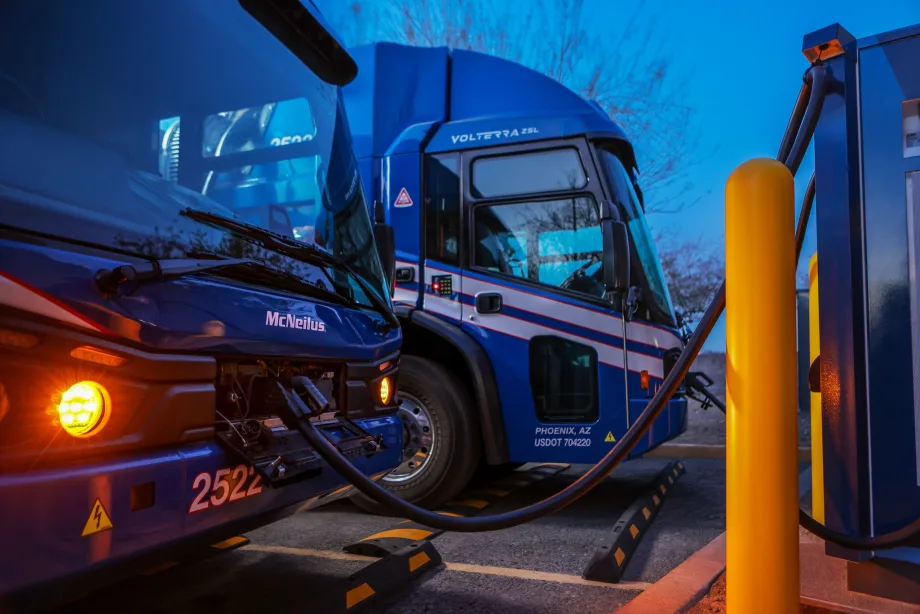
Republic Services takes a site-by-site approach to fleet electrification, evaluating infrastructure, route demands to determine where electric trucks can be deployed next.
Credit:
Republic Services
7 min to read
- Republic Services now operates 250 electric waste collection trucks, marking a significant step towards fleet electrification.
- The expansion of electric trucks within Republic Services hinges on the readiness of individual sites to support future needs rather than vehicle efficiency.
- Infrastructure capability at each location determines the potential for integrating new electric vehicles into the fleet.
*Summarized by AI
Getting the first few electric trucks into service is one kind of challenge. Deciding whether a facility is ready for the next 10, 20, or 50 is something else entirely. Republic Services has now reached that second stage.
The company operates 250 electric collection trucks across 35 sites in 11 states, a deployment that has grown steadily since Republic Services began testing electric refuse trucks in 2020. By the end of 2025, more than 180 trucks were already in service, and the program had moved well beyond controlled pilots into regular daily collection operations.
At that scale, electrification becomes less about whether the truck itself can work and more about whether the site around it can support consistent operation day after day. For Brett Rogers, vice president of operations technology at Republic Services, that shift has changed how the company thinks about deployment.
“Infrastructure planning is every bit as important as the vehicles themselves,” Rogers said. “Supporting electric truck deployments requires close coordination across charging infrastructure, facility capacity, utility planning and site readiness to ensure vehicles can reliably charge and return to service each day.”
That may be the more important milestone for commercial fleet electrification. The vehicle can be ready before the operation is.
Predictable Routes Make Charging Easier to Plan
Waste and recycling collection gives Republic Services one important advantage: predictability. The trucks operate on established routes and return to the same facility each day, creating a relatively consistent operating window for charging and making overnight charging part of the normal routine rather than an exception that has to be worked around.
“Our charging strategy is designed around the predictable nature of recycling and waste collection operations,” Rogers said. “Because our electric trucks operate on established routes and return to the same facility each day, we can incorporate charging into our normal operating routines while supporting reliable daily service.”
That predictability makes the application a strong fit for electrification, but Republic Services has learned that it does not create a one-size-fits-all charging plan.
As the fleet has grown, every site has had to be looked at on its own terms. Republic Services evaluates fleet size, route energy requirements, charging windows, utility capacity, and the physical layout of the facility before determining the charging infrastructure and power needed at that location.
“As we deploy electric vehicles across our network, we evaluate each site individually, considering factors such as fleet size, route energy requirements, charging windows, utility capacity and facility layout,” Rogers said. “That planning helps us determine the appropriate charging infrastructure and power needs for each location, ensuring we can efficiently support daily operations today while positioning the fleet for future growth.”
A charging plan that works for the first handful of trucks may not be the same one a site needs once the fleet grows. Republic Services is not only looking at whether the vehicles arriving now can be charged. The company is also considering what the site may need if electrification continues to expand.
Every Site Has Its Own Constraints
One of the harder parts of scaling fleet electrification is that success at one location does not automatically create a template that can be copied at the next. A facility with available electrical capacity and a straightforward site layout may be very different from one where space is constrained, utility upgrades are needed, or charging has to fit around a tighter operating schedule.
“We've found that every location presents unique considerations, which is why planning begins well before vehicles are deployed,” Rogers said.
That means utilities, infrastructure providers, and site teams need to be involved early enough that their timelines align with the fleet's deployment plans rather than becoming the reason trucks are sitting and waiting.
“One of the biggest lessons from our experience is that when utilities, infrastructure providers and site teams are aligned early in the process, it creates a strong foundation for reliable operations and scalable fleet electrification,” Rogers said.
For fleets, this is where electrification starts looking less like a vehicle acquisition project and more like a facility and energy project that happens to include vehicles. And that makes planning the sequence of deployment every bit as important as deciding which vehicle to buy.
The trucks may be the most visible part of the transition, but the site has to be ready to support the amount of energy those trucks require, within the hours those vehicles are actually available to charge, while still maintaining the operational reliability the fleet expects.
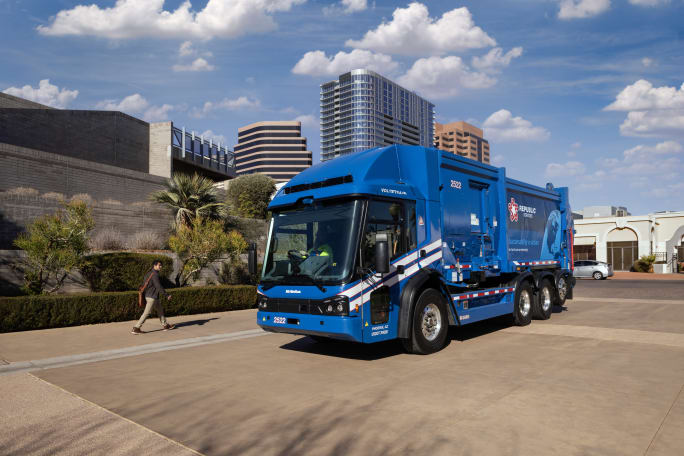
As Republic Services adds electric collection trucks, site-by-site infrastructure planning helps determine where and how the fleet can scale.
Credit:
Republic Services
The Site Has to Prove It Is Ready for More
Republic Services also uses operating data to determine when a location is ready to move beyond an initial deployment. The company evaluates route predictability, vehicle utilization, energy consumption, charging performance, facility electrical capacity, and overall operational reliability before adding more electric trucks to a site.
That list gives a fairly clear picture of what “success” looks like once electrification moves beyond a pilot. The question is not simply whether the trucks have been deployed or whether they are accumulating miles. Republic Services wants to know whether the entire system around them is performing consistently enough to absorb more.
“Our focus is ensuring that the entire ecosystem can support additional electric vehicles while maintaining the high level of service our customers expect,” Rogers said. “We want to see that trucks can consistently complete their assigned routes, recharge within available charging windows and be ready for the next day's operations.”
That creates a practical threshold for expansion: the truck has to complete its assigned work, recharge within the available window, and be ready to return to service the next day, all while the site has enough electrical capacity to support that routine reliably as more vehicles are added. Once all of that becomes consistent, the site becomes a stronger candidate for additional vehicles.
Scaling Changes the Cost Conversation
Republic Services is also looking at electrification through a total cost of ownership lens rather than focusing only on the upfront cost of the vehicle.
That means considering the broader operational and financial impact over time, although Rogers emphasized that the business case is not identical at every location.
“We evaluate fleet electrification through a total cost of ownership lens, looking beyond the upfront cost of the vehicle to assess the full operational and financial impact over time,” he said. “As we've scaled the program, we've found that business needs can vary by location, which is why we take a site-specific approach.”
That site-specific approach is important because infrastructure investment can change the economics of deployment substantially from one location to another.
A site that can support additional vehicles with existing capacity may present one financial picture, while another requiring more significant electrical or facility work may look very different, even if the trucks themselves are performing the same job.
Republic Services did not provide detailed cost figures for vehicle acquisition, infrastructure, energy, or maintenance, but the company's approach makes clear that those pieces are being evaluated together rather than independently.
“Ultimately, our focus is on building a reliable, scalable operating model that supports our sustainability goals while continuing to deliver safe, efficient and cost-effective service for our customers,” Rogers said.
The Next Challenge Is Less About Proving the Truck
Republic Services' experience also points to where commercial fleet electrification may be heading next. The company believes the technology itself has moved well beyond the pilot stage in its collection operation. The trucks are working on daily routes. The harder questions now are around how quickly the systems surrounding them can keep pace.
“Our electrification experience demonstrates that commercial fleet electrification has moved well beyond the pilot stage and into real-world operations at scale,” Rogers said. “The technology can successfully support daily collection, and the focus now is on building the systems, infrastructure and operational capabilities needed to expand deployment efficiently across more locations.”
Those systems still have limits. Rogers pointed to vehicle availability, charging infrastructure, utility capacity, permitting processes, and workforce readiness as areas that will continue to affect how quickly fleets can scale.
“Looking ahead, broader adoption will depend on continued progress across several areas, including vehicle availability, charging infrastructure, utility capacity, permitting processes and workforce readiness,” he said. “As those elements continue to advance, we believe the opportunity for electrification across commercial fleets will continue to grow.”
For Republic Services, the first phase of electrification was about proving that electric refuse trucks could handle daily collection work. The next phase is proving that more locations can support more of them.
That changes the question fleet operators have to ask. Instead of simply wondering whether the vehicle is ready, fleets moving beyond pilots may need to look just as closely at the place where that vehicle comes home every night.
Because at scale, the next electric truck can only go where the rest of the operation is ready for it.
Subscribe to Our Newsletter
More Electric Vehicles
EV Charging Use Is Outpacing Infrastructure Growth
ChargePoint’s 2026 Charging Forward Report points to rising charger use, higher-powered charging, commercial vehicle electrification, and energy-management technology. Here’s what fleets should know.
Read More →
EV Realty Names Henrik Holland President as Charging Platform Expands
The former Prologis Mobility and Shell executive will help expand EV Realty’s truck charging business and move its power-first infrastructure model into autonomous vehicle depots and other fleet sectors.
Read More →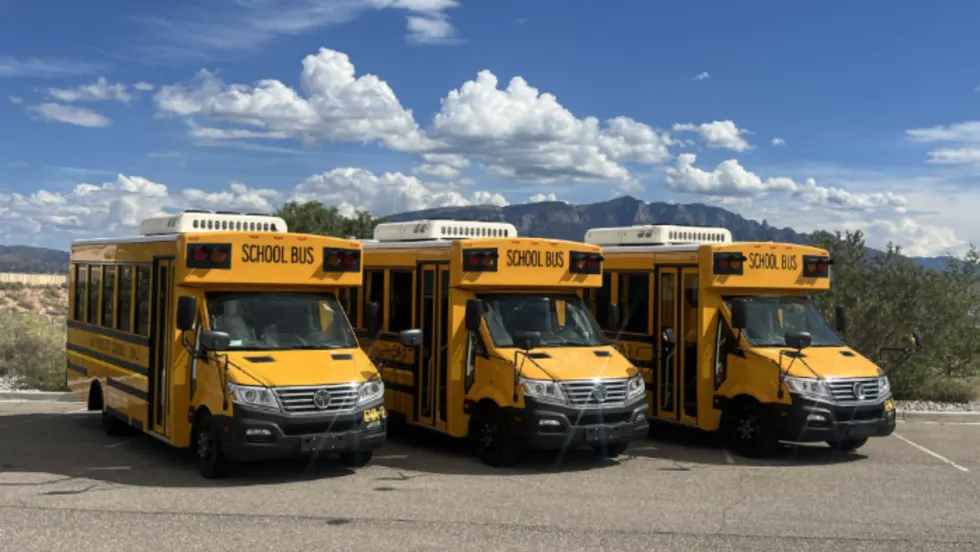
GreenPower Expands New Mexico EV Pilot With Larger Buses, V2G Testing
After logging more than 17,000 electric miles in the first year, New Mexico’s statewide pilot is moving into its second phase with larger vehicles, continued charging evaluations, and more.
Read More →
Can EV-as-a-Service Help Fleets Scale Electrification?
Sustainability Partners CEO Adam Cain explains how matching EVs, charging infrastructure, and duty cycles can help fleets scale electrification.
Read More →
How EV-as-a-Service Is Moving Fleets Beyond Pilots
Adam Cain, president and CEO of Sustainability Partners, explains how EV-as-a-service can help fleets scale deployments by addressing duty-cycle requirements and charging challenges.
Read More →
PowerFlex, The Mobility House Join Forces to Advance Fleet Electrification
Two EV charging providers are joining forces to deliver a broader portfolio of energy management and fleet electrification solutions.
Read More →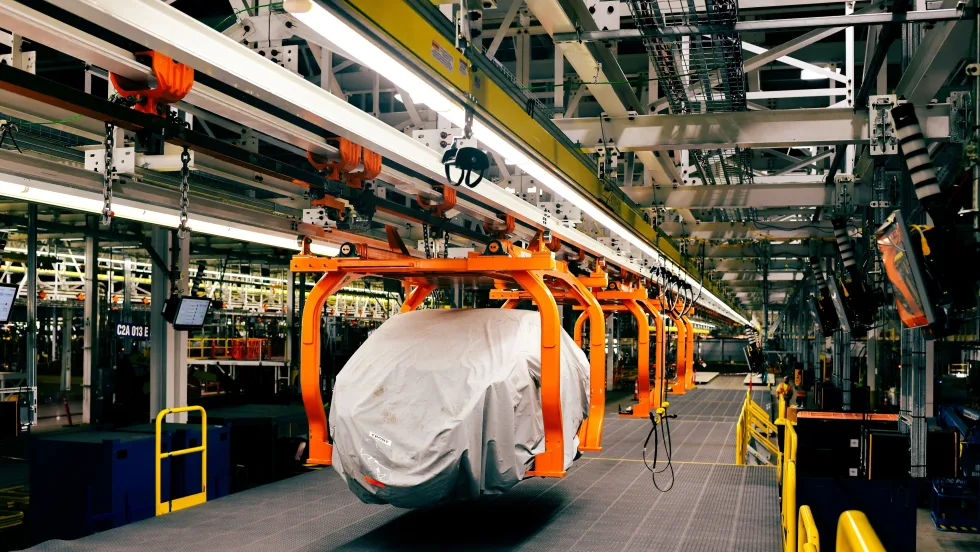
Ford Retools Louisville Plant for Fathom Electric Truck Production
Ford's $2 billion Louisville Assembly Plant overhaul introduces a three-part assembly process for the Fathom midsize electric truck, with production scheduled to begin in 2027.
Read More →
Merchants Fleet Reports 290M EV Miles as Fleets Navigate Changing Electrification Market
From millions in operating savings to hundreds of millions of EV miles, Merchants Fleet’s latest report reveals what’s working and what’s changing in fleet electrification.
Read More →
California District Commits to Electrify 25% of School Bus Fleet by 2028
One of the nation's largest school bus electrification projects to date demonstrates how grants, charging infrastructure, and public-private partnerships can help fleets transition to EVs at scale.
Read More →
Aptera Orders Bodies and Chassis for Its First 40 Production Vehicles
Aptera Motors Corp. has issued purchase orders for the major structural components of its first 40 vehicles, and body and chassis components are expected to begin arriving in October.
Read More →