



ELMS to Reveal Medium Duty All-Electric Class 2-3 Truck at FedEX Event July 30-31
ELMS Opens on Nasdaq as Electric Urban Fleet Vehicles Show Promise
The company’s CEO cites a reliable rollout schedule, solid finances, and market potential as it prepares its last-mile delivery van model for a late 2021 debut and plans to unveil an electric Class 3 truck next month.
June 29, 2021
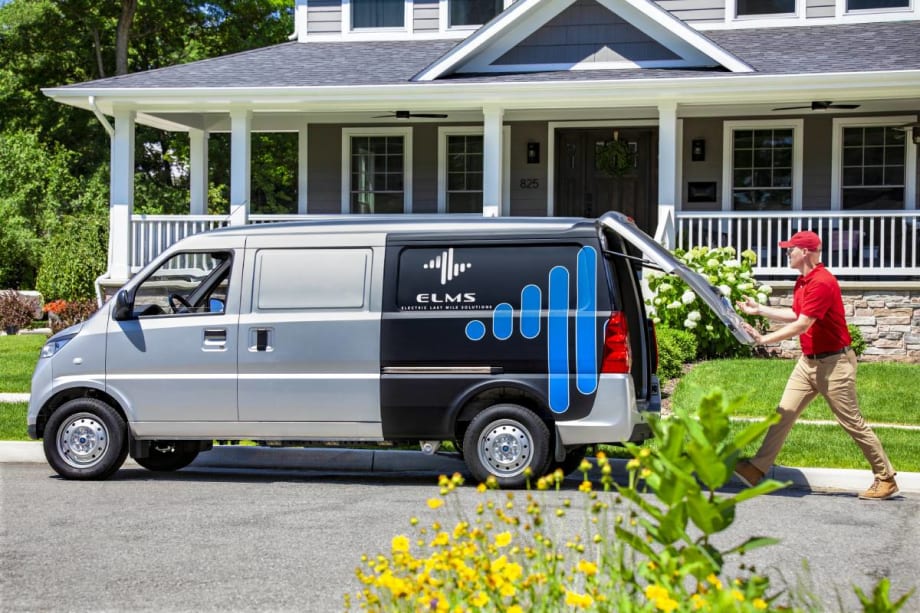
As to future model development, CEO Jim Taylor foresees ELMS focusing more on the upfitting and use case markets.
Photo: ELMS
6 min to read
The commercial EV van and truck startup Electric Last Mile Solutions, Inc. (ELMS) reached a financial milestone June 28 as its shares of its common stock and warrants started trading on The Nasdaq Stock Market under the new ticker symbols “ELMS” and “ELMSW”, respectively.
The company formally completed its business combination with Forum Merger III Corporation (“Forum” or “Forum III”), a special purpose acquisition company (SPAC), that it announced in December 2020. Forum shareholders approved the combination at a special meeting held on June 24, 2021.
In an interview with Charged Fleet June 28, ELMS CEO and co-founder Jim Taylor said the company won’t be able to release a projected amount of capital to be raised through shareholder training until it files a Super 8K with the SEC four days later. The total number of outstanding shares also will not be available until the form is filed.
However, Taylor said ELMS has raised more than the $160 million needed through investors and SPAC earnings that provides adequate capital to fund its business plan early into next year.
Those plans are focused on the rollout this year of the all-electric Urban Delivery Class 1-2 van and the unveiling next month of a working prototype of its Urban Utility Class 2-3 electric truck. The Urban Delivery is expected to be the first Class 1 commercial electric vehicle available in the U.S. market, the company says.
“We are focused on execution to launch the Urban Delivery, which we anticipate will be a first-mover in the Class 1 commercial electric vehicle segment,” Taylor said in a press release statement. “As a public company, we believe we now have all the pieces in place to launch the Urban Delivery later this year and are excited to help position America as the leader in EV manufacturing.”
ELMS’ Nasdaq listing builds on the company’s momentum during the past several months, including collaborations with industry leaders such as Randy Marion Automotive Group, Cox Automotive Inc. and Geotab Inc. ELMS also recently announced the addition of its first chief digital officer, who will be responsible for advancing the development of the company’s digital and connectivity solutions for commercial fleet customers.
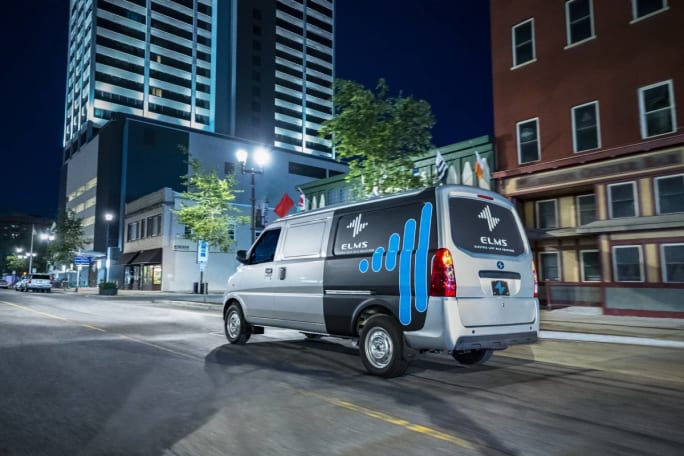
The Urban Delivery van is expected to be the first Class 1 commercial electric vehicle available in the U.S. market, the company says.
Photo: ELMS
An Orderly Path To Customers
ELMS so far has received 45,000 non-binding pre-orders for the Urban Delivery. The company’s next step is to sit down with interested potential customers and detail the specs, use cases, data requirements, EV parts needs, upfits and finances of each client before agreeing to a sales deal, Taylor said.
ELMS is working with what Taylor describes as a diverse market and geographic mix of potential clients for the Urban Delivery. Those would include fleet management companies, package and digital delivery service providers, small retail fleets, trades service providers, universities and educational institutions, cable TV companies, and specialized users such as pharmaceutical companies and food services that require refrigerated units.
“We’re interested in more of a portfolio approach with diverse customers, geography and use cases,” said Taylor, adding that they do not want their first production set to be bought by only a handful of major fleet operations.
The second vehicle, the Urban Utility electric Class 3 truck, will be revealed during a FedEx event in late July. ELMS anticipates about 10,000 pre-orders, but potential customers have not yet seen the final specs or been able to physically see or drive the vehicle. “We expect an increase in pre-orders once we get the vehicle out there,” Taylor said.
ELMS has revised its initial production order and volume downward on the Urban Delivery and moved back the schedule three months later as it works through planning upgrades, hiring schedules, operating set-ups, and some supply chain challenges related to offshore parts and supplies, Taylor said.
The company plans to start production at its Mishawaka, Ind., plant, a former GM facility that built the Chevrolet Cruze, in the late third quarter and have its first wave of vans sold and working in fleets before the end of the year. “We still plan full strength by early next year,” Taylor said.
ELMS Lines Up Support and Resources
Taylor assures investors and future customers that ELMS is moving on a solid plan toward production and growth while making clear distinctions between the state of ELMS and the SPAC-financed electric pickup truck start up Lordstown Motors. The maker of the planned Endurance fleet work truck recently has encountered several setbacks and obstacles as it delays production and revises its financial performance.
Taylor pointed out ELMS already has produced and assembled Urban Delivery vans that have been tested in various use cases. Unlike Lordstown, many of ELMS’ operational resources are already in place, such as a manufacturing plant fully adapted to EV production, established parts and supply chains, a fully developed chassis, and lower capital outlays.
ELMS needs $160 million to get started whereas start-ups like Lordstown require north of $400 million, he said.
“We’re in different boats,” said Taylor when comparing ELMS to Lordstown. “We don’t have to spend large amounts of capital. They have more challenges and problems to solve. If you’re starting from the ground up and creating your own platforms, then you have a lot more on the plate.”
By using an existing plant and product platform, ELMS faces fewer possible variations that could cause it to miss the mark, Taylor said. “We are confident in the numbers we put together.”
A Unique Strategy on Batteries and Models

“As a public company, we believe we now have all the pieces in place to launch the Urban Delivery later this year and are excited to help position America as the leader in EV manufacturing," says ELMS CEO and co-founder Jim Taylor.
Photo: ELMS
Unlike EV OEMs and other start-ups, ELMS plans to take a reserved, reliable approach to its battery development. It will stick with its lithium-ion phosphate batteries that can deliver up to 150 miles of range for the Urban Delivery and Urban Utility. Data recording of various use cases show the typical fleet delivery van requires 40-60 miles of range per day to cover its duty cycles, making the current battery size and weight more feasible.
“We’re more on the proven and reliable side and not on the leading edge of testing and efficiency,” Taylor said. “We’re not really squeezing batteries for every bit of range as the manufacturers of retail and passenger vehicles that are trying to get 300 to 400 miles of range. Our batteries have a very robust and safe chemistry.”
As to future model development, Taylor foresees ELMS focusing more on the upfitting and use case markets instead of creating a full line of Class 1 to 8 vehicles. It plans to remain rooted in the Class 1-3 van and truck fleet markets. ELMS would like to form upfitting partnerships out of its plant so it can build vehicles with different functions and applications.
ELMS would like to approach the market as a turnkey solution provider instead of as the first stage in a two-stage manufacturing / aftermarket business model, Taylor said. “We will see how that evolves in the next few years.”
Taylor advises hesitant fleet managers considering a transition to EV fleets that much of the reliability and viability of EVs have been proven on the retail side. Asian and European e-commerce markets more widely embrace electric fleet vehicles with overall positive results and success, he added.
“The risks of moving into this space are well down the curve compared to a few years ago,” he said. “We’re seeing more cost parity (with internal combustion engine vehicles) and users now can enjoy lower running costs immediately.”
More Electric Vehicles
EV Charging Use Is Outpacing Infrastructure Growth
ChargePoint’s 2026 Charging Forward Report points to rising charger use, higher-powered charging, commercial vehicle electrification, and energy-management technology. Here’s what fleets should know.
Read More →
EV Realty Names Henrik Holland President as Charging Platform Expands
The former Prologis Mobility and Shell executive will help expand EV Realty’s truck charging business and move its power-first infrastructure model into autonomous vehicle depots and other fleet sectors.
Read More →
GreenPower Expands New Mexico EV Pilot With Larger Buses, V2G Testing
After logging more than 17,000 electric miles in the first year, New Mexico’s statewide pilot is moving into its second phase with larger vehicles, continued charging evaluations, and more.
Read More →
Can EV-as-a-Service Help Fleets Scale Electrification?
Sustainability Partners CEO Adam Cain explains how matching EVs, charging infrastructure, and duty cycles can help fleets scale electrification.
Read More →
How EV-as-a-Service Is Moving Fleets Beyond Pilots
Adam Cain, president and CEO of Sustainability Partners, explains how EV-as-a-service can help fleets scale deployments by addressing duty-cycle requirements and charging challenges.
Read More →
PowerFlex, The Mobility House Join Forces to Advance Fleet Electrification
Two EV charging providers are joining forces to deliver a broader portfolio of energy management and fleet electrification solutions.
Read More →
Ford Retools Louisville Plant for Fathom Electric Truck Production
Ford's $2 billion Louisville Assembly Plant overhaul introduces a three-part assembly process for the Fathom midsize electric truck, with production scheduled to begin in 2027.
Read More →
Merchants Fleet Reports 290M EV Miles as Fleets Navigate Changing Electrification Market
From millions in operating savings to hundreds of millions of EV miles, Merchants Fleet’s latest report reveals what’s working and what’s changing in fleet electrification.
Read More →
California District Commits to Electrify 25% of School Bus Fleet by 2028
One of the nation's largest school bus electrification projects to date demonstrates how grants, charging infrastructure, and public-private partnerships can help fleets transition to EVs at scale.
Read More →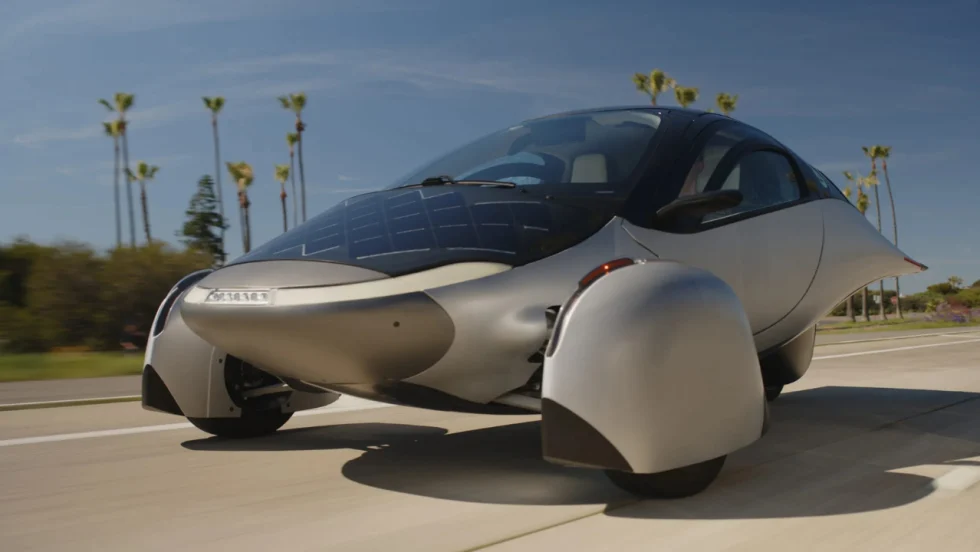
Aptera Orders Bodies and Chassis for Its First 40 Production Vehicles
Aptera Motors Corp. has issued purchase orders for the major structural components of its first 40 vehicles, and body and chassis components are expected to begin arriving in October.
Read More →