



Related News: 2025 EV Sales Only Fell 2% Despite Q4 Plunge
California Surpasses 2.5 Million ZEV Sales
California has surpassed 2.5 million cumulative zero-emission vehicle sales, marking a major milestone in the state’s clean transportation transition.
February 9, 2026
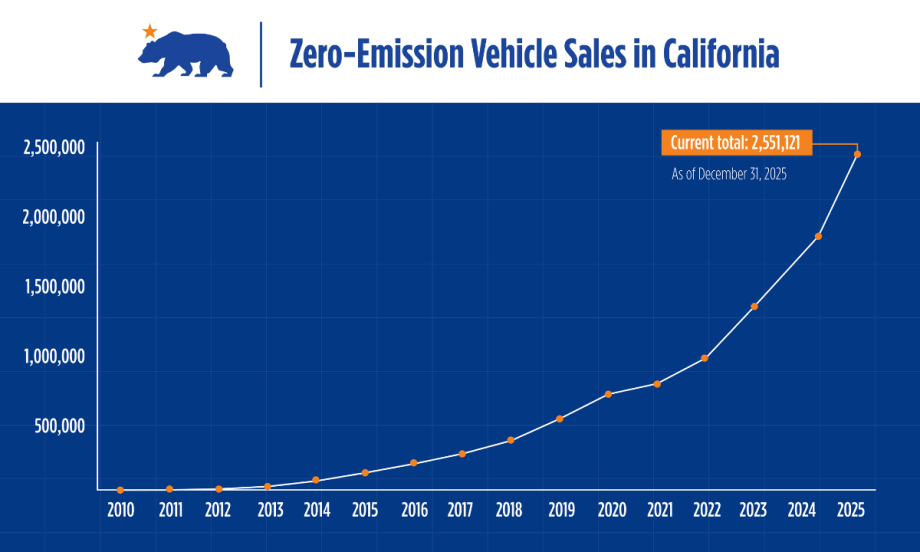
A California Energy Commission chart shows steady growth in zero-emission vehicle sales statewide, reaching more than 2.55 million total sales by the end of 2025.
Photo: California Energy Commission
2 min to read
California surpassed 2.5 million cumulative new zero-emission vehicle sales in 2025, according to the California Energy Commission.
Since the end of 2019, cumulative new ZEV sales in California have grown more than 300%, supported by state transportation policy and incentive programs.
“No state can match California’s five-year growth in ZEV sales,” said California Energy Commissioner Nancy Skinner, in a Jan. 20 news release. “This reflects strong consumer demand and continued state investment.”
California Air Resources Board Chair Lauren Sanchez pointed to continued momentum despite shifting federal policy. “California isn’t slowing down,” Sanchez said. “State incentives remain an important tool for maintaining progress.”
Q4 Sales And State Incentives
During the fourth quarter of 2025, Californians purchased 79,066 new ZEVs, accounting for 18.9% of new-car sales. The results followed the end of federal ZEV incentives on Sept. 30, 2025, which contributed to a nationwide decline in ZEV sales.
National ZEV sales dropped to 5.8% in the fourth quarter, compared with 10.5% in the third quarter, according to Cox Automotive.
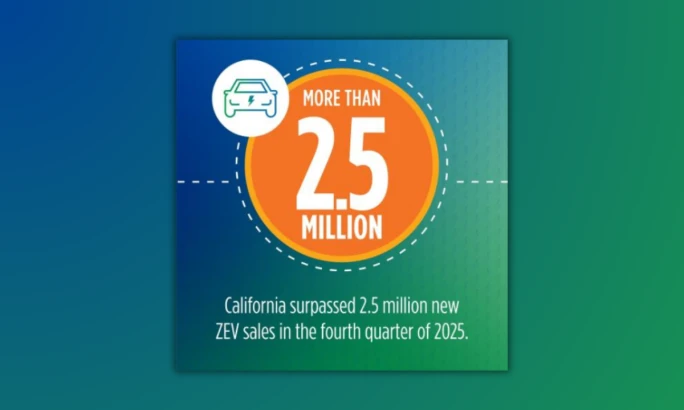
California surpassed 2.5 million cumulative new zero-emission vehicle sales in the fourth quarter of 2025, according to the California Energy Commission.
Photo: California Energy Commission
In Governor Gavin Newsom’s preliminary budget released Jan. 9, the state proposed a new $200 million incentive program to support EV adoption and affordability.
Despite the federal changes, California’s market continued to expand, with 149 ZEV models available in the state during Q4 2025.
Charging Infrastructure Expansion
California’s charging network has also grown. The state now has more than 200,000 public and shared private EV charging stations, located at sites such as grocery stores, workplaces, apartment complexes, and other parking areas.
That network is in addition to an estimated 800,000 chargers installed in homes statewide.
In its Clean Transportation Program Investment Plan Update, the CEC allocated $98.5 million for light-duty ZEV infrastructure funding in fiscal year 2025-2026. Future projects are expected to focus on Level 1 and Level 2 charging at locations with longer dwell times, including multifamily housing.
The CEC also plans to release additional infrastructure assessments later this year, including:
New funding opportunities tied to the $98.5 million investment
The third Electric Vehicle Charging Infrastructure Assessment, required under Assembly Bill 2127
The next Electric Vehicle Infrastructure Deployment Assessment, required under SB 1000
More Electric Vehicles
EV Charging Use Is Outpacing Infrastructure Growth
ChargePoint’s 2026 Charging Forward Report points to rising charger use, higher-powered charging, commercial vehicle electrification, and energy-management technology. Here’s what fleets should know.
Read More →
EV Realty Names Henrik Holland President as Charging Platform Expands
The former Prologis Mobility and Shell executive will help expand EV Realty’s truck charging business and move its power-first infrastructure model into autonomous vehicle depots and other fleet sectors.
Read More →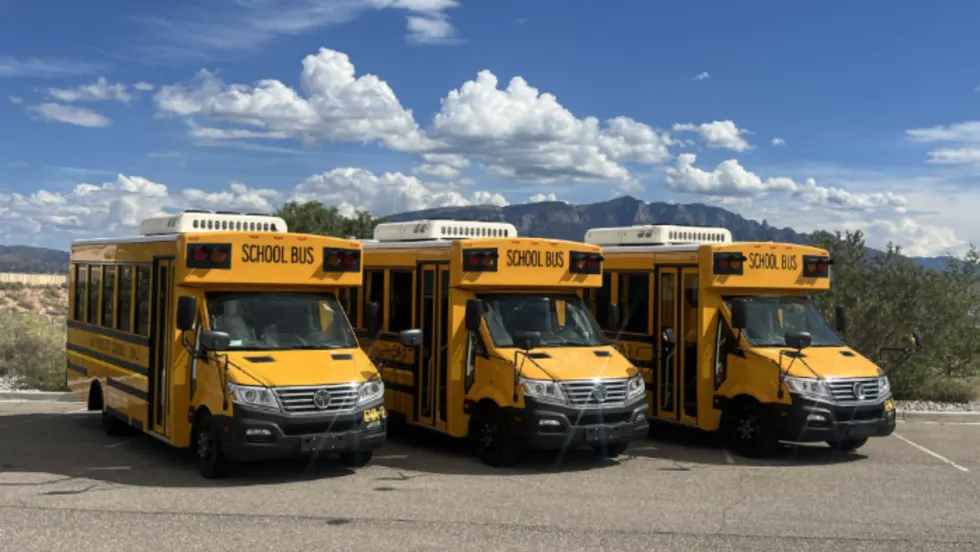
GreenPower Expands New Mexico EV Pilot With Larger Buses, V2G Testing
After logging more than 17,000 electric miles in the first year, New Mexico’s statewide pilot is moving into its second phase with larger vehicles, continued charging evaluations, and more.
Read More →
Can EV-as-a-Service Help Fleets Scale Electrification?
Sustainability Partners CEO Adam Cain explains how matching EVs, charging infrastructure, and duty cycles can help fleets scale electrification.
Read More →
How EV-as-a-Service Is Moving Fleets Beyond Pilots
Adam Cain, president and CEO of Sustainability Partners, explains how EV-as-a-service can help fleets scale deployments by addressing duty-cycle requirements and charging challenges.
Read More →
PowerFlex, The Mobility House Join Forces to Advance Fleet Electrification
Two EV charging providers are joining forces to deliver a broader portfolio of energy management and fleet electrification solutions.
Read More →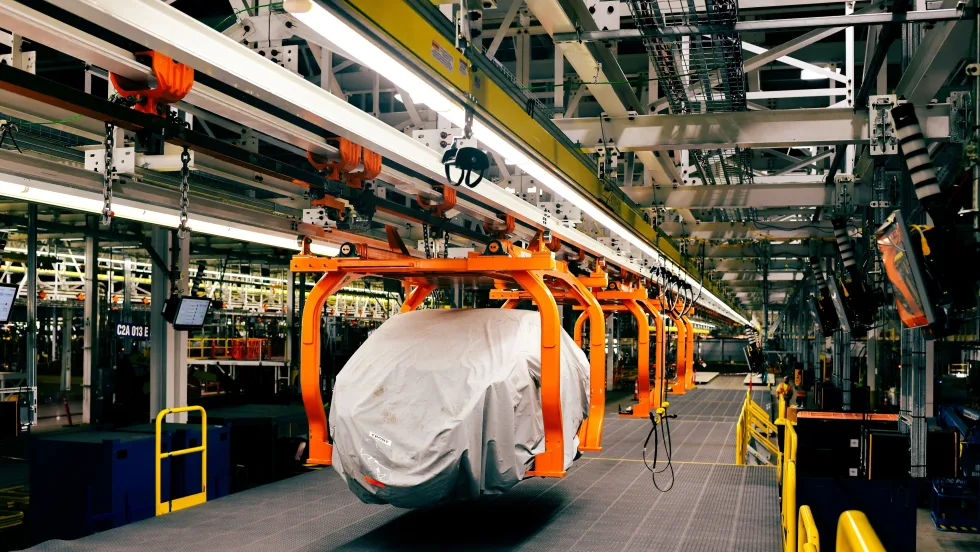
Ford Retools Louisville Plant for Fathom Electric Truck Production
Ford's $2 billion Louisville Assembly Plant overhaul introduces a three-part assembly process for the Fathom midsize electric truck, with production scheduled to begin in 2027.
Read More →
Merchants Fleet Reports 290M EV Miles as Fleets Navigate Changing Electrification Market
From millions in operating savings to hundreds of millions of EV miles, Merchants Fleet’s latest report reveals what’s working and what’s changing in fleet electrification.
Read More →
California District Commits to Electrify 25% of School Bus Fleet by 2028
One of the nation's largest school bus electrification projects to date demonstrates how grants, charging infrastructure, and public-private partnerships can help fleets transition to EVs at scale.
Read More →
Aptera Orders Bodies and Chassis for Its First 40 Production Vehicles
Aptera Motors Corp. has issued purchase orders for the major structural components of its first 40 vehicles, and body and chassis components are expected to begin arriving in October.
Read More →