


Fleet Electrification After the Hype Cycle
Moving past the inflated expectations of Fleet Electrification 1.0, industry stakeholders describe a new, measured approach focused on total cost of ownership, infrastructure planning, and duty cycle alignment.
February 2, 2026

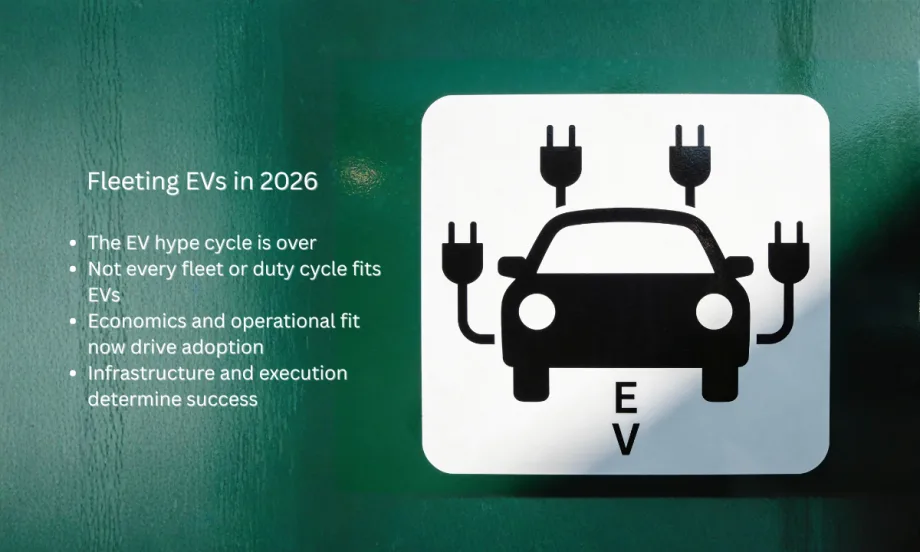
Where early EV pilots were hatched before charging infrastructure was planned, today's fleets are coordinating vehicles, chargers, and utility agreements before committing to deployment.
Credit: Automotive Fleet
8 min to read
In hindsight, the shift in tone regarding fleet electrification was already visible at the 2022 Fleet Forward Conference.
Coming out of the pandemic, electrification dominated the stage and networking conversations. EV suppliers filled the exhibit hall, EV panels were packed, and automakers were just beginning major launches of electric trucks and vans. On stage, total cost of ownership calculations were presented with certainty that battery-electric vehicles were ready to scale broadly across commercial fleets.
In one session, a speaker walked through how EV total cost of ownership penciled out, citing fuel savings, reduced maintenance, and incentives. In the audience sat a fleet manager who had just received a quote for an electric cargo van for $90,000.
That van was never going to pencil out.
At the time, few people seemed willing to say that out loud. In theory, electrification was much simpler on a spreadsheet. In the real world, factoring in vehicle pricing, infrastructure costs, charging downtime, duty-cycle mismatches, and utility delays, fleet electrification is much more complex.
The electric cargo van program in question — BrightDrop — has since been cancelled. Other highly visible programs have also been shelved, such as the Ford F-150 Lightning. Many of the suppliers who filled conference halls in 2022 and 2023 are no longer in business.
This was less the failure of electrification itself and more a collision with the reality of the day.
Now in 2026, the industry has moved past this hype cycle and into a more disciplined approach to electrification, with a greater focus on duty cycle alignment, infrastructure readiness, and total cost of ownership rather than enthusiasm and lofty sustainability goals.
As Maria Neve, vice president of eFMC strategy at Inspiration Mobility Group, put it, “Industry-wide, 2025 separated signals from noise. The market didn’t ‘retreat’ from EVs; it sobered up. We watched pilot programs collide with reality, new models get stress-tested, and a lot of confident narratives fall apart under operational pressure.”
Electrification Moves from Narrative to Economics
While early electrification centered on incentives, availability, and corporate commitments, the conversation has shifted.
“In 2026, the EV market will no longer be defined by incentives; it will be defined by simple economics,” said Maureen Gillespie, head of sales at Inspiration Mobility Group. “Fleets will adopt EVs at scale because they cost less to operate and deliver durable value.”
That reset is also visible in how fleet service providers are reframing electrification beyond vehicle selection alone.
“The first wave of EV adoption was very sustainability-focused,” said Jay Collins, vice president at WEX. “The second wave will be driven by economics and total cost of ownership. We’ve never met a fleet manager who wasn’t interested in saving money.”
Collins pointed out declining battery costs and the gradual introduction of lower-priced EVs as prerequisites for broader fleet adoption, noting that electrification is increasingly evaluated alongside, not instead of, other powertrain options.
That economic equation is calculated on common characteristics: predictable routes, centralized or take-home charging, and duty cycles that align with current battery capabilities.
“Going electric simply makes sense for fleets that have the right sorts of routes, optimized charging solutions, and the ability to leverage incentives to reduce costs,” said Jamie Hall, director of policy at EV Realty.
Where those conditions exist, electrification continues to expand. Where they do not, fleets are increasingly comfortable pausing or pivoting.
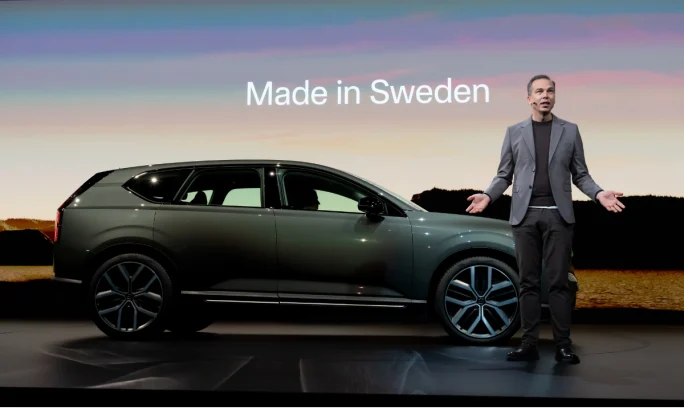
Automakers are still releasing new EV models, and they have better batteries and manageable cap costs. The Volvo EX60's 400-mile range addresses limitations that previously constrained fleet adoption.
Credit: Volvo
No Straight-Line Adoption
The U.S. charging market is no longer about straight-line adoption. As Levi-Laor of Driivz observed, growth is continuing, but competition has shifted from who can deploy chargers to who can operate them reliably and profitably.
“Fleets that have already embraced EVs in scenarios where they make sense will likely continue to expand,” said Jeremy Dewey, manager of energy and fuel at Holman. “Fleets that may have been trying to ‘force’ EVs into less-than-optimal scenarios are likely to pause or pivot.”
Dewey pointed out that electrification is not a single strategy but one piece of a broader powertrain portfolio.
“This doesn’t mean EVs are ‘going away,’” Dewey added. “It simply means that procurement strategies need to be well planned to account for this shifting landscape while also maintaining the flexibility to adjust when necessary.”
That discipline now extends beyond vehicle procurement. One of the clearest lessons from early electrification efforts was the cost of poor coordination between vehicles, infrastructure, and operations.
We saw fleets receiving EVs before chargers were even planned, said Amy Blair, director of fleet sales at ChargePoint. “That kind of uncoordinated rollout created real pain. Today, fleets are far more deliberate — asking about uptime, service agreements, and long-term support before anything gets deployed.”
The result has been slower adoption in some segments, but fewer failures.
“Most OEMs are re-aligning their product strategy with how fleets typically operate,” Dewey said. “Fleet operators should anticipate fewer ‘one-size-fits-all’ EV solutions.”
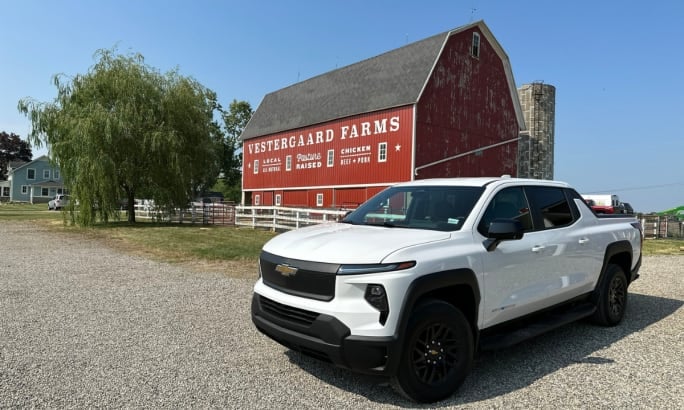
The Chevrolet Silverado went on sale with much fanfare in 2023. The electric pickup market has not exploded, and competitors such as Ford F-150 Lightning exited the market, while Silverado EV remains.
Credit: Chris Brown
The Constraint Is Infrastructure, Not Vehicles
If there is one lesson that emerged from Electrification 1.0 (or do we call that 1.5?), it is that vehicles alone do not determine success.
“Grid constraints emerged as the critical path in 2025,” said Shiri Levi-Laor, CEO of Driivz, an EV charging and energy management platform. “Interconnection timelines, transformer availability, and demand charges pushed energy management to the forefront. Managed charging, peak optimization, and tariff-aware scheduling are becoming default requirements for fleets to scale.”
“In the near term, infrastructure is a critical enabler,” Hall said. “Fleets that lock in locations, power access, and scalable infrastructure gain flexibility, speed, and cost certainty.”
That dynamic helps explain why electrification can feel slower in 2026, even as underlying investment continues. Fleets going ahead with electrification plans are prioritizing utility coordination, site selection, and service agreements before committing to additional vehicles.
That said, “Those who wait may face tighter site availability, longer utility timelines, higher infrastructure costs, and fewer incentive dollars to offset investment,” Hall said, underscoring how much electrification is a facilities, energy, and operations decision.
And when it comes to infrastructure, fleets are making sure that it works consistently over time.
“Guaranteed uptime has become non-negotiable,” Blair said. “Fleets are demanding service-level agreements, accountability, and partners that will still be here five or ten years from now.”
“Customers now require guaranteed uptime via service level agreements, accountability, and reliability standards,” Blair said.
That emphasis has intensified as several early charging providers exited the market, leaving behind unsupported hardware and stranded fleet investments.
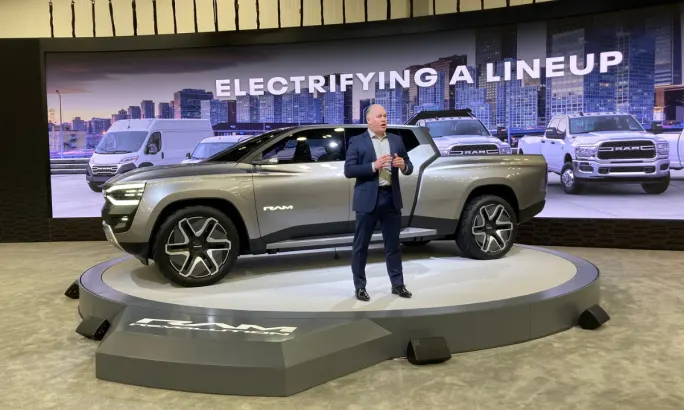
Ram revealed its Ram 1500 Revolution BEV concept in 2023. Ram ended up scrapping its plans for an electric Ram 1500. Instead, the truck maker repurposed the Ram 1500 REV name for its range-extended electric vehicle (formerly known as Ramcharger), which uses a gasoline engine as a generator to power its electric motors. Some tout range-extended EVs as an interim solution.
Credit: Chris Brown
Where Electrification Is Working
Despite the cautious tone, fleets that have started down an electrification path are finding their footing, and electrification is consistently proving effective across many applications.
“EVs continue to increase in share for dedicated route fleets with depot operations such as delivery, as the economics pencil out well for this application,” said Jason Kraus, vice president of operations for Mike Albert Fleet Solutions.
These successes occur where charging integrates naturally into existing dwell time, whether at a depot or a driver’s home. Take-home programs are proving effective for sales and service fleets, particularly if they have a structured home-charging program and clear reimbursement processes.
According to ChargePoint, fleets with formal take-home charging programs — including reimbursement reporting and proactive maintenance — are seeing higher driver satisfaction and fewer operational disruptions than fleets that rely heavily on public charging.
Medium- and heavy-duty electrification is also advancing, though at a slower pace. “Real-world data is showing that battery electric trucks are increasingly able to meet operational needs for fleets,” Hall noted, citing results from NACFE’s Run on Less demonstration. “Big fleets are continuing with BEVs after successful pilots.”
In Class 8 trucking applications, port drayage, short-haul and regional distribution, and vocational usages fit within the existing range limits.
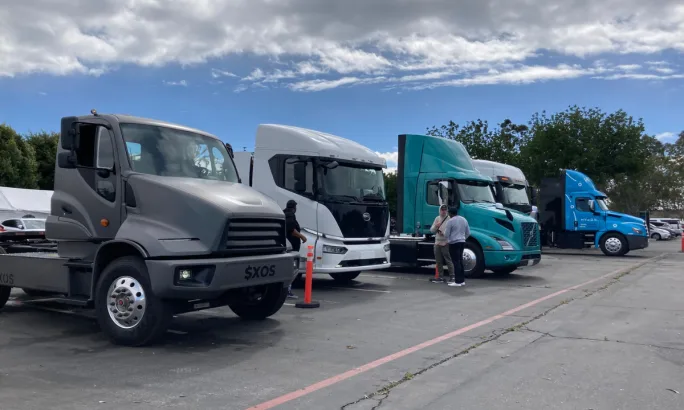
According to Calstart, 1.32% of new truck deployments in the first half of 2025 were zero-emission. Adoption has been slow, but there are duty cycles such as port drayage and regional distribution that fit within existing range limits.
Credit: Chris Brown
What Fleet Operators Say
Among fleet manager respondents for Automotive Fleet’s general outlook article, electrification was not a dominant theme. However, fleet operators are not ignoring electrification; they are approaching it incrementally, using lessons already learned.
“Despite the mandate (from CARB) no longer applying to private fleets, we are still pursuing several options related to determining which roles and vehicles in the fleet can be electrified,” said Al Saunders, fleet manager at the San Diego Humane Society. “As for a non-profit company, it is vital that any solutions we employ in the area of electric vehicles and chargers be not only sustainable, but also cost-effective.”
Saunders echoed that electrification is no longer a headline; instead, it is evaluated like any other capital investment.
The Real Tipping Point
For years, the industry searched for a technological tipping point—longer range, faster charging, next-generation batteries. Those advancements continue, but they are no longer the deciding factor.
Could the real (and more immediate) tipping point be confidence?
Confidence that vehicles will meet duty cycles, that chargers will work when needed, that EVs’ residual values will hold. Confidence that partners will still be there years after installation.
As Adam Seifert, vice president of customer success and advisory at Inspiration Mobility Group, observed, “EVs have solidified their role in a repeatable playbook for fleet initiative success.”
Confidence also comes from reducing complexity for drivers and fleet managers alike.
“The charging experience has to scale the same way fueling does,” Collins said. “If complexity becomes the hurdle, fleets will pause. Our goal is to make charging feel like fueling — one experience, one data set, one system.”
No, that $90,000 electric cargo van from 2022 was never going to pencil out. But in 2026, the same fleet manager now has options that actually do. Battery costs have declined, vehicle pricing has become more competitive, and yes, incentives still exist.
The industry has learned which applications work and which don't. The hype didn't initially deliver on its promises, but the discipline that followed is building something more durable.
Topics:charging infrastructureFleet electrificationElectric TrucksSustainabilityElectric VansElectric VehiclesChargingOperationsBatteries/TechVehicle Research
Originally posted on Automotive Fleet
Subscribe to Our Newsletter
More Electric Vehicles
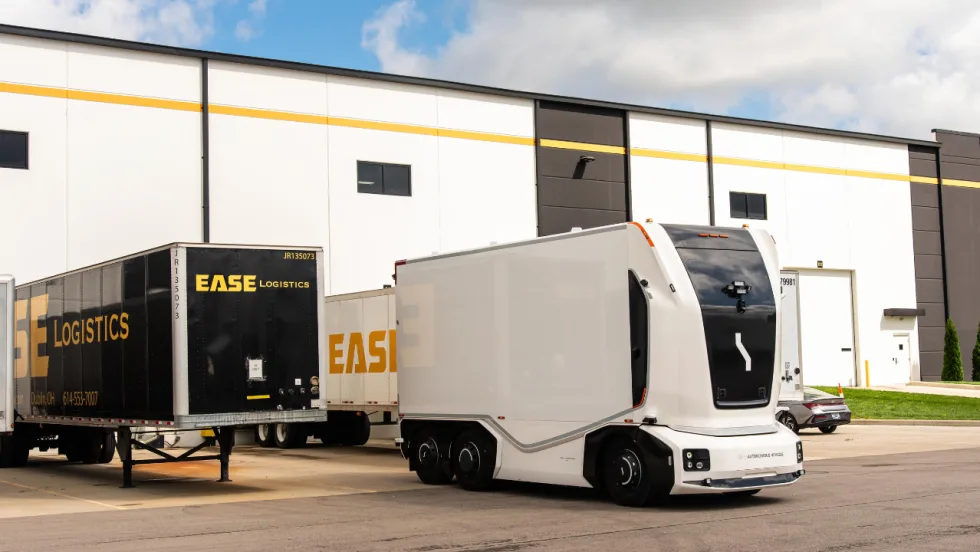
Einride Electric Driverless Trucks Begin Daily Freight Operations in Ohio
Two cabless electric trucks are now moving freight between EASE Logistics facilities, putting autonomous EV technology into daily commercial operations.
Read More →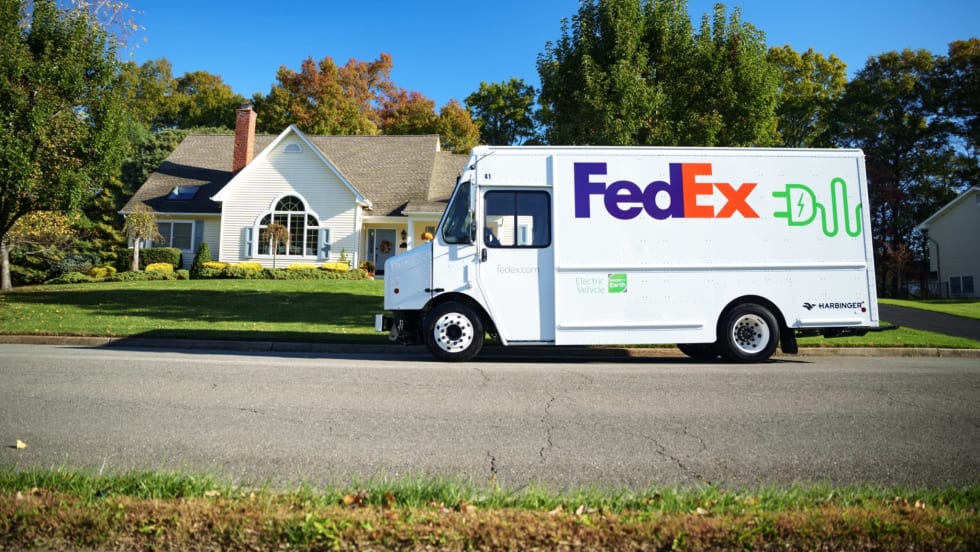
FedEx Orders 2,000 Harbinger Electric Trucks in $300 Million Deal
The Class 5 and 6 electric trucks are planned for delivery by the end of 2027 and will be deployed in FedEx pickup and delivery operations across the U.S. and Canada.
Read More →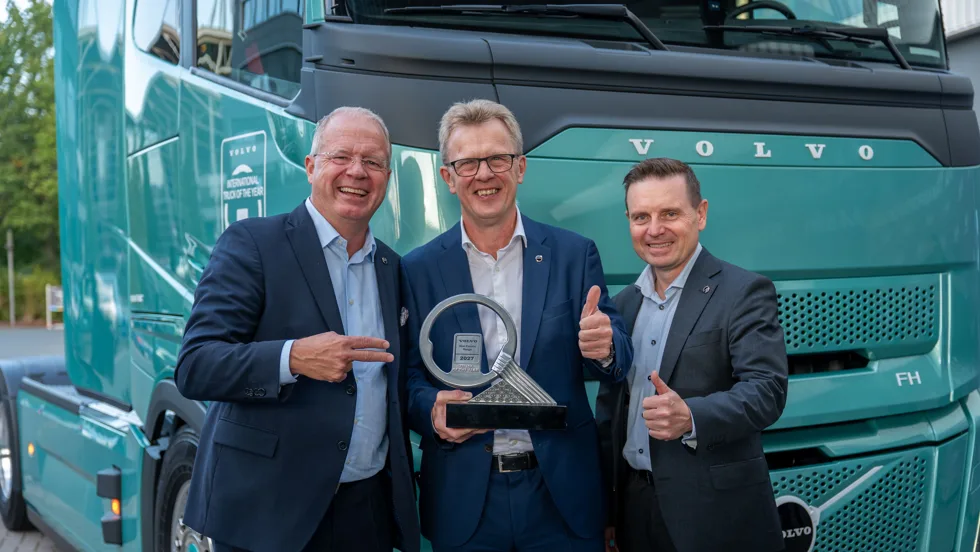
Volvo Trucks’ Electric Range Named International Truck of the Year 2027
The award recognizes Volvo’s global heavy-duty electric lineup, while more than 750 VNR Electric trucks have accumulated nearly 37 million miles in U.S. and Canadian fleet operations.
Read More →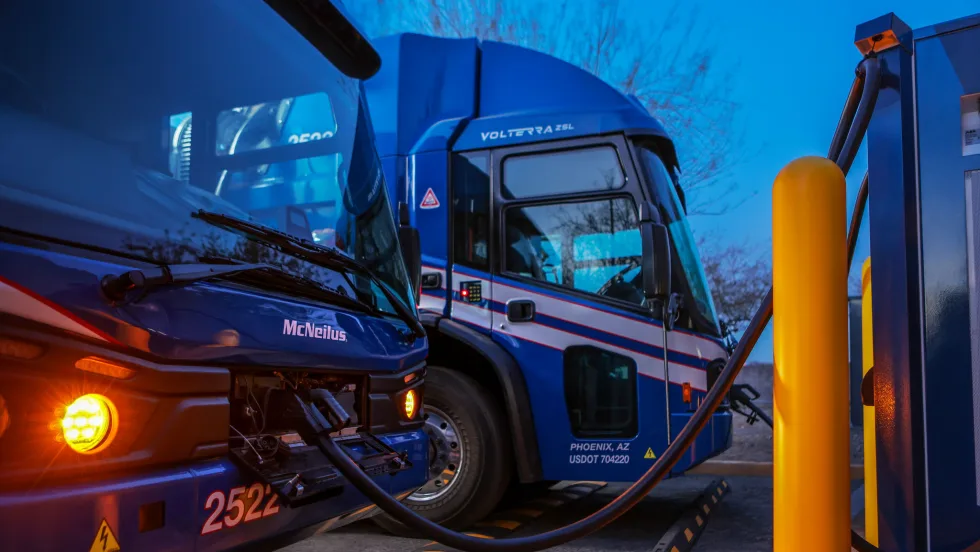
How Republic Services Decides Where Its Next Electric Trucks Can Go
With 250 electric collection trucks now in service, Republic Services is learning that scaling electrification depends less on proving the vehicle and more on whether each site can support what comes next.
Read More →
EV Charging Use Is Outpacing Infrastructure Growth
ChargePoint’s 2026 Charging Forward Report points to rising charger use, higher-powered charging, commercial vehicle electrification, and energy-management technology. Here’s what fleets should know.
Read More →
EV Realty Names Henrik Holland President as Charging Platform Expands
The former Prologis Mobility and Shell executive will help expand EV Realty’s truck charging business and move its power-first infrastructure model into autonomous vehicle depots and other fleet sectors.
Read More →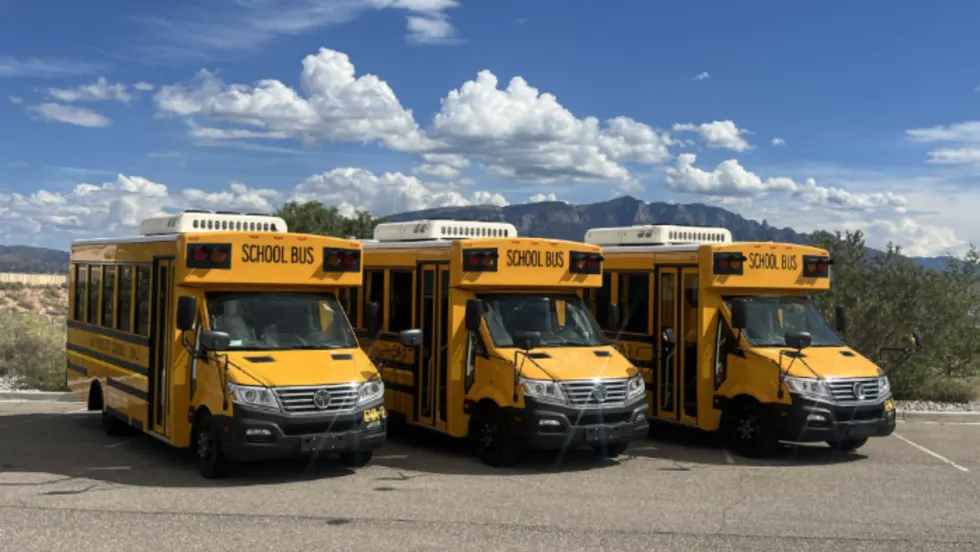
GreenPower Expands New Mexico EV Pilot With Larger Buses, V2G Testing
After logging more than 17,000 electric miles in the first year, New Mexico’s statewide pilot is moving into its second phase with larger vehicles, continued charging evaluations, and more.
Read More →
Can EV-as-a-Service Help Fleets Scale Electrification?
Sustainability Partners CEO Adam Cain explains how matching EVs, charging infrastructure, and duty cycles can help fleets scale electrification.
Read More →
How EV-as-a-Service Is Moving Fleets Beyond Pilots
Adam Cain, president and CEO of Sustainability Partners, explains how EV-as-a-service can help fleets scale deployments by addressing duty-cycle requirements and charging challenges.
Read More →
PowerFlex, The Mobility House Join Forces to Advance Fleet Electrification
Two EV charging providers are joining forces to deliver a broader portfolio of energy management and fleet electrification solutions.
Read More →