


How to Calculate Power Demand for your EV Depot
You may think your site won’t have enough juice to power your electric trucks. A simple recalculation will make a world of difference in demand projection.
Only some trucks will use their full battery every day, and in a typical depot scenario, most trucks will have well more than 10 hours to charge.
Photo: Automotive Fleet
If you’re looking to electrify your fleet, you’ve probably heard of the challenge of getting utilities to build out the grid fast enough to meet your needs.
While there are legitimate reasons for the delay, the least of which is increased demand from electric passenger vehicles, heat pumps, and regional data centers, it may be that you and/or the utility are overestimating how much power you actually need.
Here’s one simple trick that might help you (and your utility) calculate the correct power demand.
The Power Calculation Mistake
Too often, utilities (and fleet managers) start by calculating power in megawatts (MW) rather than calculating energy in megawatt hours (MWh). This simple recalculation makes a world of difference in demand projection.
In many cases, when planning to electrify a depot, they multiply the charge power capability of all trucks at the depot by the number of trucks. So, a depot with 30 trucks, each capable of 50 kW of charging, would require 30*50=1500 kW, or 1.5 MW, of additional power.
While this methodology is simple on the surface, it fails to consider the amount of electricity the trucks use daily and the amount of time available to refuel or recharge them.
Rethinking Power Needs for Electrified Fleets
The reality, as we know, is more complex. The energy used on an electric truck is measured in kilowatt-hours (kWh). Only some trucks will use their full battery every day, and in a typical depot scenario, most trucks will have well more than 10 hours to charge. The fleet manager knows the route of each vehicle, the miles driven per day (and corresponding battery drawdown), and the number of hours each vehicle will be parked.
Using the example above, if each of those 30 trucks drove an average of 80 miles, they would drive 2,400 miles daily and consume about 3,000 kWh of electricity.
Overnight, the depot would have to provide 3,000 kWh of electricity to recharge the trucks so they could go out for another 2,400 miles the next day. But because charging can occur over 10 hours while the trucks are parked, the depot only needs to provide 300 kW of power for those 10 hours — not 1.5 MW!
That’s an 80% reduction in the facility power requirement — which could be reduced further if those trucks could share that power feed with other electrical equipment that operates when the trucks are out en route.
When we no longer think in absolute terms, we quickly realize that depot-based fleet vehicles can share the power service that the utility delivers to the depot (with other vehicles and often with other non-vehicle power loads) and accommodate slower charging speeds. These two factors reduce costs significantly.
One of our customers was initially told by their utility that it would be a 3-year build-out to power a depot with 24 electric step vans. When the customer shared the actual use plan, which included the planned electricity usage and the hours when the trucks would be plugged in, the 3-year forecast was reduced to 3 months.
The Cost-Cutting Power of Extended Dwell Time
The key to effective utility/grid planning is for the fleet manager and the utility to understand “dwell time” — the amount of time a vehicle charges. Initially, the vehicle operator and the utility may want the dwell time to be as short as possible. The fleet owner wants assets in revenue-generating service, and the utility wants greater investment and revenue from higher power service.
This thinking has contributed to a nearly decade-long backlog of charging stations in California.
Fleet managers and utilities should reframe their project plans and forecasts based on MWh, not MW. When a fleet manager realizes that lengthening the dwell time can dramatically reduce their charging costs (and thus reduce a vehicle’s total cost of ownership), they will jump at the chance without negatively impacting operations or service time.
This will reduce fleet costs and the amount of power needed to be delivered by utilities, which could accelerate the adoption of electric vehicles.
Originally posted on Automotive Fleet
More Electric Vehicles

EV Charging Use Is Outpacing Infrastructure Growth
ChargePoint’s 2026 Charging Forward Report points to rising charger use, higher-powered charging, commercial vehicle electrification, and energy-management technology. Here’s what fleets should know.
Read More →
EV Realty Names Henrik Holland President as Charging Platform Expands
The former Prologis Mobility and Shell executive will help expand EV Realty’s truck charging business and move its power-first infrastructure model into autonomous vehicle depots and other fleet sectors.
Read More →
GreenPower Expands New Mexico EV Pilot With Larger Buses, V2G Testing
After logging more than 17,000 electric miles in the first year, New Mexico’s statewide pilot is moving into its second phase with larger vehicles, continued charging evaluations, and more.
Read More →
Can EV-as-a-Service Help Fleets Scale Electrification?
Sustainability Partners CEO Adam Cain explains how matching EVs, charging infrastructure, and duty cycles can help fleets scale electrification.
Read More →
How EV-as-a-Service Is Moving Fleets Beyond Pilots
Adam Cain, president and CEO of Sustainability Partners, explains how EV-as-a-service can help fleets scale deployments by addressing duty-cycle requirements and charging challenges.
Read More →
PowerFlex, The Mobility House Join Forces to Advance Fleet Electrification
Two EV charging providers are joining forces to deliver a broader portfolio of energy management and fleet electrification solutions.
Read More →
Ford Retools Louisville Plant for Fathom Electric Truck Production
Ford's $2 billion Louisville Assembly Plant overhaul introduces a three-part assembly process for the Fathom midsize electric truck, with production scheduled to begin in 2027.
Read More →
Merchants Fleet Reports 290M EV Miles as Fleets Navigate Changing Electrification Market
From millions in operating savings to hundreds of millions of EV miles, Merchants Fleet’s latest report reveals what’s working and what’s changing in fleet electrification.
Read More →
California District Commits to Electrify 25% of School Bus Fleet by 2028
One of the nation's largest school bus electrification projects to date demonstrates how grants, charging infrastructure, and public-private partnerships can help fleets transition to EVs at scale.
Read More →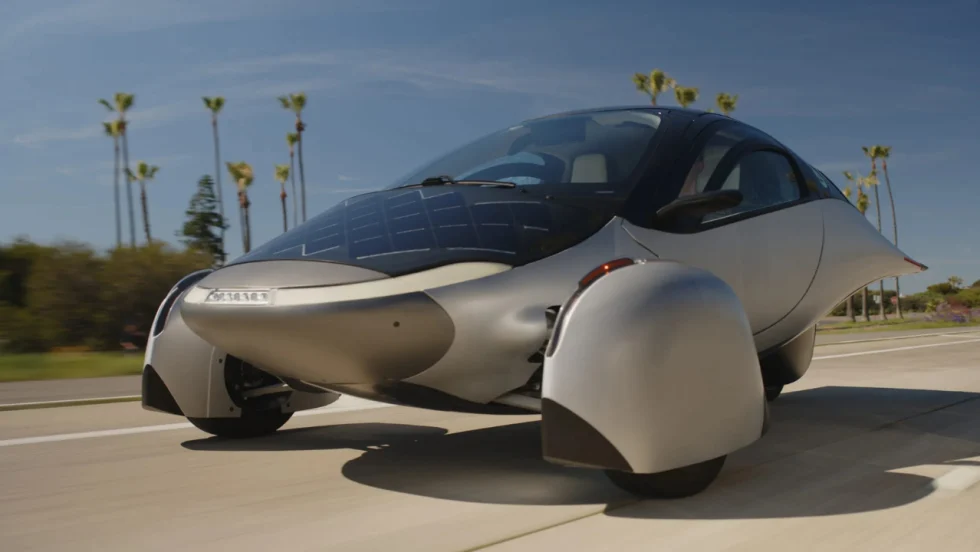
Aptera Orders Bodies and Chassis for Its First 40 Production Vehicles
Aptera Motors Corp. has issued purchase orders for the major structural components of its first 40 vehicles, and body and chassis components are expected to begin arriving in October.
Read More →