


When Hybrid Batteries Die
The batteries in hybrid vehicles today are based on nickel-metal hydride technology. They last a long time, but not forever. Here is what to do when the battery in a hybrid dies.

Many fleets, both public sector and commercial, have been moving aggressively towards acquiring more hybrids. One issue not fully addressed in the lifecycle analysis of electric and particularly hybrid-electric vehicles is what happens at the end of their service life. Most vehicle batteries, in fact most batteries in general, contain highly poisonous substances that should never enter our drinking water or food chain.
So, what should be done with the batteries, and does disposal vary for different kinds of batteries?
Since the first onboard electric systems became available in the early years of the 20th century, the system's battery in automobiles were still lead-acid units. Lead and hydrochloric acid are not noted for being environmentally friendly. Nickel-cadmium batteries are even worse. New battery technology is much "greener."
NiMH, the Technology of Choice
Nickel-metal hydride (NiMH) is the technology of choice for the emerging hybrid-electric vehicle market. The technology is gaining acceptance for mission-critical backup power needs due to its excellent performance, high energy, reliability, low cost of ownership, and long life.
Cobasys LLC, headquartered in Orion, Mich., with manufacturing facilities in Springboro, Ohio, has been a leader in the development of NiMH batteries for automotive and other applications. Cobasys was formed as a joint venture between Chevron and Energy Conversion Devices (ECD Ovonics) to further the development of emerging technologies and alternative-energy processes and products. The company has been working closely with major automakers to incorporate advanced energy storage systems to meet hybrid-electric vehicle requirements. According to Cobasys, battery packs in hybrid vehicle applications must survive extremes in temperature and road vibrations and last the life of a vehicle.
NiMH batteries consist of two electrodes: the positive uses nickel-hydroxide for the cathode and the negative uses metal hydride for the anode. The electrodes are sandwiched together with a polymer separator to eliminate shorting. A small amount of water plus a potassium hydroxide mixture forms the electrolyte, which is added to the cell. The cell is sealed and charged electrically to form a 1.2v electrochemical couple. Individual cells can be connected in series to make batteries in various voltage ranges. A typical module is 12v.
Battery technologies are evaluated in terms of complete discharge cycles. A standard electric-vehicle battery can be charged and discharged 1,000 times to 80 percent depth-of-discharge (DOD), equivalent to more than 100,000 miles.
Hybrid vehicle applications use batteries differently. Generally, the battery is never fully charged or discharged in hybrid applications. NiMH batteries used in hybrid-electric vehicle applications can be cycled in shallow discharges hundreds of thousands of times and last more than 200,000 miles under a partial charge/discharge regime.
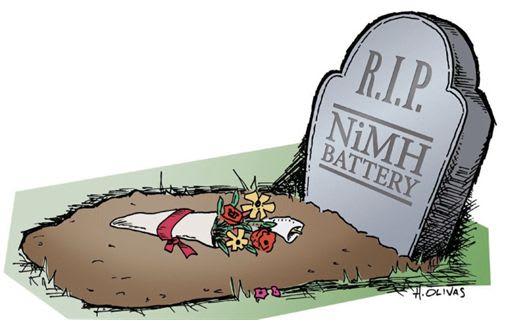
Recycling is the Answer
NiMH batteries are 100-percent recyclable and use no toxic materials (lead, cadmium, or lithium), making them the only rechargeable battery that can be legally disposed of in a landfill. But simply dumping them into a landfill is not economically nor environmentally sound.
So the answer is recycling. Hybrid vehicle manufacturers said they would accept the old battery and recycle it when it needed replacing.
Battery technology is advancing day by day. If you put a hybrid vehicle into service today, you probably will never have to worry about replacing the battery.
Originally posted on Automotive Fleet
More Batteries/Tech
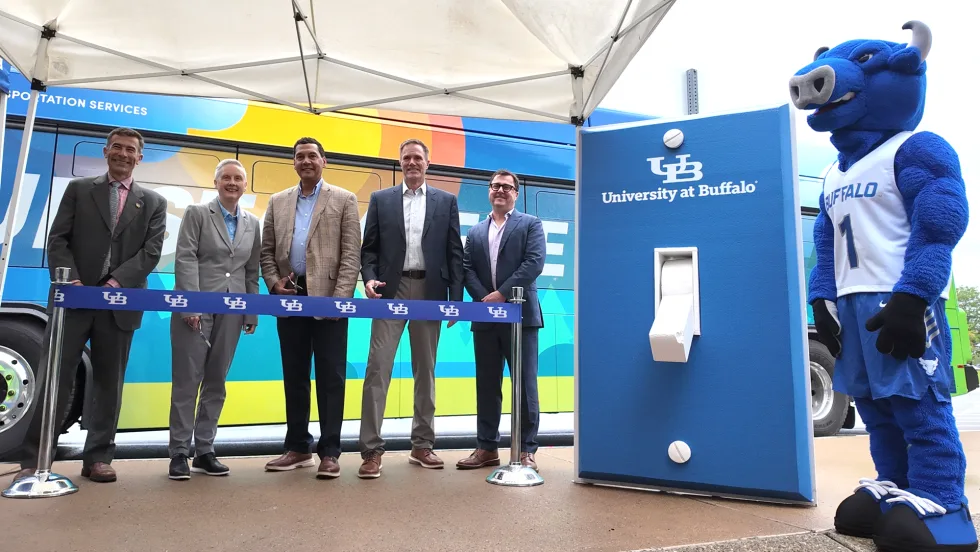
University at Buffalo Deploys 8 Electric Buses, 10 Chargers
The university, WeDriveU, and Zenobē welcomed the first electric buses to the school’s fleet under its zero-emissions roadmap.
Read More →
Samsung SDI Takes Full Control of GM Battery JV as Indiana Plant Pivots to Energy Storage
Samsung SDI is taking full control of its Indiana battery plant with GM, marking a major shift from the EV-focused joint venture Charged Fleet first covered in 2023.
Read More →
Xos White Paper Asserts LA Olympics Will Lack Enough EV Chargers
The commercial EV fleet company recommends some faster and more flexible remedies to relieve the anticipated shortfall.
Read More →
New EV and Hybrid Training Available For Auto Technicians
The curriculum covers those skill sets highly sought by electric fleet operations.
Read More →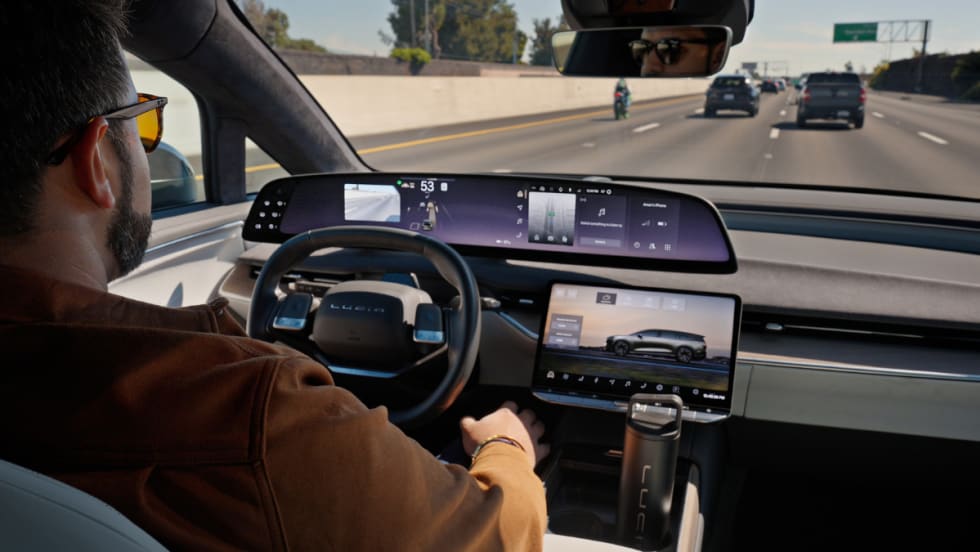
Lucid Adds Hands-Free Highway Driving, Software Updates To Gravity SUV
Hands-free drive assist makes highway driving more comfortable while keeping drivers attentive to the road.
Read More →
California Adopts Sweeping New Autonomous Vehicle Regulations
Updated DMV rules open the door for heavy-duty AV testing and deployment while strengthening safety standards, emergency response coordination, and manufacturer accountability.
Read More →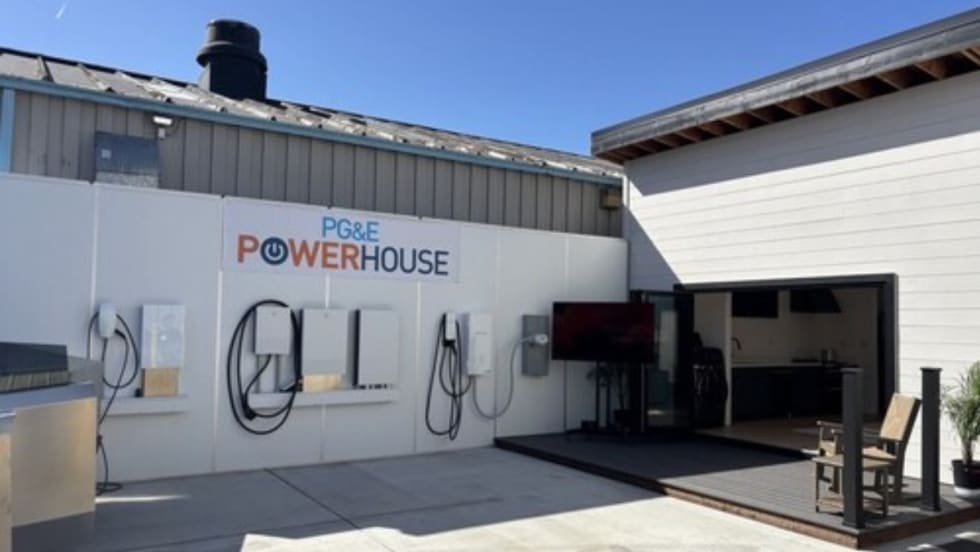
All Electric Test House Could Ease Path To EV Usage
An experimental model home shows how residential charging could enable electric fleet operations by allowing drivers to take EVs home.
Read More →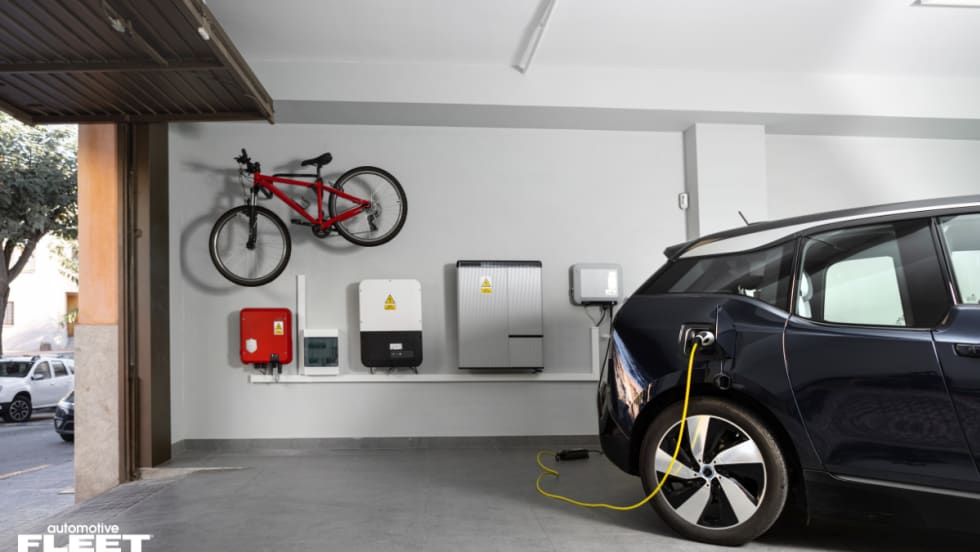
WEX Launches Solution to Close EV At-Home Charging Visibility Gap
At NAFA I&E 2026, WEX debuted an EV solution that adds a layer of verification to help fleets track, validate, and trust every at-home charging dollar.
Read More →
Major Truck Charging Hub Opens In Southern California
EV Realty opens a 76-port, 9 MW truck charging hub in San Bernardino, designed to support more than 200 medium- and heavy-duty vehicles per day with CCS and MCS capability.
Read More →
Software Speeds Up EV Fleet Charging
Learn about a new level of energy management that helps fleets control costs while maintaining service reliability. [VIDEO]
Read More →