


UPS 'Fills Up' on Fuel-Saving Practices
Environmental conservation — powered by telematics, route optimization, and alternative-fuel vehicles and technologies — saved UPS 85 million miles of driving time in 2011.

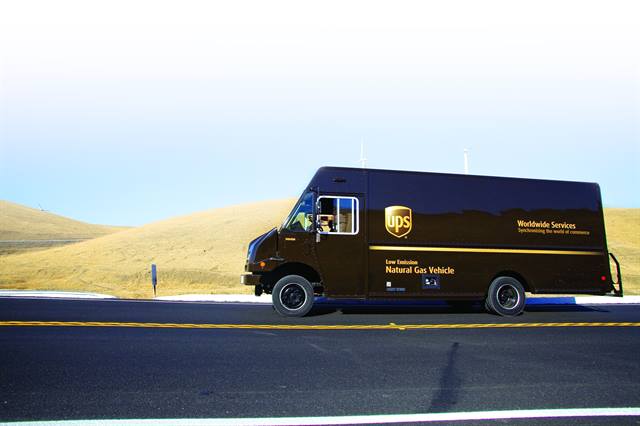
UPS has discovered going green doesn’t require taking the road less traveled — just traveling less on the road. In 2011 alone, cutting back on mileage and engaging in more fuel-efficient driving practices helped the package delivery company save more than 8 million gallons of fuel, keeping tens of thousands of tons of greenhouse gas (GHG) out of the earth’s atmosphere.
Mapping Out a Greener Course
Reducing miles traveled and fuel consumed during those trips are part and parcel of the transportation component of the UPS GHG-reduction strategy.
While sticking to right turns and avoiding making lefts has become one of its more well-known fuel-saving methods, it’s just one of several strategies that has proven effective for the company. Telematics and UPS routing technology have been major players in boosting fuel efficiency, according to Lynnette McIntire, editor of the UPS Corporate Sustainability Report and founding member of the Sustainability Working Committee.
In 2010, UPS managed to avoid driving 63.5 million miles, resulting in 68,000 metric tons of fewer emissions. Last year, it outdid itself by avoiding more than 85 million miles of travel, using 8.4 million fewer gallons of fuel, and reducing CO2 by 83,000 metric tons.
From 2001 to 2011, UPS has avoided driving 268 million miles by combining these and other efficiency strategies, including:
• Allocating pickups and deliveries to the most efficient number of vehicles each day at each facility, thus keeping vehicles off the road whenever possible.
• Loading vehicles more efficiently for the order of delivery, so that routes and miles driven can be kept to a minimum.
• Routing vehicles to reach all required destinations in the least amount of time and miles driven.
• Identifying unloading locations that enable multiple deliveries.
• Rerouting drivers based on events such as changing customer pickup needs or a requested change in delivery location to avoid wasted miles.
• Selecting route options that minimize idling time spent waiting for lights and turns, thus reducing fuel use and emissions even if miles driven remain the same.
• Selecting vehicles for routes where they will deliver the best fuel efficiency.
Packing on More Knowledge
As the saying goes, “knowledge is power”; in UPS’ case, that knowledge helps keep the company from wasting resources used to power up its operations.
“The more we know about our vehicles and routes, the more we can optimize them both. For example, we can match a route with a vehicle that gets better mileage at the speeds the route requires. We can also design routes to reduce the number of stops and starts needed to deliver packages on time,” said McIntire.
The company created a telematics system that combines behavioral and mechanical information that affect attributes such as fuel efficiency in the delivery process. “This enables us to use our delivery vehicles as ‘rolling laboratories’ in which we collect data, test ideas, and hone our performance,” said McIntire.
By the end of 2011, 74 percent of UPS vehicles in its largest operating segment —U.S. Domestic Package — and 24 percent of the U.S. pickup and delivery fleet of its supply chain & freight segment were installed with telematics systems.
In 2011, delivery drivers in telematics-equipped vehicles eliminated more than 98 million minutes of idling time, saved more than 653,000 gallons of fuel, and avoided 6,470 metric tons of CO2, according to McIntire.
Drivers in telematics-equipped vehicles also improved stops per mile compared to 2010. “In 2011, our improvement in stops per mile saved the equivalent of 5.3 million miles of driving, which translates to more than 528,000 gallons of fuel and 5,200 metric tons of CO2,” McIntire said.
Vehicles are equipped with informatics sensors that capture data on how each unit is performing mechanically. Key variables include speed, direction, braking, and the performance of specific parts and components in the engine and drive train.
Information streams from the sensors to the IT systems at the end of each day. “Our maintenance teams aim to use this information to perform customized, condition-based maintenance on each vehicle based on its actual needs rather than on a one-size-fits-all schedule. This saves time and money on parts, fluids, and maintenance breaks, and reduces the volume of our maintenance waste stream,” explained McIntire.
UPS analyzes information from the vehicle in combination with GPS data, customer delivery data, and driver behavior data.
“The resulting insights we gather enable us to make small adjustments with big payoffs because we can eventually put them to use with more than 100,000 drivers around the world,” McIntire said.
UPS drivers and managers receive detailed reports on how their behaviors stack up against the results the delivery company strives for, such as accelerating and braking smoothly to conserve fuel. “Having concrete data empowers them to optimize their behavior behind the wheel and make their ‘rolling laboratory’ ever more efficient,” said McIntire.
UPS plans to reach 100-percent deployment of telematics in both the U.S. Domestic Package and pickup and delivery fleets by 2013.
[PAGEBREAK]
Opting for the Alternatives
Shifting travel to vehicles employing low-emission alternative fuels and advanced technology is another way UPS saves fuel and lowers its carbon footprint. In 2011, the “green fleet” hit 246 million miles, with a goal of logging 400 million “green fleet” miles by 2017. These vehicles promise a 35-percent improvement in fuel economy over the gasoline-powered vehicles they replace, cut fuel consumption by hundreds of thousands of gallons annually, and CO2 by thousands of metric tons annually, according to UPS.
The UPS green fleet is composed of 2,593 vehicles, utilizing a variety of alternative technologies and fuels. Since the late 1980s, UPS has invested in alternative-vehicle technology and explored the viability of new fuel types as part of its “rolling laboratory” concept to fleet expansion. In 2011, it expanded its green fleet 35 percent.
In the U.S., UPS operates a total of 1,403 alternative-fuel units, comprised of five active alternative technologies:
Natural gas. UPS began extensively using compressed natural gas (CNG) in 1989, with 920 package delivery vehicles run on CNG in the U.S. It’s also been fueling vehicles on liquefied natural gas (LNG) since 2000 and is currently operating 93 LNG vehicles.
Hybrid electric vehicles (HEVs). UPS has been researching and testing hybrids since 1998, deploying the first model in 2000 in Alabama. A total of 380 HEVs operate in Atlanta; Dallas; Houston; Long Island, N.Y.; Minneapolis; Louisville, Ky.; Washington D.C.; Philadelphia; Chicago; and cities in California, New York, and New Jersey.
Propane autogas. Most of the propane autogas units operate internationally; however, seven run in the U.S.
Electric vehicles. First tested in the 1930s, today UPS operates a total of 31 electric vehicles, with two in the U.S. UPS expects to add 100 all-electric vehicles to its California fleet by 2013.
Hybrid hydraulic vehicles. So far, the company operates one hybrid hydraulic package car in the U.S.
“While our alternative-fuel fleet is an important strategic initiative, it is worth noting that conservation, optimized routes, transport modes, and even fuel-saving vehicle design methods can be as impactful or more so for fuel savings and emissions reduction,” said McIntire.
UPS is also actively involved with other organizations dedicated to environmental sustainability, including the U.S. Environmental Protection Agency (e.g., EPA SmartWay program) and the U.S. Department of Energy (U.S. Clean Fleets Partnership).
Originally posted on Automotive Fleet
More Vehicle Research
2027 Lexus NX Moves to Fully Electrified Lineup
For 2027, the NX moves to an entirely electrified lineup, with either hybrid or plug-in hybrid powertrains.
Read More →
2027 Mitsubishi Eclipse Sportback Named Green SUV of the Year
Green Car Journal recognized Mitsubishi’s new battery-electric crossover, which offers NACS compatibility and DC fast charging at up to 150 kW.
Read More →
Dave Carroll Named President of Ford Energy
Carroll succeeds Lisa Drake, who will remain with Ford through Dec. 31 to support the leadership transition.
Read More →
City of Long Beach Named No. 1 Green Fleet of 2026
NAFA's 2026 Green Fleet Awards recognized fleets for sustainability efforts spanning alternative fuels, technology, facilities, workplace culture and fleet operations.
Read More →
2027 Lexus ES Adds First Battery-Electric Models
The ES 350e and ES 500e join the hybrid ES lineup with up to 338 hp, an EPA-estimated 307 miles of range and standard NACS charging capability.
Read More →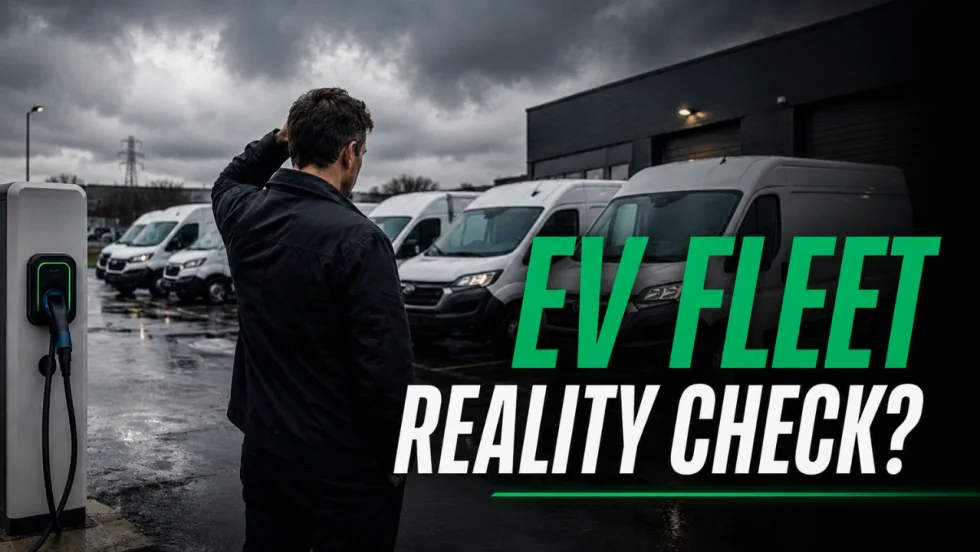
EV Fleet Reality Check: What Operators Wish They Knew Before Electrifying Their Work Vans
Electric work truck upfits bring new compatibility questions. Learn how parts availability, OEM guidance, power demands, and route planning can affect fleet performance.
Read More →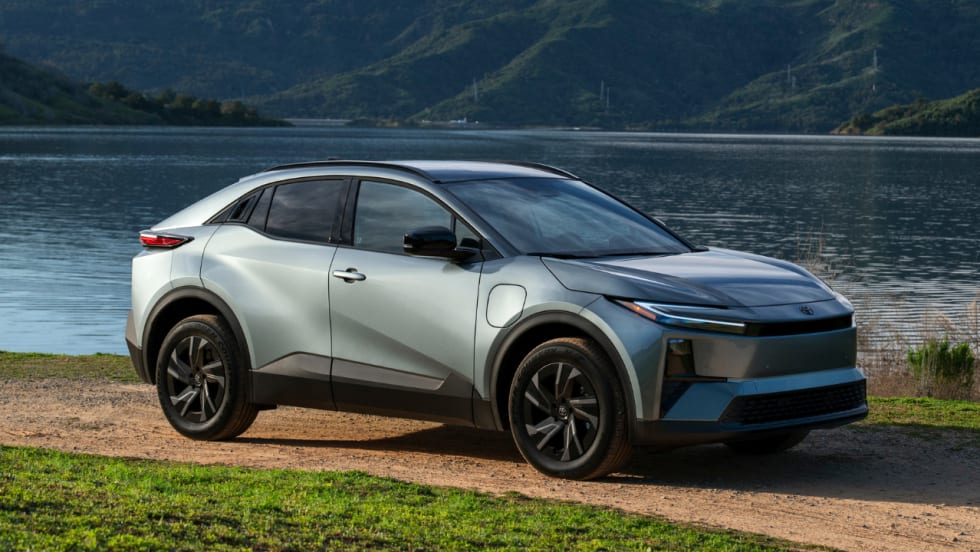
2027 Toyota C-HR Offers 287-Mile Range and Standard AWD
Toyota’s 2027 C-HR brings 287 miles of estimated range, standard all-wheel drive, and NACS fast-charging capability to the compact EV market. See what its mix of performance, cargo space, and everyday technology could offer business users.
Read More →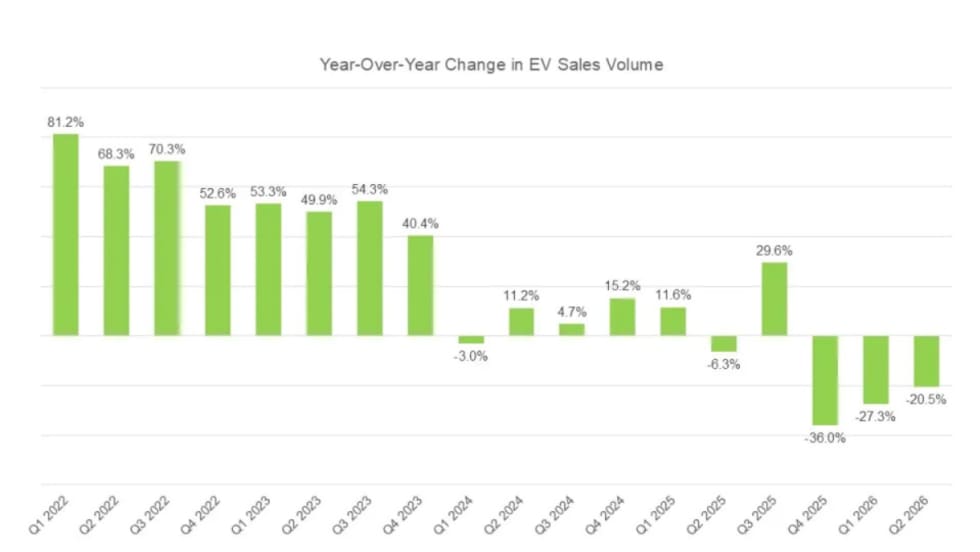
New Vehicle Models Stabilize Electrified Market In Q2
But more credit goes to hybrids than to all-electric vehicles, as more buyers look for fuel-efficient alternatives amid high gas prices.
Read More →
Slate Debuts Colorful, Unique EV Models
A recent media and client event, studded with electric vehicles dressed up on platforms, planted a new position for the manufacturer in the wider EV market. Fleets will find cost-saving advantages.
Read More →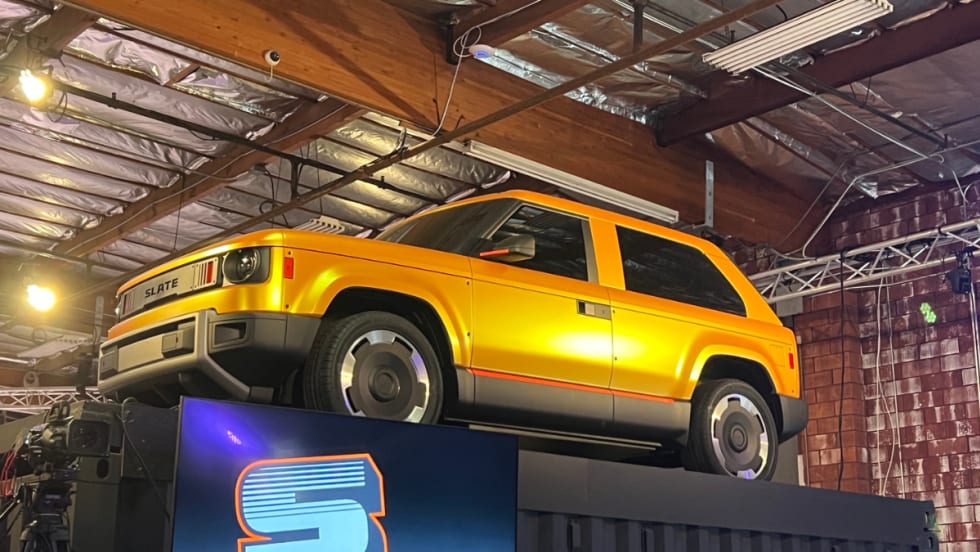
Slate Electric SUV, Pickup Switchable Model Aims For Light-Duty Fleets
Everything about this EV is counterintuitive and understated, making it stand out from the crowd.
Read More →