


The Risks and Challenges for Hauling and Storing EV Batteries
Electric vehicles are the new heavyweights in the transportation world, posing new risks for parking decks, logistics haulers, and storage operations.
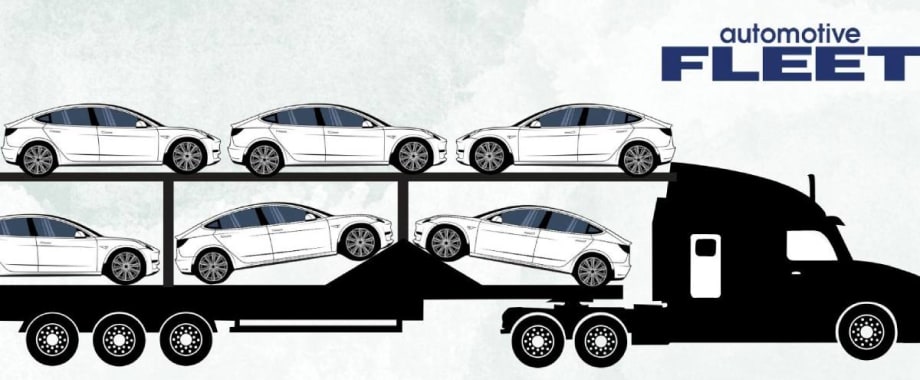
More weight per vehicle means trucks reach their weight limit capacity, with fewer vehicles. Since federal law mandates that carriers can’t haul more than 82,000 pounds of gross vehicle weight, hauling multiple EVs can reduce the load factor by up to 20%.
Graphic: Bobit / Canva
Mass electric vehicle (EV) adoption has finally hit its stride over the last few years and shows no signs of slowing down.
U.S. electric vehicle sales have increased from just 0.2% in 2011 to 4.6% in 2021, and adoption has accelerated considerably from 2022 into early 2023.
EVs are being more broadly incorporated into corporate and commercial fleets with increasing speed as the vehicles’ technology advances and the environmental and public perception benefits of a partially or fully “green fleet” become more pronounced.
But as the number of EVs in a fleet increases, the unique challenges they present due to large batteries are harder to ignore.
For example, the weight of these EVs weigh far more than their internal combustion engine (ICE) counterparts. Compare, for example, a Ford F-150, which weighs between 4,000 and 5,000 pounds, whereas its electric counterpart, the Ford Lightning, clocks in at about 6,500 pounds.
A report in the UK has questioned if parking garages built in past decades can withstand the increased weight as the ratio of gas-powered and electric vehicles shifts. Further, the recent collapse of a four-story garage in New York City has called into question the structural integrity of parking structures and whether they’re prepared for more electric vehicles whose batteries alone average 1,000 pounds but can weigh over 2,000 pounds for larger vehicles.
EV batteries cause many new logistical challenges, too, particularly with hauling and storing. Let’s talk about those challenges and how they can be overcome.
Hauling Electric Vehicles
More weight per vehicle means trucks reach their weight limit capacity, with fewer vehicles. Since federal law mandates that carriers can’t haul more than 82,000 pounds of gross vehicle weight, hauling multiple EVs can reduce the load factor by up to 20%. That’s one-fifth fewer EVs you can transport on one carrier. A bill proposed in the US House of Representatives this April has proposed an increase in that limit to 88,000 pounds, but even if that passes, EV haulers will still be able to carry fewer vehicles at a time than the same carriers hauling ICEs exclusively.
Even small capacity changes can complicate finely-tuned processes and cause delays, or simply cost more due to needing more carrier trips. Specialized logistics providers are tuned into the challenges caused by capacity limits and can use their networks of carriers and drivers to handle EV fleets without delay and identify opportunities for further efficiencies. Sometimes that means using differing carrier sizes — anything from a flatbed to a nine-car hauler — or consolidating and bundling freight.
Battery charge also needs to be worked into commercial fleet transport planning. On average, an EV loses 4% of its battery life for every day it spends in transport. Charging at or near 100% is not good for battery health, and neither is getting down to 0%. The ideal battery range is between 20% and 80% charge — managers should make sure they have visibility into which vehicles need charging before hauling, and which can wait to be charged in storage or at the vehicle’s destination.
With so many moving parts, and a dwindling battery providing a ticking clock, vehicle logistics services can enable the automation needed to track all these factors without eating up many employee hours and reducing potential delays in hauling.
On a positive note, the added weight of EV batteries provides a silver lining for the hauling process. Thanks to the heavy batteries sitting at the floor of EVs, as opposed to weight being concentrated at the front like in an ICE vehicle, electric vehicles have a lower center of gravity. That means greater stability and less susceptibility to sudden forces during shipment.
Storing Electric Vehicles
When storing EVs, there are more challenges than weight. While current garage structures and their weight capacity are a concern, most EV fleet storage happens on lots. The bigger challenge here is charging. Fleet management companies (FMCs) and any organization with EVs in its fleet need to acquaint themselves with the different types of charging, which vehicle types are best charged in what ways, and how to maintain batteries for their long-term health.
There are three levels of EV charging, aptly named Levels 1, 2, and 3.
Level 1 is the slowest, using a 120-volt household outlet — this level of charging can be used for any EV, simply by plugging into a regular wall outlet. This is best for PHEVs (plug-in hybrid electric vehicles), since the smaller batteries don’t need an exceptional level of charge.
Level 2 is the most used charge level, between 208 and 240 volts and charging at 10 times the speed of level 2; while most locations can handle this voltage, including private homes, equipment needs to be installed — it’s not just a plug-into-an-outlet situation. For larger EVs, the increased battery size means a longer (often overnight) charging session at level 2.
Level 3, also known as DC fast charging, is the fastest method available and uses direct current (DC) rather than alternating current (AC).
Why is this important? Because FMCs must ensure that storage locations are equipped with the ability to properly charge entire fleets of EVs in appropriate timeframes to keep batteries in that optimal range of 20-80% capacity.
While the EV itself can control how much power it accepts — so there’s no risk of plugging in a small hybrid into a Level 2 or 3 charger — fleet managers need to ensure they are investing in, or enabling access to, storage solutions properly equipped with the right chargers in the right quantities.
Especially for fleets of larger electric vehicles, storage with only Level 1 charging stations will not be ideal.
Building Fleets and Logistics
As commercial fleets electrify further, fleet managers should plan for new logistics that weren’t in the picture before. Managers need to consider moving, storing, keeping compliant, titling, and registering electric vehicles, and working with a vehicle logistics specialist that can account for the challenges listed above, which would take much complexity off their hands. Those providers can plan out routes and storage to the most minute detail, accounting for the differences between EVs and gas-powered ones and the specific considerations of keeping vehicles properly charged. This will help fleet managers keep costs on the lighter side — even with heavy EVs in their fleet.
Justin Finke is the senior director of process improvement at ACERTUS.
Originally posted on Automotive Fleet
More Electric Vehicles
EV Charging Use Is Outpacing Infrastructure Growth
ChargePoint’s 2026 Charging Forward Report points to rising charger use, higher-powered charging, commercial vehicle electrification, and energy-management technology. Here’s what fleets should know.
Read More →
EV Realty Names Henrik Holland President as Charging Platform Expands
The former Prologis Mobility and Shell executive will help expand EV Realty’s truck charging business and move its power-first infrastructure model into autonomous vehicle depots and other fleet sectors.
Read More →
GreenPower Expands New Mexico EV Pilot With Larger Buses, V2G Testing
After logging more than 17,000 electric miles in the first year, New Mexico’s statewide pilot is moving into its second phase with larger vehicles, continued charging evaluations, and more.
Read More →
Can EV-as-a-Service Help Fleets Scale Electrification?
Sustainability Partners CEO Adam Cain explains how matching EVs, charging infrastructure, and duty cycles can help fleets scale electrification.
Read More →
How EV-as-a-Service Is Moving Fleets Beyond Pilots
Adam Cain, president and CEO of Sustainability Partners, explains how EV-as-a-service can help fleets scale deployments by addressing duty-cycle requirements and charging challenges.
Read More →
PowerFlex, The Mobility House Join Forces to Advance Fleet Electrification
Two EV charging providers are joining forces to deliver a broader portfolio of energy management and fleet electrification solutions.
Read More →
Ford Retools Louisville Plant for Fathom Electric Truck Production
Ford's $2 billion Louisville Assembly Plant overhaul introduces a three-part assembly process for the Fathom midsize electric truck, with production scheduled to begin in 2027.
Read More →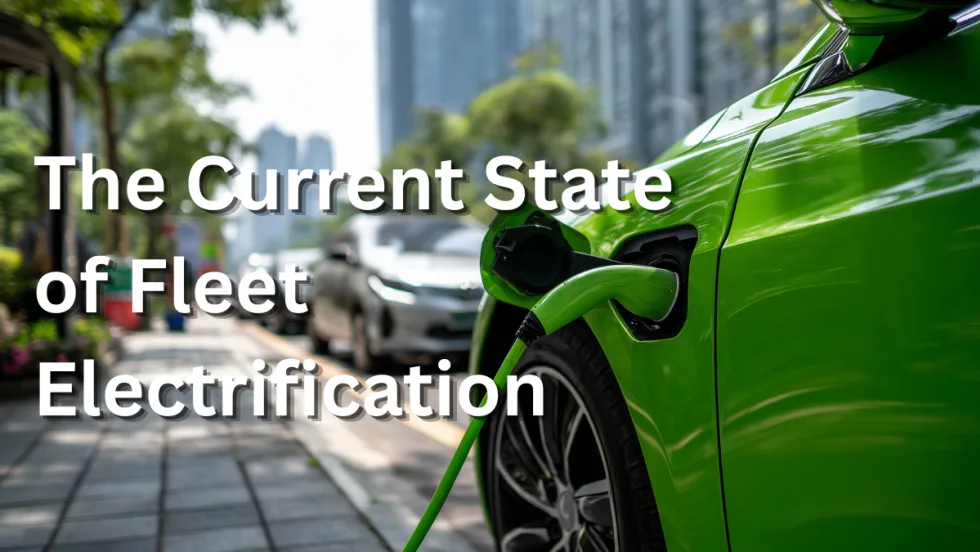
Merchants Fleet Reports 290M EV Miles as Fleets Navigate Changing Electrification Market
From millions in operating savings to hundreds of millions of EV miles, Merchants Fleet’s latest report reveals what’s working and what’s changing in fleet electrification.
Read More →
California District Commits to Electrify 25% of School Bus Fleet by 2028
One of the nation's largest school bus electrification projects to date demonstrates how grants, charging infrastructure, and public-private partnerships can help fleets transition to EVs at scale.
Read More →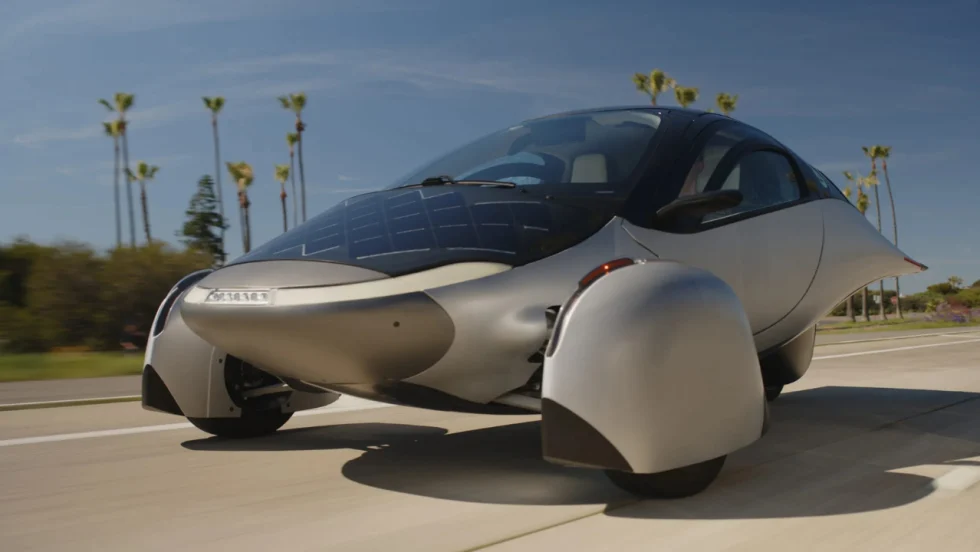
Aptera Orders Bodies and Chassis for Its First 40 Production Vehicles
Aptera Motors Corp. has issued purchase orders for the major structural components of its first 40 vehicles, and body and chassis components are expected to begin arriving in October.
Read More →