


The Business Case for Hybrid-Electric Medium-Duty Trucks
While the up-front investment may be high, hybrid-electric power makes financial sense for some medium-duty fleets. Find out if your fleet is one of them.
The fuel savings and environmental benefits of hybrid-electric medium-duty trucks are clear. According to the Electric Drive Transportation Association (EDTA), medium-duty hybrids increase fuel efficiency by as much as 20 to 50 percent over conventional gasoline- or diesel-powered trucks, depending on the vehicle’s size and duty cycle. And, the reduced amount of fossil fuel burned translates into fewer harmful emissions and a “greener” fleet.
Most hybrid-electric vehicles (HEVs) in the medium-duty truck segment are equipped with parallel hybrid drive systems, which employ both an internal combustion engine (gasoline or diesel) and an electric motor, which can operate together or one-at-a-time, depending on the vehicle’s drive cycle.
This system allows fleet managers to spec a smaller, more fuel-efficient engine, without sacrificing overall power and performance, because the electric motor provides supplemental power assist alongside the combustion engine during vehicle acceleration.
Hybrids also offer electric power takeoff (PTO) capabilities to operate specialty equipment, such as service cranes, dump bodies, and utility bucket hoists, without having to run the engine while the vehicle is stationary, reducing wasted fuel from engine idling.
“Besides fuel savings, the main advantages of a hybrid-electric drive include quieter operation, especially applications that use the [electric] PTO feature,” said Greg Treinen, segment manager, alternative fuels product marketing, Freightliner Trucks, which builds medium- and heavy-duty hybrids equipped with Eaton Corporation’s parallel electric-hybrid system.
“The regenerative braking process (which leverages the motor to slow the truck when taking your foot off the accelerator, while also restoring charge to the onboard battery) provides the advantage of reduced wear-and-tear on the brakes, which ultimately means reduced maintenance costs,” Treinen continued.
But, with a steep up-front additional investment (around $35,000 per truck or more, according to Treinen), does hybrid-electric power make financial sense for medium-duty fleets? Do the benefits outweigh the costs?
[PAGEBREAK]
Optimal Applications for Hybrids
The key to crafting a compelling business case for hybrid-electric medium-duty trucks is to first ensure the vehicle’s duty cycle will make the technology pay off — and generate an attractive return on investment. Otherwise, it’s hard to justify the expense.
“Fleet operators find high value in hybrid-electric medium-duty trucks for routes that require numerous stops and urban travel,” said Christine Rogala, director of public relations, EDTA. “An example would be delivery vehicles (e.g., parcel, hospitality, and food services) with multiple drop-offs, often in urban traffic. Other applications that capitalize on those benefits include government fleets (e.g., school district, sanitation, road crews, recreation, and maintenance) and utility company fleets that service multiple locations on a given day. Fleet operators that service areas with greater ecological demands, such as large park systems, will benefit from the hybrid truck’s smaller [carbon] footprint, with reduced emissions and noise pollution.”
Gerard Devito, engineering director of Eaton Corp.’s hybrid power systems division, points to average speed as a key indicator.
“The value proposition for an HEV is typically enhanced if the average operating speed of the vehicle is less than 50 mph, 50 percent of the time, and the average annual mileage exceeds 20,000 miles or 15 to 20 deliveries per day,” Devito said. “Another example is utility trucks, where that value proposition is centered on fuel savings (fuel per hour) through the use of the onboard electric power system, rather than the engine-on function for power takeoff (PTO) needs.”
Dave Hurst, senior research analyst for Pike Research, a part of Navigant, agreed.
“In an 11-mile route, a package delivery box truck drive cycle has an average speed of 21 mph, with a top speed of 57 mph and 42 deceleration events where the regenerative braking system can charge the batteries,” Hurst said. “This type of cycle is a very good fit for hybrids. Other good applications include work trucks, such as aerial lift or digger trucks that go somewhere and park and idle. The hybrid system can reduce the idle time, thereby saving fuel and emissions.”
Eaton’s Devito estimates that under lower speed, high-mileage, and/or high-hour conditions, the payback period (to recoup up-front cost for the hybrid system) ranges from three to five years, factoring in currently available government incentives for hybrids.
There are other applications that don’t make financial sense for medium-duty HEVs.
“Anything with longer driving distances between stops is going to be more challenging,” Hurst said. “Vehicles that provide point-to-point deliveries, such as from a manufacturing facility to a warehouse — these vehicles operate at higher speeds for longer distances, which does not give the hybrid system the opportunity to operate for very long, reducing the fuel savings.”
[PAGEBREAK]
Impact on Maintenance
With new technology, there can arise unexpected maintenance issues and expenses. What’s the impact on maintenance with HEVs compared to conventional-powered trucks?
“Eaton’s hybrid system, for example, requires an air filter to be changed every four months,” said Eaton’s Devito. “But, due to the nature of the base [automated] transmission model integrated with the hybrid drive system, there are no oil filter changes required as there are with a torque-converted model transmission. Most hybrid systems also require a cooler, but, in general, the additional maintenance is very minimal.”
According to Treinen of Freightliner, “Maintenance with the hybrid drive system is simple. It requires only a normal coolant check and battery compartment filter replacement every 15,000 miles or so. You will likely see less wear-and-tear on the brakes due to regenerative braking, further reducing costs.”
The Future of Medium-Duty HEVs
What does the future hold for hybrid-electric medium-duty trucks five to 10 years out? This is an important consideration when evaluating the business case for HEVs, because the market’s viability directly impacts future vehicle availability and remarketing strategies.
“We see substantial growth in the market for hybrid-electric drive for trucks,” said Rogala of the EDTA. “As awareness of the benefits grow, fleet operators will take advantage of the fuel savings, reduced emissions, and lowered daily and lifecycle costs. Regulatory standards and local mandates on tailpipe emissions and fuel economy will also require drivers and fleet operators to continue looking for ways to comply, and hybrids offer flexibility in that compliance.”
Some of the greatest technology gains are in the area of battery technology.
“The improvements are coming quickly with the kilowatt/hour density improving dramatically. These improvements in battery technology have not resulted in cost increases, making the payback on hybrid systems more attractive,” according to Devito of Eaton. “Recently, Eaton received a grant from the U.S. Department of Energy to conduct advanced research on hybrid system batteries with the goal of reducing the size of the battery by 50 percent and improving the total performance of the system and its charge rate, while maintaining fuel economy and overall vehicle performance. As further enhancements are made on HEV systems, the three- to five-year payback should be achieved without the use of [government] incentives.”
Hurst with Pike Research envisions a declining payback period for HEVs, driven by new technologies and economies of scale, but predicted challenges still lie ahead.
“Hybrid systems are still expensive, with nine- to 10-year payback periods for some hybrid systems. This payback is falling, however. As the price of batteries decrease (most use lithium-ion batteries), and the price of diesel climbs, the incremental cost can be recovered more quickly,” Hurst said. “We have seen a very difficult period for small hybrid-electric drive players with Azure Dynamic’s bankruptcy and rumored trouble for others. This means the market will likely see increasing concentration in big [hybrid system OEM] players, such as Eaton, BAE, and Allison Transmission.”
Pike Research has forecast that the market for hybrid-electric medium-duty trucks would be about 2,500 vehicles this year, growing to 12,740 vehicles in 2017, assuming at least a 5-percent increase in diesel costs per year.
Treinen at Freightliner pointed to the cost of hybrid components (such as batteries) as a key indicator as to whether HEVs will achieve widespread fleet adoption.
“The hybrid market peaked in 2010 with the introduction of the California HVIP voucher program and has stagnated since then, mainly because the costs haven’t come down on the hybrid systems enough to see a quicker payback,” Treinen said. “Technologies that increase the electrification of components and reduce the amount of time the engine is in operation will help in terms of further reducing fuel consumption. Higher battery capacities, further improving the amount of time the vehicle can run using electric power, will also help.”
The Bottom Line
As with most green technologies, the business case for medium-duty HEVs ultimately rests on the truck’s application. “Work closely with the truck [and hybrid system] OEM to make sure the system is right for your application because the band of applications for medium-duty hybrid use is narrow — high stop-and-go segments, such as armored trucks, and high-idling, high-PTO usage segments, such as utility applications,” Treinen advised.
[PAGEBREAK]
Hybrid Advantages
What are the most compelling advantages of hybrid-electric drive, specifically for
medium-duty truck applications?
● Ability to downsize the engine while keeping similar performance.
● Fuel economy and the corresponding cost-savings.
● Ability to provide a portable power source at worksites so that tools can be
operated with the primary engine off.
● Quiet operation on worksites, which is very desirable in neighborhoods where work is being performed.
● Reduction in CO2 emissions and environmental sustainability image.
Resources for More Information
Additional resources available to help fleets present the “business case” for
hybrid-electric medium-duty trucks include:
● U.S. Department of Energy: Alternative Fuels Data Center: Hybrid Electric
Vehicles: www.afdc.energy.gov/vehicles/electric_basics_hev.html
● BAE HybriDrive Systems: www.hybridrive.com
● Eaton Corporation: Hybrid Power: www.eaton.com/Eaton/ProductsServices/Truck/HybridPower/index.htm
Originally posted on Automotive Fleet
More Batteries/Tech
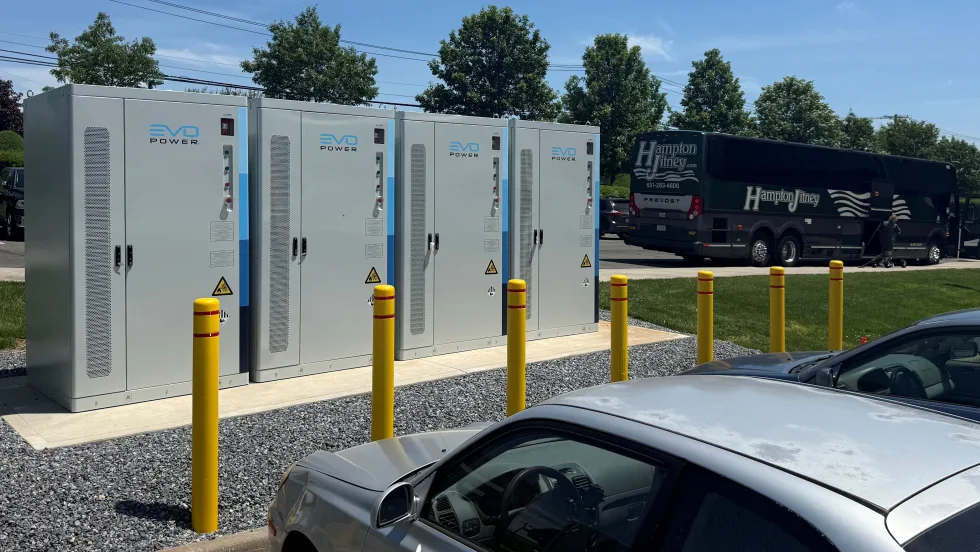
Hampton Jitney Deploys Microgrid to Support Fleet Electrification
The Long Island transportation provider is using solar generation and battery storage to manage charging costs, with plans to add 1 MW of DC fast-charging capacity as electric coaches enter service in 2027.
Read More →
Qnovo Pilots Battery Health Software for EV Residual Value Assessments
The Battery Genome application uses in-vehicle operating and cell-level data to identify battery aging and potential defects as automakers prepare for new battery passport requirements.
Read More →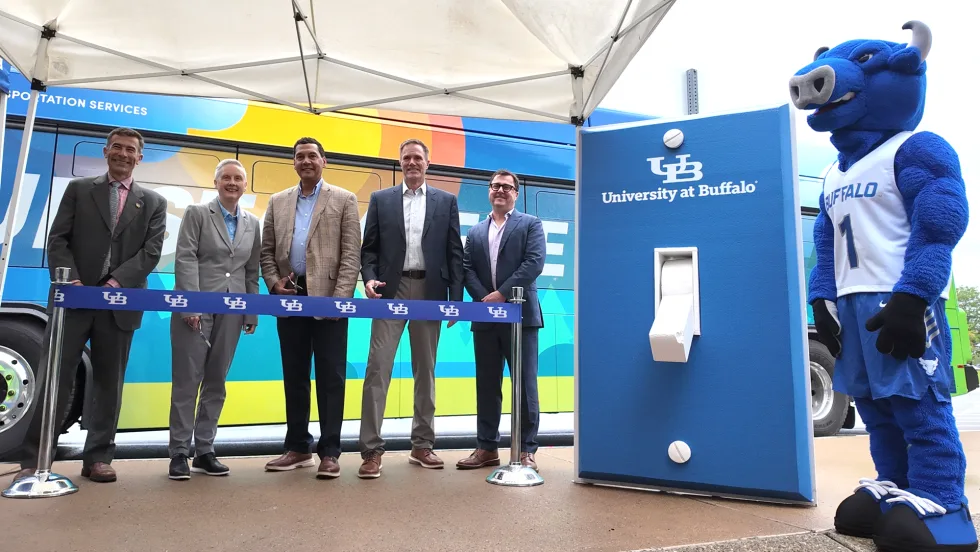
University at Buffalo Deploys 8 Electric Buses, 10 Chargers
The university, WeDriveU, and Zenobē welcomed the first electric buses to the school’s fleet under its zero-emissions roadmap.
Read More →
Samsung SDI Takes Full Control of GM Battery JV as Indiana Plant Pivots to Energy Storage
Samsung SDI is taking full control of its Indiana battery plant with GM, marking a major shift from the EV-focused joint venture Charged Fleet first covered in 2023.
Read More →
Xos White Paper Asserts LA Olympics Will Lack Enough EV Chargers
The commercial EV fleet company recommends some faster and more flexible remedies to relieve the anticipated shortfall.
Read More →
New EV and Hybrid Training Available For Auto Technicians
The curriculum covers those skill sets highly sought by electric fleet operations.
Read More →
Lucid Adds Hands-Free Highway Driving, Software Updates To Gravity SUV
Hands-free drive assist makes highway driving more comfortable while keeping drivers attentive to the road.
Read More →
California Adopts Sweeping New Autonomous Vehicle Regulations
Updated DMV rules open the door for heavy-duty AV testing and deployment while strengthening safety standards, emergency response coordination, and manufacturer accountability.
Read More →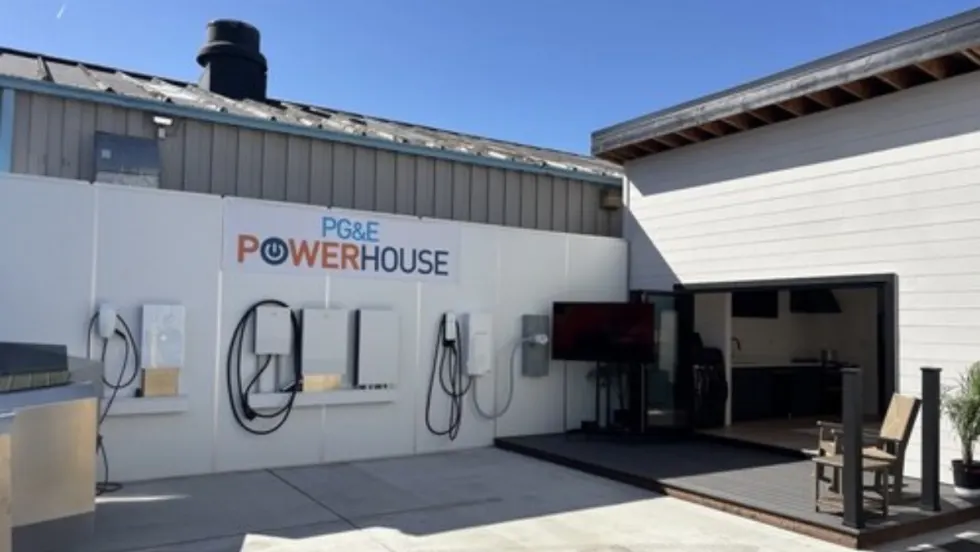
All Electric Test House Could Ease Path To EV Usage
An experimental model home shows how residential charging could enable electric fleet operations by allowing drivers to take EVs home.
Read More →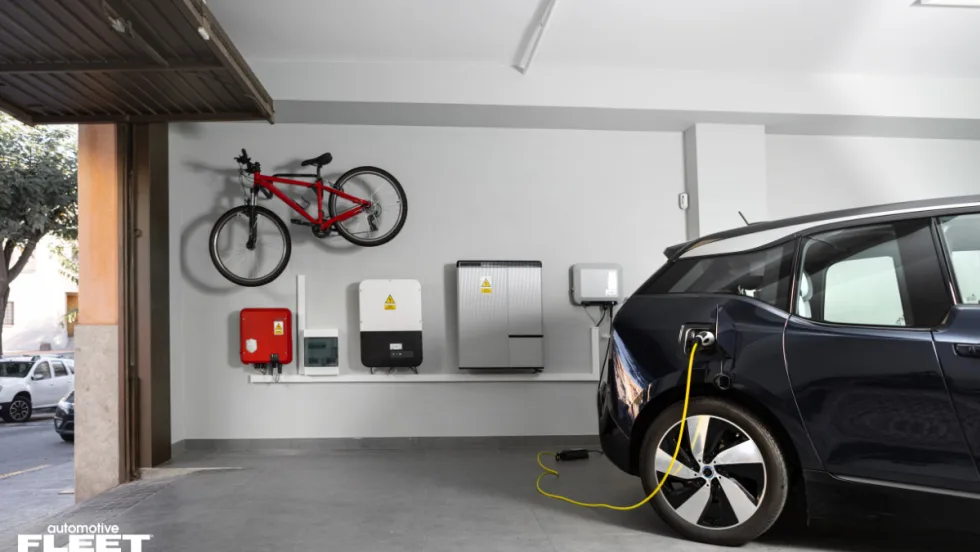
WEX Launches Solution to Close EV At-Home Charging Visibility Gap
At NAFA I&E 2026, WEX debuted an EV solution that adds a layer of verification to help fleets track, validate, and trust every at-home charging dollar.
Read More →