


Materials of Trade - Are You Sure You Know the Limits?
Hazmat fines can cost your company tens of thousands of dollars. Familiarity with key areas of the MOT can save time, money, and confusion.
January 1, 2008

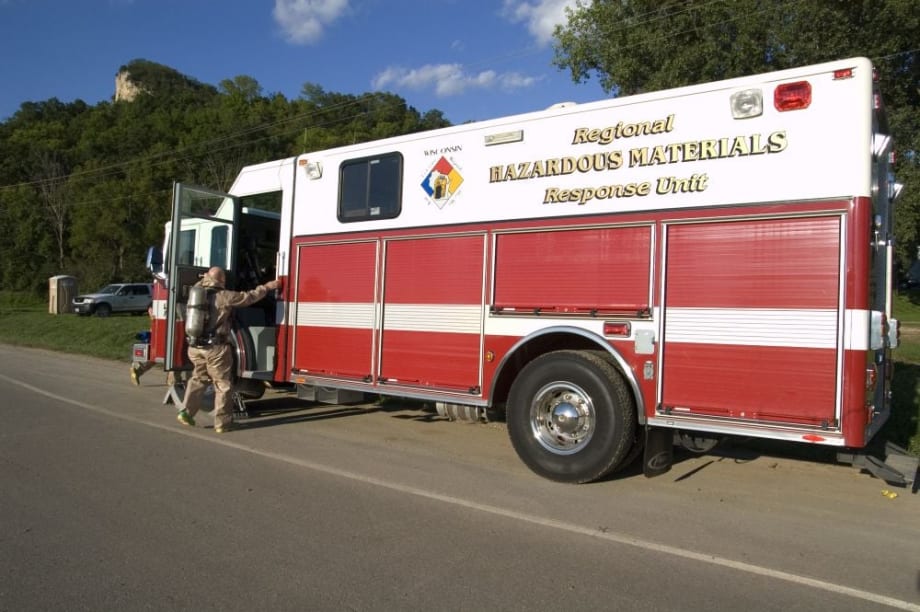
Hazardous materials (hazmat) fines can run in the tens of thousands of dollars. Drivers, as well as the company, may be subject to fines.
Photo: FEMA
5 min to read
"We do not transport hazardous materials, and none of our trucks are close to 1,000 pounds of anything hazardous!" As a commercial or work truck fleet manager, does this statement sound familiar?
Unfortunately, many companies confuse the Materials of Trade (MOT) limit with quantities greater than regulations allow. This lack of understanding can be very costly. Hazardous materials (hazmat) fines can run in the tens of thousands of dollars. Drivers, as well as the company, may be subject to fines.
MOT exceptions can be found in the Hazardous Material Regulations (HMR), 49 CFR 173.6. Mandatory compliance with this section was required by October 1, 1998.
Who Does Materials of Trade (MOT) Affect?
Many organizations transport limited quantities of hazardous materials in support of their business. Examples include utility, construction, welding, lawn care, plumbing, building maintenance, and other service-related organizations.
These companies may use products such as spray paints, lubricants, welding gases, or gasoline, classified as hazmat. For example, gasoline used by a lawn care company is a flammable liquid classified as hazardous, according to the HMR.
MOT exceptions allow non-transportation companies to transport limited quantities of hazardous material. These materials must meet specific guidelines to be classified as a MOT.
Materials transported using this exception are exempted from shipping papers, placarding, emergency response information, and specific training requirements.
That being said, the exceptions do not apply to the following hazard types:
Self-reactive (HMR 49 CFR 172.124).
Poisonous by inhalation (HMR 49 CFR 173.133).
Hazardous waste (HMR 49 CFR 171.8).
What Qualifies as a 'MOT'?
MOTs are hazardous materials transported on a motor vehicle for the following purposes:
To protect the health and safety of the driver and passenger.
To support the operation or maintenance of the vehicle (including auxiliary equipment).
To support the primary business of a private motor carrier or vehicles operated by a rail carrier not transported by a motor vehicle.
A hazardous material must meet specific quantity limits and hazard classifications to be considered an MOT. The material must belong to one of the hazard classes in the table below:
Class/Division | Hazard Description |
|---|---|
Division 2.1 | Flammable Gas |
Division 2.2 | Nonflammable Gas |
Class 3 | Flammable Liquid |
Division 4.1 | Flammable Solid |
Division 4.3 PG II or PG III | Dangerous When Wet |
Division 5.1 | Oxidizer |
Division 5.2 | Organic Peroxide |
Division 6.1 | Poison |
Class 8 | Corrosive |
Class 9 | Miscellaneous |
ORM-D | Other Regulated Material |
Quantity limits. Hazard classes 3, 8, 9: division 4.1, 5.1, 6.1, and ORM-D quantities include gross mass or capacity and include the weight of the packaging.
PG I: Not to exceed one lb. (0.5 kg) or one pint (0.5 L).
PG II, III, or ORM-D: Not to exceed 66 lbs. (30 kg) or eight gallons (30 L).
Diluted mixtures of a Class 9 (misc.): Not over 2% concentration — may not exceed 400 gallons (1500 L).
Division 2.1 (flammable gas) or 2.2 (nonflammable gas) in a cylinder: The gross weight of the gas and cylinder must not exceed 220 lbs. (100 kg).
Permanently installed tanks for division 2.2 non-liquefied material with no subsidiary hazard must meet ASME standards, and the capacity must not exceed 70 gallons.
The package must have a gross capacity of less than or equal to one ounce for division 4.3 material in PG II or PG III.
If you need assistance identifying the hazard class, division, or packing group, contact your supervisor or the individual responsible for your company's safety program.
Total weight. The total allowable weight of a MOT is 440 lbs. per vehicle. As a side note, it is important to remember that a vehicle towing a trailer is considered a single vehicle. So again, the 440-lb. rule applies to combination units. The amount is important because the driver must know the total weight of all hazardous materials transported in their fleet truck.
Example: A welding company transports a cylinder of oxygen and a cylinder of acetylene to a job site.
Acetylene is a Hazard class 2.1 flammable gas, and oxygen is a Hazard 2.2 nonflammable gas. Each cylinder must be 220 lbs. or less, and the total combined weight for all MOTs must be 440 lbs. or less.
Package requirements. MOT packages must meet the following requirements.
Liquids and gases must be in packages that are:
Leak-proof.
Securely closed.
Secured to prevent movement.
Protected against damage.
Solids must be in packages that are:
Sift-proof.
Securely closed.
Secured from movement.
Protected against damage.
Cylinders or other pressure vessels. Cylinders used in transport must conform to packaging, maintenance, and use requirements specified in the HMR regulations. Manifolding of cylinders is currently authorized, but this rule is under review. A best practice is to remove the regulators and install safety covers secured against movement.
Gasoline. Must be in a metal or plastic container and meet HMR requirements or the OSHA requirements found in 29 CFR 1910.106(d)(2) or 1926(a)(1).
Original packaging. Materials must be in the original packaging or have equal strength and quality. An outer package is not required for cans and bottles secured in cages, carts, or boxes. Keep in mind that they must be secured against movement.
What are the Marking Requirements?
Nonbulk packages, those with a capacity of 119 gallons or less, must be marked with the common name or proper shipping name. Cylinders must be marked and labeled as per HMR mandates. The table can be found in HMR 49 CFR 172.101.
Any diluted mixture of Class 9 (miscellaneous) carried in a bulk tank (greater than 119 gallons) must be marked on two opposing sides with the four-digit ID number. ID numbers are also found in the hazmat table and must be displayed on an orange panel or a white square-on-point configuration of the same size as the placard.
What Drivers Must Know
All commercial and work truck drivers must know that they are transporting hazardous materials. The MOT exceptions require the operator to be aware of the presence of the materials as well as the requirements in HMR 173.6. Many companies choose to cover these requirements as part of orientation. Some organizations cover this issue on a daily checklist.
The MOT exception relieves the company of shipping paper requirements and provides relief from other HMR requirements as long as the hazardous materials transported meet the MOT criteria. If the limits are exceeded, the corporation is subjected to all of the HMR rules.
Someone within your organization must be identified as the individual responsible for ensuring compliance with hazardous materials regulations. The company should formalize its program concerning the MOTs. If the need arises, this effort will help to demonstrate the company's compliance with the regulations.
Originally posted on Work Truck Online
Subscribe to Our Newsletter
More Electric Vehicles

EV Charging Use Is Outpacing Infrastructure Growth
ChargePoint’s 2026 Charging Forward Report points to rising charger use, higher-powered charging, commercial vehicle electrification, and energy-management technology. Here’s what fleets should know.
Read More →
EV Realty Names Henrik Holland President as Charging Platform Expands
The former Prologis Mobility and Shell executive will help expand EV Realty’s truck charging business and move its power-first infrastructure model into autonomous vehicle depots and other fleet sectors.
Read More →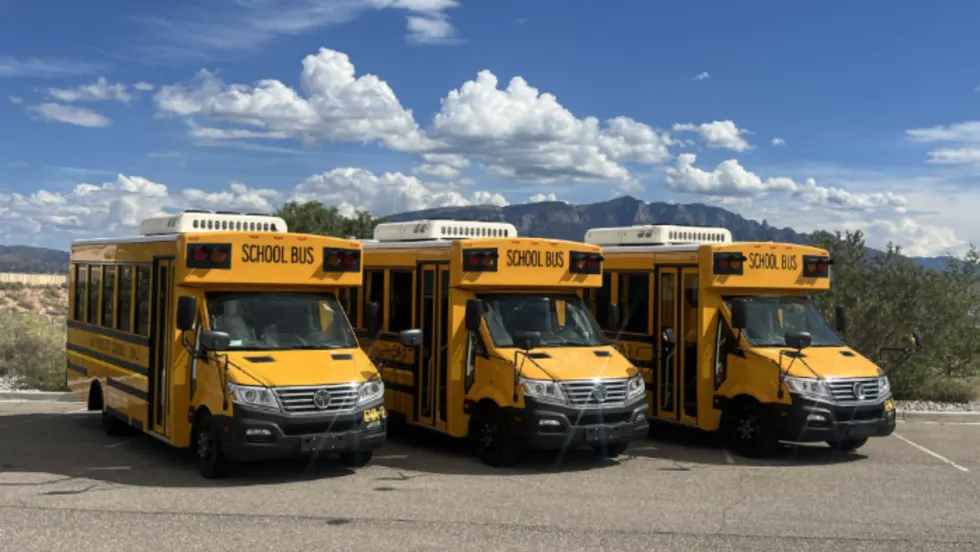
GreenPower Expands New Mexico EV Pilot With Larger Buses, V2G Testing
After logging more than 17,000 electric miles in the first year, New Mexico’s statewide pilot is moving into its second phase with larger vehicles, continued charging evaluations, and more.
Read More →
Can EV-as-a-Service Help Fleets Scale Electrification?
Sustainability Partners CEO Adam Cain explains how matching EVs, charging infrastructure, and duty cycles can help fleets scale electrification.
Read More →
How EV-as-a-Service Is Moving Fleets Beyond Pilots
Adam Cain, president and CEO of Sustainability Partners, explains how EV-as-a-service can help fleets scale deployments by addressing duty-cycle requirements and charging challenges.
Read More →
PowerFlex, The Mobility House Join Forces to Advance Fleet Electrification
Two EV charging providers are joining forces to deliver a broader portfolio of energy management and fleet electrification solutions.
Read More →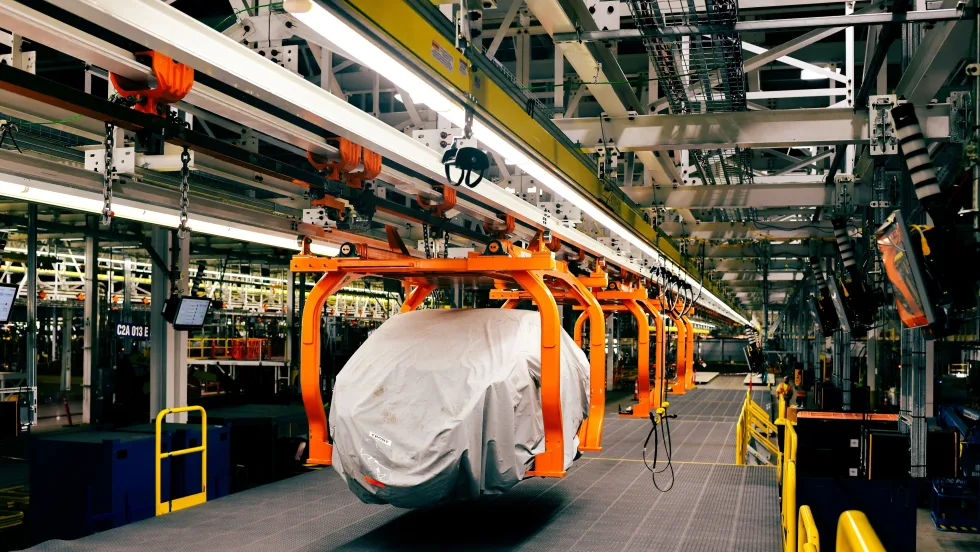
Ford Retools Louisville Plant for Fathom Electric Truck Production
Ford's $2 billion Louisville Assembly Plant overhaul introduces a three-part assembly process for the Fathom midsize electric truck, with production scheduled to begin in 2027.
Read More →
Merchants Fleet Reports 290M EV Miles as Fleets Navigate Changing Electrification Market
From millions in operating savings to hundreds of millions of EV miles, Merchants Fleet’s latest report reveals what’s working and what’s changing in fleet electrification.
Read More →
California District Commits to Electrify 25% of School Bus Fleet by 2028
One of the nation's largest school bus electrification projects to date demonstrates how grants, charging infrastructure, and public-private partnerships can help fleets transition to EVs at scale.
Read More →
Aptera Orders Bodies and Chassis for Its First 40 Production Vehicles
Aptera Motors Corp. has issued purchase orders for the major structural components of its first 40 vehicles, and body and chassis components are expected to begin arriving in October.
Read More →