



Related: What I Want from an Electric Pickup
How a Fleet Operator Builds an Electric Truck
XOS cofounders Dakota Semler and Gio Sordoni share their fleet origin story, the company’s purpose-built battery tech, and the right applications for truck electrification today.
December 24, 2019

XOS first produced the prototype fully electric semi called the ET-One (right) but is now focused on last-mile delivery applications. The white Class 6 delivery truck is in a pilot for Loomis, a cash-in-transit provider.
Photo by Chris Brown.
6 min to read
Dakota Semler comes at vehicle electrification from a uniquely fleet point of view — he started in the family business in Southern California that ran a fleet of medium- and heavy-duty trucks.
“I dealt with fuel management, looking at fuel budgets and how we could save money, keep trucks on the road, and maintain them and service them,” he says.
With successive diesel emissions standards looming in the 2000s, the company started investigating alternative technologies. “We eventually shut down because we couldn't meet the new compliance standards,” Semler says, referring to the 2010 diesel emissions standards.
At the time, compressed natural gas (CNG) was the hot alternative fuel, but Semler’s company decided against it.

XOS cofounders Dakota Semler (left) and Gio Sordoni started the company after investigating alternative powertrains for their fleet operations.
Photo by Chris Brown.
“CNG and other alternative technologies were always going to be subject to CARB (California Air Resources Board) and EPA standards,” he says. “We realized it would get increasingly harder to be compliant with these complex emissions and fuel systems, so we went full bore ahead with battery electric vehicles.”
Making the leap from fleet operator to electric truck maker is no small feat, but Semler and cofounder Gio Sordoni were able to produce a prototype fully electric semi in 2017 called the ET-One from their startup, Thor Trucks, now named XOS.
The pair soon realized that the battery technology and charging infrastructure requirements for long hauls would take longer to develop. In the meantime, they saw immediate opportunity for last-mile applications such as food and beverage, parcel, and e-commerce package deliveries.
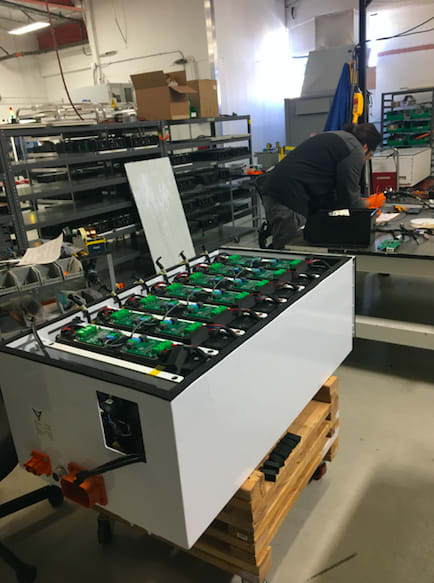
A foosball table? No, a battery pack: Xos batteries are purpose-built for commercial applications and are designed to be swapped individually.
Photo by Chris Brown.
Those fleets run a high number of stops, set routes of up to 100 miles a day, and return to a central depot. They also don’t require as much power to charge those vehicles as heavy duty.
“The challenge with heavy duty is getting fleets set up with the trucking infrastructure that they'll need to charge hundreds of kilowatts of energy at a given time,” says Sordoni, COO.
The company’s Class 6 is available for purchase today, though in low volume production, with production ramping up in 2020. The heavy-duty model is “a little further off but coming soon,” Sordoni says.
Semler and Sordoni assessed hydrogen fuel cells but aren’t pursuing the technology.
Hydrogen might be appropriate for longer range needs in the future, but the infrastructure isn't in place yet, Sordoni says, also referencing the complexity of the hydrogen powertrain, which requires two power sources and as many as eight different voltages onboard the vehicle.
“From a simplicity perspective we decided to tackle that massive swath in the market that is doing under 100 to 150 miles a day, which we can address with a purely electric powertrain,” he says.
Purpose Built
The result is a purpose-built Xos electric chassis, a “skateboard” that can accommodate a range of bodies for various applications. The focus at present is a Class 6 fully electric delivery truck that is in pilots with UPS and Loomis, a cash-in-transit provider.
XOS builds its batteries from scratch and engineers its own software and vehicle controls. As opposed to liquid cooling, the batteries use an air-cooling system. This is better suited for commercial truck applications, Sordoni says, allowing for a safer, more energy dense, and less expensive battery that isn’t designed to fit in the tight space of a passenger car.
“Our (electric) step van really doesn't need to do zero to 60 in three seconds,” he says. “It's going to be on the road for a long time. We’re building a battery pack more focused on cost and durability than on performance characteristics.”
XOS partners with Utilimaster and Morgan Olson to provide the van bodies for the UPS and Loomis EVs.
The Loomis trucks are armored and therefore heavier, and as some Loomis routes involve coin transfers, payloads can max out at 10,000 lbs. Semler says the Xos trucks in the Loomis application can travel up to 120 miles, which is well within their normal daily delivery range of 60 to 80 miles.
With less weight to carry, the UPS electric vehicles achieve the same range but with fewer battery packs. “UPS parcel delivery vans average about 65 miles per day, so they are still able to get back to the depot and not worry about range anxiety,” Semler says.
Range is impacted by not only the weight of the vehicle and the payload, but also the driving terrain, and auxiliary loads such as air conditioning or refrigeration of cargo.
“The one that is most overlooked is the driver profile,” Sordoni says. “Driving style can have a big impact on range. It's incumbent upon the OEM to do a better job of helping fleets train their drivers to have a really efficient duty cycle.”
XOS manufactures its batteries in its North Hollywood facility and assembles the truck chasses in Tennessee, where the completed vehicles roll off the line for delivery. The company plans to expand the Tennessee facility and may co-locate its battery manufacturing there.
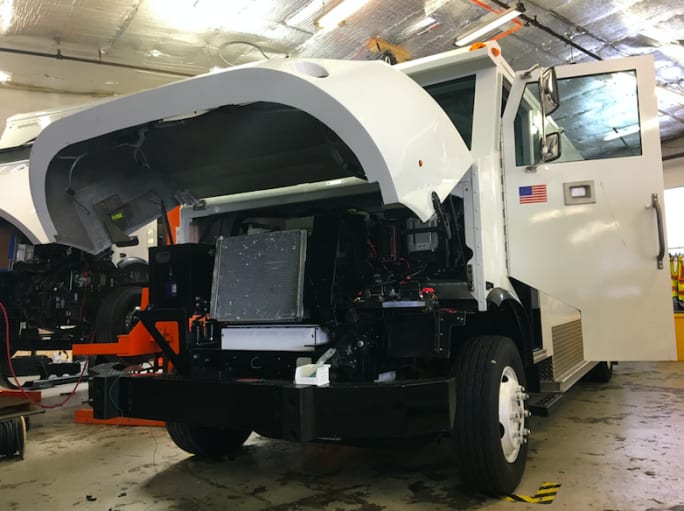
Under the hood of the electric truck used by Loomis: As opposed to liquid cooling, Xos batteries are air cooled, which allows for a safer, cheaper more energy dense battery.
Photo by Chris Brown.
Today’s batteries should last about six to 10 years before needing to be replaced, depending on duty cycle and use case. Sordini says XOS batteries are designed to be swapped individually, instead of having to replace the entire vehicle’s battery packs, a cost-saving measure when and if range degrades.
“Modularity is a key focus of our design,” he says.
The Payback Equation
When it comes to electrification, fleet operators need to measure total cost of ownership and return on investment. That equation is just now starting to make sense.
Semler estimates that for electric vehicles to compete with diesel on total cost of ownership, battery costs must fall below about $200 a kilowatt hour. Battery costs have dropped in the last 10 years from over $1,000 a kilowatt hour to within $200 to $300.
“Fleets are willing to convert from diesel to electric as long as you can show a path to about a three-year payback,” Sordoni says.
Sordoni says by switching to electric, trucking fleets can save from 50% to as high as 80% in fuel costs, depending on the utility and rate structure. Yet federal and regional subsidies are still essential: “Incentives play a key role in helping companies like us get to scale, but our goal is to compete with diesel on cost without incentives,” he says.
XOS — as well as other electric vehicle makers — are beginning to realize greater cost savings in production to make that happen.
Battery prices will fall, but there are other cost optimizations to be realized, Sordoni says. He references power electronics, which are presently bought off the shelf and sometimes need to be duplicated to achieve the right voltage levels.
“It's still very early,” he says.
The truck electrification market is growing exponentially, with mainline OEMs retooling facilities and ramping up production capabilities. That growth is not lost on XOS’ founders.
“I think competition is good for us,” Semler says. “It validates that there's a need for (electrification) in the market, and ultimately it's going to encourage us to be better at our game. We want to see the incumbents come into this space so that customers have a choice of product, and it ultimately encourages us to build the best product we can.”
Subscribe to Our Newsletter
More Vehicle Research
2027 Lexus NX Moves to Fully Electrified Lineup
For 2027, the NX moves to an entirely electrified lineup, with either hybrid or plug-in hybrid powertrains.
Read More →
2027 Mitsubishi Eclipse Sportback Named Green SUV of the Year
Green Car Journal recognized Mitsubishi’s new battery-electric crossover, which offers NACS compatibility and DC fast charging at up to 150 kW.
Read More →
Dave Carroll Named President of Ford Energy
Carroll succeeds Lisa Drake, who will remain with Ford through Dec. 31 to support the leadership transition.
Read More →
City of Long Beach Named No. 1 Green Fleet of 2026
NAFA's 2026 Green Fleet Awards recognized fleets for sustainability efforts spanning alternative fuels, technology, facilities, workplace culture and fleet operations.
Read More →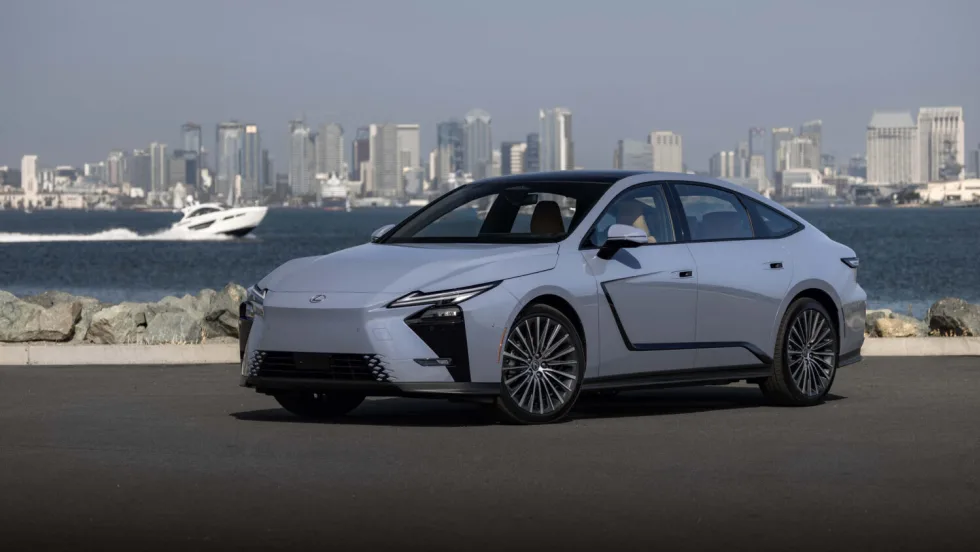
2027 Lexus ES Adds First Battery-Electric Models
The ES 350e and ES 500e join the hybrid ES lineup with up to 338 hp, an EPA-estimated 307 miles of range and standard NACS charging capability.
Read More →
EV Fleet Reality Check: What Operators Wish They Knew Before Electrifying Their Work Vans
Electric work truck upfits bring new compatibility questions. Learn how parts availability, OEM guidance, power demands, and route planning can affect fleet performance.
Read More →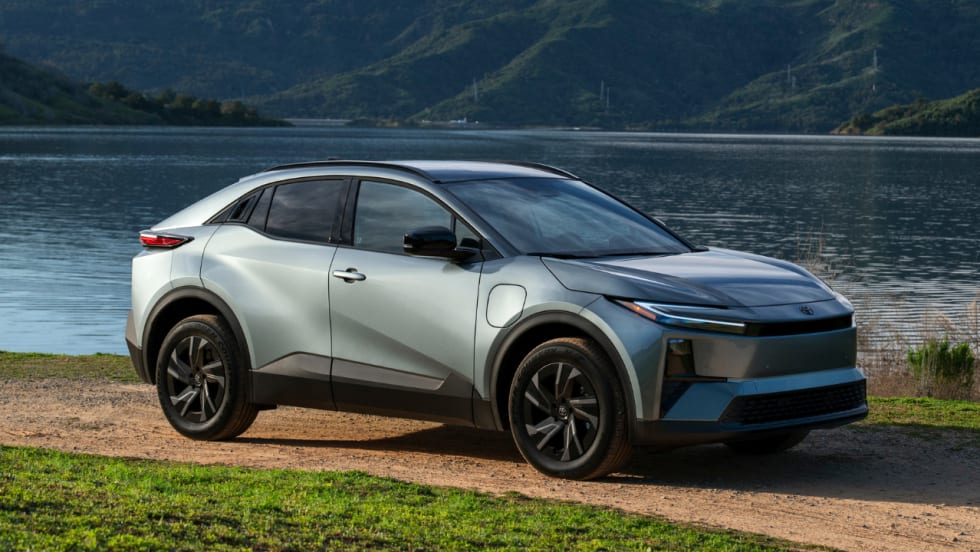
2027 Toyota C-HR Offers 287-Mile Range and Standard AWD
Toyota’s 2027 C-HR brings 287 miles of estimated range, standard all-wheel drive, and NACS fast-charging capability to the compact EV market. See what its mix of performance, cargo space, and everyday technology could offer business users.
Read More →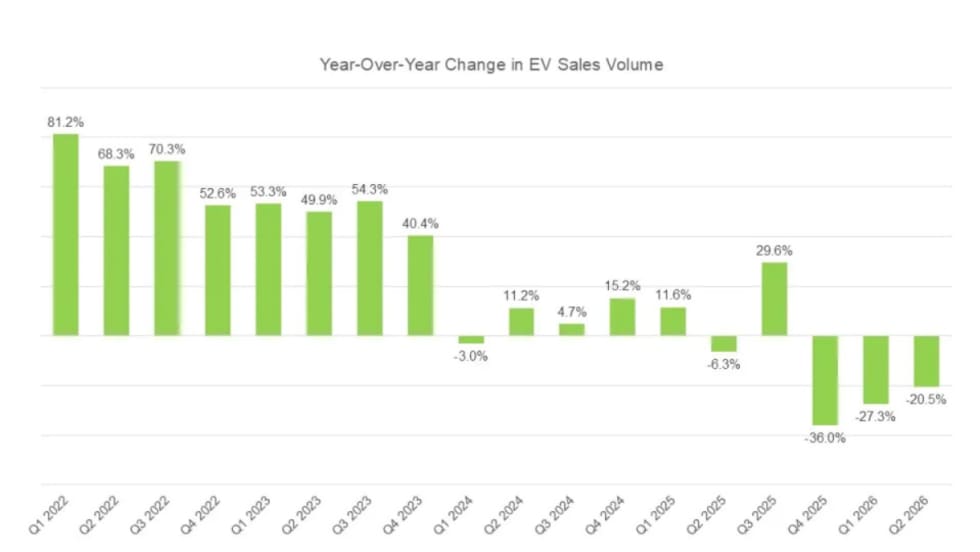
New Vehicle Models Stabilize Electrified Market In Q2
But more credit goes to hybrids than to all-electric vehicles, as more buyers look for fuel-efficient alternatives amid high gas prices.
Read More →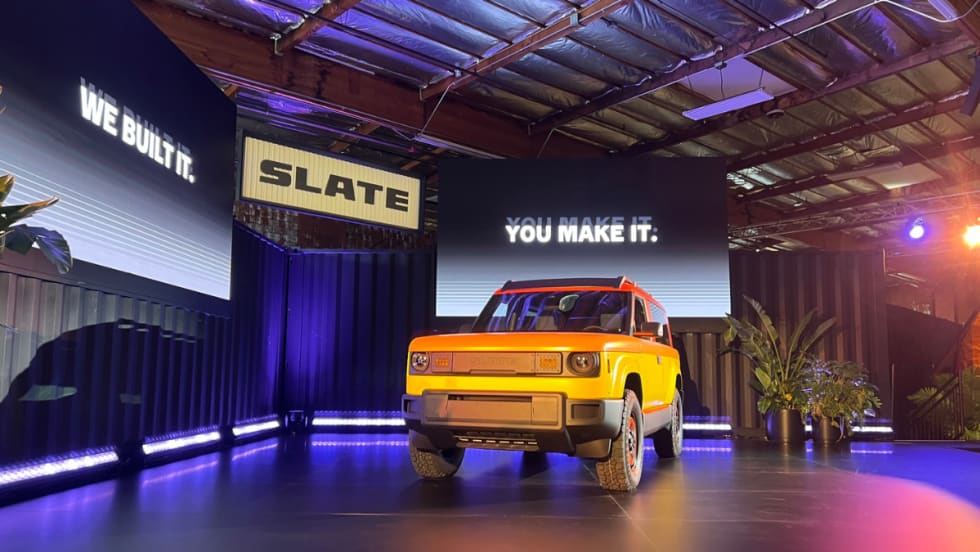
Slate Debuts Colorful, Unique EV Models
A recent media and client event, studded with electric vehicles dressed up on platforms, planted a new position for the manufacturer in the wider EV market. Fleets will find cost-saving advantages.
Read More →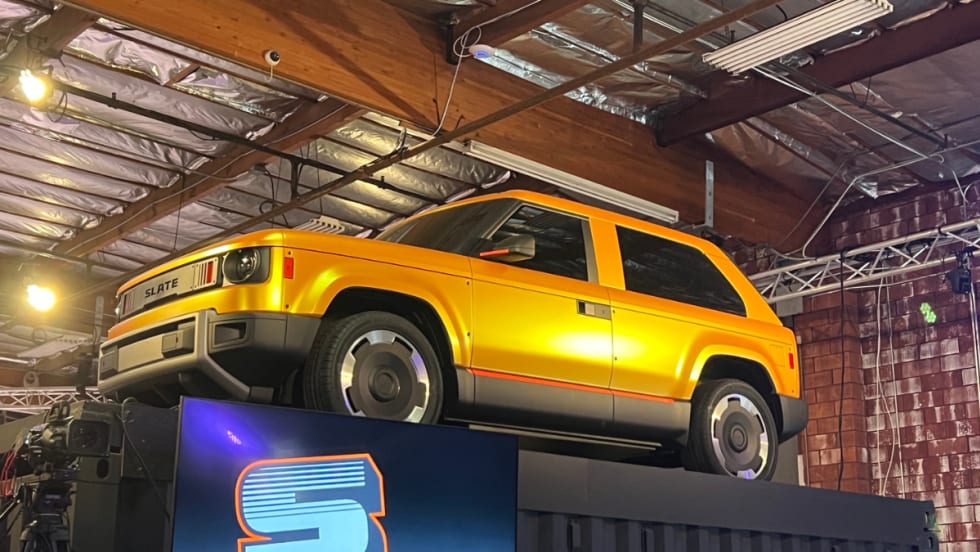
Slate Electric SUV, Pickup Switchable Model Aims For Light-Duty Fleets
Everything about this EV is counterintuitive and understated, making it stand out from the crowd.
Read More →