


Higher Commodity Prices Exert Upward Cost Pressure on Tires
Many tire OEMs have increased prices in CY-2021, ranging from 3-10% depending on type of tire and size. Higher commodity prices and increased ocean freight rates are being passed on to end users as OE profit margins compress.

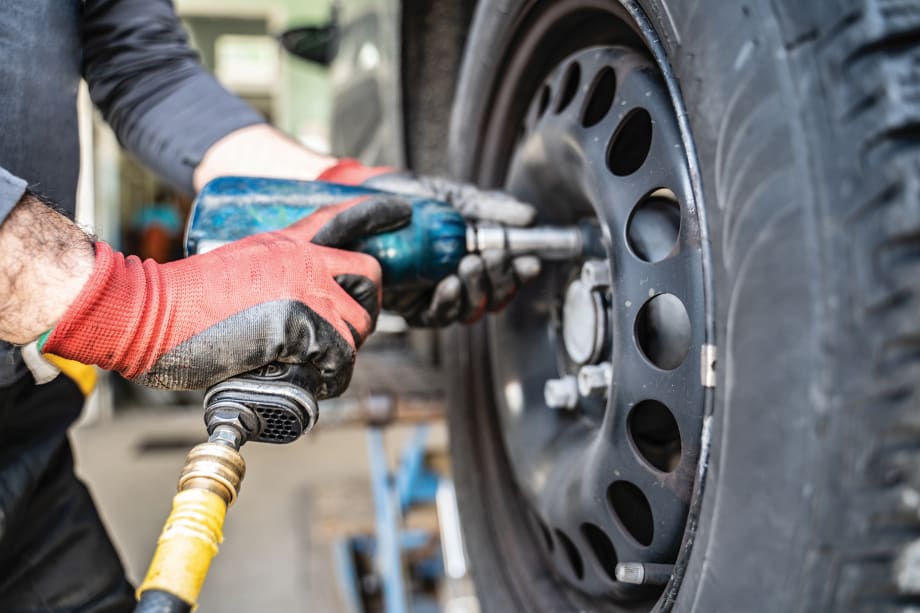
Tire prices have risen approximately 5% in 2021, mainly due to raw material and manufacturing cost increases coupled with higher disposal and transportation costs.
Getty Images
Replacement tire prices are vulnerable to fluctuations in commodity prices, which have been trending upward for the past three years, but especially during calendar-year 2021.
“Many tire manufacturers increased prices in 2021. Tire prices are affected by the prices of commodities such as crude oil, rubber, and steel, which are all used in tire manufacturing. All three of these commodities saw price increases this year,” said Mark Atchley, senior supply chain manager for Enterprise Fleet Management. “Additionally, ocean freight rates have spiked in 2021, especially affecting tires imported from Asian countries. We hope to see corrections in early 2022.”
On a per unit per month basis, fleet tire spends in 2021 has experienced upward pricing pressures due to higher prices for the commodities used to manufacture them. As a result, it is one of the greatest contributors to increased fleet maintenance spend.
Agreeing with this assessment is Dale Jewell, senior director – fleet service operations for Emkay.
“Tire prices have risen approximately 5% in 2021, mainly due to raw material and manufacturing cost increases, along with disposal and transportation costs,” said Jewell.
As a wear item, the high mileages driven by fleet vehicles makes this a significant ongoing cost to operating a fleet.
“Tire spend continues to be the No. 1 maintenance spend by category, making up about 18% of all maintenance spend – higher than the 14% in 2020 but on par with the 18% in 2019. We see 2020 as more of an anomaly due to increased fleet inactivity in 2020,” said John Wuich, CAFM, vice president, consulting services for Donlen. “Interestingly, the percent of maintenance spend attributed to tires has risen steadily in 2021 – as fleet travel has returned and as companies look to extend vehicle lifecycles while new vehicle production is reduced.”
As the economy reopened in the last half of 2020 and first half of 2021, more fleet vehicles were on the road with mileages increasing industry wide. Following the reduction of overall miles in 2020 due to the pandemic-induced economic lockdowns, mileages increased in 2021, along with increased tire-related expenditures.
“We saw extremely low mileage for many fleets in 2020, but much of that has reversed in 2021 leading to a sharp rise in demand and cost. Increasing raw material costs and the increase of tire sizes have also continued to impact overall unit cost. We also continue to see a shortage of tires due to the port backups and not being able to get these products into the U.S.,” said Tony Blezien, senior vice president, operations for LeasePlan USA.
The tire price increase occurred across the board. “Overall, per tire cost has increased across most major brands, with manufacturers noting price increases in raw materials, labor, and distribution. Tire costs increases have averaged between 3% and 7% among most major tire manufacturers,” said Joe Shinn, manager of fleet maintenance for Merchants Fleet.
In addition to higher commodity and manufacturing costs, there are other factors putting upward pressure on replacement tire expenses, such as higher fuel prices, which increased logistics costs to transport tires to distribution centers and retail stores. This assessment was also cited by other FMC partners.
“All of our tire vendors have increased the cost per tire, sometimes by 10% or more,” said Jenny Baker-Ford, manager, fleet maintenance for Mike Albert Fleet Solutions.
Although tires prices have been increasing, the forecast is that the pace of price increases will gradually moderate.
“Throughout the year, several tire manufacturers increased their tire prices by approximately five to 10% as the price of raw materials continued to climb. Fortunately, these increases occurred gradually over time so fleet operators were able to adjust their budgets easily rather than trying to navigate large, unexpected spikes,” said Chris Foster, manager, fleet management services for ARI. “Looking ahead there may be incremental increases but for the most part, we anticipate prices will likely remain relatively stable. However, we remain closely aligned with our strategic partners to monitor supply levels and help our clients stay ahead of any potential constraints that may be on the horizon, allowing them to adjust accordingly if necessary.”
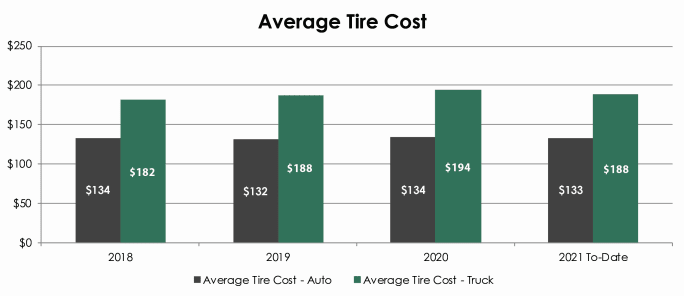
The higher cost of rubber and other raw materials is helping push tire prices skyward.
[EMPTY CREDIT]
THIRD LARGEST SPEND IN FLEET
Overall tire expenses are only exceeded by vehicle depreciation and the total cost of fuel.
“Tire costs remained the third highest spend category for our portfolio. As vehicles returned to road, tire purchases significantly increased across all segments but have not yet returned to pre-pandemic levels,” said Shinn of Merchants Fleet.
The exception to this rule occurred in calendar-year 2020 as non-essential fleets parked their vehicles, resulting in an industry-wide decrease in overall miles driven.
“Many fleets avoided expenses as much as possible in 2020. Also, with many units being driven fewer miles, tire spend was down a year ago. This year as miles have accumulated at a higher pace, and the need to replace aging tires, naturally the spend has risen in 2021,” said Jewell of Emkay.
It is important to remember that tire costs are not uniform for all fleets and w does vary from company to company depending on the type of vehicles in service and the severity of the fleet application. Another cost variable occurs during the new-vehicle specification and ordering process.
“We continue to see an increase in tires being upgraded during the factory order process, as well as immediately following delivery. This occurs with fleets in the gas & oil, construction, and engineering industries. Standard issues are being replaced early with more aggressive treads,” said Wuich of Donlen.
PROACTIVE PLANNING
With the reopening of the global economy there was much pent-up demand for a variety of raw materials, such as natural rubber.
“Like many segments of the global supply chain, rubber production waned during the height of the pandemic and there are some initial signs that the global need for this raw material may affect tire availability. Right now, there’s certainly no need to panic but fleet operators should be proactive in their planning to minimize the impact of potential disruptions,” said Foster of ARI. “For cars and light-duty vehicles, you’ll simply want to plan to secure tires earlier than your usual replacement interval. Be proactive in your planning to avoid scenarios where you have tires at the end of their useful lifecycle or beyond. Additionally, for those vehicles that are critical to your business operations, be sure to source replacement tires well in advance to avoid extended downtime for these important units.”
One recommendation is for companies to create a formalized tire policy for their fleets, especially if operating Class 3 and larger trucks. These classes of trucks, due to their fleet applications, requires constant monitoring of tire tread wear or for damage caused by road conditions and debris.
‘For medium- and heavy-duty units, we’re working with several clients and their regional tire partners to implement yard check programs. On a recurring basis, typically monthly, the tire vendor visits our client’s facility to inspect the vehicles’ tires. They monitor wear and track use, proactively recommending replacements as needed to allow sufficient lead-time to order new tires during this time of somewhat limited supply. This also helps to ensure tires are inflated and rotated accordingly to maximize the life expectancy of the tires,” said Foster.
These factors underscore the importance of incorporating a comprehensive tire policy into a company’s overarching maintenance and vendor strategy.
“We typically work with our customers to help them partner with a national account vendor whose locations align with their operating footprint. This allows them to take advantage of consistent pricing and availability regardless of geography to help control operating costs and minimize downtime,” said Foster of ARI.
TIRE PRICING TRENDS & FORECAST
The market forecast is that tires prices will continue to experience upward pricing pressures during the 2022 calendar-year.
“Earlier this year, major tire OEMs announced new tire price increases, citing higher raw material, labor, and transportation costs,” said Tim Brockschmidt, maintenance client partner for Element Fleet Management.
“In recent years, tires have seen increasingly more specific design features giving fewer suppliers incentive to produce a particular tire model. This led to limited tire availability by suppliers and models, which in turn drove up price. However, this trend now appears to be flattening out,” said Brockschmidt.
PRICE VARIABILITY FACTORS
In addition to higher commodity prices, transportation costs are likely to continue to rise, which will create more pass-along costs to end-users due to higher logistics expenses.
“Overall, we’ve not observed consistent tire pricing trends across all vehicle classes. However, the average tire spend per vehicle is up for some vehicle classes,” said Chad Christensen, strategic consultant for Element Fleet Management.
One common refrain from commercial fleets is a desire for tire OE to build tires that have longer tread wear.
“We have observed customers demand increased durability for tires, especially for cargo vans and stepvans in the last-mile sector. Urban driving in last-mile fleets has driven the need for higher mileage tires with lower to mid-range price points,” said Shinn of Merchants Fleet.
In addition, higher labor rates and logistics costs are impacting tire costs.
“Labor shortages and distribution challenges contributed to this year’s trend of increased tire prices,” said Erin Mills, national service department manager for Enterprise Fleet Management.
This was seconded by Jewell from Emkay. “Transportation and distribution log jams have created issues in nearly every production facet, tires included. Labor costs have risen and will likely continue to trend upward,” said Jewell of Emkay.
Retreads, which are common replacement tires for many truck fleets, are likewise experienced upward cost pressures.
“Similar to other aspects of the fleet industry, retread availability has been significantly impacted by the ongoing labor shortage. As facilities continue to work towards a return to pre-pandemic production levels, retread availability will likely remain somewhat limited and more costly for the foreseeable future,” said Foster of ARI.
Element made similar observations.
“Additional factors impacting the cost of replacement tires and retreads to fleets in 2021 include the higher cost of rubber and underlying raw materials used to produce tires,” said Brockschmidt of Element Fleet Management.
PRICING FORECAST FOR 2021-2022
Commodity prices are difficult to forecast because they are influenced by many uncontrollable variables such as weather, shipping rates, logistics constraints, and geopolitical tensions.
“Commodity prices and other contributing factors are difficult to predict, especially in this current environment. Miles driven will likely increase as economic activity recovers. Looking ahead, if tire prices remain elevated during the recovery, it could have a substantial impact on tire-related maintenance costs,” said Jamie Grams, national service department manager for Enterprise Fleet Management.
However, the feedback from professionals in the tire industry is to anticipate future price increases.
“Cost increases are expected as per major tire OEM announcements earlier this year,” said Brockschmidt of Element Fleet Management.
Therefore, the fleet management industry is watching very closely the fluctuations in commodity prices.
“Cost pressure of underlying raw materials is something we are monitoring,” said Christensen of Element Fleet Management.
Others say that while future price increases may occur, they do not anticipate that these increases in tire prices will be significant.
“It doesn’t appear that we will see as significant of tire price increases in 2022 as we experienced in 2021. However, beyond 2022 that may change as vehicles and their use continues to evolve,” said Troy Fleener, team lead – maintenance for Emkay.
In the final analysis, the key variables influencing future tire prices will be the cost of raw materials used to manufacture tires and the strength of the overall economy, which has a direct bearing on total miles driven by commercial fleets.
“We expect that overall tire cost per tire will increase across most manufacturers due to continued pressures from commodities, labor, and distribution costs. Increases in urban driving by last-mile fleets will continue to stimulate demand for cargo van and stepvan tires,” said Shinn of Merchants Fleet.
Originally posted on Automotive Fleet
More Electric Vehicles

EV Charging Use Is Outpacing Infrastructure Growth
ChargePoint’s 2026 Charging Forward Report points to rising charger use, higher-powered charging, commercial vehicle electrification, and energy-management technology. Here’s what fleets should know.
Read More →
EV Realty Names Henrik Holland President as Charging Platform Expands
The former Prologis Mobility and Shell executive will help expand EV Realty’s truck charging business and move its power-first infrastructure model into autonomous vehicle depots and other fleet sectors.
Read More →
GreenPower Expands New Mexico EV Pilot With Larger Buses, V2G Testing
After logging more than 17,000 electric miles in the first year, New Mexico’s statewide pilot is moving into its second phase with larger vehicles, continued charging evaluations, and more.
Read More →
Can EV-as-a-Service Help Fleets Scale Electrification?
Sustainability Partners CEO Adam Cain explains how matching EVs, charging infrastructure, and duty cycles can help fleets scale electrification.
Read More →
How EV-as-a-Service Is Moving Fleets Beyond Pilots
Adam Cain, president and CEO of Sustainability Partners, explains how EV-as-a-service can help fleets scale deployments by addressing duty-cycle requirements and charging challenges.
Read More →
PowerFlex, The Mobility House Join Forces to Advance Fleet Electrification
Two EV charging providers are joining forces to deliver a broader portfolio of energy management and fleet electrification solutions.
Read More →
Ford Retools Louisville Plant for Fathom Electric Truck Production
Ford's $2 billion Louisville Assembly Plant overhaul introduces a three-part assembly process for the Fathom midsize electric truck, with production scheduled to begin in 2027.
Read More →
Merchants Fleet Reports 290M EV Miles as Fleets Navigate Changing Electrification Market
From millions in operating savings to hundreds of millions of EV miles, Merchants Fleet’s latest report reveals what’s working and what’s changing in fleet electrification.
Read More →
California District Commits to Electrify 25% of School Bus Fleet by 2028
One of the nation's largest school bus electrification projects to date demonstrates how grants, charging infrastructure, and public-private partnerships can help fleets transition to EVs at scale.
Read More →
Aptera Orders Bodies and Chassis for Its First 40 Production Vehicles
Aptera Motors Corp. has issued purchase orders for the major structural components of its first 40 vehicles, and body and chassis components are expected to begin arriving in October.
Read More →