


Finding More Miles in Today's Fuels
Even with falling gasoline prices, fleets need to monitor and measure fuel use by drivers. Many of the techniques to increase mileage and, consequently, productivity are tried and true, but there are still new ideas to explore.

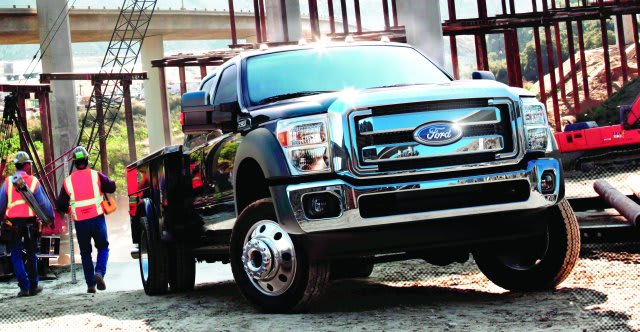
Clark County, Wash.’s fleet of Ford F-550 models (similar to above) improved routing for fuel gains. (PHOTO: Ford Motor Co.)
Second only to depreciation, fuel is a fleet’s highest expense. While this can be a burden to a fleet’s budget, there is a silver lining. There are a number of proven ways to control fuel costs without impacting the fleet’s mission.
Cutting Idling
For truck fleets, idling is probably one of the biggest drains on fuel economy, particularly since an idling truck is getting 0 mpg, and, thus, being completely unproductive — unless it’s a PTO application.
This was a problem faced by Paul Chamberlain, fleet services manager for Clark County (Wash.) Public Utilities.
Drivers were idling the support vehicles such as those used in the line operations for flagging and carrying small materials.
“The reason for idling is that they need their hazard lights and high-intensity lights while they’re working,” he said.
The solution relied on technology. The utility added start/stop systems to these units and the aerial units used in the line operations, so that has eliminated a lot of unnecessary idling.
For Michelle Thur, fleet manager for American Greetings, idling was a result of human behavior.
“Our area managers would go into the stores, do their job, and would go back into their vehicle, which would be idling, and work instead of utilizing their iPhone with WiFi to fill out their reports,” Thur noted.
There was no particular reason field managers had to work in their vehicles. In fact, Thur said that the managers have an app on their mobile phones to handle administrative work.
The solution to this problem was to change the behavior, albeit through technology.
With the help of the company’s fleet management company, Element Fleet Management and American Greetings’ field sales organization, the internal group responsible for the drivers, American Greetings has implemented a fleet safety program designed to educate drivers about improving various issues — including idling — while rewarding drivers for good behavior and working with them to eliminate the bad.
Adjusting Bad Behavior
Fuel efficiency and productivity has been more an issue of behavior than using inefficient vehicles, Thur said.
Among the driver behaviors that have impacted fuel efficiency include aggressive driving and not keeping tires adequately inflated.
But, it isn’t just the drivers who have had to change their habits. Thur noted that the fleet has implemented route optimization to improve productivity and efficiency. And, she keeps a close eye on operations to ensure that the fleet remains productive.
“We also monitor their driving behavior, we monitor their fuel reports, we monitor their vehicles, we monitor their fuel cards for misuse. We take all that information and put it together, and then work with district managers to make sure drivers understand what their responsibility is while using that company asset that we give them to do their job,” she said.
Chamberlain of Clark County has also found route optimization to be key to keeping the fleet productive and fuel efficient.
“We have a group called the First Responders that’s on the operations side, and they’re doing more in terms of setting routes based on where the employee lives, because they take their vehicles home. The group divides the county into quarters and that’s been a big help,” he said.
The operations group also uses an outage management system, similar to a telematics system, which helps to find a nearby truck and respond to a power outage.
Switching to an Alt Fuel
It’s not just the amount of fuel that a fleet is using, but also the type of fuel, that may be the key to seeing significant fuel-efficiency gains.
For example, Tom Armstrong, director of fleet for ThyssenKrupp Elevator, is an outspoken advocate for the use of propane autogas in fleet operations. He has been running propane autogas vehicles in the fleet since about 2009 and hasn’t looked back.
Not only has the fleet saved money due to the lower up-front cost of propane autogas, but it has also realized a number of other cost and productivity gains, according to Armstrong.
“Our real benefit tied to propane autogas is that it’s clean, it saves us money with the price per gallon being cheaper, and we get some little ancillary benefits, such as HOV lane access — and, in some cases, you don’t have sales tax on the purchase of the vehicle,” he said.
While propane autogas produces 35 percent lower BTUs than traditional gasoline, fleets will realize cost savings due to the fact that the fuel costs about 20 percent to 30 percent less than traditional gasoline.
“As engines become more efficient, we’re coming closer to matching miles per gallon of gasoline, with a fuel that gets much fewer BTUs,” said Tucker Perkins, chief business development officer for the Propane Education & Research Council (PERC).
“If you’re just interested in trimming your fleet costs per mile, I always say, use propane autogas, because we’re going to expect most fleets to cut their costs by 30 percent at a minimum.”
But, as with traditional gasoline fleets, propane-autogas efficiency has as much to do with the drivers as the fuel itself.
“The fuel is cheaper, but drivers have to relearn how to drive in a higher-performing vehicle because the octane in propane autogas is quite a bit higher,” Perkins said.
Similar cost savings and efficiencies have been seen by fleets switching to the other alternative fuels on the market.
Downsizing for Efficiency
Propane autogas is one of the biggest factors in making ThyssenKrupp’s fleet efficient, but another is downsizing.
Since 2010, Armstrong has been downsizing the full-size vans in the fleet to smaller, more fuel-efficient Transit Connect compact vans. He added about 60 of the vans in 2010 and expects to have 800 by sometime this year.
“About 70 percent of our fleet is a fit for this smaller vehicle, which has been getting us 8 mpg better compared to a full-size van that the Transit Connect replaced,” he said.
Falling Fuel Prices
As of press time, gasoline prices have fallen to their lowest point since the Great Recession of 2008. This could pose a danger to fleets if they allow their drivers to become complacent, warned Steve Jastrow, strategic consulting manager at GE Capital Fleet Services.
“Fleet managers shouldn’t be measuring fuel spend — they should be measuring mpg as that measurement variable. The danger you face is that you take your eye off the ball and the driver adopts the behavior of, ‘Who cares, fuel prices are low,’ they’re going to become complacent,” Jastrow said. “As a result, when fuel goes back up, you’re going to have to go through the process of getting fuel efficiency up again.”
Hedging Your Fuel Bets
In the here and now world of falling gasoline prices, Jastrow of GE Capital Fleet Services said this may be a good time for fleets to hedge their fuel bets.
“Miles per gallon is always good to focus on, because if you can effectively manage it, you can create a natural hedge if fuel prices go up,” he said. “Fuel hedging might be an opportunity for fleets; they have an opportunity to lock in some of these low prices and create a bit of safety net for themselves if fuel prices go up.”
What’s Next?
In the future, will fuel gains be found with improvements in technology or driver behavior? It probably isn’t an either/or solution, according to the subject matter experts. As with the proven methods of the past and the emerging trends of today, the future will undoubtedly depend on technology and driver behavior working in concert.
Telematics may be the prime example of this mixing of behavior and technology.
“An increasing number of fleets are starting to incorporate telematics technology in their vehicles, and this helps them to collect a large quantity of data,” said Brian Matuszewski, manager of sustainable strategies for ARI. “The next innovation will be the transformation of this large quantity of data into meaningful, actionable information. Fleets that develop strategies to manage their Big Data effectively will greatly enhance their ability to improve fleet-wide mpg.”
Thur of American Greetings echoed Matuszewski.
“We’re doing more with less. We’re not backfilling positions. We’re giving people bigger territories, and, I think, that by teaching them what they need to do and how they should be using that asset and then giving them tools to do their job better, whether it be an app on their phone to help them to do their route optimization or investing in telematics [we’re being more efficient],” she said.
Rick Bettis, regional vice president for Element Fleet Management, also sees telematics as the technological key to fleet management.
“Telematics can provide the capability to monitor the behavior of each driver, and identify those who may need training or remedial driving help,” he said. “It really is going to be a combination of technology and behavior to improve operations.”
A big factor in seeing gains in mpg may be even more straightforward and rely on proper replacement cycling.
“Just by updating from the old Transit Connect to the new Transit Connect you have some added cost, but it’s negated by the fuel savings,” said Armstrong of ThyssenKrupp. “To get that newer vehicle that saves you 5 mpg is pretty big.”
Bettis noted that lightweighting will be a new way truck fleets will be able to see mileage gains.
“We’ve been looking at ways to safely upfit trucks with lightweight bodies, but still allow them to be effectively utilized,” he said.
Originally posted on Work Truck Online
More Suppliers

Slate Debuts Colorful, Unique EV Models
A recent media and client event, studded with electric vehicles dressed up on platforms, planted a new position for the manufacturer in the wider EV market. Fleets will find cost-saving advantages.
Read More →
Slate Electric SUV, Pickup Switchable Model Aims For Light-Duty Fleets
Everything about this EV is counterintuitive and understated, making it stand out from the crowd.
Read More →
Polestar Barred from U.S. Market Under Connected Vehicle Rule
The automaker loses its authorization to sell new vehicles in the U.S., starting with the 2027 model year. Polestar owners will retain access to the brand's service network.
Read More →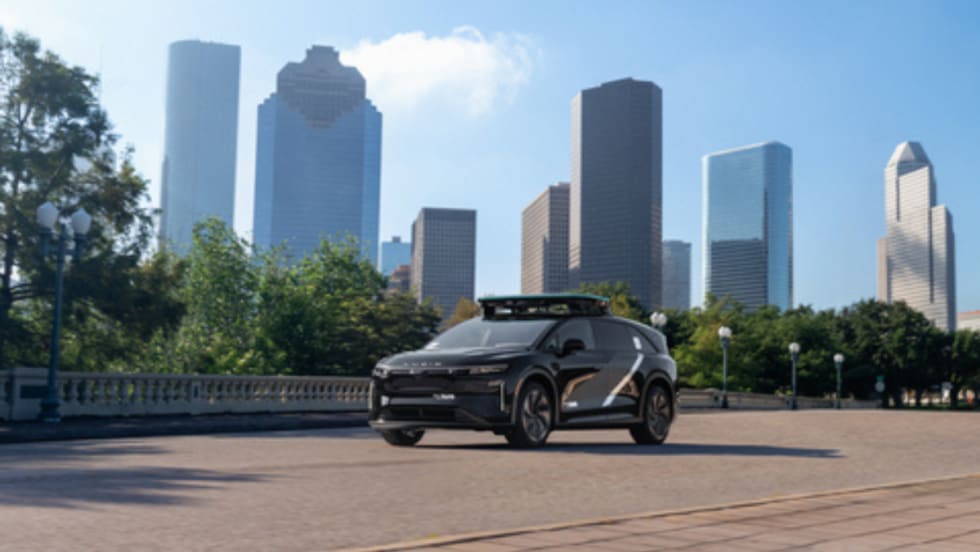
Uber, Nuro and Lucid Plan Houston Robotaxi Service in 2027
The tripartite venture brings out the combined advantages of electric vehicles, mobility, and autonomy into ground transportation.
Read More →
Electrify America Opens EV Fast Charging Station in Southern California
The large-format depot features 20 hyper-fast chargers capable of delivering 350 kilowatts and is backed by a powerful battery energy storage system.
Read More →
Inspiration Mobility Acquires Key Electrada Assets
Inspiration Mobility Group has acquired select assets of Electrada, adding the fleet electrification provider's team, technology, and charging infrastructure development capabilities to its energy management business.
Read More →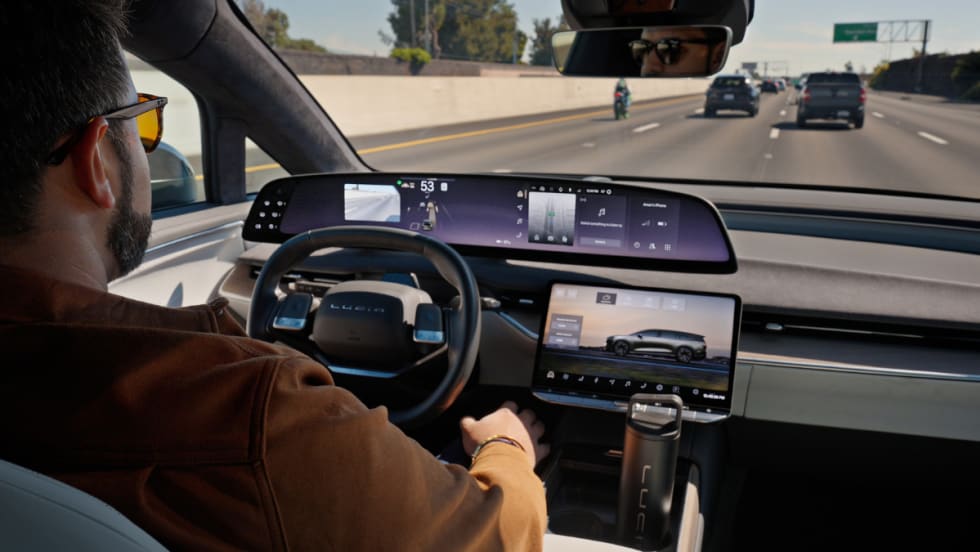
Lucid Adds Hands-Free Highway Driving, Software Updates To Gravity SUV
Hands-free drive assist makes highway driving more comfortable while keeping drivers attentive to the road.
Read More →
Harbinger Creates Hybrid-Electric Unmanned Vehicle Platform for Defense Use
The platform is based on the company's medium-duty plug-in hybrid chassis, which is also used in commercial vehicles.
Read More →
Mitsubishi To Debut All-Electric Eclipse Subcompact For North American Market
The 2027 Mitsubishi Eclipse Sportback is a small SUV that will go on sale by this fall.
Read More →
Stellantis To Build Smaller, Affordable EVs For European Market
Stellantis aims to expand access to urban EV mobility in Europe and address the decline in the smaller-vehicle segment.
Read More →